
Equipment & Facilities
Enabling Breakthrough Research at the Center for Photochemical Sciences
The Center for Photochemical Sciences (CPS) at BGSU is home to a collection of specialized instrumentation that directly enables its faculty to pursue discoveries across some of the most consequential frontiers in modern science — from next-generation solar energy and cancer-fighting biomaterials to recyclable plastics and single-molecule biology. Housed in the Physical Sciences Laboratory Building and Overman Hall, CPS laboratories are purpose-built to support research at the cutting edge of photochemical science.
At the core of the Center's experimental power are multiple broadband, tunable femtosecond laser systems paired with optical parametric amplifiers (OPAs), along with nanosecond Nd:YAG laser systems equipped with optical parametric oscillators (OPOs). Together, these systems deliver pump and probe light pulses spanning the UV to near-infrared, with time resolution from femtoseconds (one millionth of one billionth of a second.) all the way to milliseconds.
This capability is essential for researchers like Alexander Tarnovsky, whose ultrafast spectroscopy work tracks the earliest moments of photochemical reactions — bond-breaking and bond-forming events that occur faster than almost any other measurable physical process. Similarly, Malcolm Forbes uses time-resolved techniques in his physical organic chemistry and photochemistry work, probing how light drives radical reactions with electron paramagnetic resonance (EPR). These laser systems make it possible to literally watch chemistry unfold, answering fundamental questions about how molecules respond to light that no other technique can address.
CPS operates a suite of state-of-the-art microscopy platforms including confocal scanning and fluorescence imaging, single-molecule spectroscopic imaging, scanning tunneling and atomic force microscopy, confocal Raman spectroscopy and imaging, and fluorescence lifetime/spectral imaging.
For H. Peter Lu, whose work focuses on the spectroscopy of interfaces and single-molecule spectroscopy, these instruments are indispensable. Single-molecule imaging allows researchers to observe the behavior of individual biological molecules in real time — eliminating the averaging effects of bulk measurements and revealing dynamics that would otherwise be invisible. This has profound implications for understanding enzyme function, protein interactions, and biological processes at the most fundamental level. Atomic force and scanning tunneling microscopy extend this capability to surfaces and nanomaterials, enabling Mikhail Zamkov and Liangfeng Sun to characterize the optoelectronic nanomaterials and nanocrystal-based solar cell architectures they develop.
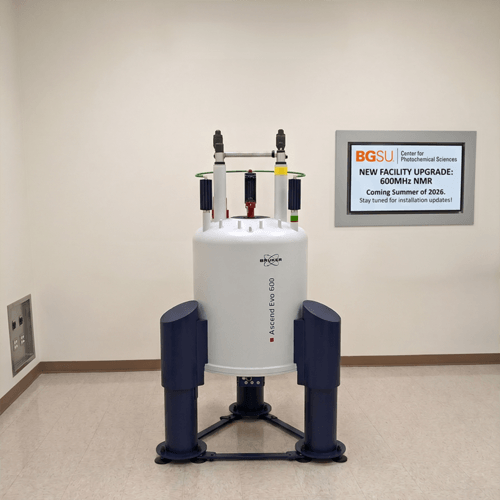
The Center maintains 300, 400, and 500 MHz NMR spectrometers, with the 500 MHz instrument outfitted with a cryoprobe for ultrasensitive measurements. This high-field NMR capability is critical for researchers working with complex organic and polymer systems. Jayaraman Sivaguru's group, which develops photodegradable and recyclable polymers as well as supramolecular photochemistry in the solid state, relies on NMR to confirm molecular structure and track photochemical transformations. Joseph Furgal's work spanning siloxane polymers, sol-gel materials, and natural composite systems equally depends on detailed structural characterization that only high-field NMR can provide.
MALDI-TOF, GC/MS with direct insertion probes, LC/MS, ESI, and APCI mass spectrometry systems give CPS researchers a comprehensive toolkit for molecular identification and purity analysis. Combined with HPLC, gel permeation, and gas chromatographs, these instruments support the full analytical pipeline from synthesis to characterization.
For Xiaohong Tan, whose research spans protein biochemistry, peptide chemistry, and bioengineering, mass spectrometry is essential for verifying peptide and protein structures. Pavel Anzenbacher Jr., who develops supramolecular chemosensors and organic photovoltaic materials, uses these tools to confirm the composition and purity of newly synthesized molecular architectures. A CNS elemental analyzer rounds out compositional analysis capabilities.
The MicroCal VP-ITC (Isothermal Titration Calorimeter) provides simultaneous determination of binding affinity, enthalpy, and stoichiometry in a single experiment — information that competing assays simply cannot deliver. This is particularly powerful for Alexis Ostrowski's biomaterials research and Xiaohong Tan's work on protein-ligand and peptide interactions, where understanding the thermodynamics of molecular recognition is central to designing effective biological and therapeutic systems.
An MBraun glove box (with integrated −30°C freezer), MB-SPS solvent purification system, and Lindberg Blue vacuum sublimation system give researchers the controlled environments needed for sensitive synthetic work. For Mikhail Zamkov and Liangfeng Sun, whose research involves nanocrystal synthesis and device fabrication for solar cell applications, the ability to handle oxygen- and moisture-sensitive materials is non-negotiable. Joe Furgal's green chemistry work — including silicon recyclability, sulfur chemistry, and bioremediation materials — similarly depends on clean, controlled synthetic conditions.
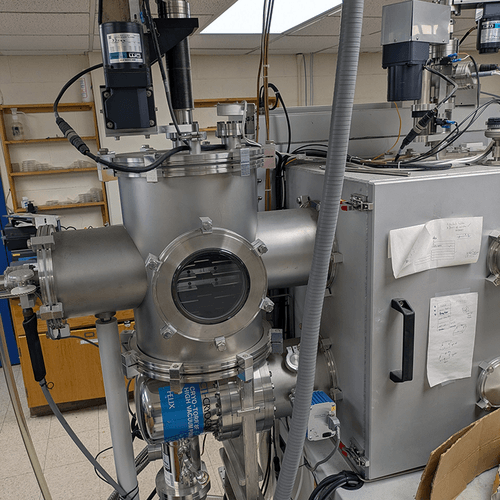
Materials processing, device fabrication, and characterization facilities extend this capability, allowing CPS researchers to take materials from synthesis all the way through to functional device testing under one roof.
By leveraging the infrastructure provided by the State of Ohio, Bowling Green State University (BGSU) conducts high-level scientific research that would otherwise be computationally impossible. The Ohio Supercomputer Center (OSC) serves as the primary engine for this work, offering BGSU faculty and students access to massive processing power and specialized data storage.
This state-funded resource is the vital backbone for complex modeling within the Center for Photochemical Sciences, creating a seamless bridge between theory and practice:
Dr. Massimo Olivucci utilizes OSC’s high-performance clusters for his world-renowned research in computational photobiology. By employing quantum chemical modeling, he decodes how molecules—such as chromophores in the human eye and photosynthetic systems—respond to light at a molecular level.
Dr. Alexey Zayak similarly relies on these substantial computing resources for his atomistic Density Functional Theory (DFT) simulations and Raman spectroscopy research. His work focuses on the fundamental interactions of matter at the atomic scale, providing the precision needed to understand complex material behaviors.
Having this infrastructure readily available allows BGSU’s theorists and experimentalists to work in close collaboration. Computational predictions from the likes of Dr. Olivucci and Dr. Zayak directly inform and accelerate experimental design, transforming the state’s investment into a catalyst for faster, more efficient scientific discovery. This strategic partnership ensures that BGSU remains at the forefront of photochemical innovation and global research.
John Cable's research in supersonic jet expansion spectroscopy requires specialized conditions — molecules cooled to near absolute zero in a jet expansion — to resolve fine spectral features that are thermally blurred in conventional measurements. This niche but powerful technique yields uniquely precise information about molecular electronic structure and is enabled by the Center's specialized gas-phase spectroscopy infrastructure.
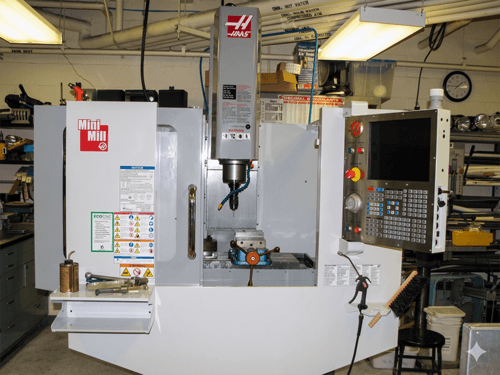
Perhaps one of the most underappreciated assets at CPS is its in-house machine and electronics shop. Staffed by a Laboratory Design Engineer and an Electrical Engineer, these facilities empower researchers to move beyond the limitations of commercial instrumentation. By providing expert design, custom fabrication, and precision engineering, the shop transforms abstract experimental requirements into reality.
This capability means researchers are not constrained by what commercial vendors offer. When a research question demands an instrument that doesn't exist yet, the combined expertise of the machine and electronics shops can build it—representing a genuine competitive advantage that accelerates discovery and supports the Center's tradition of experimental innovation.
Laboratory Design Engineering: Professional expertise in CAD/CAM, CNC machining, and specialized fabrication of mechanical components and laser rigging.
Electrical Engineering: Expert design and troubleshooting of custom circuitry, sensor integration, and high-speed data acquisition systems to interface with laboratory hardware.
Collaborative Prototyping: A holistic "cradle-to-grave" development process where mechanical and electronic systems are integrated seamlessly to create one-of-a-kind scientific instruments.
Infrastructure Maintenance: Comprehensive support for both legacy systems and cutting-edge digital modernization, ensuring the longevity and reliability of lab equipment.
What sets CPS apart is not any single instrument, but the way these capabilities form a fully integrated research ecosystem. Across seven active research areas — Materials & Polymers, Inorganic & Organometallic Chemistry, Physical Chemistry & Chemical Physics, Biochemistry, Green & Sustainable Chemistry, Organic Chemistry, and Physics — CPS faculty leverage shared instrumentation to pursue questions that span disciplines. The equipment at CPS doesn't just support research; it defines what kinds of breakthroughs are possible.

Updated: 05/08/2026 05:11PM