
Dialogue and Relationships Research Lab

The Dialogue and Relationships Research Lab (DRR) is an interdisciplinary lab for research, teaching, and engagement around issues of difference and difficulty in close relationships across the lifecourse. The goal of the lab is to foster collaboration and engaged approaches to dealing with difference and challenges in our close relationships.
The DRR makes room for dialogue that centers close relationships across difference and contributes to interdisciplinary conversations within and outside of BGSU.
The DRR is a home for research, teaching, and engaged practice that:
- is dialogical, collaborative and engaged socially and ethically
- is interdisciplinary
- is community based
- is relationship centered
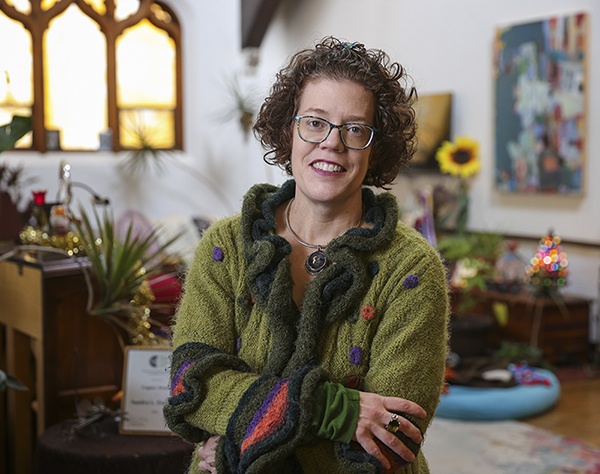
The founder of the DRR is Dr. Sandra L. Faulkner, School of Media and Communication.
Faulkner, S. L. (2025). Poetic Portraits of Older Women in the Great Black Swamp: Making Poems from Stories as Representation, Inquiry, and Community Engagement. Qualitative Research. Online First. https://doi.org /10.1177/14687941251390776
Faulkner, S. L. (April 13, 2022). Intergenerational Connections: The Power of Conversation and Connection Across Age. TEDX BGSU. https://www.youtube.com/watch?v=_Y3RopTWTu4&t=245s
Faulkner, S. L., Pollino, M. A., Shetterly, J., & Watson, W. K. (2024). Intergenerational Connections: US College Students’ Attitudes and Expectations Toward Older Adults and Aging in an Online Critical Community Engagement Project. Communication Pedagogy, 8, 48-67. https://doi.org/10.31446/JCP.2024.1.04
Faulkner, S. L., Watson, W. (2024). What I know now that I wish I had known when I was younger: Older women’s relationship advice as Skinny Poetry. Voices and Silences: Poetry as Knowing and Learning in Social Research. Heidi van Rooyen & Kathleen Pithouse-Morgan (Eds.). HSRC Press
Faulkner, S. L., Watson, W. K., & Shetterly, J. (2023). Intergenerational Connections: An online community engagement project. Communication Teacher, 37(2), 132–140. https://doi.org/10.1080/17404622.2022.2077973
Faulkner, S. L., Watson, W. K, Pollino, M. A., & Reese, J. (2022). Poetic Portraiture as Critical Arts-Based Pedagogy and Methodology: Older Women’s Relationships through the Lifecourse. Qualitative Inquiry, 28(10), 987-997. https://doi.org/10.1177/10778004221097058
Difficult Conversations in Older Adults’ Close Relationships

In fall 2025, students in Sandra Faulkner’s graduate relational communication course (MC 7000), along with Dr. Wendy Watson are collaborating on a project with the Wood County Committee on Aging titled, Difficult Conversations in Older Adults’ Close Relationships. The purpose of this community engaged research is to identify what older adults in Wood County find to be difficult topics to discuss in their close relationships and why, the skills they have for engaging in these conversations, and what skills they need to develop. The findings from this research will be used to develop a workshop on how to have difficult conversations in close relationships for older adults in Wood County. This project is important for three reasons. First, findings from this study will advance research that explains how individuals have multiple goals in their interpersonal interactions and how individuals navigate these goals influence their success and satisfaction. Second, this study will provide best practices for discussing difficult topics in close relationships. Third, the findings from this research will be used to develop a workshop on how to discuss difficult topics in close relationships for older adults in the community. We began by conducting 4 focus groups with older adults at the senior center in Bowling Green about topics they find difficult to discuss, close relationships in which they want to discuss difficult topics, what they consider a successful conversation about a difficult topic to look like, and any insights they had into how to talk about difficult topics. They identified friendships, sibling relationships, romantic relationships, and parent-child relationships as relationships in which they needed and wanted to talk about topics such as health, finances, and end of life care. Participants goals included maintaining relational harmony, keeping autonomy, passing on wisdom, and ensuring practical matters are addressed. They experienced conflict because they wanted to be honest, but they do not want to hurt feelings, they want independence but also need help, and they want to protect loved ones but also want to be understood. Successful conversations were defined less by “agreement” and more by feeling heard and respected. Even if outcomes weren’t perfect, success meant reduced tension, shared understanding, and maintaining closeness in relationships. We will be presenting our work at a colloquium at BGSU and working on a collaborative research presentation for a national conference as well as a publication.
Photo:
Back Left to Right
K.C. Bailey, Donnie Glover, Victoria Main, Osama Bahassan
Bottom Left to Right
Kendall Johnstone, Natalie Rogers, Jack Cullen, Sandra Faulkner
Not pictured (Wendy Watson)
Updated: 10/27/2025 08:03PM