
Studio

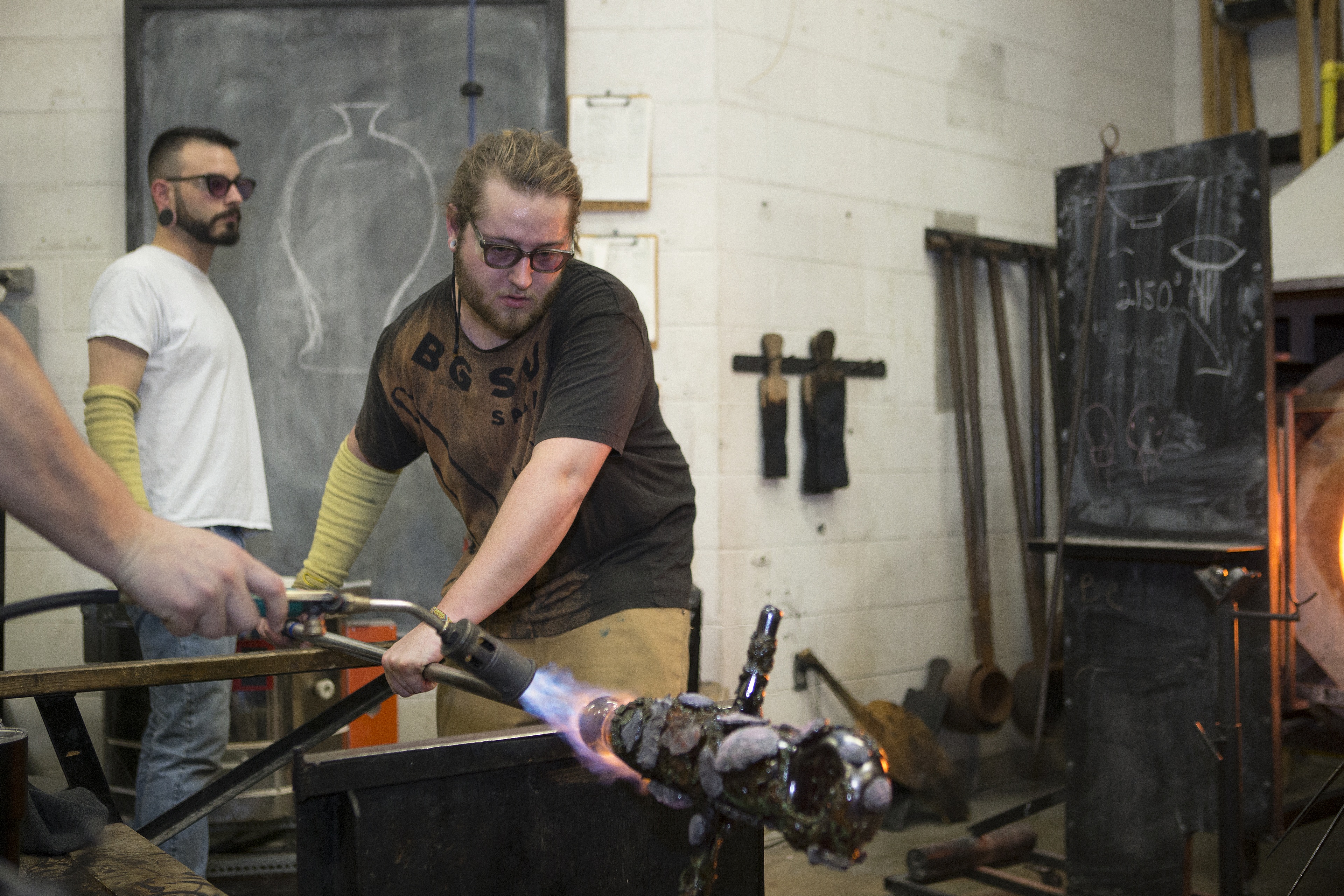
Studio Art (BA)
The B.A. in art with a specialization in studio art degree program combines foundational studio art training with a broader liberal arts education. It’s a great fit if you want a mix of creative and practical skills that can be leveraged into interdisciplinary careers or pursuit of graduate studies in art, art-related and non-art fields.
The Studio Art division is committed to providing a positive, collaborative environment in which a range of artistic viewpoints may flourish. Students seeking a degree in studio art have the option to obtain a Bachelor of Fine Arts (BFA) or Bachelor of Arts (BA) degree.
Contemporary art is becoming increasingly transcendent of the traditional boundaries of a single medium. In light of this, our Studio Art division prepares students with a solid foundation in all media. Perceptual, technical, and theoretical knowledge is absorbed through a choice of focused studio experiences across the disciplines of ceramics, drawing/painting, glass, jewelry/metals, photography, printmaking, or sculpture. From this open foundation, the studio art curriculum encourages and fosters experimentation and risk taking, as it allows students to select intermediate and advanced level courses best suited to the individual. The degree in studio art provides students with depth and flexibility through expression in several media or disciplines or expression within a single medium or discipline.
In the classroom and beyond, our faculty prepares students to actively commit to and engage with a variety of professional opportunities in the arts. We insist that art is vital to the well-being of all communities, and that our students will play vital roles in this effort wherever they go.
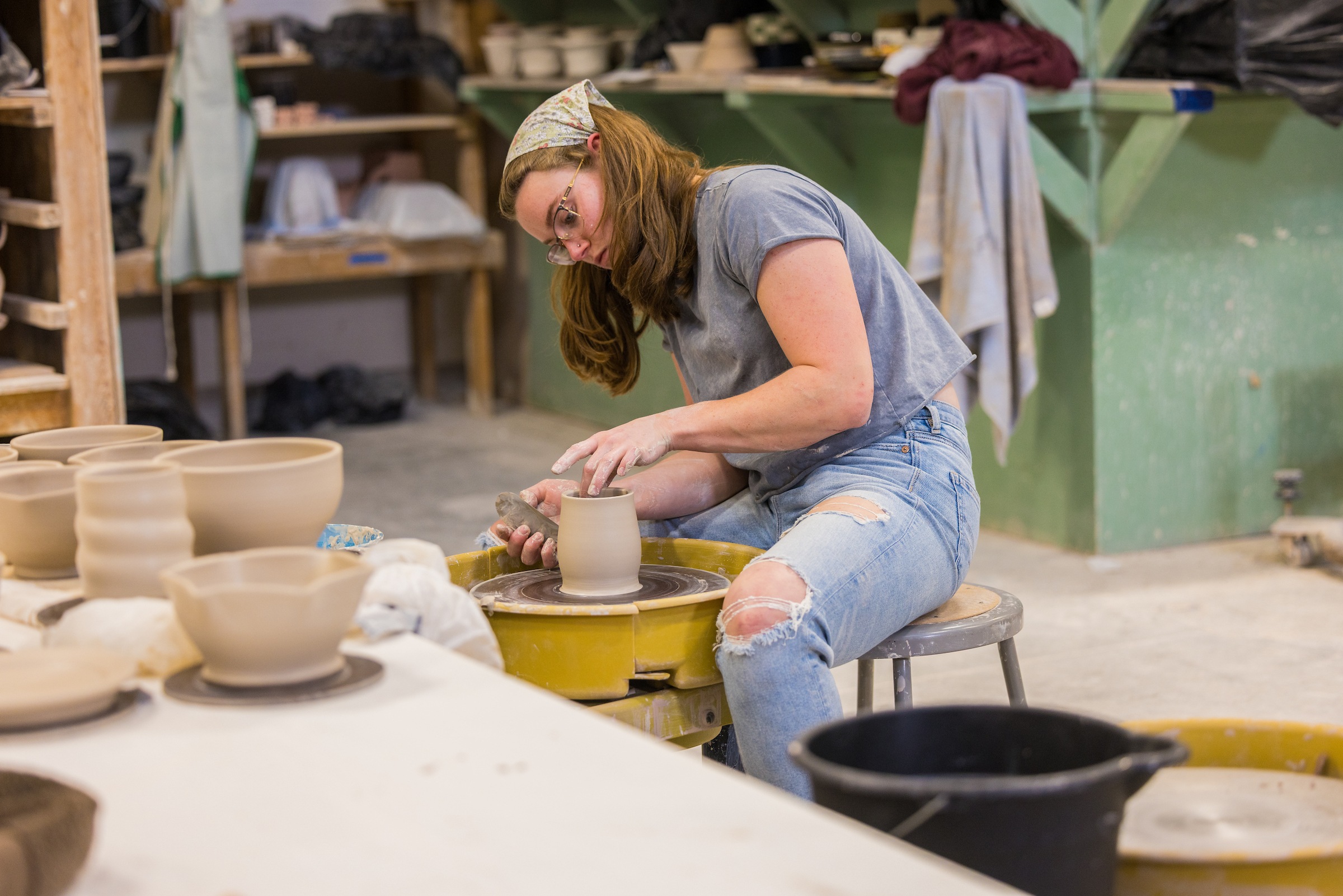
The ceramics program at BGSU introduces students to a wide range of techniques and processes that emphasize creative thinking and individual artistic growth. Students are exposed to the rich history of ceramic art and are guided into achieving excellence in aesthetics, concept, craftsmanship, and professionalism while developing their unique artistic visions. The studio experience emphasizes community and the ability to work in a group, offering many opportunities for individual leadership. Ceramicists participate in every facet of a functioning studio, from mixing their own clays and glazes to firing their own work.
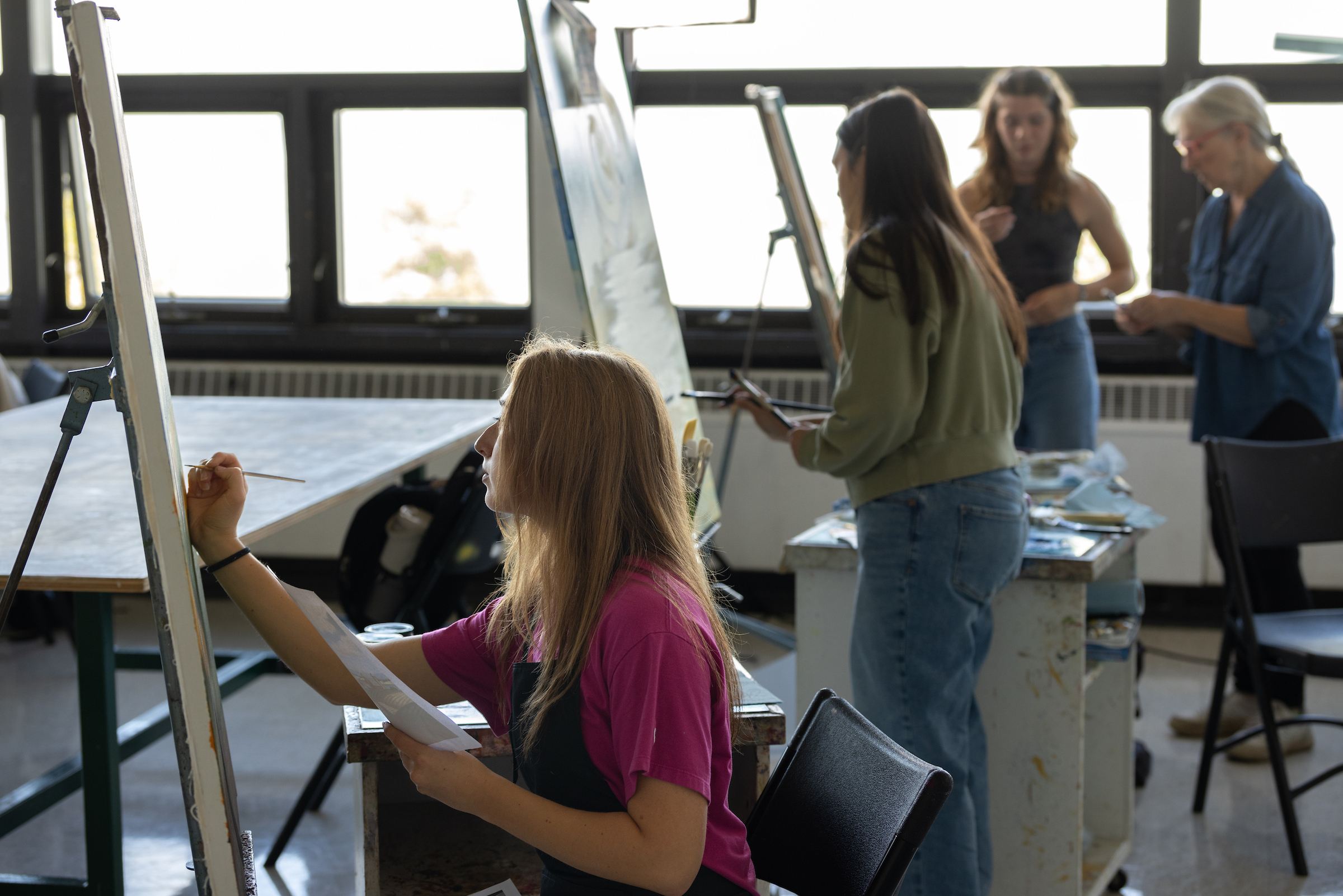
The drawing/painting area offers students the opportunity to explore a wide range of media and helps new artists build a working knowledge of materials, technique, and the use of color. Students are taught how to use media expressively and how to explain their media choices with an in-depth visual vocabulary. As our students progress, critical thinking and problem solving become the primary focus in creative development.
In our program, students are introduced to both traditional drawing and painting techniques as well as contemporary practices and issues. In the beginning classes, we introduce basic distinctions between drawing and painting by learning to use media in its rawest form. It is our belief that this gives the artist a deeper appreciation for their chosen media. In the advanced classes, the separation between medias is dissolved in favor of exploring meaningful and dynamic works. Students are afforded a great deal of freedom to explore their personal ideas and interests, while weekly discussions, readings, and assignments prepare them for the challenge of a BFA thesis exhibition.
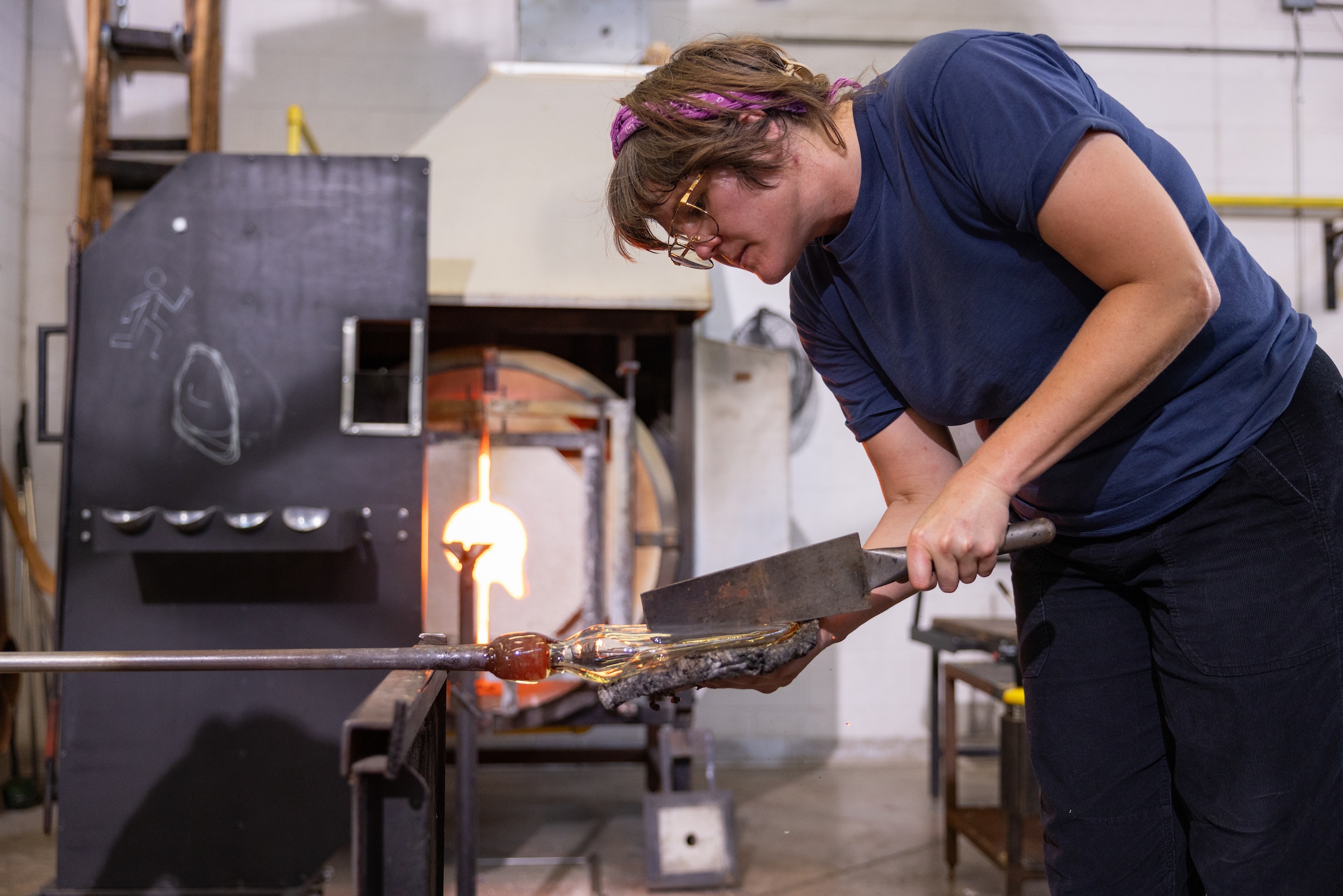
The glass area embraces the ideas of creative production, ongoing experimentation, research, and critical investigation. Students are encouraged to become innovative thinkers and creative problem solvers when approaching glass as an art-making material. Glass art projects that involve other materials are supported and encouraged. The glass area has state-of-the-art facilities that allow students to work with hot, warm, and cold glass techniques.
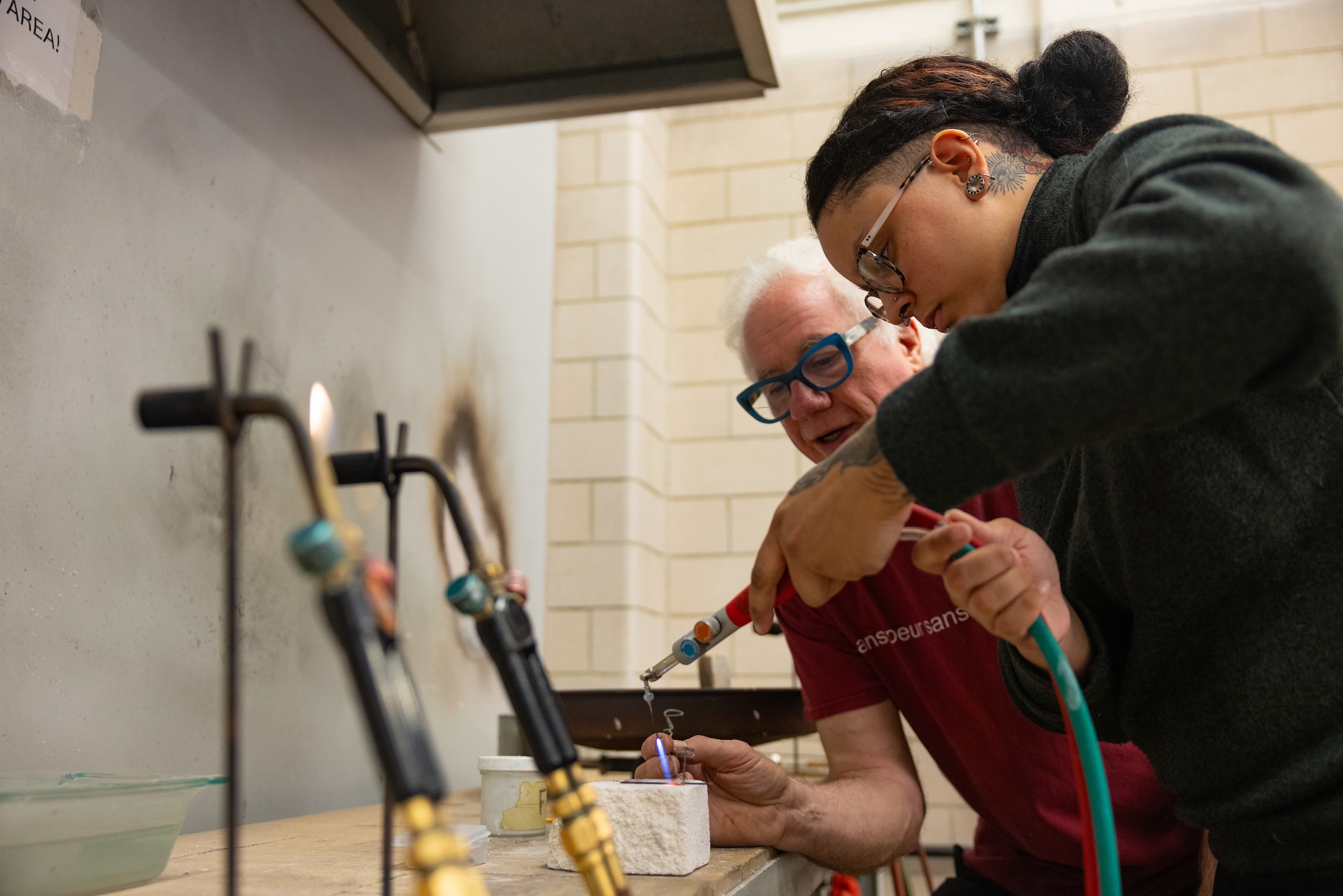
The jewelry/metals program offers a wide variety of traditional and non-traditional approaches aimed at promoting a broad spectrum in the technical and conceptual development of artwork. Our program integrates the various areas of human experience and expression, combined with aesthetic exploration, material and technique, historic references and personal experiences as specific points of reference for artistic creation. The focus of the curriculum is on problem solving, creative thinking, and the development of skills which relate to the different approaches artists and designers have toward their disciplines. Additional educational opportunities are provided through workshops, lectures, visiting artists, and field trips to museums, artist studios, and exhibitions.
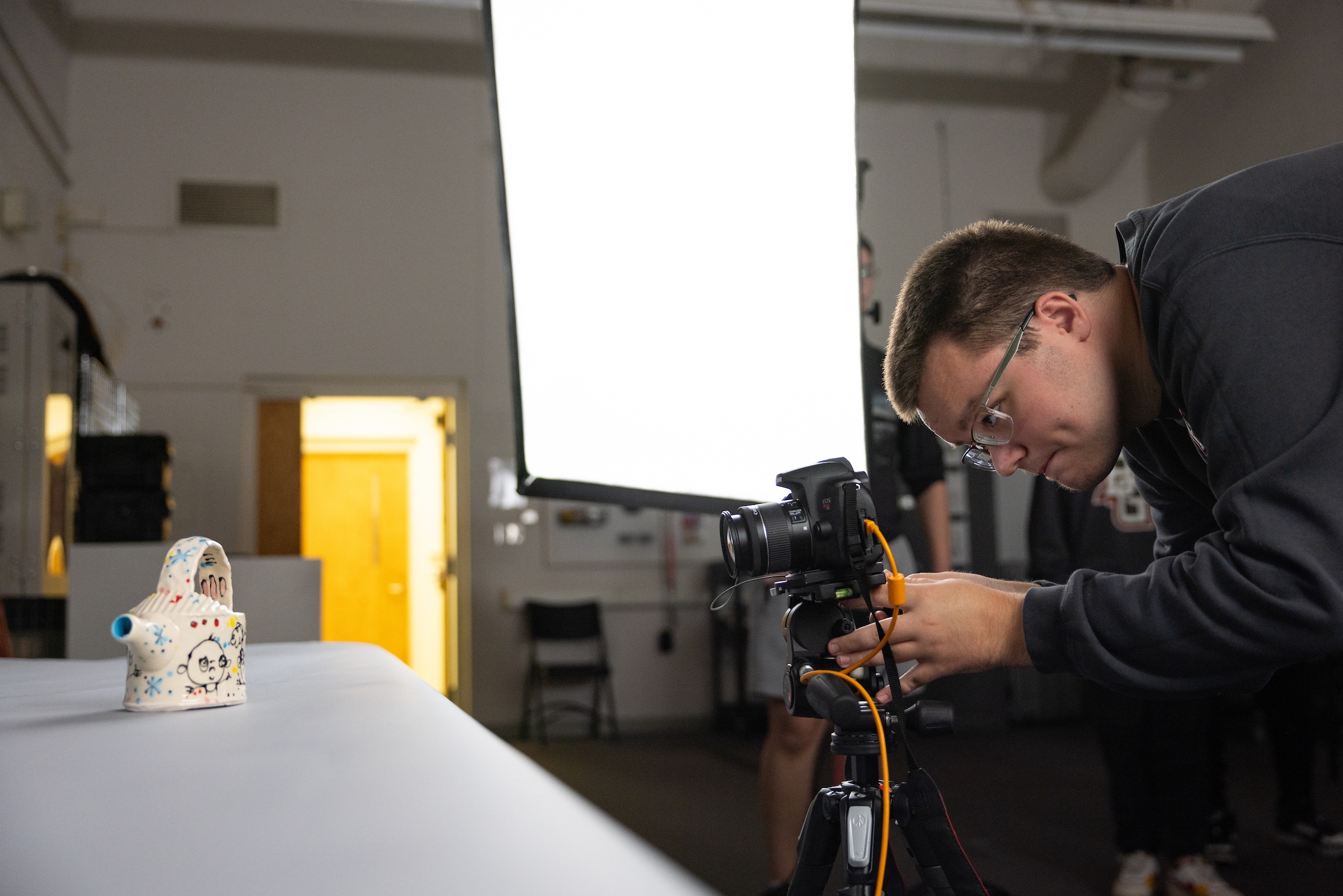
The photography curriculum emphasizes proficiency in analog and digital production. At the introductory level, students are introduced to 35 mm film cameras, darkroom printing fundamentals and photographic history. They develop critical thinking skills through critiques, and are introduced to contemporary trends. At the intermediate and advanced levels, students are offered a selection of courses to further deepen their technical skills and awareness of contemporary practice. Students explore color film, digital output, medium and large format film cameras, and alternative processes. With this broad base, students develop a viewpoint from which to make informed and passionate choices by which a subject is best expressed. Weekly discussions, technical demonstrations, critiques, visiting artists, lectures, and field trips challenge and support students’ ongoing research that culminates in the production of a body of work for their capstone project, the BFA Senior Thesis Exhibition.
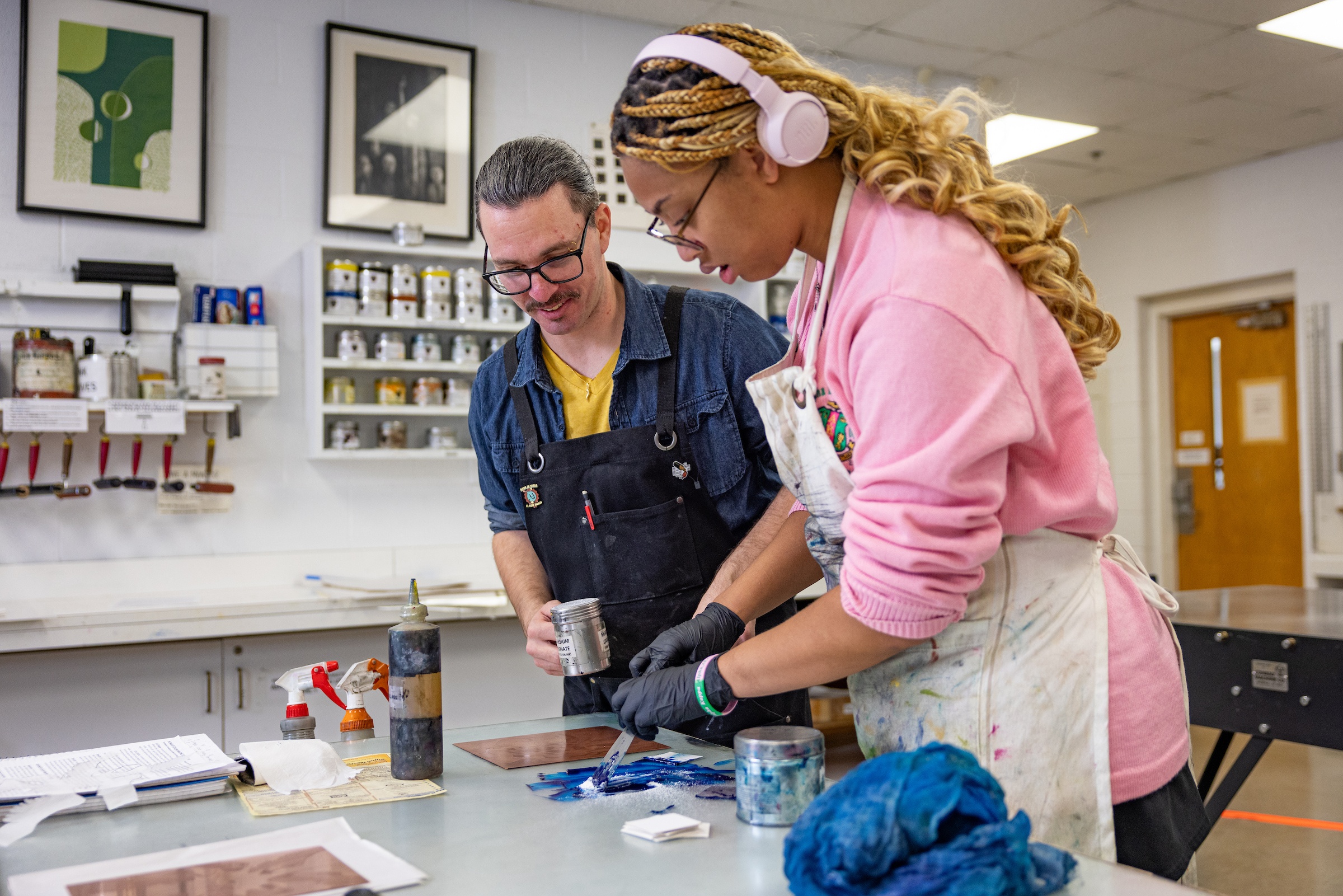
The printmaking program introduces students to a wide range of techniques and processes with an emphasis on the development of critical thinking and an individual artistic vision. Contemporary printmaking has evolved into an interdisciplinary medium, combining traditional and alternative processes that integrate print with other studio disciplines, such as painting, fibers, ceramics, and digital arts. With the recent movement toward non-toxic materials, digital imaging, and photographic processes, printmaking remains an exciting and ever-changing field.
The program offers coursework in relief and monoprint, intaglio, lithography, and screenprint, all of which include traditional as well as contemporary practices. In consultation with an adviser, print students plan an individualized degree program that provides a thorough grounding in a range of print media, with additional advanced level studies in a specialized area of interest.
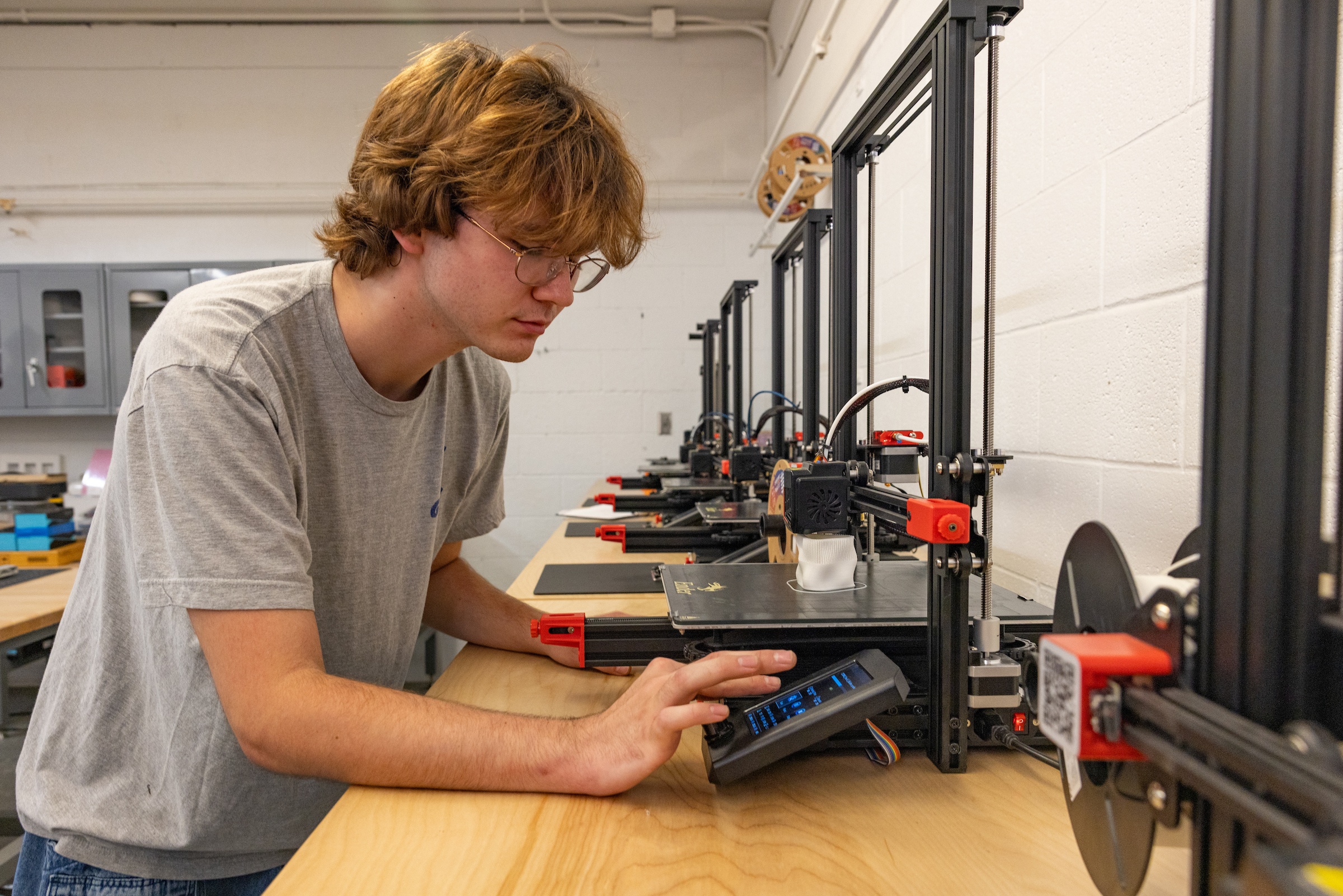
The sculpture program is an intermedia program supporting a broad range of approaches to making with an emphasis on visualization and realization. The program supports curriculum towards a BFA in studio art and a minor in product design, with a strong professional practices component. Our entry level courses emphasize 3D design issues with a hybrid approach that includes both physical hands-on material investigation as well digital exploration. As students develop, they have a variety of intermediate level themed courses to choose from that are offered in regular rotation. At the advanced level students are encouraged to explore and develop their own artistic styles, content and individual approaches to problem solving and making of creative work.
Our course offerings inspire personal creative exploration in the following areas:
- Woodworking
- Metal Fabrication
- Mixed Media
- Fiber
- 3D Scanning and Printing
- CNC Digital Fabrication
- Photogrammetry
Updated: 02/06/2026 07:58PM