

BGSU researcher developing potentially groundbreaking lake water filter through international collaboration
Estimated Reading Time:
The partnership aims to combat harmful algal blooms and protect freshwater resources like Lake Erie
Known internationally for its water-quality research, Bowling Green State University created a partnership that will bring together scientists with a shared goal of developing a groundbreaking water filter for freshwater lakes.
James Metcalf, Ph.D., the Hollingsworth Smith Endowed Chair in biological sciences at BGSU, is collaborating with Fatma Gurbuz, Ph.D., from Aksaray University in Turkey to develop the next generation of water filters to protect lakes against harmful algal blooms.
The collaboration brings together expertise from two continents to address a critical environmental challenge affecting freshwater systems worldwide.
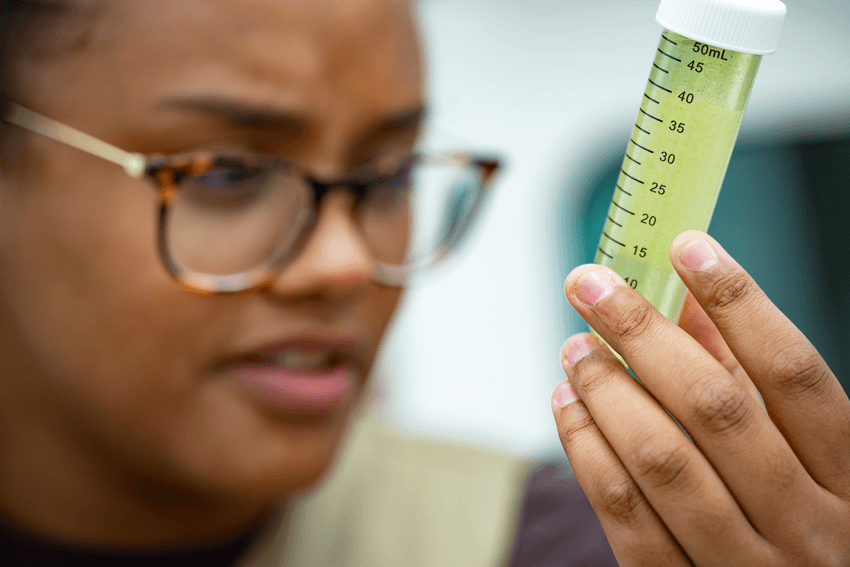
"We're coming up with new ideas and conducting experiments to produce novel materials that remove nitrogen and phosphorus from water, which are major drivers of algal blooms, along with the toxins produced by these blooms," Metcalf said. "We want to use these filters to clean and decontaminate the water."
The research team is focused on creating next-generation filters capable of removing the root causes of algal blooms before they can threaten water quality and public health.
Gurbuz's experience with water contamination issues in Turkey made her an ideal partner for BGSU's ongoing efforts to develop cutting-edge solutions that protect freshwater. Her prior work includes research at a Turkish lake that, like Lake Erie, experienced a harmful algal bloom.
Gurbuz has published extensive research on microcystin – the toxin sometimes produced by algal blooms including in Lake Erie – and has become an expert on technologies that clean water to address a shared problem with the Great Lakes.
"Most of my work is around removing pollutants from water and improving water treatment," Gurbuz said. "We have many lakes in Turkey that become polluted with nitrogen and phosphate, resulting in harmful algal blooms that demand attention."
By using the University's already existing research impact and connecting with expertise elsewhere, the project hopes to address a problem that affects communities worldwide.
"The value is that we can combine Fatma's expertise with expertise here at BGSU to come up with the next generation of filters to remove pollutants and algal toxins from fresh water," Metcalf said.
The project's potential extends far beyond the laboratory.
If successful, the technology could provide a scalable solution for water treatment facilities, offering protection for Ohio's lakes and waterways while creating valuable research opportunities for BGSU students.
"Our hope is that BGSU can create the ultimate lake water filter," Metcalf said. "If this proves successful, we'll need quite a few graduate and undergraduate students to help drive the research forward. With all of us working together, we hope we can make this into a commercial or industrial product that can be applied to water treatment plants, drinking water and wastewater to clean and protect Ohio's natural environment."
Related Stories


Media Contact
Michael Bratton | mbratto@bgsu.edu | 419-372-6349
Updated: 04/30/2026 09:13PM