
BGSU researchers working to make solar panels that can withstand extreme Midwest weather
Estimated Reading Time:
Researchers are tackling a multi-million dollar problem by addressing the strength of solar panels
By Branden Ferguson
In the heart of the Midwest, where the weather can turn from calm to turbulent in an instant, researchers at Bowling Green State University are working to ensure a staple of clean energy can withstand the harshest elements.
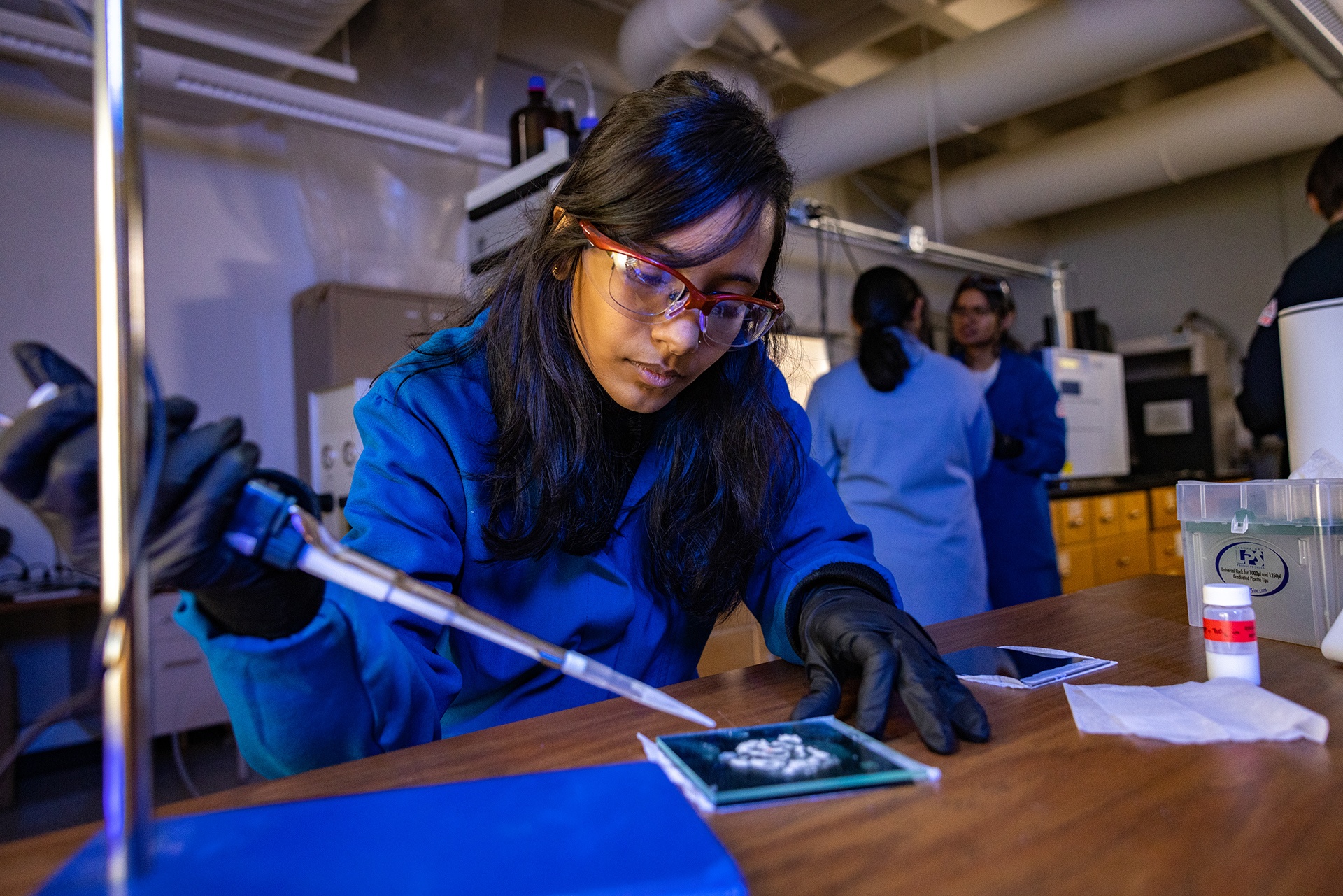
BGSU researchers are working to make solar panels tough enough to withstand hail that is golf-ball-sized and larger, a problem that has plagued the industry and costs an estimated multi-million dollars in damage every year.
The project is supported by an $850,000 grant from the Northwest Ohio Innovation Consortium (NOIC), which established the Northwest Ohio Glass Innovation Hub in 2024 to bring together industry and academia to strengthen the state’s economy through research and innovation.
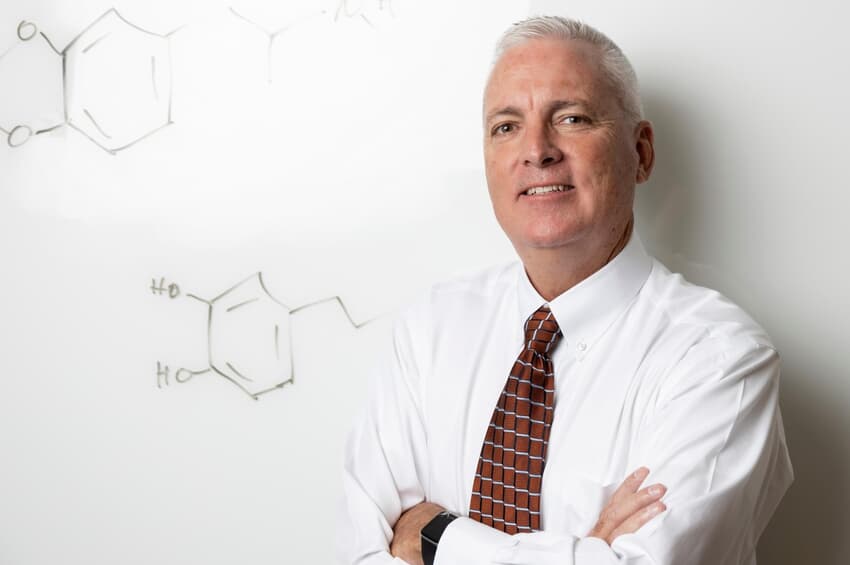
Leading the charge in the solar panel glass research is Joseph Furgal, Ph.D., a leading researcher in the University's world-renowned Center for Photochemical Sciences.
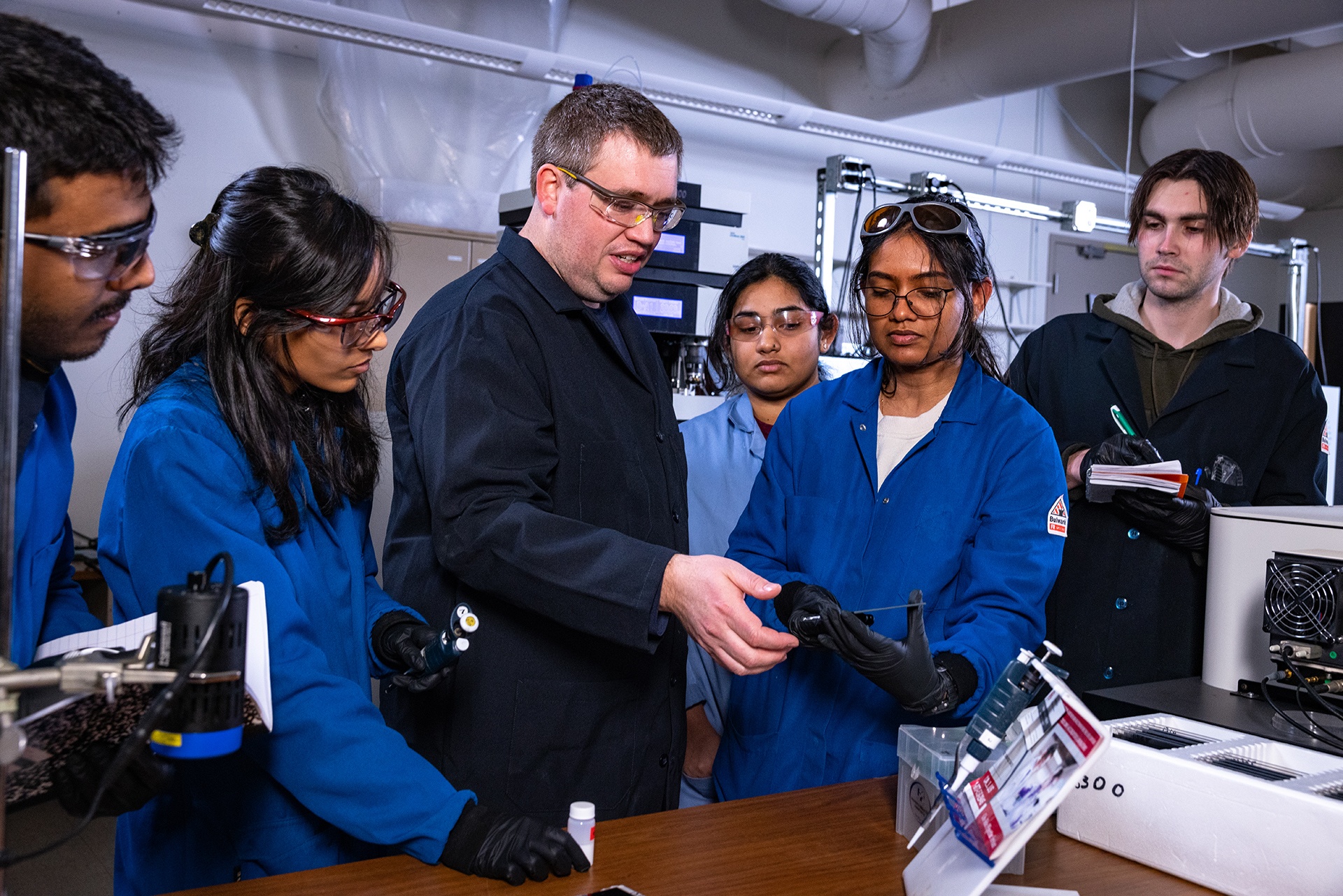
"This research enables longer-lasting solar panels that can withstand extreme weather events, including large hail, limiting the need for replacement panels," said Furgal. "In doing so, we can reduce overall costs for panels and insurance claims, while simultaneously improving energy production."
The project is a collaboration between BGSU, the University of Toledo and First Solar – America's leading solar manufacturer and one of the University's gold-tier partners. By using raw glass and panel samples provided directly by First Solar, BGSU scientists are testing solutions in a lab that could potentially be integrated into commercial solutions in the future.
In addition to Furgal, the BGSU research team includes Jayaraman Sivaguru, Ph.D., a distinguished university professor in the Department of Chemistry; Pavel Anzenbacher, Ph.D., a chemistry professor; Mikhail Zamkov, Ph.D., a physics and astronomy professor; and undergraduate, graduate and post-doctoral students.
The research focuses on the most vulnerable part of a solar panel: the edges. Researchers are deploying a four-pronged attack:
- Healing the surface: Using inorganic treatments to heal microscopic cracks before they grow.
- Advanced armor: Developing hybrid organic coatings to cushion the glass against impact.
- Precision lasers: Utilizing laser edge-delete modifications to remove structural weaknesses.
- High-speed screening: Creating systems to rapidly test how glass breaks and cracks propagate, allowing for faster innovation.
"Stronger glass could be thinner and less dense overall," explains Furgal. "If lower-cost glass can perform at the same level as higher-end products, we could see reduced manufacturing costs and improved energy efficiency across the board."
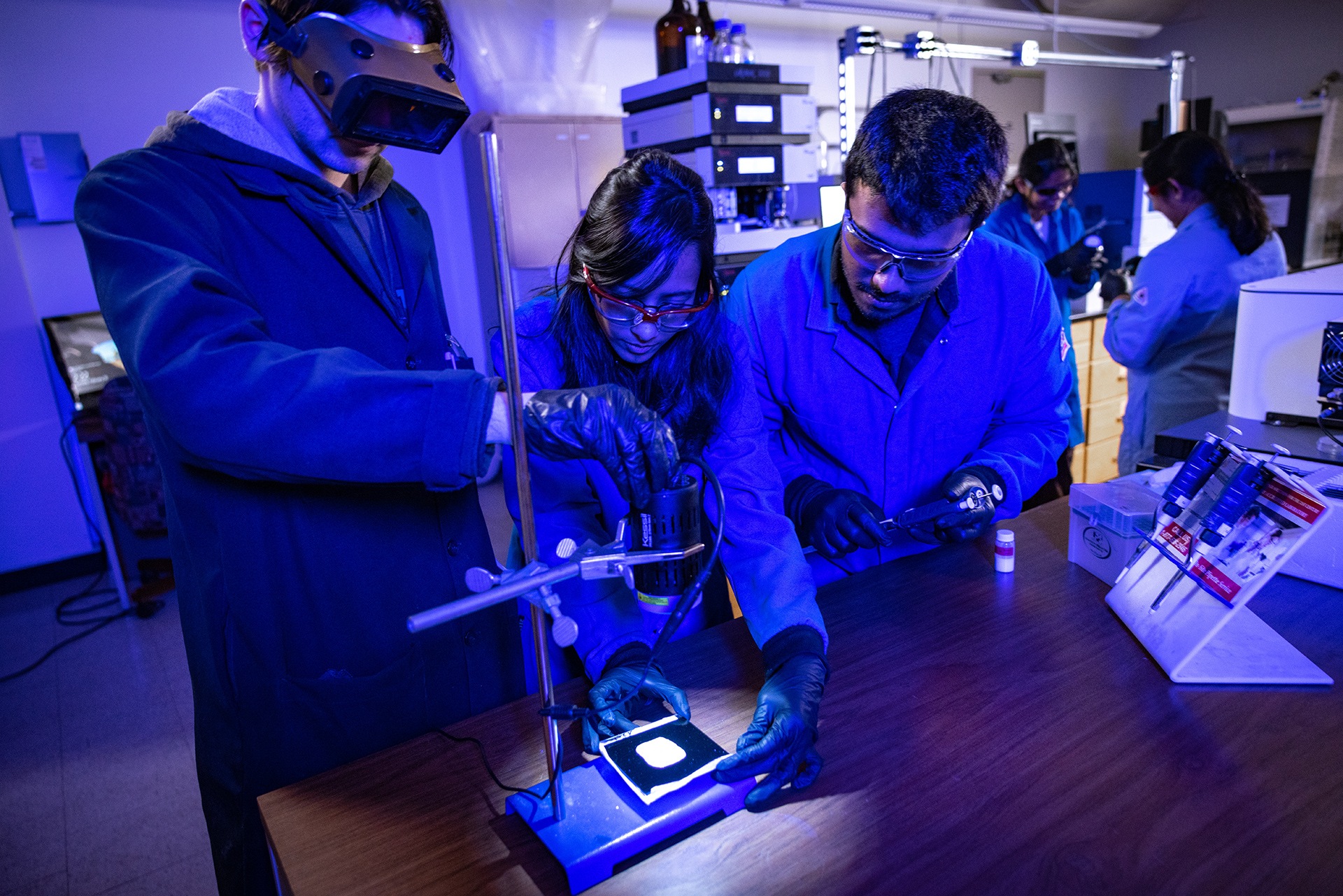
For BGSU students, this research serves as a career launchpad. Both graduate and undergraduate students are working side by side with industry leaders, participating in collaborative meetings and high-level laboratory work, gaining invaluable experience outside the classroom.
"Students are interacting with industry professionals, solving real-world problems and gaining hands-on experience," said Furgal. "Research of this magnitude can lead to internships and job opportunities that define a student's future."
Initial results from the study are expected in late spring or early summer 2026. These findings will be shared with First Solar, potentially setting a new global standard for solar panel manufacturing.
Related Stories
Media Contact
Michael Bratton | mbratto@bgsu.edu | 419-372-6349
Updated: 03/04/2026 06:29PM