
Why study statistics at BGSU in Ohio?
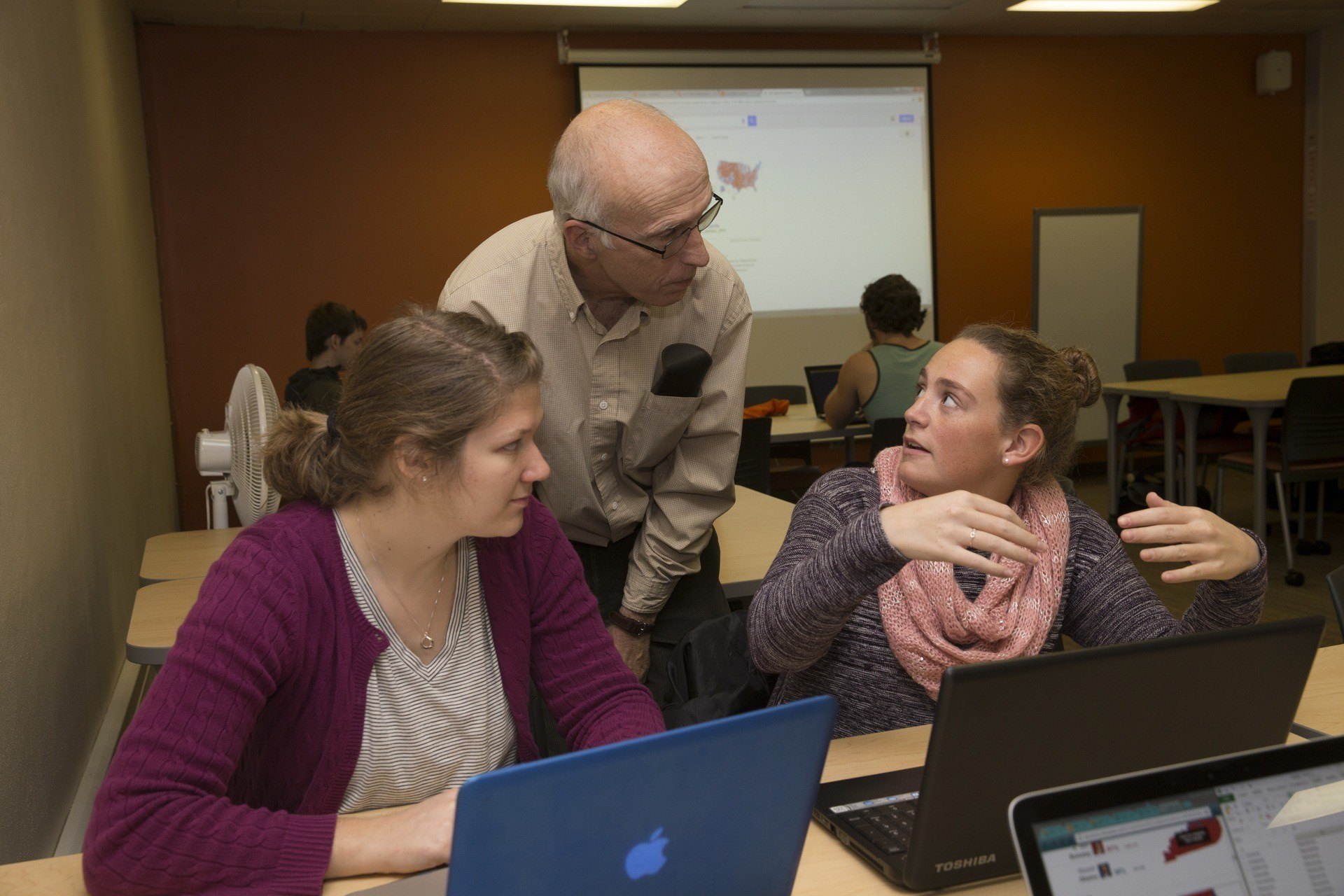
- Personal connections. Small class sizes provide students 1:1 guidance and mentorship opportunities with leading researchers and distinguished faculty who are passionate about guiding your growth.
- State-of-the-art learning environment. Work with specialized statistical software and powerful computing resources in collaborative spaces designed for innovation.
- Employment opportunities. Part-time employment is available for qualified undergraduate tutors in the Learning Commons and the Math Emporium.
- Undergraduate research opportunities. The National Science Foundation offers statistics majors research opportunities through its Research Experiences for Undergraduates program. The BGSU Center for Undergraduate Research and Scholarship offers the possibility of summer research funding.
- Active student organizations. Get involved in groups like:
- Advanced statistics degrees. Many statistics majors go on to graduate studies. BGSU offers an M.S. in applied statistics and a Ph.D. in statistics.
The BGSU Department of Mathematics and Statistics with the College of Education and Human Development runs the largest secondary mathematics education program in Ohio.
#1 public university in Ohio for career prep
The Wall Street Journal
Career – what can you do with a statistics degree?
The skills learned in our statistics degree program – critical thinking, problem-solving and data interpretation – are transferable across industries, providing career security in a rapidly changing economy.
Careers with a statistics degree offer unique and remarkably diverse opportunities to make a meaningful difference in the world. The explosion of big data, artificial intelligence and evidence-based decision-making across industries has created unprecedented demand for statistical expertise.
Entry-level positions typically offer competitive salaries and rapid advancement opportunities for those who demonstrate strong analytical and communication skills.
Graduates with a statistics bachelor’s degree can pursue roles such as:
- Data scientist. Work at the intersection of statistics, computer science and domain expertise Build predictive models that power everything from streaming movie recommendations to autonomous vehicle navigation systems. These professionals command some of the highest starting salaries in the job market.
- Biostatistician. Collaborate with medical researchers to design clinical trials, analyze drug efficacy and contribute to life-saving medical discoveries. Your statistical analysis could be the key to developing the next breakthrough cancer treatment or understanding the spread of infectious diseases.
- Market research analyst. Help companies understand consumer behavior, optimize marketing strategies and make data-driven decisions that affect millions of customers worldwide. These professionals provide the compass that guides business strategy in an era where customer preferences change rapidly.
- Quality control specialist. Ensure that manufacturing processes meet stringent standards, from automotive safety to pharmaceutical purity. Their statistical expertise prevents defective products from reaching consumers and maintains public trust in essential goods.
- Government statistician. Work for state and federal agencies, such as the Census Bureau and Centers for Disease Control and Prevention. Provide foundational data for major policy decisions.
Students majoring in other disciplines can also sharpen their competitive advantage with a statistics minor or applied statistics minor.
The question isn’t whether you’ll find success with a statistics degree – it’s which of the many exciting paths you’ll choose to explore.
Career paths
- Actuarial assistant
- Biostatistics assistant
- Business analyst
- Credit analyst
- Data analyst
- Economic analyst (entry-level)
- Intelligence analyst
- Machine learning assistant/Junior data scientist
- Research analyst
Quick Facts from the Bureau of Labor Statistics
Average median salary for statisticians is 65% higher than the median average for all occupations in the U.S
Curriculum
The Bachelor of Science in statistics at BGSU provides a comprehensive foundation for students seeking a statistics degree that combines mathematical rigor with practical applications. The curriculum prepares graduates to use statistical methods in business, industry, government and research settings.
The program requires 34-36 credit hours in major coursework. Begin with calculus and linear algebra fundamentals, then advance to core probability and statistics courses.
Students complete four electives courses – at least two from applied statistics and two from mathematics – allowing specialization in areas such as regression analysis, experimental design, data mining or statistical learning.
The curriculum integrates broader educational frameworks, including:
- 36 credit hours of BG Perspective requirements covering humanities, natural sciences and social sciences
- Arts & Sciences requirements, including world languages and a multidisciplinary component.
A minor is also required.
Sample courses
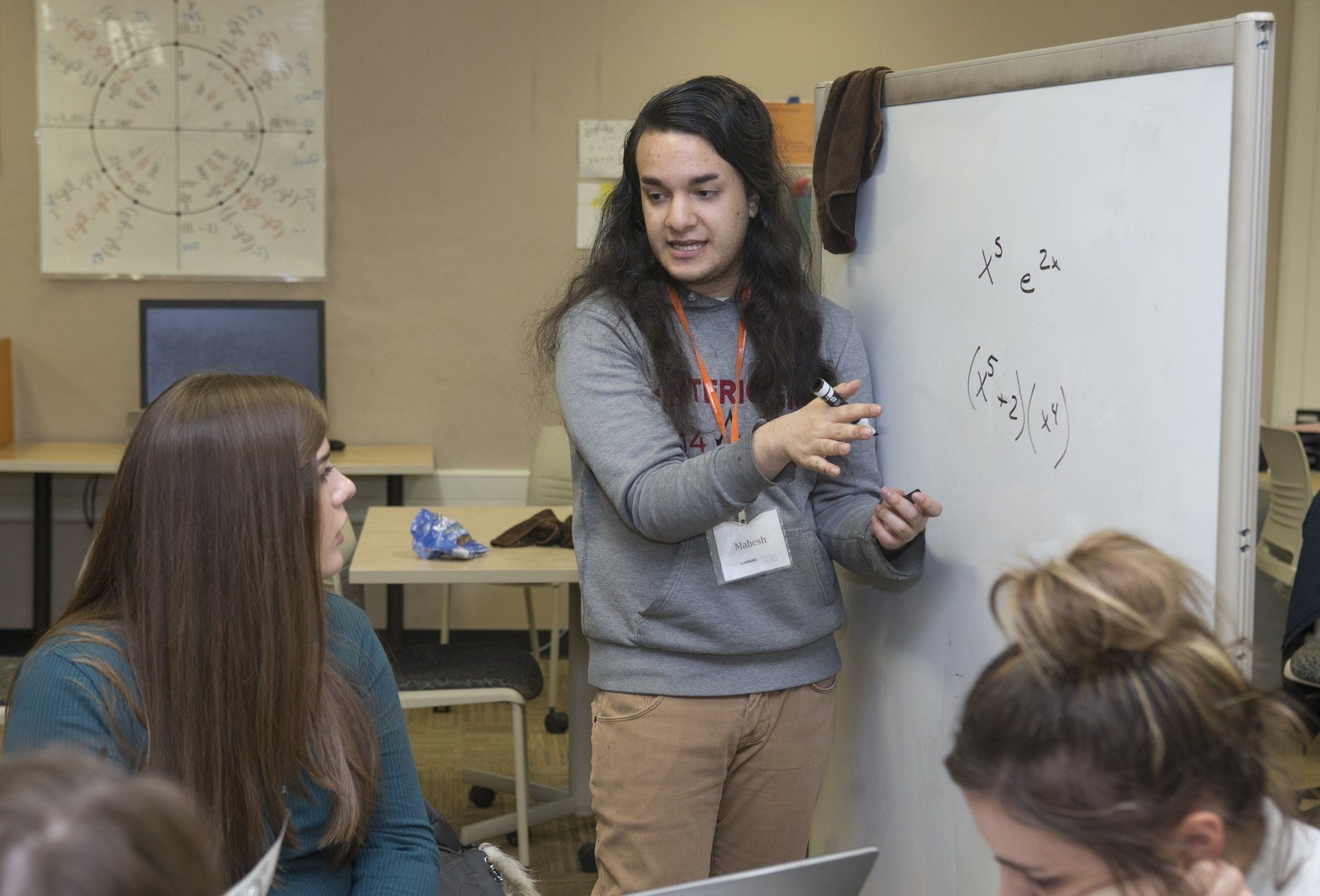
- Calculus and Analytic Geometry
- Linear Algebra
- Probability and Statistics
- Regression Analysis
#1 university in Ohio – big or small, public or private – students would choose again
The Wall Street Journal

The Bachelor of Science in statistics program is part of the Department of Mathematics and Statistics in the BGSU College of Arts and Sciences.
Updated: 09/03/2025 12:59PM