
BGSU to co-lead cutting-edge aging research initiative with Ohio State, Purdue
Estimated Reading Time:
The Center for Aging Families will bring together scholars at BGSU, Ohio State and Purdue to foster innovative population science
In recognition of the nationally renowned research on aging performed by scholars at Bowling Green State University, the National Institute on Aging selected the University to be among the few to receive a six-year grant award that will fund the Center for Aging Families.
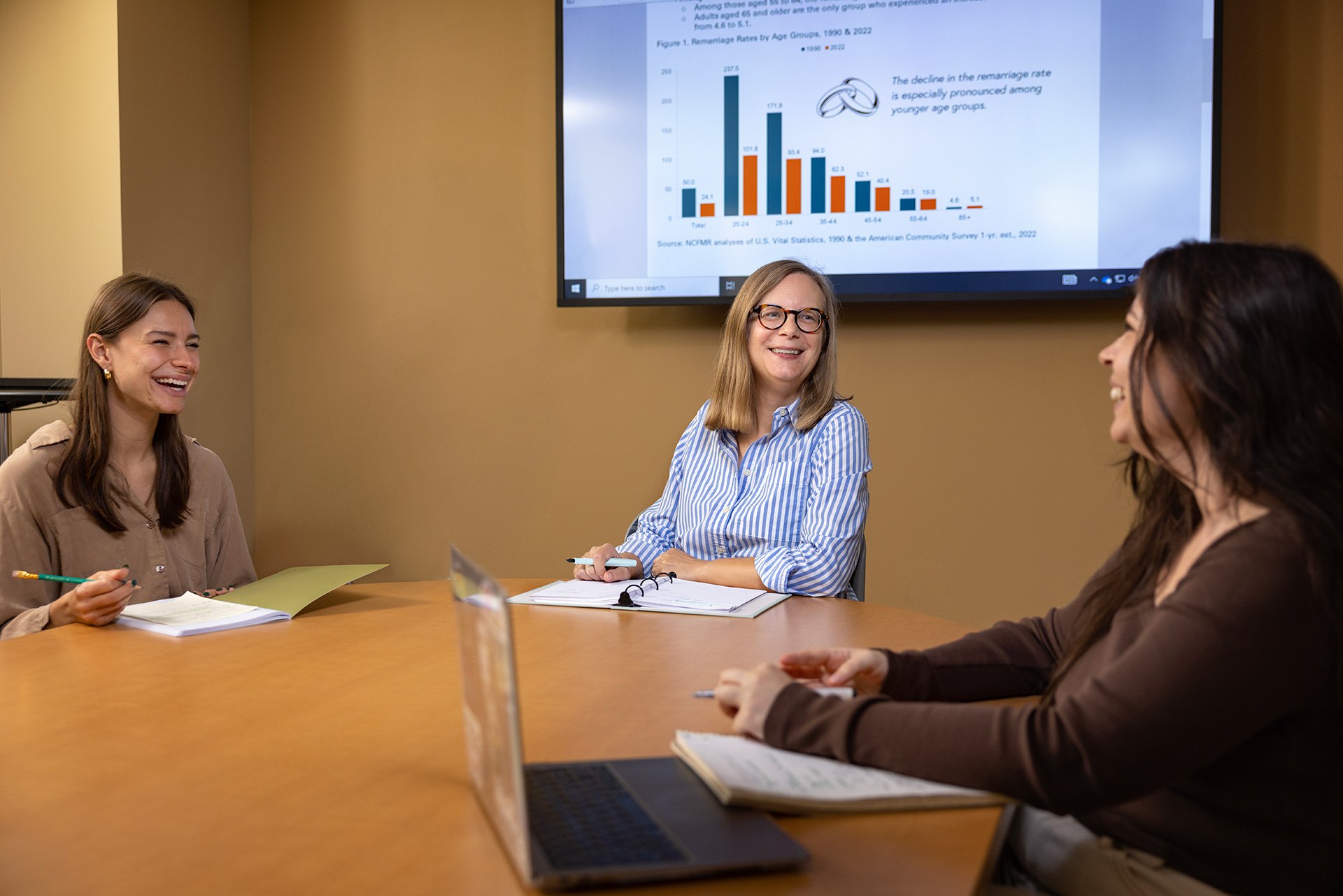
The Center’s stated mission is to advance cutting-edge science on the United States population through the prism of the family by bringing together scholars at three Midwestern research institutions and providing seed funding competitions for facility affiliates, including nine BGSU faculty members.
Funded by an NIA/National Institute of Health P30 center grant award and co-directed by BGSU sociology professor Susan Brown, Ph.D., the Center will bring together many of the top scholars in the field of aging research, including Brown's fellow principal investigators, Hui Liu at Purdue University and Sarah Hayford and Rin Reczek at Ohio State University.
Brown said the collaboration between three like-minded universities brings together experts from different areas to provide relevant research into aging, a topic that affects everyone.
“Our broader theme is that if we want to truly understand how people are experiencing aging – and just as importantly, how the broader population is aging – we have to pay attention to the role of the family,” Brown said. "When we bring together faculty at three institutions who are working on these topics, the goal is to really make something that’s greater than the sum of its parts and push the field forward in new ways.”
The BGSU Sociology Department, home to a highly ranked doctoral program, has become a national leader in the field in large part because of its innovative research, which has served as the backbone for informing policy decisions across the U.S.
In 2007, Brown co-founded the National Center for Family and Marriage Research with Wendy Manning, Ph.D., which has led to groundbreaking research, including findings by Brown on “gray divorce” that made national news in late 2024 and led to an invite to appear on Oprah Winfrey's podcast.
With an even greater collaboration between researchers, the Center for Aging Families will allow scholars to both receive support and more chances to connect with other experts. Lauren Newmyer, Ph.D., an assistant professor of sociology at BGSU, is among the first two emerging scholars funded by the Center with a two-year research award and grant writing guidance from senior faculty affiliate mentors.
“This will promote synergy across faculties, which really helps BGSU in particular because this center gives our faculty the opportunity to make connections with scholars at other universities in a large array of disciplines,” Brown said. “When they can connect with other faculty, they can really take their scholarship to the next level and generate even more interdisciplinary scholarship.”
By providing support for high-level study into family structures, Brown said the Center for Aging Families can better understand the topic and identify how society is changing.
Brown cited the example of kinlessness, in which an older adult has no spouse and no children, which can mean a dearth of support as they age. Currently, a statistically significant 6% are deemed kinless, but that number is expected to rise in future years.
Because family is often a key pillar of support for older adults in the U.S., Brown said studying the evolution of the family structure will be critical.
“Today's young adults will be tomorrow's middle-aged and older adults,” she said. “As we see more complexities in families – like increases in delaying or foregoing marriage or deciding to have children – that’s reshaping the constellation of family membership and is likely to have ramifications for how people experience aging once they become older adults themselves.
“Taking care of society’s vulnerable members is the responsibility that all of us share. As we see changes in the ability or effectiveness of family structures to do that care work, we have to rethink society’s role is in providing care.”
With scholars at three universities working in tandem, Brown said there is good reason to believe the Center for Aging Families can produce rigorous research that helps everyone better understand the human condition.
“The funding agencies realize collaboration is often where the cutting edge lies,” Brown said. “For people to really be innovative, we often have to get out of our own silos and reach out to others, and that’s exactly what the Center offers.”
Related Stories

Media Contact
Michael Bratton | mbratto@bgsu.edu | 419-372-6349
Updated: 11/20/2025 04:24PM