
Biology students at BGSU research key aspect of Ohio wetlands implementation
Estimated Reading Time:
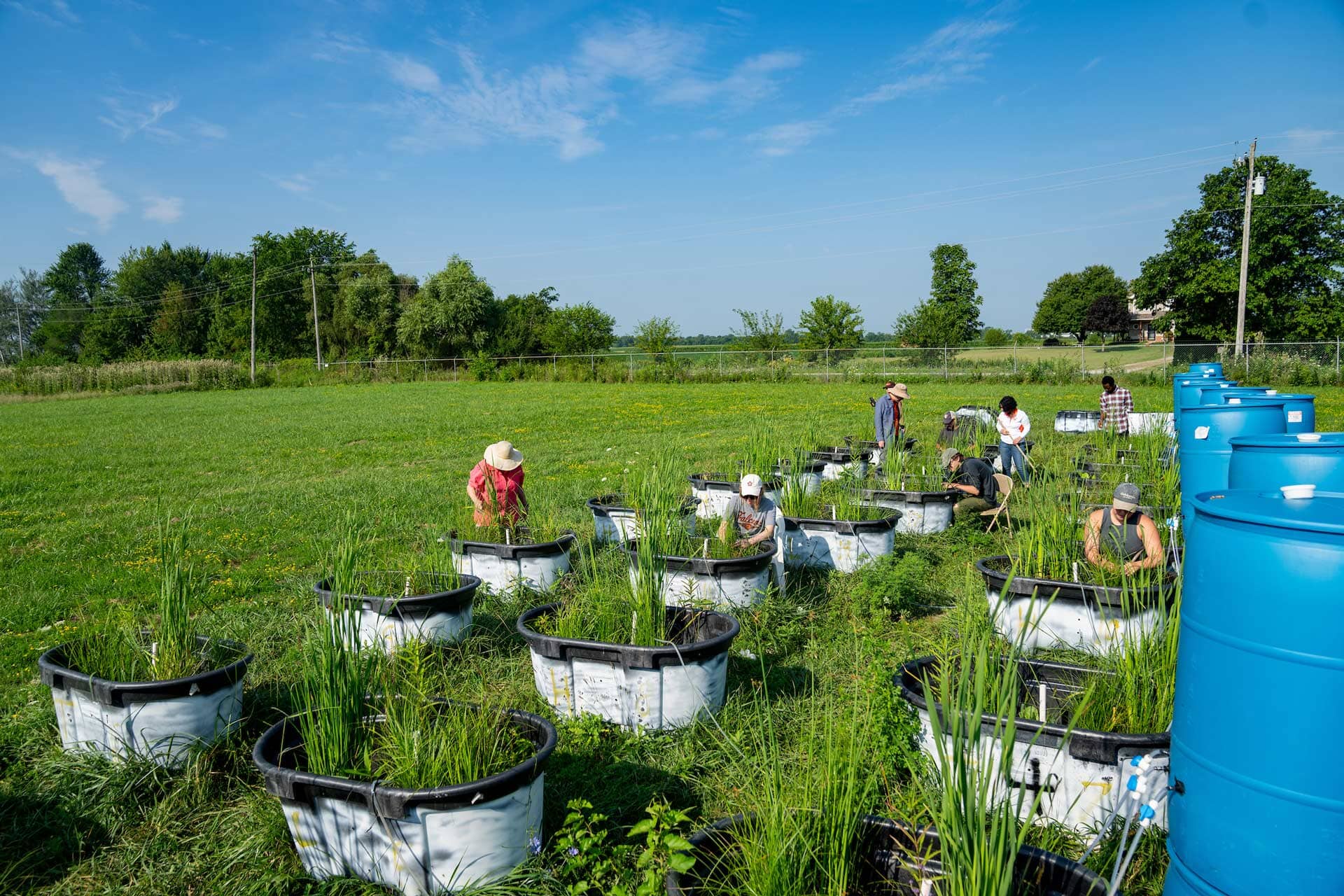
Students are conducting wetland tank experiments at the BGSU Ecology Research Station, contributing valuable data to Ohio water quality research
Just off campus at Bowling Green State University, biology students have turned the University’s Ecology Research Station into dozens of mini experiments that could aid the state of Ohio’s efforts to mitigate harmful algal blooms in Lake Erie.
The site is playing host to students helping conduct two wetland tank experiments, which together house more than 450 individual pots and represent many common plant species one might expect to see in a wetland in the Great Lakes region.
Through the in-depth study of each of these plant species, the effects of adding dredged sediment from the Maumee Bay on their establishment and their ability to absorb or trap nutrients, namely phosphorus and nitrogen, BGSU students are playing a key role in understanding how Ohio’s wetlands can be even more effective.
The state of Ohio’s H2Ohio initiative has made significant investments into wetlands, which are sometimes compared to human kidneys for their ability to filter water. Plant stems and leaves within wetlands often slow water flow from places like farm fields, allowing nutrient-laden sediment to settle while plants and microbes in the soil absorb phosphorus and nitrogen that can cause harmful algal blooms in Lake Erie.
In one of the two projects, which is separate from H2Ohio but related to the overall mission, BGSU biology students are studying how different plants behave in wetland environments, research that could help identify which species are most effective at absorbing nutrients before they reach larger water systems.
“H2Ohio has restored and built all of these wetlands, and the goal is to have them serve as ‘nutrient sinks’ for runoff or rivers to flow into,” said BGSU graduate student Trevor DeGroote, who runs the operation at the BGSU Ecology Research Station with mentorship from BGSU professors, including Drs. Helen Michaels, Angelica Vazquez-Ortega and Kevin McCluney.
“Because plants are a large part of that, we want to understand which plants do better at nutrient capture and where they do well based on their different hydrology and traits that help them mitigate the amount of nutrients that get into Lake Erie.”
BGSU has been a steady force for water quality research within the larger region. Researchers are contributing to statewide collaborations like H2Ohio, the Harmful Algal Bloom Research Initiative (HABRI), an Ohio Department of Higher Education venture funding one of the research projects, and the Ohio Department of Natural Resources' Office of Coastal Management, which is funding the other.
For students, there exists ample opportunity at BGSU to not only learn about water quality initiatives, but also contribute to them during their undergraduate studies.
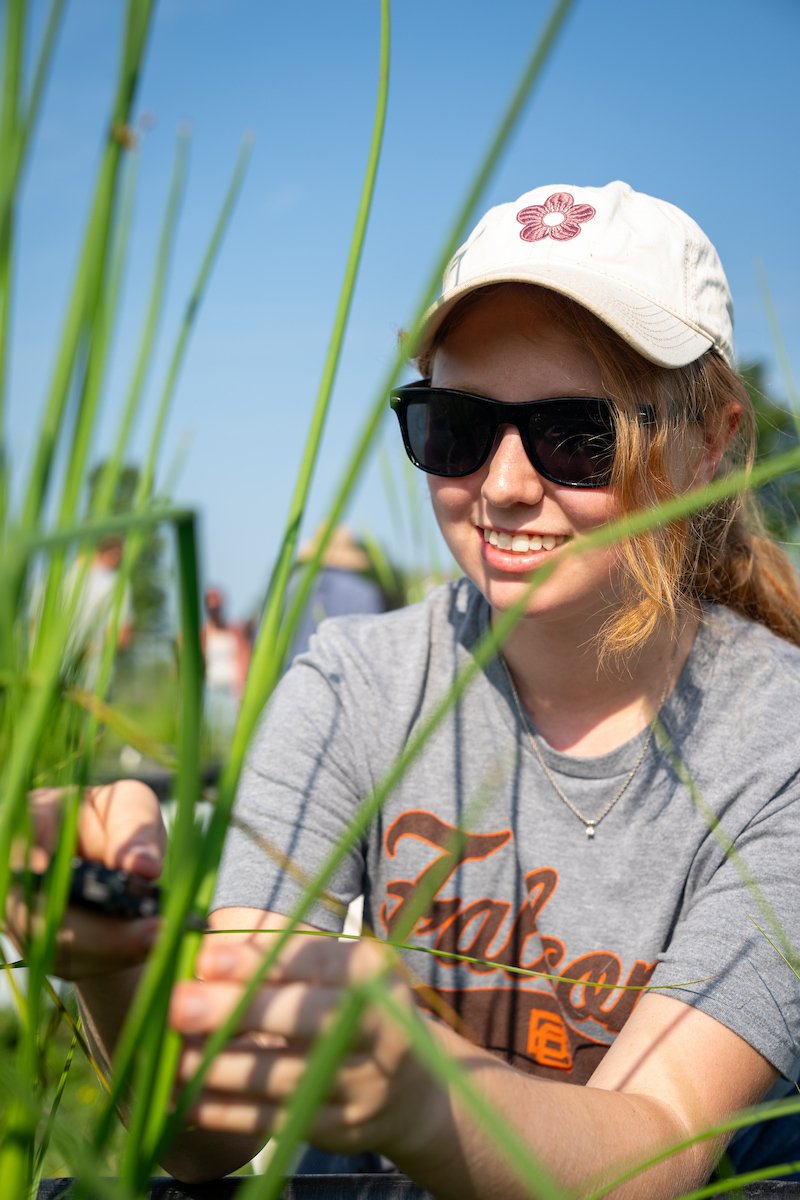
Senior biology student Katana Kerch said contributing to the project gave her a valuable set of skills as she prepares to conduct research as a professional.
“You don’t have to have any experience, but they’ll take you out in the field and train you, which gave me a lot of field skills in the couple of years I’ve been doing this,” she said. “Field work has been awesome and really confirmed that this was going to be my career in the future. This was my foot in the door, which has been really awesome that BGSU does this for students.”
The process of regularly contributing to a research project often gives students a different, more complete picture of what a career in science actually looks like.
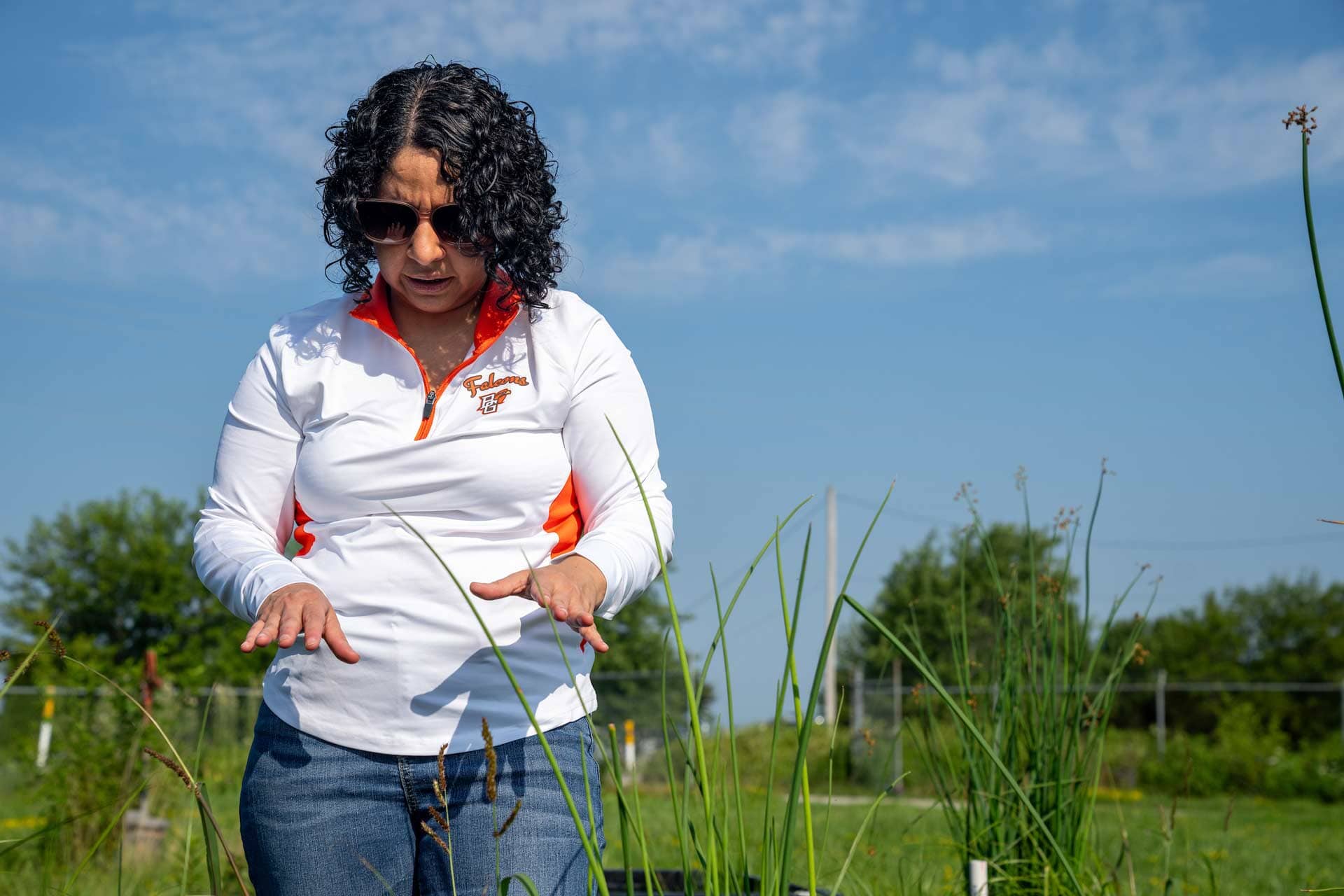
Gabrielle Phillips ’24 said getting involved with research as a BGSU undergraduate gave her a new understanding of her major through experiential learning.
“I’ve always done my best learning by being hands on, so participating in different research projects, whether it was with H2Ohio, HABRI or the different labs here, it provided me with that experience,” Phillips said. “I had always heard about wetlands, but I was actively doing experiments and getting valuable hands-on knowledge of how the ecosystem functions and how different variables affect the ecosystem.”
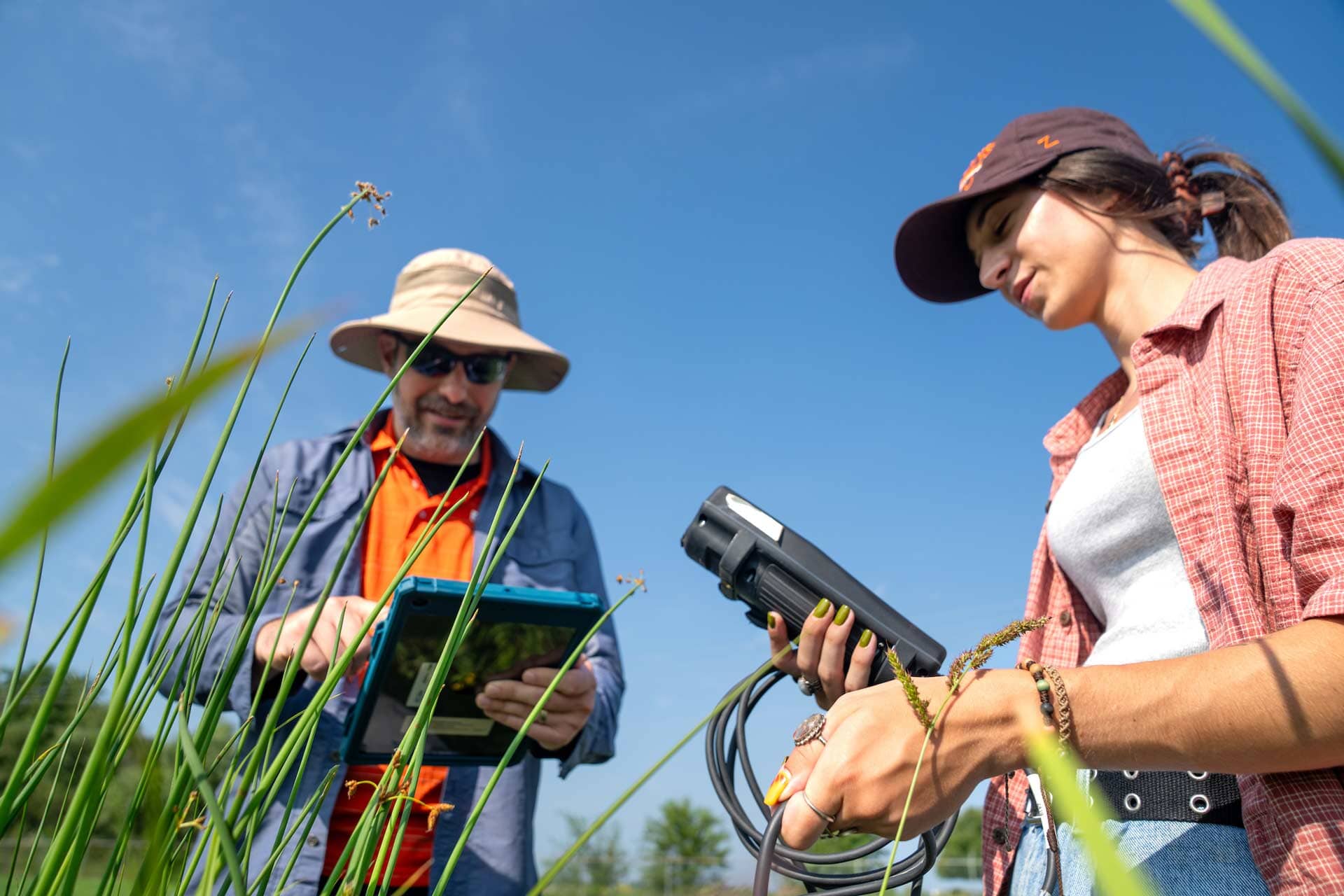
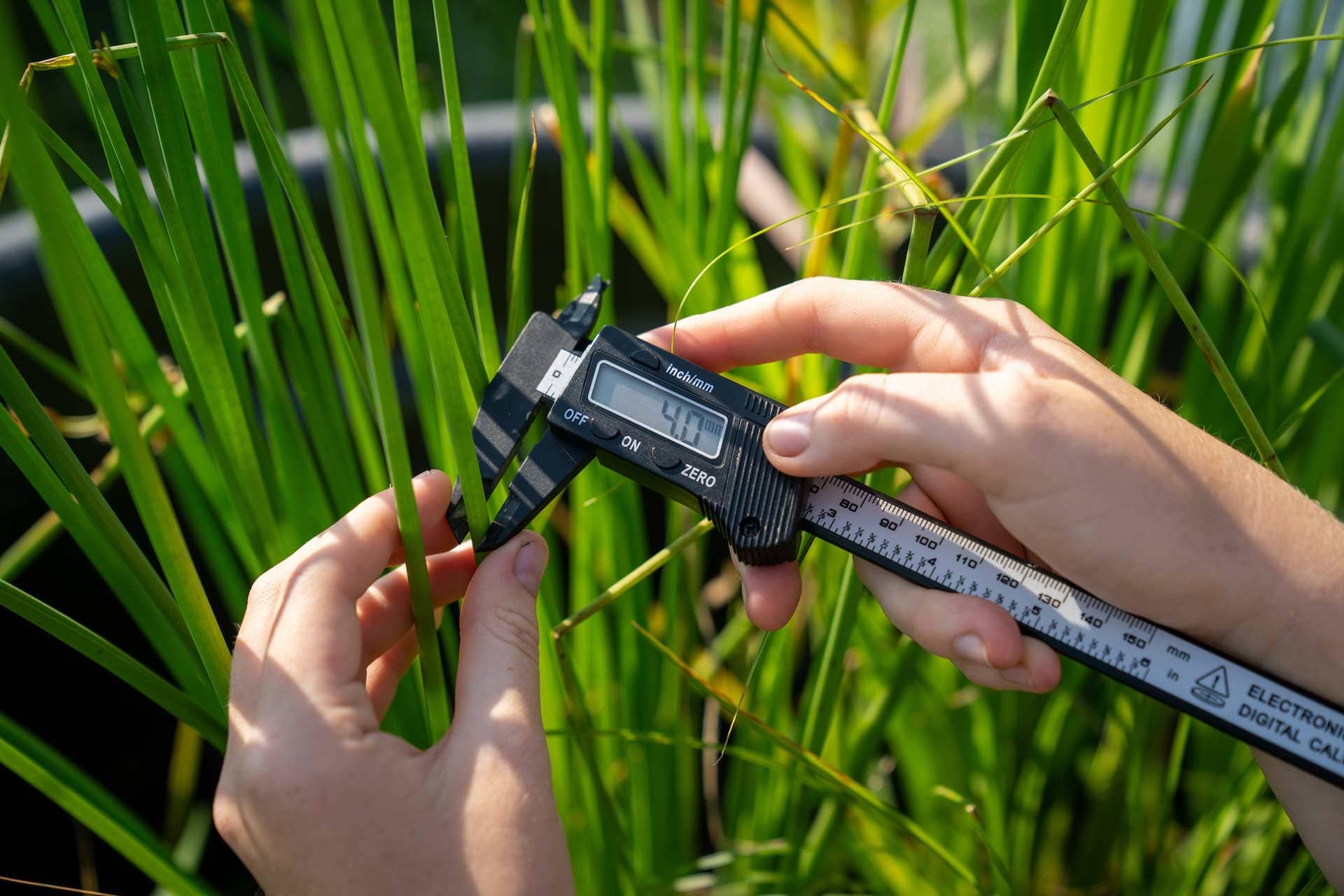
As part of the wetland tank research project, students regularly track chlorophyll in plant leaves, perform nutrient and root analyses, harvest plants for biomass and prepare them to be analyzed in labs, compiling a data set that will be useful in the creation or rehabilitation of wetlands.
The overall mission is to achieve a better understanding of how certain plant species can contribute to mitigating agricultural runoff and how to best support their establishment.
“All of this data will give us a good idea of how well the plant is taking up nutrients – both how much of a nutrient was in the water, and how much the plant took out,” Kerch said. “That gives us a clue of how effective each plant is within a wetland.”
Beyond collecting valuable data that further informs initiatives to protect one of Ohio’s most important natural resources, the experience also gives students meaningful career experience and the chance to contribute to a project of value as undergraduates.
“The reason these are such large and ambitious projects is because we have so many undergrads who are passionate about the projects and are willing to help,” DeGroote said. “A lot of them have taken on these projects as one of their own, which has been really cool to see.”
Related Stories



Media Contact
Michael Bratton | mbratto@bgsu.edu | 419-372-6349
Updated: 04/30/2026 09:14PM