
Prevalence of Grandparenthood in the U.S.
Family Profile No. 03, 2018
Author: Huijing Wu
In 2014, approximately 62 million adults aged 50 and older were grandparents, according to the Survey of Income and Program Participation (SIPP). The SIPP is a nationally representative household-based survey and is designed to provide comprehensive family and social information on individuals and families. Because the SIPP gathers information on all individuals who lived in a surveyed household, and directly asks respondents if they are a grandparent, it is one of the few surveys that identifies non- resident grandparents. In this profile, we identify the prevalence of grandparenthood among adults aged 50 and older and examine their demographic characteristics including race/ethnicity, educational attainment, and current relationship status. This profile, an update of FP-14-14, is the third in our series on grandparents in the U.S.
Race/Ethnicity and Grandparenthood
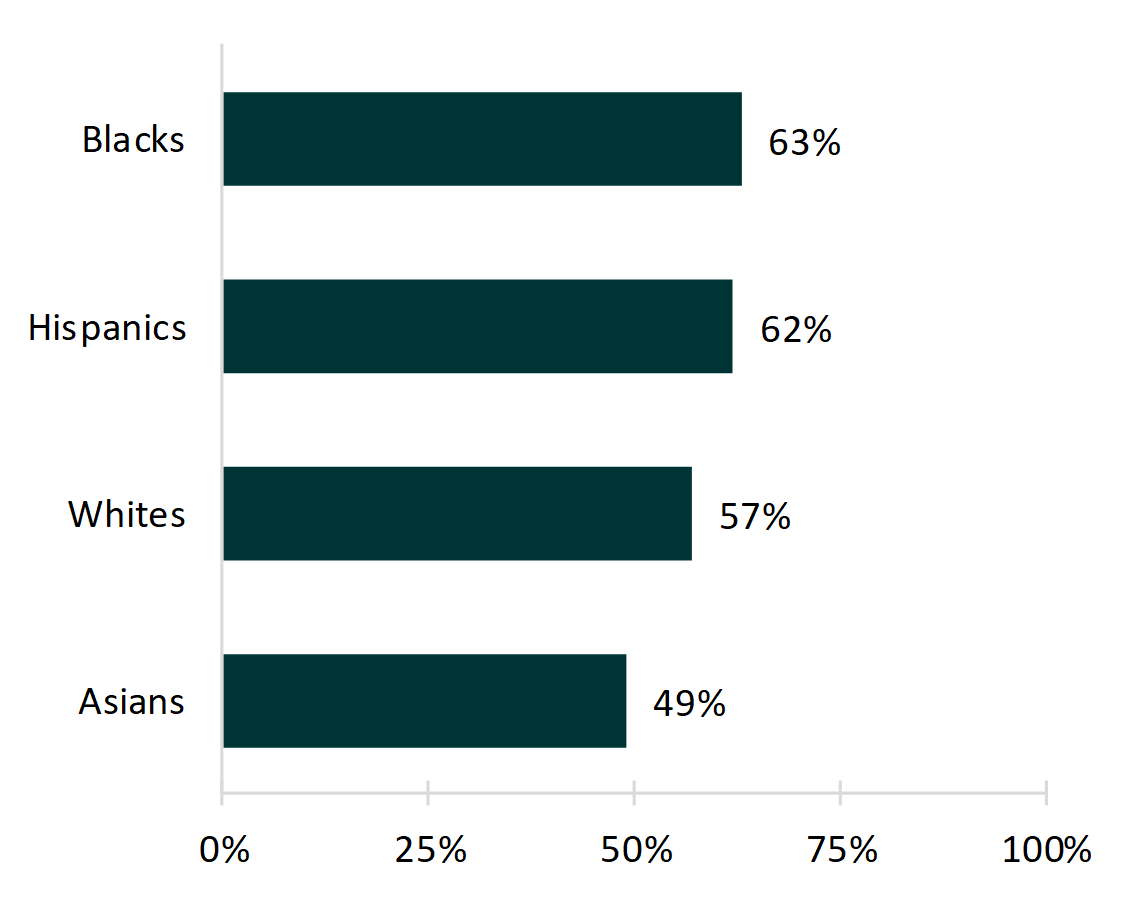
- Among adults aged 50 and older, a greater percentage of Blacks and Hispanics were grandparents than those of other racial/ethnic backgrounds in 2014. Roughly, three in five Black and Hispanic adults were grandparents.
- Asian adults had the smallest share who reported being a grandparent (49%).
Figure 1. Grandparenthood by Race/Ethnicity, 2014
Educational Attainment and Grandparenthood
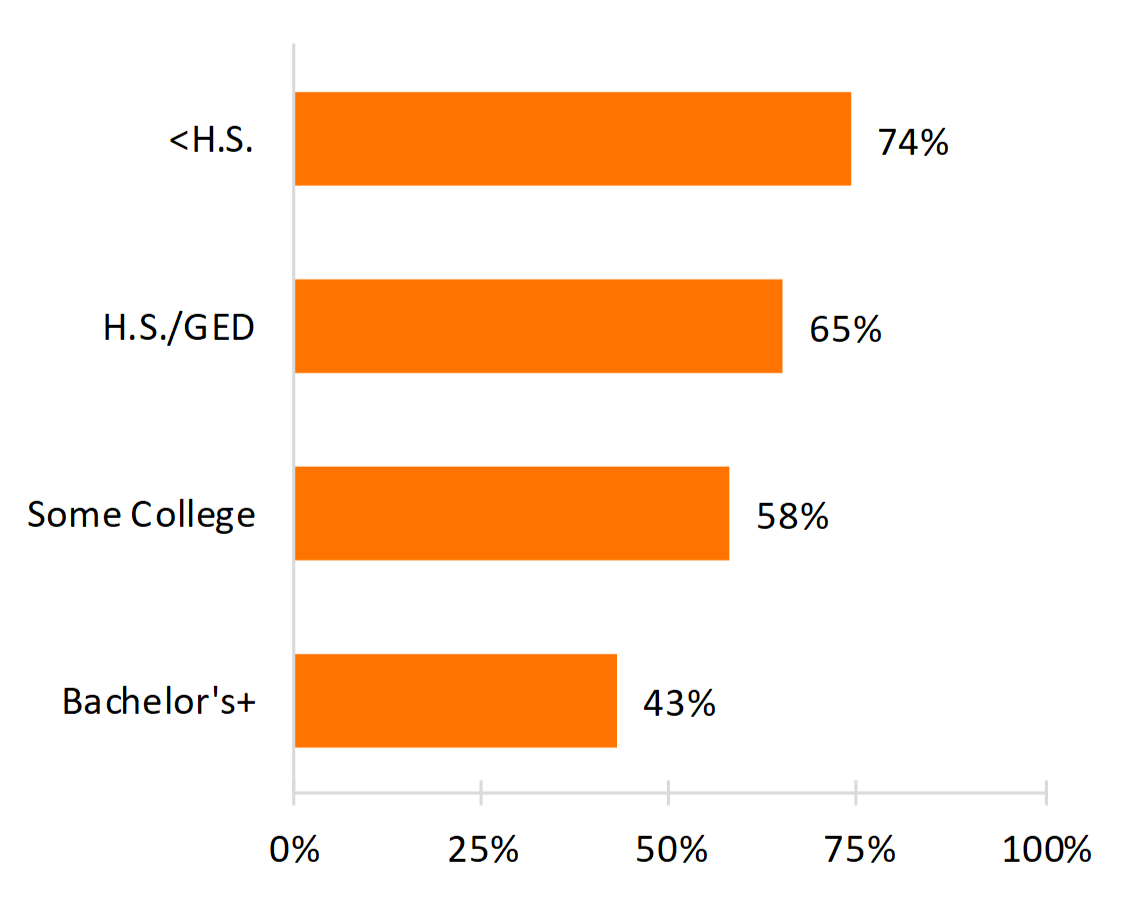
The prevalence of grandparenthood decrease d as educational attainment increased.
- Among those aged 50 or older in 2014 without a high school diploma/GED, three-fourths were grandparents.
- Being a grandparent was least common among those who had at least a Bachelor’s degree (43%).
Figure 2. Grandparenthood by Educational Attainment, 2014
Relationship Status and Grandparenthood
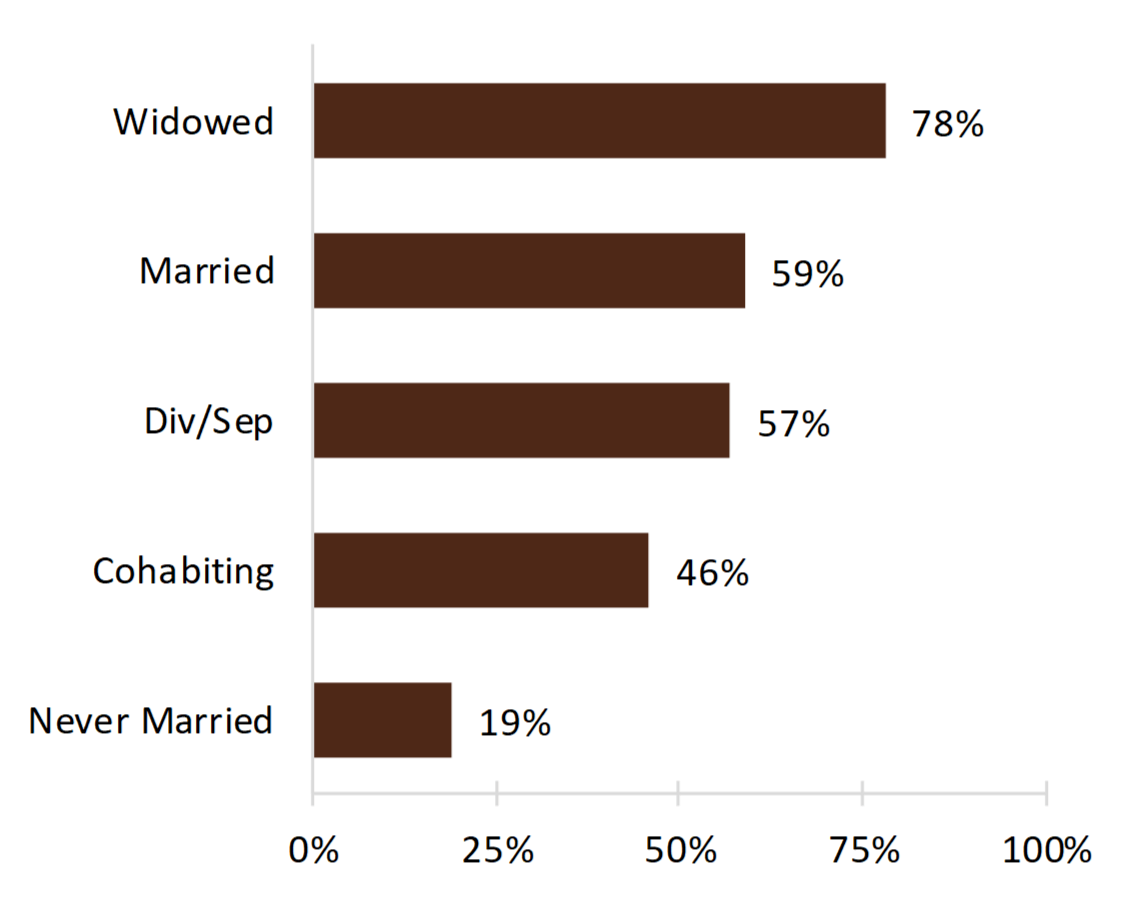
- Being a grandparent was most common among widowed adults, at 78%. This is not unexpected because the widowed are more often older.
- Similar shares of married and divorced/separated adults were grandparents (59% and 57%, respectively). Slightly less than half (46%) of cohabiting adults age 50 and older were grandparents.
- Never-married adults had the smallest share who reported being a grandparent, at only 19%.
Figure 3. Grandparenthood by Relationship Status, 2014
Data Source
- U.S. Census Bureau, Survey of Income and Program Participation, 2014 Panel, Wave 1. https://www.census.gov/programs- surveys/sipp/data/2014-panel/wave-1.html
References
- Stykes, B., Manning, W. D., & Brown, S. L. (2014). Grandparenthood in the U.S.: Prevalence of grandparenthood among adults aged 50+. Family Profiles, FP-14-14. Bowling Green, OH: National Center for Family & Marriage Research.https://www.bgsu.edu/content/dam/BGSU/ college-of-arts-and-sciences/NCFMR/documents/FP/FP-14-14-grandparent-50-plus.pdf
Suggested Citation
Wu, H. (2018). Prevalence of grandparenthood in the U.S. Family Profiles, FP-18-03. Bowling Green, OH: National Center for Family & Marriage Research. https://doi.org/10.25035/ncfmr/fp-18-03.


Updated: 07/08/2026 07:43PM