
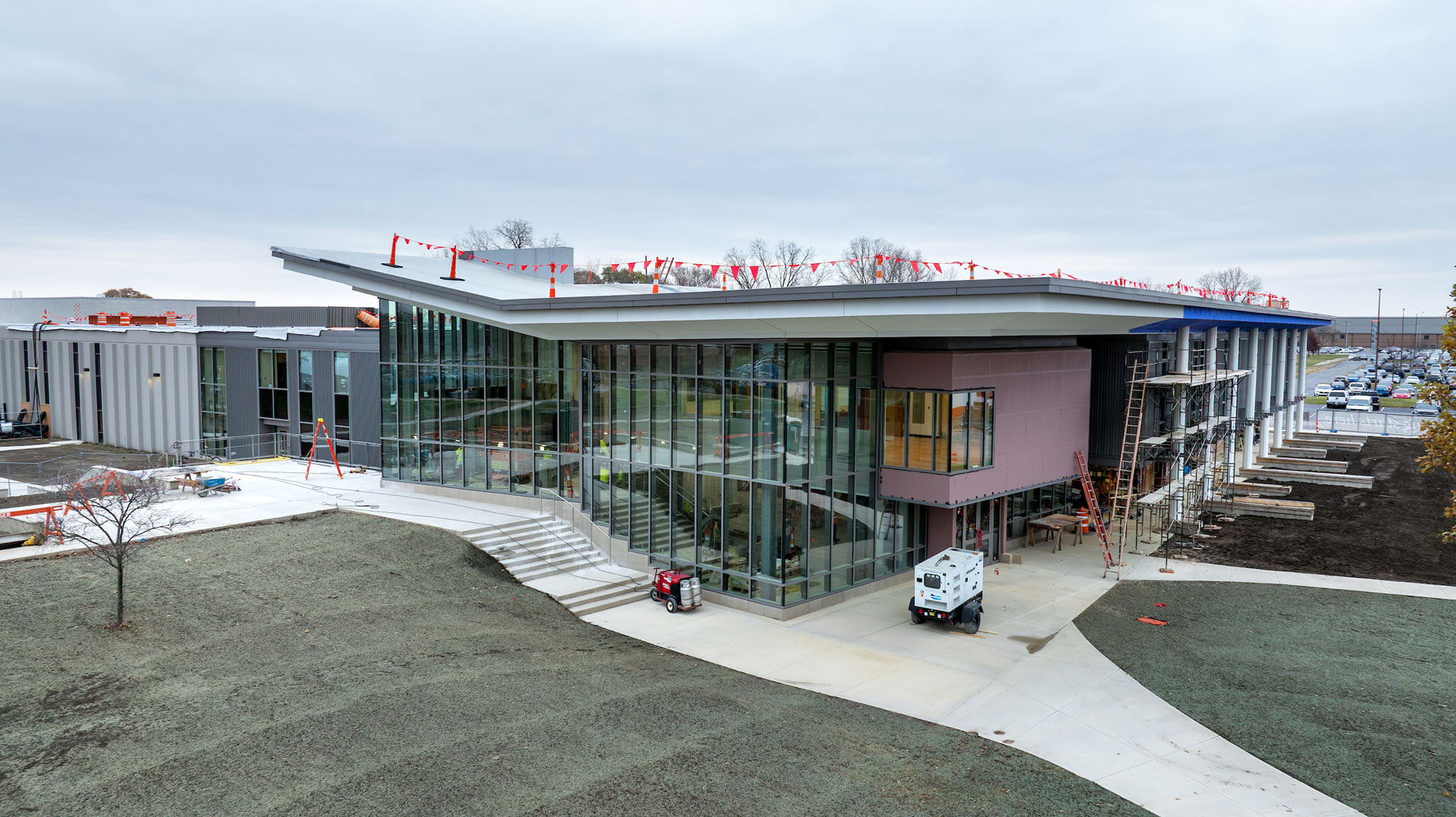
New Engineering and Innovation Center at BGSU set to open for classes in January
Estimated Reading Time:
The labs within the state-of-the-art facility are designed to replicate workplace engineering environments
Bowling Green State University is redefining what it means to be career-ready in engineering, reshaping academic curriculum and investing in new infrastructure and technology to ensure students graduate prepared for jobs in emerging technologies across Ohio.
In January, the culmination of these efforts will be realized with the opening of the University’s new Engineering and Innovation Center, the most modern university engineering lab in the region.
The state-of-the-art facility, which has been under construction since summer 2024, includes seven specialty labs for training on semiconductors, robotics, advanced manufacturing, augmented reality and more.
Engineering education aligned with Ohio’s workforce needs
“What makes our engineering programs unique is how closely they mirror real industry experience,” said Wael Mokhtar, Ph.D., dean of the BGSU College of Engineering and Innovation. “Students aren’t just learning theory, they’re developing hands-on skills with the same state-of-the-art tools and materials they’ll use in their careers.”
Throughout every process – from reimagining degree programs to designing the new Engineering and Innovation Center – Bowling Green has remained laser-focused on industry alignment.
BGSU strategically made every decision to align with Ohio’s workforce needs now and into the future, creating a cohesive, intentional connection between what students learn and the careers they’ll build after graduation.
Hands-on learning built into every program
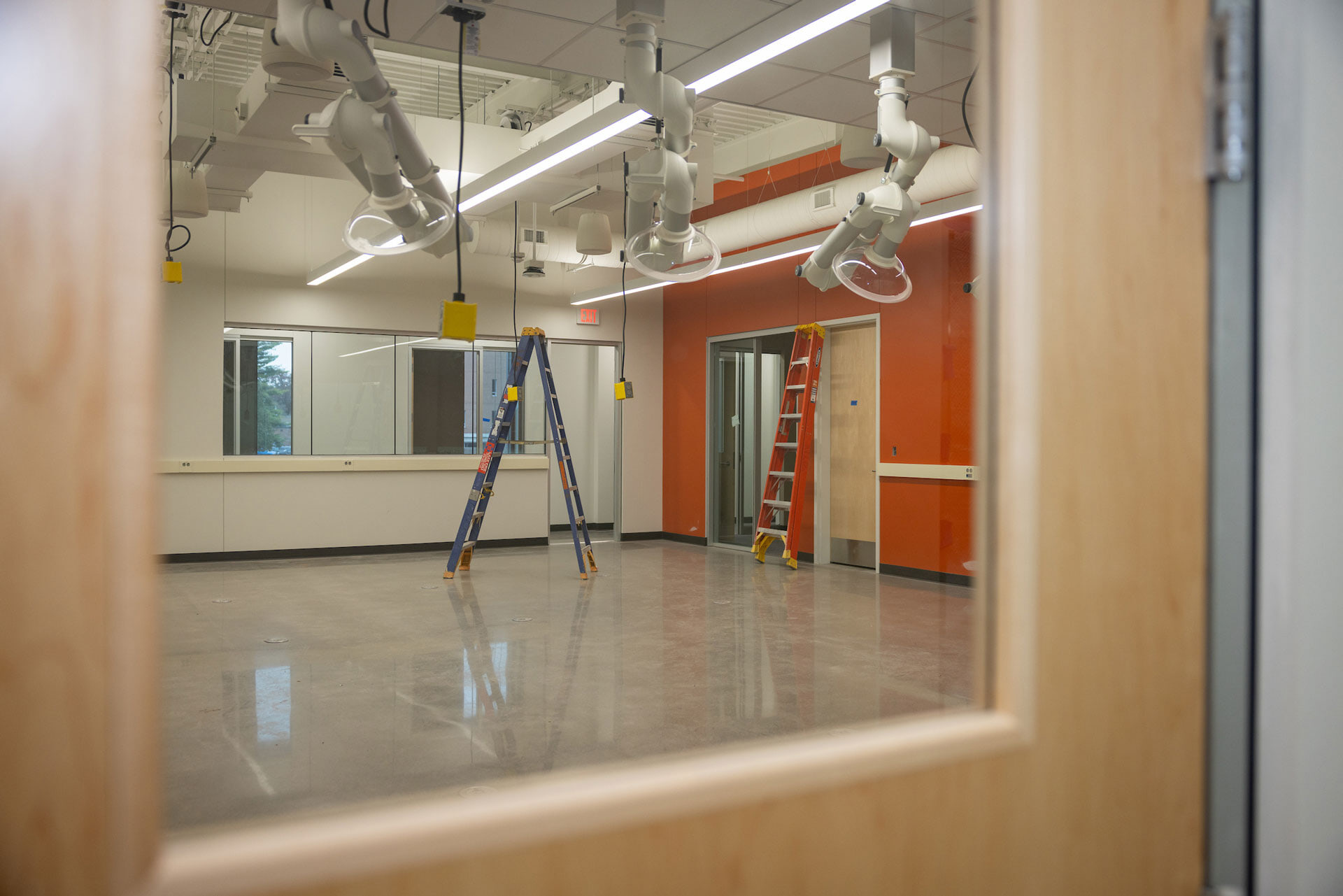
Hands-on learning is a key focus of the programs, with 80% of engineering courses including a lab experience. Students start using the technology early in their degree program and master the tools by their final year.
About 24,000 square feet of the new Engineering and Innovation Center is dedicated to labs designed to replicate workplace engineering environments.
The University’s new robotics technology will transform how students learn automation. Instead of only programming robots to perform tasks, students will learn to engineer entire robotic systems, integrating sensors, control systems, software and mechanical components.
“Students will gain more advanced skills, essentially moving from programming a robot to engineering a robotic system,” said Mohammed Abouheaf, Ph.D., associate professor in the College of Engineering and Innovation. “There are not many universities that have this kind of technology, positioning Bowling Green and our engineering programs as innovative.”
Training tomorrow's workforce
Another lab will immerse students in augmented reality and virtual reality applications for advanced manufacturing. Students will use mixed-reality tools to design, simulate and test production systems – skills that are becoming increasingly essential in advanced manufacturing and Industry 4.0 settings.
There is a lab that will focus on semiconductor education and fabrication, providing students with hands-on training in one of the nation’s fastest-growing industries. With Intel’s multi-billion-dollar investment in Ohio, demand for engineers in that sector is rising, and BGSU is preparing students to fill that talent pipeline.
Students will also gain access to 3D metal printing, a capability typically reserved for research-level environments. These printers allow for the creation of precision components used in aerospace, automotive, energy, semiconductor and biomedical industries.
“Having this technology available to undergraduate students inside the lab is unique,” Abouheaf said. “This is the future of manufacturing, and our students will have a distinct advantage by learning on this technology as undergraduates.”
Learning from experts
Another distinct feature of Bowling Green’s School of Engineering is that all labs and lectures are taught by Ph. D.-level faculty members, many of whom bring valuable industry experience.
Their combined academic and industry knowledge provides students with a broad perspective on both technical skills and real-world applications.
“Learning from a professional faculty member with a Ph.D. who also has industry experience is an incredible advantage for our students,” Mokhtar said. “We are immensely proud of the fact that our students are being exclusively educated and trained by experts in their fields.”
Related Stories


Media Contact
Michael Bratton | mbratto@bgsu.edu | 419-372-6349
Updated: 03/18/2026 12:38PM