
Relationship Status by Age Among U.S. Adults Aged 50+, 2024
An Aging Family Portrait (AFP-26-02)
Krista K. Westrick-Payne & Susan L. Brown

Introduction
The relationship status of today's older adults represents the culmination of a lifetime of union formation and dissolution patterns that have unfolded amidst growth in cohabitation, divorce, and nonmarriage as well as falling widowhood (Brown & Wright, 2017; Carr & Utz, 2020). Using data from the 2024 American Community Survey, we chart current relationship status, marital history, marital duration, and marital transitions in the past year among females and males aged 50-64 and 65+.
Relationship Status
Most adults aged 50+ were married, regardless of age group or sex.
Among those aged 65+, widowhood accounted for a larger share than among those aged 50-64 and was more common among females than males (28%, or about 9.3 million, compared with 10%, or 2.7 million, respectively).
Figure 1. Relationship Status by Sex & Age Group, U.S. Adults Aged 50+, 2024
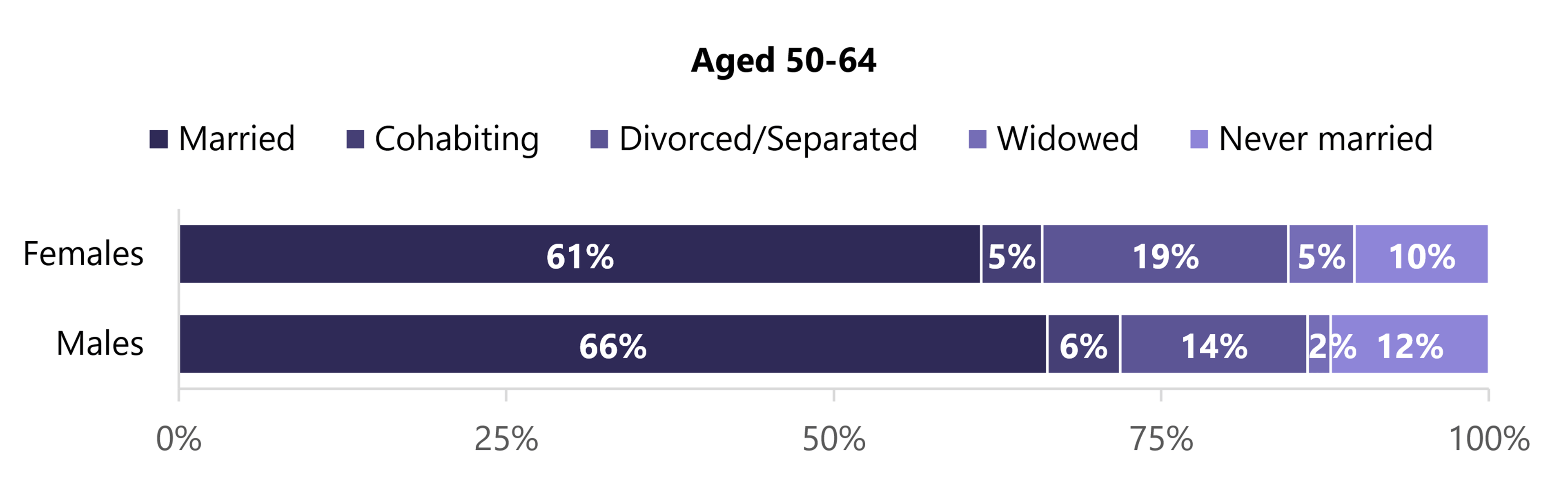
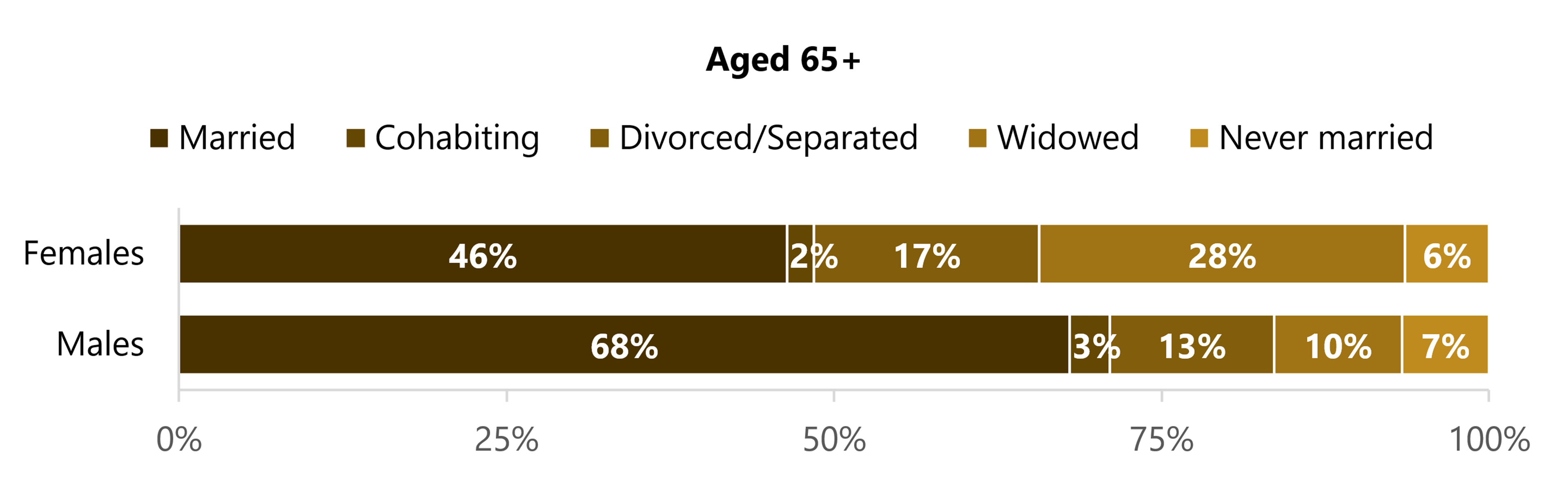
Source: CAF analysis of U.S. Census Bureau, American Community Survey, 1-year files, 2024 (IPUMS USA)
Note. Categories may not sum to 100% due to rounding.
Marital Transitions
About 2.8 million adults aged 50+ experienced a marital transition in the past year.
Widowhood accounted for the largest share of marital transitions among both females and males. Among all transitions experienced by females, 62% were widowhoods, compared with 39% among males.
Figure 2. Marital Transitions in the Past Year by Sex, U.S. Adults Aged 50+, 2024
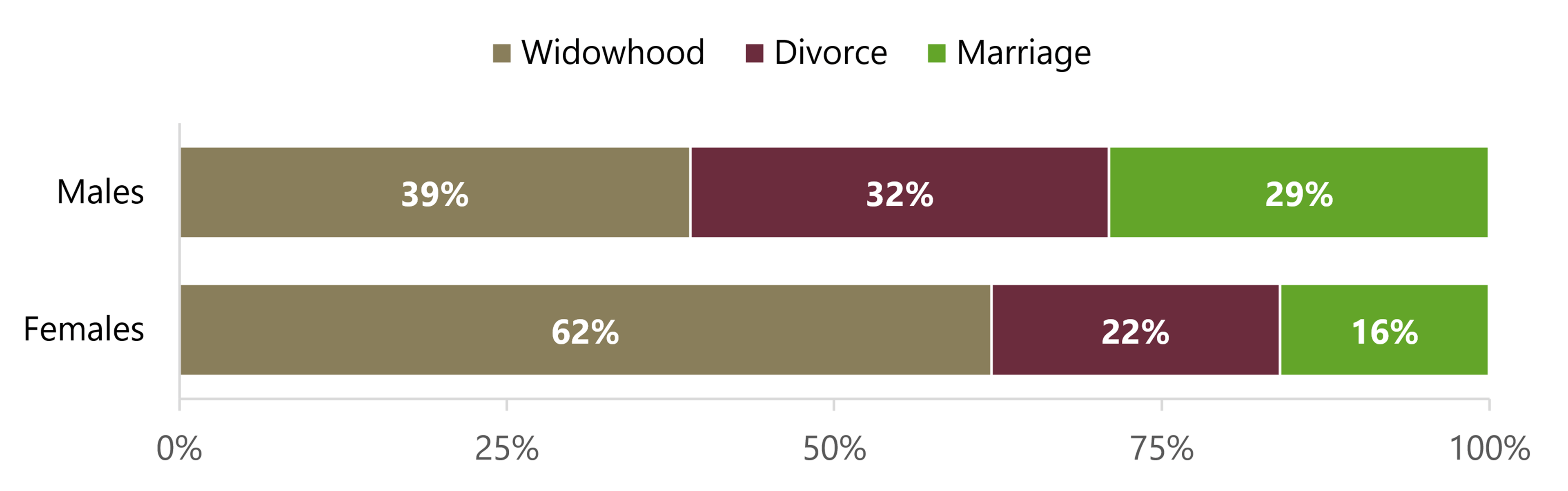
Source: CAF analysis of U.S. Census Bureau, ACS, 1-year files, 2024 (IPUMS USA)
Note. Percentages reflect the distribution of all marital transitions experienced in the past year. Some individuals may have experienced more than one transition. Categories may not sum to 100% due to rounding.
Number of Marriages
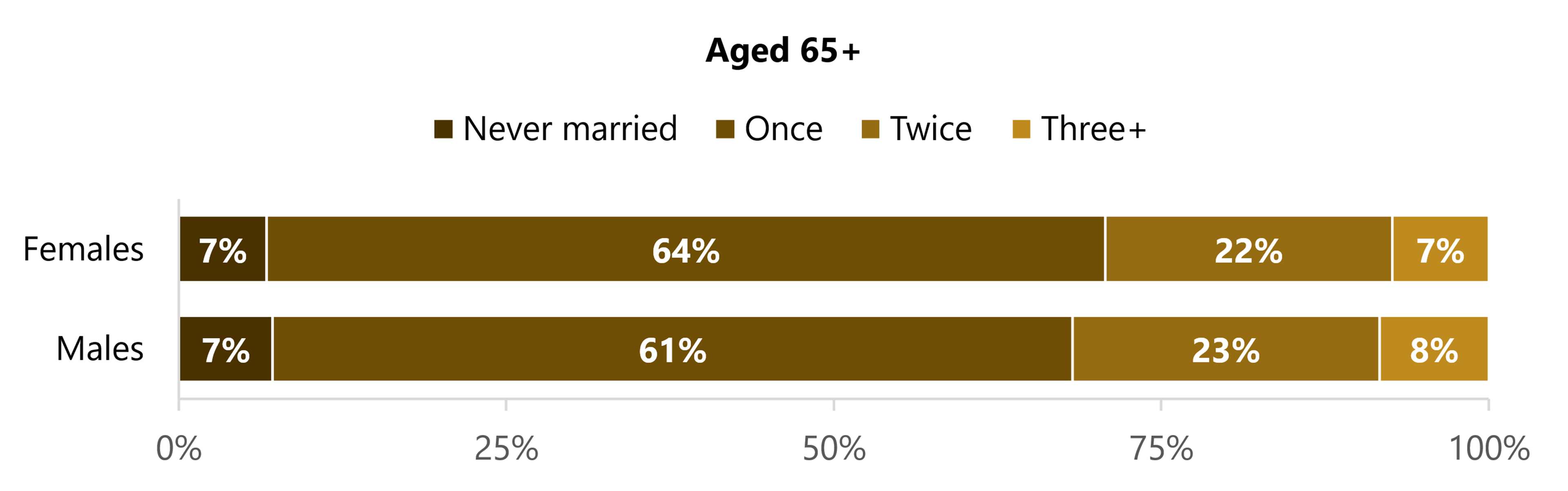
A majority adults aged 50+ had been married once.
Those aged 65+ had slightly higher shares married two or more times, indicating more complex marital histories. Additionally, those aged 50-64 were roughly twice as likely to be never married as those aged 65+.
Figure 3. Number of Times Married by Sex & Age Group, U.S. Adults Aged 50+, 2024
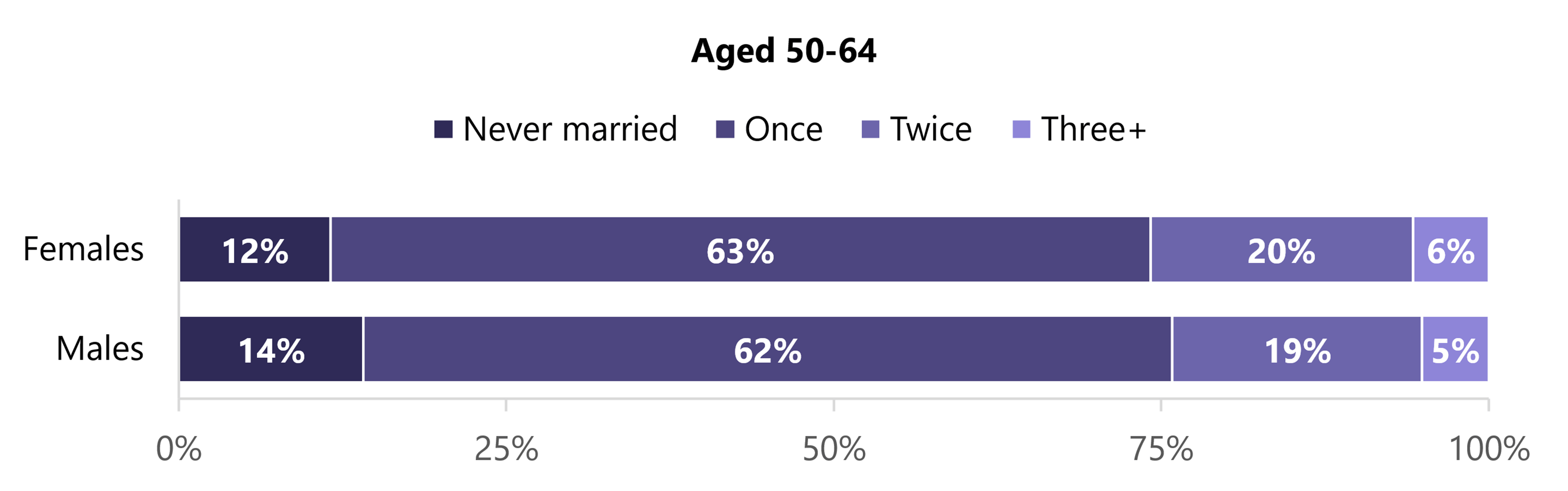
Source: CAF analysis of U.S. Census Bureau, ACS, 1-year files, 2024 (IPUMS USA)
Note. The “never married” category reflects lifetime marriage history. In the relationship status figure, some adults who have never married are included in the cohabiting category. Categories may not sum to 100% due to rounding.
Duration of First Marriages
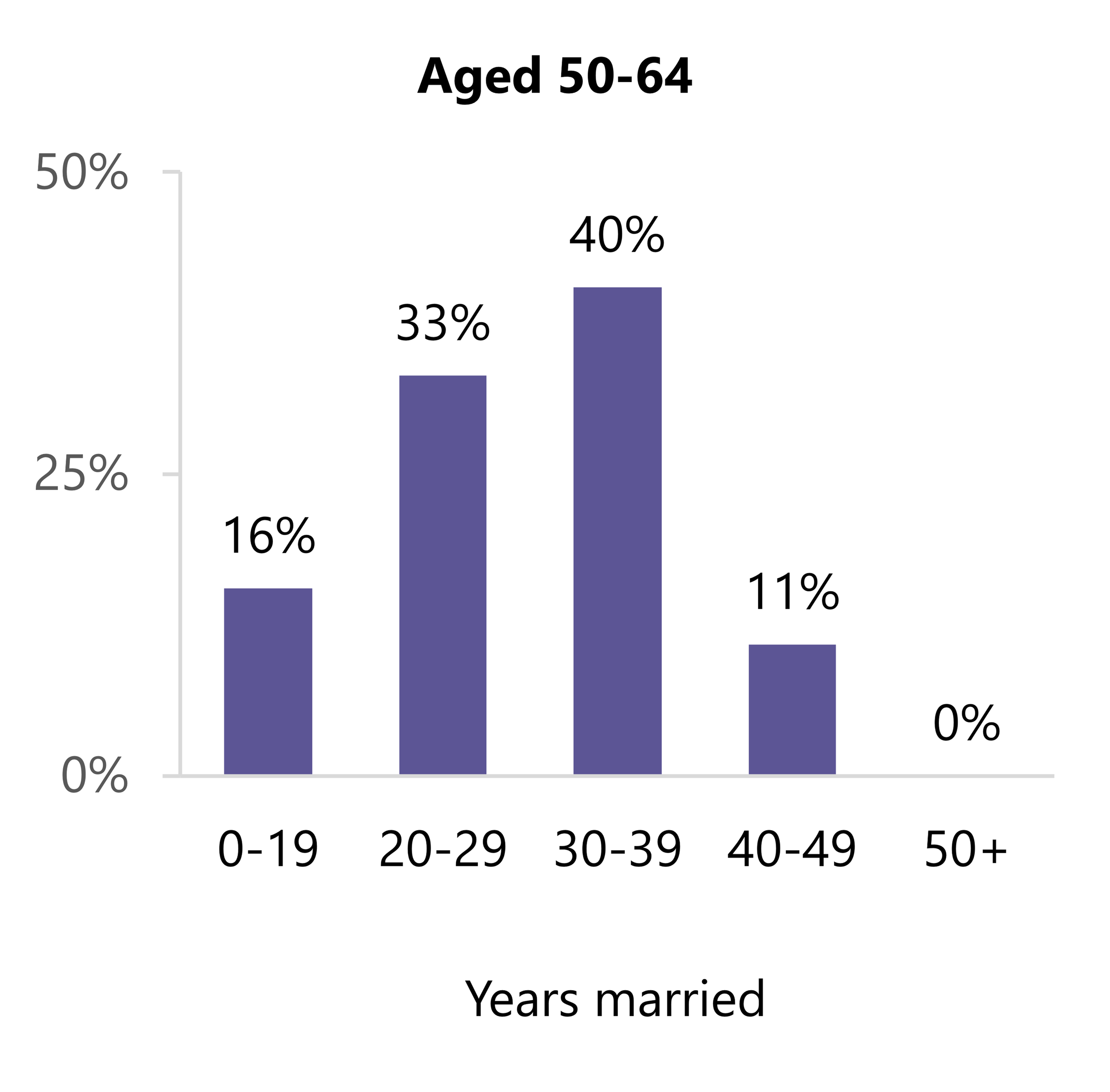
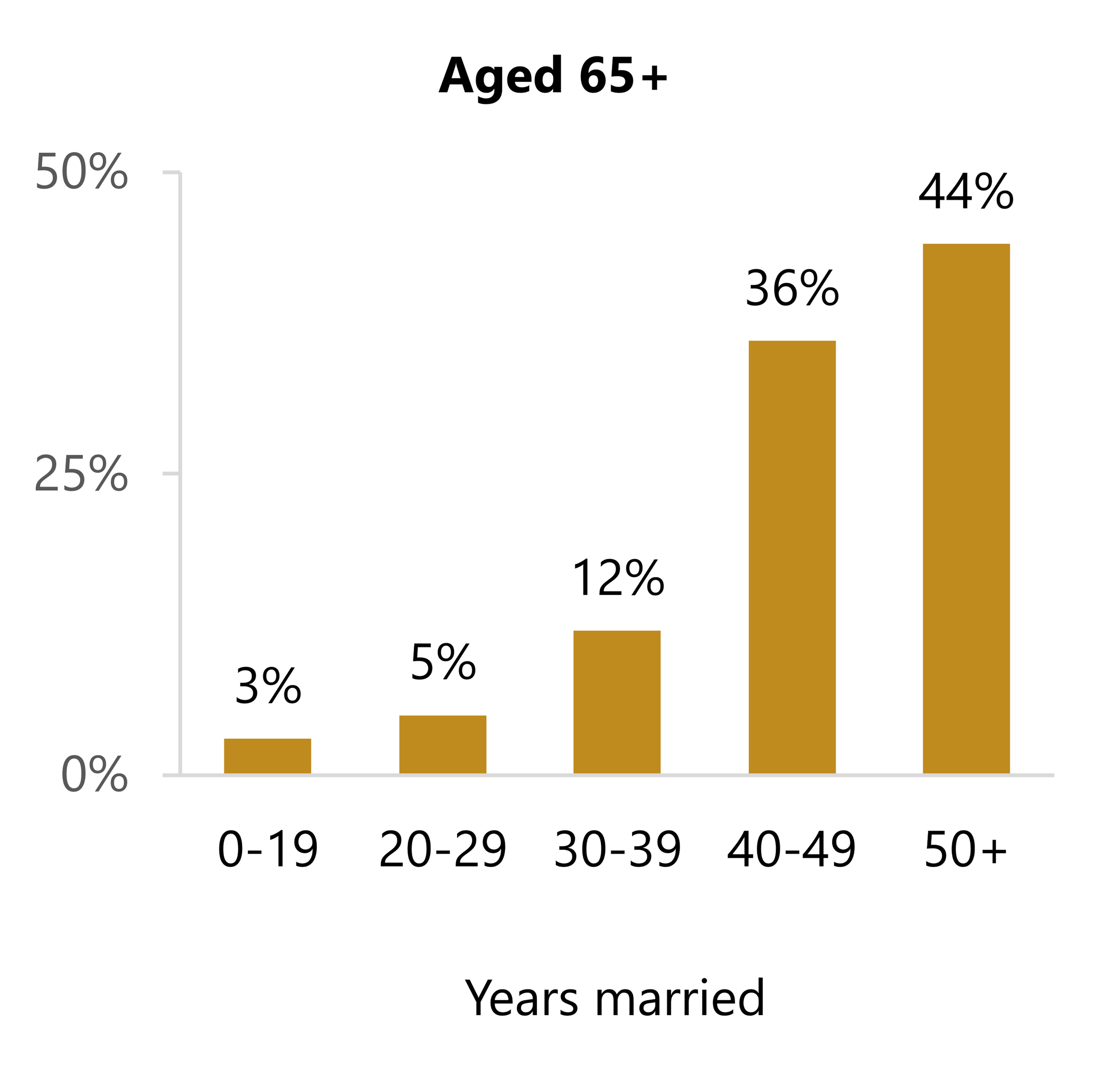
Most adults aged 65+ in a first marriage had been married 40 years or more.
Among those in a first marriage, adults aged 50–64 were concentrated in marriages of 20–39 years, whereas those aged 65+ were concentrated in marriages of 40 years or more.
Figure 4. Duration of First Marriages by Age Group, U.S. Adults Aged 50+, 2024
Source: CAF analysis of U.S. Census Bureau, American Community Survey, 1-year files, 2024 (IPUMS USA)
Note. All individuals are currently married. No one among those aged 50-64 had a marital duration greater than 49 years. Sums may not total 100% due to rounding.
Duration of Remarriages
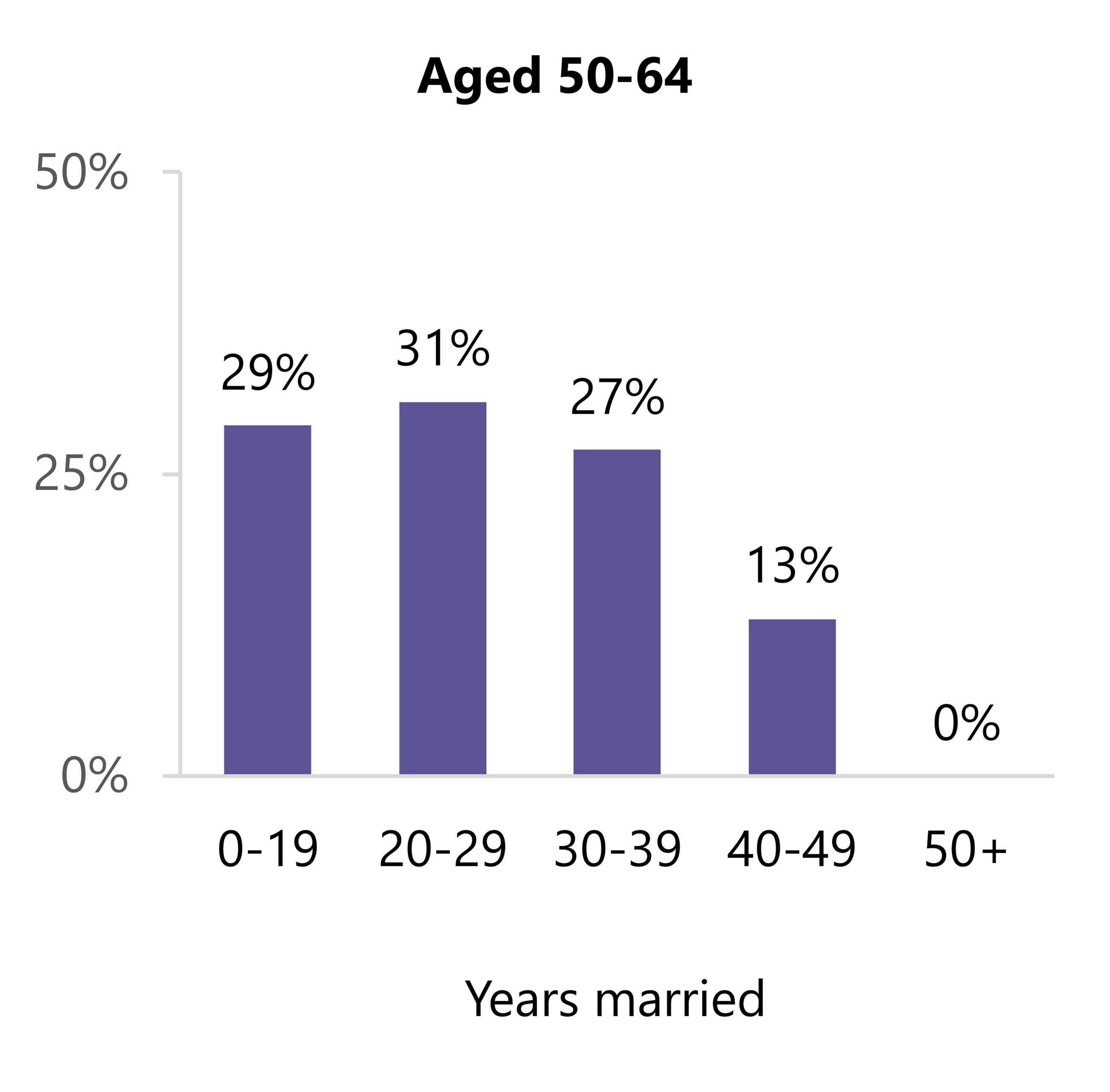
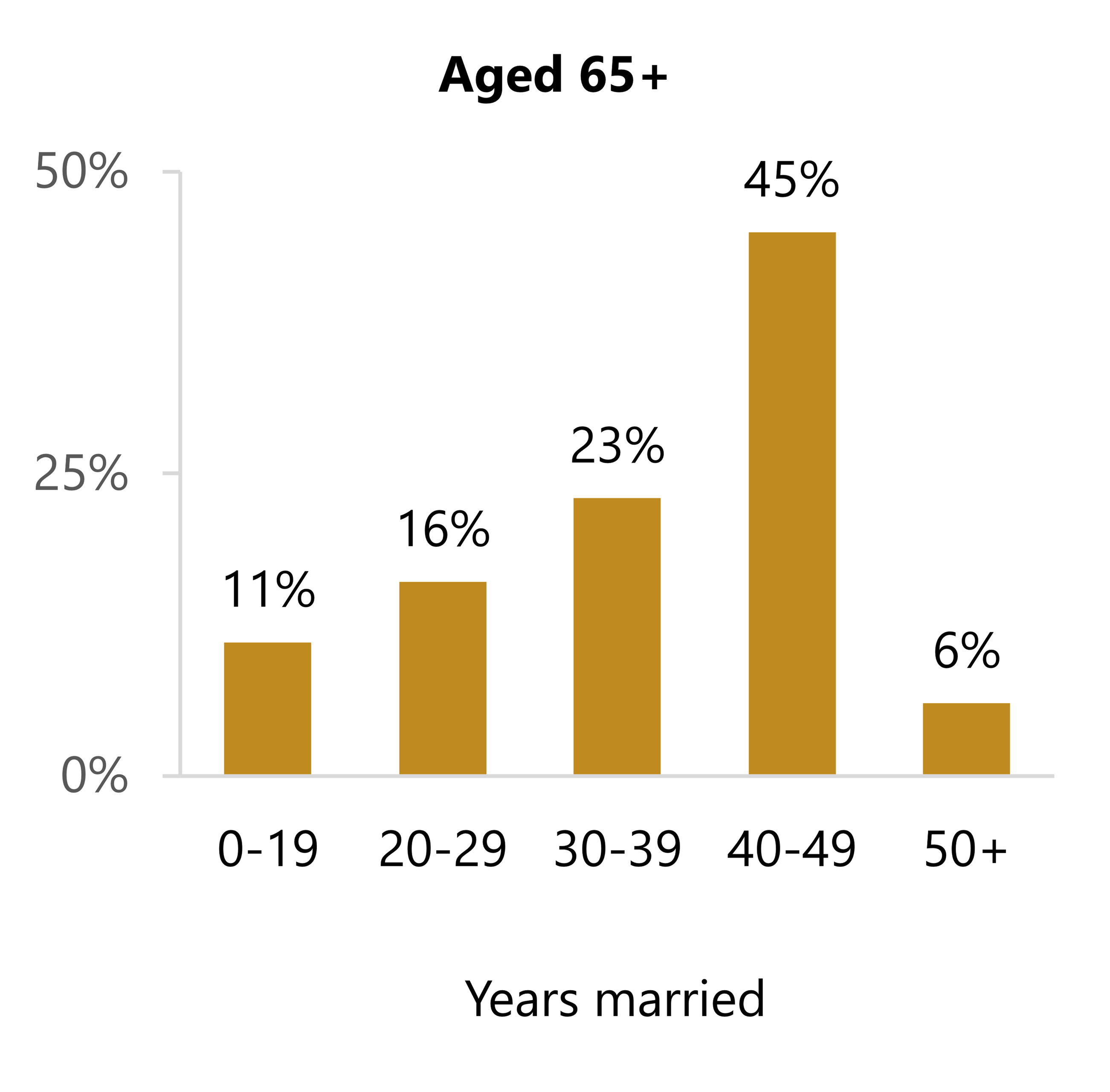
About half of adults aged 65+ in a remarriage had been married for 30 years or more.
Remarriages were generally shorter in duration than first marriages, particularly among those aged 50–64. Among those aged 65+, durations were longer, with the largest shares in marriages of 30–49 years.
Figure 5. Duration of Remarriages by Age Group, U.S. Adults Aged 50+, 2024
Source: CAF analysis of U.S. Census Bureau, ACS, 1-year files, 2024 (IPUMS USA)
Note. All individuals are currently married. No one among those aged 50-64 had a marital duration greater than 49 years. Sums may not total 100% due to rounding.
Data Source
Ruggles, S., Flood, S., Sobek, M., Backman, D., Cooper, G., Rivera Drew, J. A., Richards, S., Rodgers, R., Schroeder, J., & Williams, K. C. W. (2025). IPUMS USA: Version 16.0 [Dataset]. Minneapolis, MN: IPUMS. https://doi.org/10.18128/D010.V16.0
References
Brown, S. L. & Wright, M. R. (2017). Marriage, cohabitation, and divorce in later life. Innovation in Aging, 1(2). https://doi.org/10.1093/geroni/igx015
Carr, D. & Utz, R. L. Families in later life: A decade in review. Journal of Marriage & Family, 82(1). https://doi.org/10.1111/jomf.12609
Suggested Citation
Westrick-Payne, K. K., & Brown, S. L. (2026). Relationship status by age among U.S. adults aged 50+, 2024. An Aging Family Portrait, AFP-26-02. Bowling Green, OH: Center for Aging Families. https://doi.org/10.25035/caf/afp-26-02
Research reported in this publication was supported by the National Institute on Aging of the National Institutes of Health under award number P30AG096979. The content is solely the responsibility of the authors and does not necessarily represent the official views of the National Institutes of Health.
Updated: 05/12/2026 06:51PM