High School Honor Band Festival: Wind Symphony
- BGSU
- College of Musical Arts
- High School Honor Band Festival: Wind Symphony
Wind Symphony
featuring
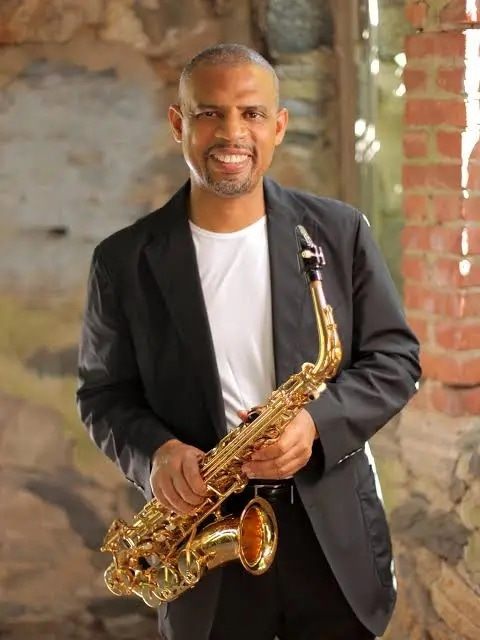
Steve Wilson, saxophone
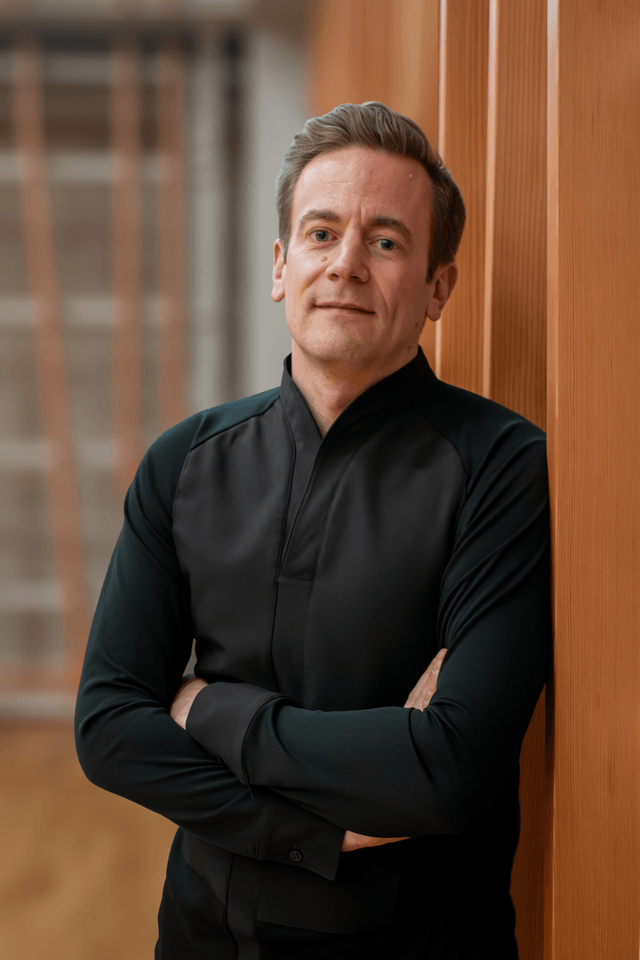
Matthew Dockendorf, conductor
Thursday, November 21, 2025
8 P.M.
Kobacker Hall
Program
Intrada 1631 (after Juan Pérez Bocanegra) (2003) | Stephen Montague (b. 1943)
Concerto for Saxophone and Wind Symphony (2025) | Billy Childs (b. 1957)
*consortium premiere performance
Steve Wilson, saxophone
La Procession du Rocio (1913 arr. 1962) | Joaquin Turina (b. 1972), arr. Alfred Reed
Sinfonia (2022) | Zhou Tian (b. 1981)
I. Noir
II. Transit
III. Arioso
IV. D-O-N-E
This performance is funded by the Marvin S. Kobacker Concert Fund.
Intrada 1631 was inspired by a concert of early South American liturgical
music directed by Jeffrey Skidmore at the 2001 Dartington International
Summer Music School (UK). One of the most moving and memorable works
in the programme was a Hanacpachap cussicuinin, a 17th century Catholic
Liturgical chant written in Quechua, the native language of the Incas. The
music was composed by a Franciscan missionary priest called Juan Pérez
Bocanegra who lived and worked is Cuzco, a small village east of Lima (Peru)
in the Jauja Valley during the early 17th century. Intrada 1631 uses
Bocanegra’s 20-bar hymn as the basis for an expanded processional scored
for the modern forces of a symphonic brass choir with field drums.
The first complete performance of Intrada 1631 was in Bath Abbey, England,
1 June 2003. It was the opening processional for the late night multimedia
event called Abbey Mode: a Sonic/Light Event commissioned for the finale of
the 2003 Bath International Music Festival. The long shadows of the darkened
Abbey were illuminated by special lighting effects (James Loudon) on the
giant arches while multiple video projections (Kathy Hinde) on the high
ribbed vaulting gave the illusion of an roof open to the night sky with flying
creatures overhead. The 120 performers were masked and in special costume.
The work is dedicated to Gavin Henderson.
- Program Note by composer
Stephen Montague is an Anglo/American composer born (1943, Syracuse, New York) and educated in the USA (Florida State University, Ohio State University). Since 1972 he has been living in Europe, first as a Fulbright Scholar in Warsaw (1972-74), then from 1974 in London where he works as a freelance composer, pianist and conductor. His works have been performed worldwide by leading ensembles and soloists including the London Symphony Orchestra, Royal Philharmonic, BBC Symphony Orchestra, The National Symphony Orchestra (Washington, DC), Südwestfunk Symphony (Baden-Baden), RTE Orchestra Madrid. Solo performers include pianists Stephen Kovacevich, Marc-André Hamelin, Joanna MacGregor, baritone Benjamin Luxon, and percussionist Evelyn Glennie.
Recent commissions include the BBC Proms, Birmingham Royal Ballet, UK New Music Biennale, Calgary Philharmonic (Canada), Royal Festival Hall, the Southbank and Barbican Centres, London.
In addition to writing for conventional ensembles Montague has done a number of large scale theatrical events with sometimes hundreds of performers such as directing the Cage Centennial Musicircus at English National Opera, London Coliseum and unusual works such as his Horn Concerto for klaxon horn soloist and an orchestra of automobiles, and a piano concerto with symphonic brass, percussion and 8 motorcycles for the UK World Superbike Championships Brands Hatch. The piano soloist was twice World Superbike Champion, James Toesland.
As a conductor Montague specializes in contemporary music and recently conducted the Bournemouth Symphony Orchestra, Royal Navy Band and Chorus in a performance of his Dark Sun – August, 1945 in a RAF bomber hanger.
Composer Portrait concerts of Montague’s work have taken place in London, Cambridge, Aberdeen, Vienna, Budapest, Warsaw, Houston, Hartford, and Chicago.
“Southern Lament” an NMC recording of his piano & chamber works won the International Piano Award for Best New Piano Music Recording 2006. His works are published by United Music Publishing: www.ump.co.uk. His website is at: stephenmontague.com
Concerto for Saxophone and Wind Symphony (2025)
Billy Childs has emerged as one of the foremost American composers of his era, perhaps the most distinctly American composer since Aaron Copland – for like Copland, he has successfully married the musical products of his heritage with the Western neoclassical traditions of the twentieth century in a powerful symbiosis of style, range, and dynamism.
Childs has received orchestral and chamber commissions from, among others: Esa-Pekka Salonen and the Los Angeles Philharmonic, the Detroit Symphony Orchestra under the baton of Leonard Slatkin, the Los Angeles Master Chorale, the National Symphony, the Minnesota Orchestra, the Orpheus Orchestra, the St. Paul Chamber Orchestra, the Kronos Quartet, the Dorian Wind Quintet, the Lincoln Center Jazz Orchestra, the Isidore Quartet, the American Brass Quintet, the Ying Quartet, the Lyris Quartet, Anne Akiko Meyers, Rather Barton Pine, and Inna Faliks. Hi s works have been performed at Carnegie Hall, Kennedy Center, and Disney Concert Hall.
He has also garnered seventeen GRAMMY nominations and six awards: two for Best Instrumental Composition (Into the Light from Lyric and The Path Among The Trees from Autumn: In Moving Pictures), two for Best Arrangement Accompanying a Vocalist (including New York Tendaberry from Map to the Treasure: Reimagining Laura Nyro, featuring Renee Fleming and Yo-Yo Ma), and two for Best Instrumental Jazz Album: Rebirth (2018) and The Winds of Change (2024). In 2006, Chamber Music America awarded Childs a New Jazz Works Award and in 2019 a Classical Commissioning Award – making him the first artist to receive awards in both genres. In 2009 Childs was the recipient of a Guggenheim Fellowship, and in 2013 was awarded the Doris Duke Performing Artist Award. He has also been awarded a Composers Award from the American Academy of Arts and Letters (2015). In 2018, Childs was named Outstanding Alumnus of the Thornton School of Music (sharing that honor with, among others: Morton Lauridsen, Michael Tilson Thomas, and Marilyn Horne). Childs has also served as president of Chamber Music America (2016-2022).
Childs’ jazz career began in 1977, when he joined the band of trombonist J.J. Johnson. Soon thereafter trumpet legend Freddie Hubbard recognized the 21-year-old’s prodigious talents, and invited Childs to join his star-studded ensemble. Over a six-year internship that followed, Hubbard became Childs’ mentor in mastering the art of small ensemble improvisation. Childs launched his recording career as a jazz solo artist in 1988, when he released four critically acclaimed albums on the Windham Hill Jazz label. He has also recorded two volumes of “jazz/chamber music” (an amalgam of jazz and classical music) – Lyric, Vol. 1 (2006) and Autumn: In Moving Pictures, Vol. 2 (2010); both recordings have collectively been nominated for five GRAMMY awards (winning twice). In 2014, Childs recorded a collection of re-imagined Laura Nyro compositions for Sony Masterworks. Map to the Treasure: Reimagining Laura Nyro was produced by Larry Klein, and features guest artists Renee Fleming, Yo-Yo Ma, Wayne Shorter, Alison Kraus, Dianne Reeves, Chris Botti, Esperanza Spalding, and Lisa Fischer. In 2017, Childs released the first of his Mack Avenue recordings, Rebirth, which won the 2018 GRAMMY award for Best Instrumental Jazz Album. The second, Acceptance, was released in 2020, and the third, The Winds of Change, was released in March, 2023, winning the 2024 GRAMMY Award for Best Instrumental Jazz Album.
As a pianist Childs has performed with Yo-Yo Ma, Sting, Renee Fleming, the Los Angeles Philharmonic, The Los Angeles Master Chorale, the Detroit Symphony, Rachel Barton Pine, Anne Akiko Meyers, Chick Corea, the Kronos Quartet, Wynton Marsalis, Jack DeJohnette, the Dorian Wind Quintet, Ying Quartet, the American Brass Quintet, and Dave Holland.
Saxophonist Steve Wilson has toured and recorded with Chick Corea, Dave Holland, Buster Williams, Mulgrew Miller, James Williams, Lionel Hampton, and Ralph Peterson, Jr., amongst the many jazz greats with whom he has collaborated. His discography encompasses over one hundred recordings, including seven as leader.
Mr. Wilson has consistently placed in the Downbeat Magazine Critics and Readers Polls in the alto and soprano saxophone categories since 1997. He has previously taught at William Paterson University, The New School, SUNY Purchase, and has been Artist-in-Residence at The University of North Carolina at Chapel Hill, Hamilton College in Clinton, New York, and for Cityfolk, Inc. in Dayton, Ohio.
Wilson has toured and/or performed with Lionel Hampton, Out of the Blue, The Smithsonian Jazz Masterworks Orchestra, The Four Tops, Stephanie Mills, Ellis Marsalis, Hamiet Bluiett, Buck Clayton, Mel Lewis, Michele Rosewoman, Ralph Peterson, Jr., Mulgrew Miller, Dave Liebman, Leon Parker, Renee Rosnes, Joe Henderson, Frank Foster, Peter Leitch, John Hicks, Dave Holland, Benny Powell, Etta Jones, Benny Golson, Chick Corea, Dianne Reeves, John Clayton, Billy Childs, David Berkman, Ray Drummond, Marvin “Smitty” Smith, James Williams, Bruce Barth, Geoffrey Keezer, The Charles Mingus Big Band, Michael Weiss, Jimmy Heath, Benny Carter, Dr. Billy Taylor, Mulgrew Miller, and Buster Williams.
Steve Wilson’s teaching philosophy emphasizes mastering the technical and musical fundamentals that will enable the student to be a total musician, as well as a skilled performer. In addition, an awareness and appreciation of the earlier periods of jazz and American music are encouraged.
La Procession du Rocio (1913 arr. 1962)
Joaquin Turina wrote La Procession Del Rocio in 1913 to depict the annual
processional held during the month of June of La Hermandad de La Virgen del
Rocio de Triana from Seville to the holy site of El Rocio, 80 miles to the south.
Members of the Hermandad, a type of brotherhood, which includes some of the
best families in Seville, participate in this annual ritual. At the head of the
procession is the Sinpecado, an image of The Virgin of El Rocio placed in a
golden cart drawn by oxen. As the procession makes its way out of the city it
stops at several church doorsteps. People dance the Seguidilla and the Soloare. A
drunkard sets off firecrackers, adding to the confusion. At the sound of melismas
by high pitched vertical cedar flutes and drums, the procession resumes. The
music to the Salve of Rocio de Triana is heard and breaks forth mingling with the
peeling of the church bells and the strains of the royal march. As the procession
makes its way out of the city, its sounds fade away.
-program note by Sixto Montesinos
Joaquin Turina (9 December 1882 -14 January 1949) by Julie Riegg Spain's nationalist musical renaissance was over by the end of the first half of the 20th Century. The music had been inspired by musical scholar Filipe Petrell (1841-1922) through his researches into folk music of the various regions of Spain that had resulted in the rise of representatives of this rebirth in the beginning of the 1900's. Foremost composers of this renaissance were Isaac Albeniz (1860-1909), Enrique Granados (1867-1916, Manuel De Falls (1876-1946) and Joaquin Turina (1882-1949). All have remained prominent although Turina's music has enjoyed a revival recently.
Turina was born in Seville and studied there and in Madrid. He lived in Paris from 1905 to 1914 and studied composition with Cesar Franck's disciple, Vincent D'Indy at the Schola Cantorum, where he learned the mysteries of the "Cyclical Form" (meaning, what you hear at the beginning, you will hear again at the end). He studied the piano under Moritz Moszkowski. He was encouraged by Maurice Ravel and Claude Debussy, whose influences can be heard in Torina's music, and, in turn, both Frenchmen wrote pieces influenced by Spanish music. Turina wrote a considerable amount of chamber music. Among his compositions are violin sonatas, piano trios, a piano quartet, quintet and sextet as well as work for soprano and piano quintet. His most popular work and most often performed in an arrangement for string orchestra is La Oracion del Torero (The Bullfighter's Prayer)(1925). In it the influences of Debussy can be heard and the music of the Andalusian Gypsies. Turina returned to Madrid in 1914 and worked as a composer, teacher and critic. From 1931 he was professor of composition at the Royal Conservatory. His works include the operas Margot (1914) and Jardin de Oriente (1923), and Danzas Fantasticas (1920) for orchestra and piano.
Sinfonia (2022)
Sinfonia seeks inspirations from cultures close to my heart and mixes them into four different movements. It begins nostalgically and ends on a hopeful, uplifting note.
I. Noir
Grainy films and stylized black-and-white images from the 1940s and ’50s inspired this nostalgic throwback. Although it starts brightly, at its core lies the night.
II. Transit
New York City. Subway. Rush hour. Each stop opens to a new soundscape. “Say, did I hear Jazz?” Someone asks. “STAND CLEAR OF THE CLOSING DOORS, PLEASE,” New York replies.
III. Arioso
Shanghai. Night of the Mid-Autumn Festival. A vocalise was conceived.
IV. D-O-N-E
May 10, 1869. Promontory, Utah. A one-word telegraph was sent across the United States in Morse code, announcing the completion of the First Transcontinental Railroad. Now the country was connected as never before: a journey between San Francisco and New York that previously took up to six months now took only days. Some 150 years later, that word, “D-O-N-E,” is transformed here into music using the rhythm of the Morse code. Throughout the finale, the “done” motif is passed back and forth by numerous instruments in the ensemble. An accumulation of materials sends the piece to a climax at the end. This movement was adapted from a movement of my orchestral work Transcend.
“D-O-N-E” motif, based on the Morse code for the word
Sinfonia was jointly commissioned by a CBDNA consortium consisting of the Michigan State University (Kevin Sedatole), Ball State University (Thomas E. Caneva), Baylor University (Eric Wilson), University of Colorado Boulder (Donald J. McKinney), Florida State University (Richard Clary), Indiana University (Rodney Dorsey), University of Michigan (Michael Haithcock), Ohio State University (Russel C. Mikkelson), Oklahoma State University (Joseph Missal), Purdue University Fort Wayne (Daniel Tembras), University of Texas Austin (Jerry Junkin), Texas Tech University (Sarah McKoin), and Western Michigan University (Scott Boerma). My deepest gratitude goes to Kevin Sedatole, who initiated this project, and to all the commissioning partners. I had a blast writing this work!
©Zhou Tian
Sinfonia was selected as the 2022 Sousa-ABA-Ostwald Award winning composition.
Grammy-nominated Chinese-American composer Zhou Tian (JOH TEE-en) seeks inspiration from different cultures and strives to mix them seamlessly into a musically satisfying combination for performers and audience alike. The Wall Street Journal states his works “accomplish two important things: They remind us of how we got from there to here, and they refine that history by paying belated tribute to contributors who might otherwise be forgotten.”
His music—described as “absolutely beautiful…utterly satisfying” (Fanfare), “stunning” (the Cincinnati Enquirer), and “a prime example of 21st-century global multiculturalism”—has been performed by leading performers and orchestras, such as Jaap van Zweden, Yuja Wang, Manfred Honeck, Long Yu, Noah Bendix-Balgley, the New York Philharmonic, London Philharmonic, San Francisco Symphony, Pittsburgh Symphony, Mahler Chamber Orchestra, Melbourne Symphony, “The President’s Own” U.S. Marine Band, Tokyo Kosei Wind Orchestra, Dover Quartet, and the Shanghai Symphony, where he recently served as Artist-in-Residence. His Concerto for Orchestra, commissioned and recorded by Louis Langrée and the Cincinnati Symphony, earned him a GRAMMY Award nomination for Best Contemporary Classical Composition in 2018, making him the first Chinese-born composer and the second Asian composer (following Tōru Takemitsu) honored in that category. In 2019, Beijing Music Festival named him “Artist of the Year.” In 2022, he became the first Asian-American composer to win the coveted Sousa-ABA-Ostwald Award from the American Bandmasters Association for Sinfonia.
Born into a musical family in Hangzhou, Zhou moved to the US when he was 19. Trained at Curtis, Juilliard, and USC, he studied with some of America’s finest composers, such as Jennifer Higdon, Christopher Rouse, and Stephen Hartke. He is Professor of Composition at Michigan State University.
Saxophonist Steve Wilson has toured and recorded with Chick Corea, Dave Holland, Buster Williams, Mulgrew Miller, James Williams, Lionel Hampton, and Ralph Peterson, Jr., amongst the many jazz greats with whom he has collaborated. His discography encompasses over one hundred recordings, including seven as leader.
Mr. Wilson has consistently placed in the Downbeat Magazine Critics and Readers Polls in the alto and soprano saxophone categories since 1997. He has previously taught at William Paterson University, The New School, SUNY Purchase, and has been Artist-in-Residence at The University of North Carolina at Chapel Hill, Hamilton College in Clinton, New York, and for Cityfolk, Inc. in Dayton, Ohio.
Wilson has toured and/or performed with Lionel Hampton, Out of the Blue, The Smithsonian Jazz Masterworks Orchestra, The Four Tops, Stephanie Mills, Ellis Marsalis, Hamiet Bluiett, Buck Clayton, Mel Lewis, Michele Rosewoman, Ralph Peterson, Jr., Mulgrew Miller, Dave Liebman, Leon Parker, Renee Rosnes, Joe Henderson, Frank Foster, Peter Leitch, John Hicks, Dave Holland, Benny Powell, Etta Jones, Benny Golson, Chick Corea, Dianne Reeves, John Clayton, Billy Childs, David Berkman, Ray Drummond, Marvin “Smitty” Smith, James Williams, Bruce Barth, Geoffrey Keezer, The Charles Mingus Big Band, Michael Weiss, Jimmy Heath, Benny Carter, Dr. Billy Taylor, Mulgrew Miller, and Buster Williams.
Steve Wilson’s teaching philosophy emphasizes mastering the technical and musical fundamentals that will enable the student to be a total musician, as well as a skilled performer. In addition, an awareness and appreciation of the earlier periods of jazz and American music are encouraged.
Matthew Dockendorf is Director of Bands and Assistant Professor of Music Education at Bowling Green State University. His duties include guiding all aspects of the concert band program, artistic director of the BGSU Wind Symphony and teaching courses in undergraduate and graduate conducting and music education.
Previous professional appointments include interim Director of Bands, Associate Director of Bands and Director of the “Golden Buffalo” Marching Band, and Assistant Director of Bands all at the University of Colorado Boulder. During this time, he developed a national profile for music education, artistic performance, undergraduate and graduate teaching, and a generous collaborator.
Dr. Dockendorf is an advocate for new music, music education, and developing artistry in all ages of musicians. He has most recently commissioned and premiered works by composers Kevin Day (Glimmerglass, Concerto for Flute and chamber winds, Christina Jennings), Annika Socolofsky (The Full Hundred), Alexandra Gardner (Concerto for Saxophone, Nathan Mertens), and collaborated with ~Nois Saxophone quartet and Viet Cuong. Other meaningful musical collaborations include Stacey Berk, Lindsay Bronnenkant, Peter Cooper, Henry Dorn, Tyler Grant, Jennifer Jolley, Ricardo Lorenz, David Maslanka, Abigail Nims, Chris Pilsner, Kevin Poelking, Ivette Herryman Rodríguez, James Stephenson, Luka Vezmar, and Cheldon Williams.
Dockendorf maintains an active teaching, conducting, and clinician schedule with engagements throughout the United States. He has guest conducted high school and middle school bands in Colorado, Georgia, Minnesota, Missouri, South Carolina, and has presented clinics at various state music conferences, the Texas Music Educators Association convention, and the Midwest Band and Orchestra Clinic.
Dockendorf taught public school at Lakeville South High School in Minnesota where he was the Assistant Director and was involved in administering and teaching: marching band, concert bands, chamber music, percussion ensemble, pit orchestra, and guitar class.
Dr. Dockendorf earned his Doctor of Musical Arts in Conducting from Michigan State University under Dr. Kevin L. Sedatole; a Master of Music in Conducting from The Ohio State University under Dr. Russel Mikkelson; and a Bachelor of Music Education from the University of Minnesota where he studied and performed under Prof. Craig Kirchhoff, Prof. Jerry Luckhardt, and Dr. Timothy Diem.
Flute
Emily Fluty
Rachel Moeller
Sherry Young
Evelyn Purdin
Emily Dyko, picc
Oboe
Michael Berchert
Megan Strait
Kathryn Swanson
Bassoon
Jordan Wier
Cruz Stock
Alex Smith
Clarinet
Ricky Jurski, Eb
Michael Hudzik
Adam Williams
Alex Proctor
Willis McClure
Kamryn VanHoose
Natalie Kyser
Mollie Barrett
Ryan Moore, bass
Saxophone
Mary Borus
Matthew Reed
Nathan Wood
Lukas Bass
Aidan Peper
Elizabeth Laird
Horn
Elena Maria Farmer
Bird Birmingham
Charles Ditchman
Mitchell Hemme
Tre Myers
Zoe Voelker
Trumpet
Trace Coulter
Ella Stone
Sydney Nitschke
Chris Amaya
Eli Hash
Luke Brewster
Nicholas Forlow
Trombone
Peyton Grey
David Franklin
Matthew Ross
Xavier Branch, bass
Euphonium
Brady Fortman
Benjamin Bates
Tuba
Ethan Morris
Xavier Bucher
Matt Brewton
Percussion
Mason Marquette
Brooke Guyton
Jacob Kendall
Jude Crawford
Alex Minniear
Zach Hallam
Matthew Graves
Piano
Nathaniel Brown
Jingyi Xu
Harp
Julie Buzzelli
Double Bass
Ellie Kornowa
******************************************
Thanks for attending this performance. If you have enjoyed your experience, please consider donating to the College of Musical Arts in support of our students and programming. Donate online at bgsu.edu/givecma, or call Karmen Concannon at 419-372-2424.
To our guests with disabilities, please indicate if you need special services, assistance or appropriate modifications to fully participate in our events by contacting Accessibility Services, access@bgsu.edu, 419-372-8495. Please notify us prior to the event.
Audience members are reminded to silence alarm watches, pagers and cellular phones before the performance. As a matter of courtesy and copyright law, no recording or unauthorized photographing is allowed. BGSU is a nonsmoking campus.
Updated: 11/20/2025 09:04AM