
How in-between moments drive successful organizational change
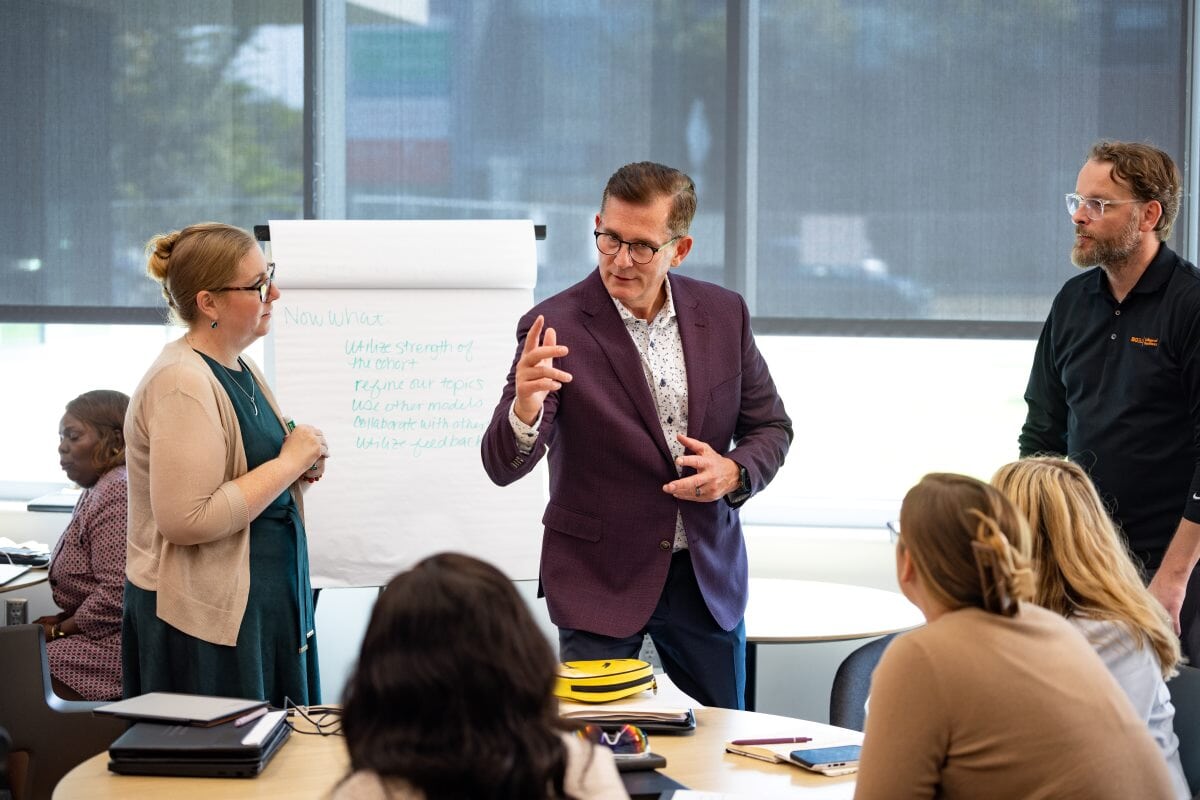
Organizations that rush through change miss critical opportunities for learning and growth.
In today's fast-paced business world, the pressure to move quickly often causes leaders to overlook the most critical moments of transformation. According to a new article published in The Journal of Applied Behavioral Science, the secret to successful change isn't just moving from point A to point B. It's how we handle the space in between.
Researchers Dr. Steven Cady and Sanjay Rishi identify these moments as "liminal spaces." In their article The Space in Between: Leveraging the Liminal Nature of Change, they argue that these pauses are not just empty gaps. They are vital opportunities for learning, adaptation and growth. By rushing through transitions, companies often undermine the very resilience and innovation they are trying to build.
The article introduces a practical framework that identifies seven specific pauses across three phases of change. The preliminal phase involves preparation. The liminal phase covers the actual transition period. The postliminal phase focuses on reintegration into the new reality. By making these moments visible, the research provides managers and practitioners with techniques to interrupt automatic reactions. This allows for more thoughtful decision-making and stronger employee engagement.
Across complex change efforts, these three leadership practices demonstrate how disciplined pauses, used strategically rather than reactively, enable leaders to accelerate progress while improving decision quality and trust.
Three high-impact change leadership practices
Slow down early to accelerate later (Plan): Effective leaders resist premature action at the outset of change. They deliberately introduce planning pauses to surface assumptions, align stakeholders, assess readiness and clarify interdependencies before committing resources. This disciplined deceleration reduces downstream rework, prevents escalation and creates conditions for faster, more coherent execution once change is underway.
Regulate before responding under pressure (Regulate): High-impact leaders actively manage the space between stimulus and response, especially during emotionally charged moments. By pausing to regulate reactions — through inquiry, reflection or structured dialogue — they interrupt automatic defensiveness and enable thoughtful sensemaking. This practice preserves trust, improves decision quality and turns potential conflict into productive learning during change.
Convert experience into learning before moving on (Retrospect and Stabilize): Rather than rushing from milestone to milestone, effective leaders create structured pauses to reflect on what occurred, extract insight and reinforce what is working before declaring success. These retrospective and stabilization pauses embed learning, anchor new behaviors and prevent regression, ensuring that change becomes durable rather than episodic.
The impact of this research extends far beyond corporate boardrooms. As communities navigate rapid technological shifts and social transitions, the ability to skillfully hold uncertainty becomes essential. The article suggests that reframing uncertainty as a transformative space can lead to more compassionate and adaptive social systems. Cady and Rishi's work bridges the gap between complex behavioral science and everyday practice, offering a humane way to lead in an era of constant disruption.
The Space in Between is available via The Journal of Applied Behavioral Science.
Updated: 01/27/2026 05:25PM