Faculty Artist Series: Sarah Luebke, soprano and Kevin Bylsma, piano
- BGSU
- College of Musical Arts
- Faculty Artist Series: Sarah Luebke, soprano and Kevin Bylsma, piano
Wednesday, September 16, 2026
8 P.M.
Bryan Recital Hall
assisted by
Franci de Freitas, piano
Benjamin Hoffman, violin
Brian Snow, cello
Program
I.
Placido zeffiretto | Vincenzo Righini (1756–1812)
Mi lagnero tacendo
Vorrei di te fidarmi
II.
“Ecco mi in lieta vesta... Oh! quante volte, oh! Quante” | Vincenzo Bellini (1801–1835)
from I Capuleti e i Montecchi
III.
Fiançailles pour rire | Francis Poulenc (1899–1963)
La dame d'André
Dans l'herbe
Il vole
Mon cadavre est doux comme un gant
Violon
Fleurs
Intermission
IV.
Cuatro madrigales amatorios | Joaquín Rodrigo (1901–1999)
¿Con qué la lavaré?
Vos me matasteis
¿De dónde venís, amore?
De los álamos vengo, madre
V.
Love Sweet | Jennifer Higdon (b. 1962)
Apology
The Giver of Stars
Absence
A Gift
A Fixed Idea

Placido zeffiretto, | Gentle little zephyr,
Se trovi il caro oggetto | If you find the dear one,
Digli che sei sospiro; | Tell her you are a sigh;
Ma non gli dir di chi. | But do not tell her whose.
Limpido ruscelletto, | Clear little brook,
Se mai t'incontri in lei, | If you happen to meet her,
Dille che pianto sei | Tell her you are tears
Ma non le dir qual ciglio | But do not tell her whose eyes
Crescer ti fè così. | Made you grow thus.
Mi lagnerò tacendo | I shall mourn in silence
Del mio destino avaro, | over my harsh destiny,
Ma ch'io non t'ami, o cara, | but that I love you not, my dear,
Non lo sperar da me. | do not expect that of me.
Crudele, in che t'offendo | Cruel one! How do I offend you
Se resta a questo petto | if in my breast there remains
Il misero diletto | this miserable delight
Di sospirar per te? | in sighing for you?
Vorrei di te fidarmi, | I would like to have faith in you,
ma per usanza antica | but by long experience
Inteso ad ingannarmi | intent on deceiving me
io ti conosco amor; | I know you to be, Love.
Se t’accarezzo amica, | If I caress you as a friend,
tu mi prepari un laccio, | you set a snare for me,
se ti raccolgo in braccio | If I take you in my arms
tu mi ferisci il cor. | You wound my heart.
Eccomi in lieta vesta… | Here I am in cheerful attire…
Eccomi adorna come vittima all'ara. | Here I am adorned like a victim on the altar
Oh! almen potessi | Oh! If only as a wounded victim
Qual vittima cader dell'ara al piede! | Fall from the altar to the floor!
O nuziali tede, | Oh wedding candles,
Abborrite così, così fatali | You abhor me, so fatal
Siate, ah! siate per me faci ferali. | You are, ah! You are candles of my deathbed.
Ardo...una vampa, un foco | I burn… a flame, a fire
Tutta mi strugge. | Torments me.
Un refrigerio ai venti io chiedo invano. - | I ask for a cool breeze of wind, but in vain -
Ove se'tu, Romeo? | Where are you, Romeo?
In qual terra t'aggiri? | In which land?
Dove, dove inviarti i miei sospiri? | Where, where shall I send my sighs?
Oh! quante volte, | Oh! How many times,
Oh! quante ti chiedo | Oh how many did I ask
Al ciel piangendo | the skies crying
Con quale ardor t'attendo, | With such fervor I wait for you,
E inganno il mio desir! | but my desire is in vain!
Raggio del tuo sembiante | The light of your presence
Parmi il brillar del giorno: | shines for me like daylight:
L'aura che spira intorno | The air that dances around me
Mi sembra un tuo respir. | reminds me of your presence.
La dame d’André
André ne connaît pas la dame | André does not know the woman
Qu’il prend aujourd’hui par la main. | Whose hand he takes today.
A-t-elle un coeur à lendemains | Has she a heart for the future,
Et pour le soir a-t-elle une âme? | And for evening has she a soul?
Au retour d’un bal campagnard | Returning from a country dance,
S’en allait-elle en robe vague | Did she in her loose-fitting gown
Chercher dans le meules la bague | Go and seek in the haystacks
Des fiançailles du hassard? | The ring of random betrothal?
A-t-elle eu peur, la nuit venue, | Was she afraid, when night fell,
Guettée par les ombres d’hier. | Watched by the ghosts of the past,
Dans son jardin lorsque l’hiver | In her garden, when winter
Entrait par la grande avenue? | Entered by the wide avenue?
Il l’a aimée pour sa couleur | He loved her for her complexion,
Pour sa bonne humeur de Dimanche. | For her Sunday good humour.
Pâlira-t-elle aux feuilles blanches | Will she fade on the blank pages
De son album des temps meilleurs? | Of his album of better days?
Dans l’herbe
Je ne peux plus rien dire | I can say nothing more
Ni rien faire pour lui. | Do nothing more for him.
Il est mort de sa belle | He died for his fair one
Il est mort de sa mort belle | He died a fair death
Dehors | Outside
Sous l’arbre de la Loi | Beneath the tree of Justice
En plein silence | In utter silence
En plein paysage | In open country
Dans l’herbe. | In the grass.
Il est mort inaperçu | He died unnoticed
En criant son passage | Crying out as he passed away
En appelant, en m’appelant | Calling, Calling me
Mais comme j’étais loin de lui | But since I was far from him
Et que sa voix ne portait plus | And since his voice no longer carried
Il est mort seul dans les bois | He died alone in the woods
Sous son arbre d’enfance | Beneath his childhood tree
Et je ne peux plus rien dire | And I can say nothing more
Ni rien faire pour lui. | Nor do nothing more for him.
Il vole* | Stealing away
En allant se coucher le soleil | The sun as it sets
Se reflète au vernis de ma table: | Is reflected in my polished table –
C’est le fromage rond de la fable | It is the round cheese of the fable
Au bec de mes ciseaux de vermeil. | In the beak of my silver scissors.
– Mais où est le corbeau? – Il vole. | But where’s the crow? Stealing away.
Je voudrais coudre mais un aimant | I’d like to sew but a magnet
Attire à lui toutes mes aiguilles. | Attracts all my needles.
Sur la place les joueurs de quilles | In the square the skittle players
De belle en belle passent le temps. | Pass the time playing game after game.
– Mais où est mon amant? – Il vole. | But where’s my lover? He steals away.
C’est un voleur que j’ai pour amant, | I’ve a thief for lover,
Le corbeau vole et mon amant vole, | The crow steals away and my lover | steals,
Voleur de coeur manque à sa parole | The stealer of my heart breaks his word
Et voleur de fromage est absent. | And the stealer of cheese is absent.
– Mais où est le bonheur? – Il vole. | But where is happiness? Stealing away.
Je pleure sous le saule pleureur | I weep under the weeping willow
Je mêle mes larmes à ses feuilles | I mingle my tears with its leaves
Je pleure car je veux qu’on me veuille| I weep because I want to be wanted
Et je ne plais pas à mon voleur. | And because my stealer doesn’t care for | me.
– Mais où donc est l’amour? – Il vole.| But where can love be? Stealing away.
Trouvez la rime à ma déraison | Find the sense in my nonsense
Et par les routes du paysage | And along the country ways
Ramenez-moi mon amant volage | Bring me back to my wayward lover
Qui prend les coeurs et perd ma raison. | Who steals hearts and robs me of my | senses.
Je veux que mon voleur me vole. | I want my stealer to steal me.
* ‘Voler’ means to fly and to thieve, an almost
untranslatable double meaning.
Mon cadavre est doux comme un gant | My corpse is as soft as a glove
Doux comme un gant de peau glacée | Soft as a glove of frozen skin
Et mes prunelles effacés | And my hidden pupils
Font de mes yeux des cailloux blancs. | Make two white pebbles of my eyes.
Deux cailloux blancs dans mon visage, | Two white pebbles in my face
Dans le silence deux muets | Two mutes in the silence
Ombrés encore d’un secret | Still darkened by a secret
Et lourds du poids mort des images. | Laden with the dead weight of what | they’ve seen
Mes doigts tant de fois égarés | My fingers that roved so often
Sont joints en attitude sainte | Are joined in a saintly pose
Appuyés au creux de mes plaints | Resting on the hollow of my sorrows
Au noeud de mon coeur arrêté. | At the centre of my arrested heart.
Et mes deux pieds sont les montagnes, | And my two feet are mountains,
Les deux derniers monts que j’ai vus | The last two hills that I saw
À la minute où j’ai perdu | At the very moment I lost the race
La course que les années gagnent. | That the years always win.
Mon souvenir est ressemblant. | My memory is resembling–
Enfants emportez-le bien vite, | Children, bear it swiftly away,
Allez, allez, ma vie est dite. | Go, go my life is over.
Mon cadavre est doux comme un gant. | My corpse is as soft as a glove.
Violon | Violin
Couple amoureux aus accents méconnus | Loving couple of unappreciated sounds
Le violon et son joueur me plaisent. | Violin and player please me.
Ah! j’aime ces gémissements tendus | Ah! I love these long wailings
Sur la corde des malaises. | Stretched on the string of disquiet.
Aux accords sur les cordes des pendus | To the sound of chords of the hang men
À l’heure où les Lois se taisent | At the hour when Justice is silent
Le coeur en forme de fraise | The heart shaped like a strawberry
S’offre à l’amour comme un fruit inconnu. | Gives itself to love like an unknown fruit.
Fleurs | Flowers
Fleurs promises, fleurs tenues dans tes bras, | Promised flowers, flowers held in your arms,
Fleurs sorties des parenthèses d’un pas, | Flowers from a step’s parentheses,
Qui t’apportait ces fleurs l’hiver | Who brought you these flowers in winter
Saupoudrés du sable des mers? | Sprinkled with the sea’s sand?
Sable de tes baisers, fleurs des amours fanées | Sand of your kisses, flowers of faded loves
Les beaux yeux sont de cendre et dans la | Your lovely eyes are ashes and in the hearth
cheminée
Un coeur enrubanné de plaints | A moan-beribboned heart
Brûle avec ses images saintes. | Burns with its sacred images.
¿Con qué la lavaré | With what shall I wash
la tez de la mi cara? | the skin of my face?
¿Con qué la lavaré, | With what shall I wash it?
Que vivo mal penada? | I live in such sorrow.
Lávanse las casadas | Married women wash
con agua de limones: | in lemon water:
lávome yo, cuitada, | in my grief I wash
con penas y dolores. | in pain and sorrow.
¿Con qué la lavaré, | With what shall I wash it?
que vivo mal penada? | I live in such sorrow.
Vos me matásteis, | You killed me,
niña en cabello, | girl with hair hanging loose,
vos me habéis muerto. | you have slain me.
Riberas de un río | By the river bank
ví moza vírgo, | I saw a young maiden.
Niña en cabello, | Girl with hair hanging loose,
vos me habéis muerto. | you have slain me.
Niña en cabello | Girl with hair hanging loose,
vos me matásteis, | you have killed me,
vos me habéis muerto. | you have slain me.
¿De dónde venís, amore? | Where hast thou been, my love?
Bien sé yo de dónde. | I know well where.
¿De dónde venís, amigo? | Where hast thou been, my friend?
Fuere yo testigo! | Were I a witness
¡Ah! | ah!
Bien sé yo de dónde. | I know well where!
De los álamos vengo, madre, | I come from the poplars, mother,
de ver cómo los menea el aire. | from seeing the breezes stir them.
De los álamos de Sevilla, | From the poplars of Seville,
de ver a mi linda amiga, | from seeing my sweet love,
de ver cómo los menea el aire. | from seeing the breezes stir them.
De los álamos vengo, madre, | I come from the poplars, mother,
der ver cómo los menea el aire. | from seeing the breezes stir them.
Love Sweet
Be not angry with me that I bear
Your colours everywhere,
All through each crowded street,
And meet
The wonder-light in every eye,
As I go by.
Each plodding wayfarer looks up to gaze,
Blinded by rainbow haze,
The stuff of happiness,
No less,
Which wraps me in its glad-hued folds
Of peacock golds.
Before my feet the dusty, rough-paved way
Flushes beneath its gray.
My steps fall ringed with light,
So bright,
It seems a myriad suns are strown
About the town.
Around me is the sound of steepled bells,
And rich perfumed smells
Hang like a wind-forgotten cloud,
And shroud
Me from close contact with the world.
I dwell impearled.
You blazon me with jewelled insignia.
A flaming nebula
Rims in my life. And yet
You set
The word upon me, unconfessed,
To go unguessed.
Hold your soul open for my welcoming.
Let the quiet of your spirit bathe me
With its clear and rippled coolness,
That, loose-limbed and weary, I find rest,
Outstretched upon your peace, as on a bed of ivory.
Let the flickering flame of your soul play all about me,
That into my limbs may come the keenness of fire,
The life and joy of tongues of flame,
And, going out from you, tightly strung and in tune,
I may rouse the blear-eyed world,
And pour into it the beauty which you have begotten.
My cup is empty to-night,
Cold and dry are its sides,
Chilled by the wind from the open window.
Empty and void, it sparkles white in the moonlight.
The room is filled with the strange scent
Of wistaria blossoms.
They sway in the moon's radiance
And tap against the wall.
But the cup of my heart is still,
And cold, and empty.
When you come, it brims
Red and trembling with blood,
Heart's blood for your drinking;
To fill your mouth with love
And the bitter-sweet taste of a soul.
See! I give myself to you, Beloved!
My words are little jars
For you to take and put upon a shelf.
Their shapes are quaint and beautiful,
And they have many pleasant colours and lustres
To recommend them.
Also the scent from them fills the room
With sweetness of flowers and crushed grasses.
When I shall have given you the last one,
You will have the whole of me,
But I shall be dead.
What torture lurks within a single thought
When grown too constant, and however kind,
However welcome still, the weary mind
Aches with its presence. Dull remembrance taught
Remembers on unceasingly; unsought
The old delight is with us but to find
That all recurring joy is pain refined,
Become a habit, and we struggle, caught.
You lie upon my heart as on a nest,
Folded in peace, for you can never know
How crushed I am with having you at rest
Heavy upon my life. I love you so
You bind my freedom from its rightful quest.
In mercy lift your drooping wings and go.
Dr. Sarah Luebke is a 2025 American Prize Second Place Winner and a versatile soprano recognized for her artistry as both performer and pedagogue. Hailed by mezzo-soprano Suzanne Mentzer as “a thinking artist…a mature artist in the best sense, whose musicality stands out in a crowd, producing wonderful sounds with a playful spirit and wide range,” Dr. Luebke is particularly celebrated for her compelling interpretations of contemporary vocal repertoire. In May 2026, she will make her National Sawdust debut performing Jennifer Higdon’s Love Sweet song cycle.
A trailblazing advocate for 21st-century vocal music, she has collaborated with and performed works by Chen Yi, Missy Mazzoli, Benjamin Moore, James Whitbourn, and other living composers. She brings intellectual depth, vocal clarity, and expressive range to newly written works while maintaining an active presence in standard concert and operatic repertoire.
Dr. Luebke has appeared as a soloist in major concert works including Handel’s Messiah, Brahms’ Ein deutsches Requiem, Poulenc’s Gloria, Rossini’s Stabat Mater, Bach’s St. Matthew Passion, Sibelius’ The Tempest, Whitbourn’s Annelies, and Fauré’s Requiem. She made her Carnegie Hall debut in 2023 performing Vivaldi’s Magnificat.
Her operatic roles include Fiordiligi (Così fan tutte), Lauretta (Gianni Schicchi), Najade (Ariadne auf Naxos), Monica (The Medium), Serpina (La serva padrona), Nora (Riders to the Sea), Isabelle Eberhardt (Songs from the Uproar), Masha (Enemies: A Love Story), Juno (The Tempest), Yum-Yum (The Mikado), Rose Maybud (Ruddigore), and La Fée (Cendrillon), among others. She performed as a young artist with the Twin Cities Opera Guild and the Janiec Opera Company at the Brevard Music Festival.
Recognized for excellence in teaching, Dr. Luebke was selected for the prestigious 2022 NATS Intern Program and received both the 2022 NATS Mario Martinez Intern Prize and the 2020 Eastman School of Music Teaching Assistant Prize. Her students have won and placed in major competitions including the National Classical Singer Competition, Schmidt Vocal Competition, Schubert Club Competition, state, regional, and national NATS auditions, and The Voice(NBC). They have been accepted to leading institutions including The Juilliard School, Eastman School of Music, Boston Conservatory, Interlochen Summer Music Festival, and Brevard Music Festival, and several now serve on university and conservatory faculties across the United States.
An active lecturer and clinician, Dr. Luebke presents at National Association of Teachers of Singing (NATS) and College Music Society (CMS) conferences and offers masterclasses, recitals, and workshops nationwide.
Dr. Luebke is Assistant Professor of Voice at Bowling Green State University. Prior to her appointment at BGSU, she taught applied voice and pedagogy at SUNY Fredonia and French lyric diction at the Eastman School of Music. She holds a DMA in Vocal Performance from the Eastman School of Music, an MM from the University of Kentucky, and a BM from St. Olaf College. Her principal teachers include Kathryn Cowdrick, Robert McIver, Everett McCorvey, and Louise Toppin.
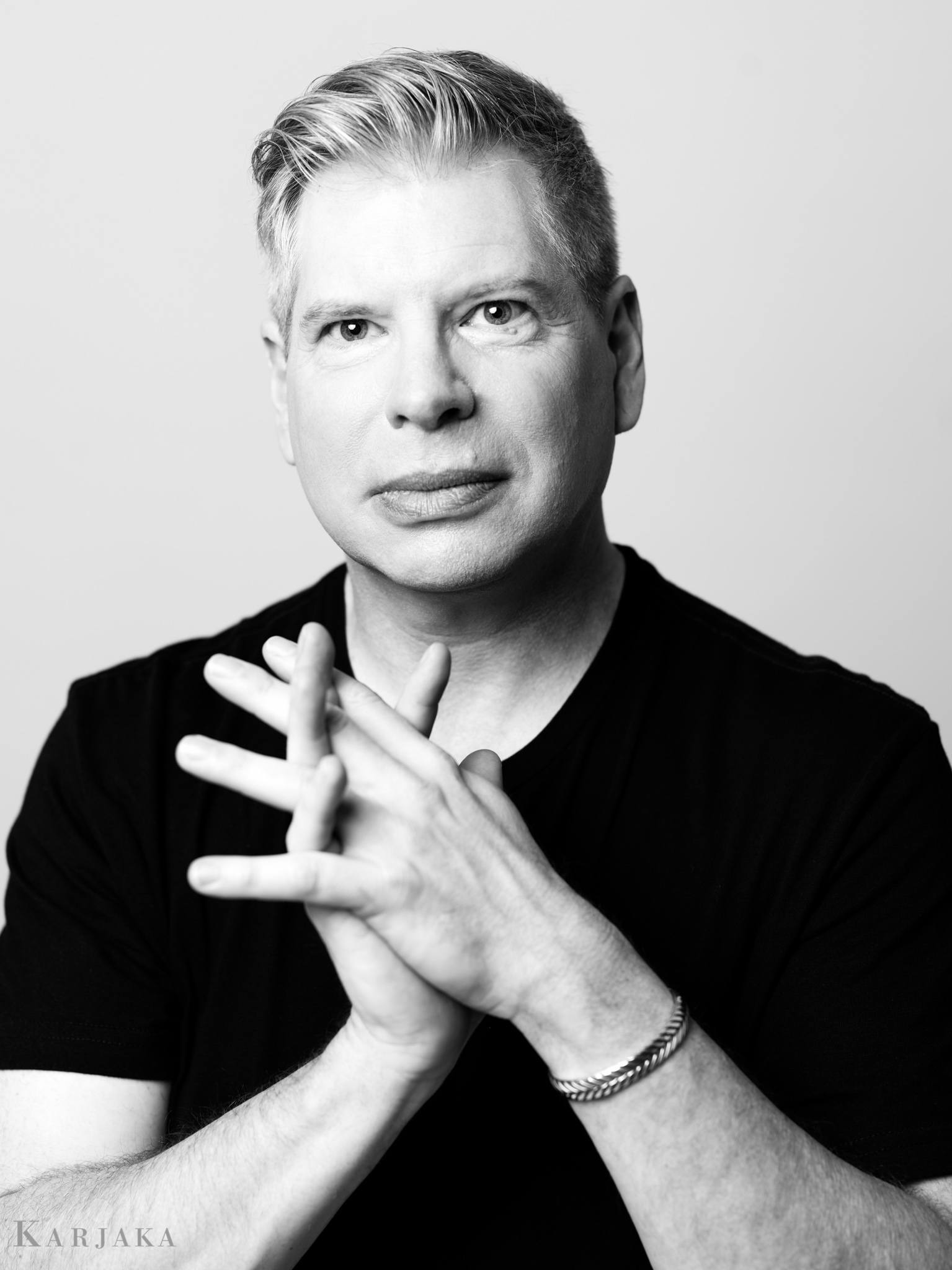
With more than two decades experience as a vocal coach, collaborative pianist, choral conductor, and organist, Kevin J. Bylsma is a musician of impressive depth and ability, well known for his work in opera, art song, and oratorio. A longtime member of the Toledo Opera staff, Mr. Bylsma is currently the Head of Music Preparation and Chorus Master, and was recently names Co-Artistic Director with the company. He was formerly Music Director of the Department of Community Programs for the Michigan Opera Theatre and vocal coach, accompanist, and chorus master for OPERA! Lenawee. In recitals and master classes he has collaborated with the great American singers Samuel Ramey, Diane Soviero, Marilyn Horne, Dawn Upshaw, Michelle De Young, Irina Mishura, Katherine Lewek, and Jennifer Rowley. He is the Co-founder and Artistic Director of the Ann Arbor Festival of Song, and, for the past twenty-eight years, he has served the historic Mariners’ Church of Detroit as Associate Organist and Choirmaster.
Dedicated to the education and training of the next generation of operatic talent, Mr. Bylsma is Coordinator of Opera and Repetiteur at Bowling Green State University’s College of Musical Arts, responsible for vocal coaching and serving as a collaborative pianist for the school’s large body of young singers. Mr. Bylsma also served on the artistic staff of OperaWorks, an intensive opera training program, based in Los Angeles, CA.
A native of Grand Rapids, MI, Mr. Bylsma received his musical training at Calvin College, Bowling Green State University, and the University of Michigan—where he received the Robert Glasgow Organ Scholarship. He currently resides in Toledo, Ohio’s Old West End historic neighborhood with his cats: Rex and Dickens!
Thanks for attending our performances. If you have enjoyed your
experience, please consider donating to the College of Musical Arts in
support of our students and programming. Donate online at bgsu.edu/givecma, or call Karmen Concannon at 419-372-2424.
To our guests with disabilities, please indicate if you need special services, assistance or appropriate modifications to fully participate in our events by contacting Accessibility Services, access@bgsu.edu, 419-372-8495. Please notify us prior to the event.
Audience members are reminded to silence alarm watches, pagers and cellular phones before the performance. As a matter of courtesy and copyright law, no recording or unauthorized photographing is allowed. BGSU is a nonsmoking campus.
Updated: 09/14/2026 04:46PM