Guest Artist: Oliver Worthington, Bass and Johan Botes, piano
- BGSU
- College of Musical Arts
- Guest Artist: Oliver Worthington, Bass and Johan Botes, piano
Tuesday, October 13, 2026
8 p.m.
Bryan Recital Hall
Program
Bearing Witness
War Scenes | Ned Rorem (1923-2022), texts Walt Whitman (1819-1892)
- A Night Battle
- Specimen Case
- An Incident
- Inauguration Ball
- The Real War Will Never Get in the Books
Another Reason Why I Don't Keep a Gun in the House | Tom Cipullo (b. 1956), texts Billy Collins (b. 1941)
- Desire
- Embrace
- Cancer
- Flames
- Putting Down the Cat
- Another Reason Why I Don't Keep a Gun in the House
Last Summer on Neptune | Matthew Ricketts (b 1986), texts Mark Campbell (b. 1953)
A song story for baritone and piano
(commissioned by Oliver Worthington)
- May to September friends
- The waves roll in…
- Heads in, feet out
- Ricky
- Brian
- Hal and Felipe
- Vincent
- Three Visions
- …the Waves roll out.

War Scenes
Walt Whitman (1819-1892)
The texts for these songs are excerpted from Specimen Days and Collect, an autobiographical collection of prose published in 1882. It includes powerful reflections of Whitman’s time spent in field hospitals during the Civil War where he felt compelled to document some of the war’s “interior history.” He wrote to Emerson, “This thing I will record–it belongs to the time, and to all the states–(and perhaps it belongs to me).”
A Night Battle
What scene is this?—is this indeed humanity—these butchers’ shambles? There they lie, in an open space in the woods, 300 poor fellows—the groans and screams mixed with the fresh scent of the night, that slaughter-house! O well is it their mothers cannot see them. Some have their legs blown off – some bullets through the breast—some indescribably horrid wounds in the face or head, all mutilated, sickening, torn, gouged out—some mere boys—they take their turns with the rest.
Such is the camp of the wounded, while over all the clear, large moon comes out at times softly, amid the crack and crash and yelling sounds. The clear-obscure up there, those buoyant upper oceans—a few large placid stars beyond, coming languidly out, then disappearing—the melancholy, draperied night around. And there, upon the roads and in those woods, that contest, never one more desperate in any age or land.
What history can ever give—for who can know—the mad, determin’d tussle of the armies? Who knows the many conflicts in flashing-moonbeam’d woods—the writhing squads—the cries, the din,the distant cannon—the cheers and calls and threats and awful music of the oaths—the indescribable mix—the officers’ orders, the devils fully rous’d in human hearts,—the strong shout, Charge, men, charge. And still again the moonlight pouring silvery soft its radiant patches over all. Who paint the scene, the sudden partial panic of the afternoon, at dusk?
Specimen Case
Poor youth, so handsome, athletic, with profuse shining hair. One time as I sat looking at him while he lay asleep, he suddenly, without the least start, awaken’d, open’d his eyes, gave me a long steady look, turn ing his face very slightly to gaze easier—one long, clear, silent look—a slight sigh – then turn’d back and went into his doze again. Little he knew, poor death-stricken boy, the heart of the stranger that hover’d near.
An Incident
In one of the fights before Atlanta, a rebel soldier, of large size, evidently a young man, was mortally wounded top of the head, so that the brains partially exuded. He lived three days, lying on his back on the spot where he first dropt. He dug with his heel in the ground during that time a hole big enough to put in a couple of ordinary knapsacks. He just lay there in the open air, and with little intermission kept his heel going night and day. Some of our soldiers then moved him to a house, but he died in a few minutes.
Inauguration Ball
At the dance and supper room, I could not help thinking
what a different scene they presented to my view a while since.
Filled with a crowded mess of the worst wounded of the war
Tonight beautiful women, perfumes, the violin’s sweetness, the polka and the waltz.
There the amputation, the blue face, the groan
The glassy eye of the dying, the clouted rag, the odor of blood
And many a mother’s son amid strangers passing away untended there.
The Real War Will Never Get in the Books
And so good-bye to the war. I know not how it may have been to others—to me the main interest
was in the rank and file of the armies, both sides,
And even the dead on the field. The points illustrating the latent character of the American young were of more significance than the political interests involved.
Future years will never know the seething hell of countless minor scenes. The real war will never
get in the books, perhaps must not and should not be. The whole land, North and South, was one
vast hospital greater (like life’s) than the few distortions ever told. Think how much, and of
importance, will be, has already been buried in the grave.
Another Reason Why I Don't Keep a Gun in the House
Billy Collins (b 1941
Desire
It would be easier to compile an encyclopedia
for you than to write these longhand letters
whose ink blackens the night. I write
until dawn saying I think the world of you
but they are always too short
like those two-page schoolboy essays
with The History of Mankind
underlined on the front in crayon.
My encyclopedia will ignore the research
of others and rely on personal experience.
Embrace
You know the parlor trick.
wrap your arms around your own body
and from the back it looks like
someone is embracing you
her hands grasping your shirt
her fingernails teasing your neck
from the front it is another story
you never looked so alone
your crossed elbows and screwy grin
you could be waiting for a tailor
to fit you with a straight jacket
one that would hold you really tight.
Cancer
When you need to say the word, it cowers
in the back of your vocabulary
behind some outdated slang.
And if you try forcing it into the mouth
it lodges in the throat like a fishbone.
My father cannot say it yet.
The old man cannot even hear it.
He pretends I am saying “campfire.”
Flames
Smokey the Bear heads
into the autumn woods
with a red can of gasoline
and a box of wooden matches.
His ranger’s hat is cocked
at a disturbing angle.
His brown fur gleams
under the high sun
as his paws, the size
of catcher’s mitts,
crackle into the distance.
He is sick of dispensing
warnings to the careless,
the half-wit camper,
the dumbbell hiker.
He is going to show them
how a professional does it.
Putting Down the Cat
The assistant holds her on the table,
The fur hanging limp from her tiny skeleton,
And the veterinarian raises the needle of fluid
Which will put the line through her ninth life.
“Painless,” he reassures me, “like counting
backwards from a hundred,” but I want to tell him
that our poor cat cannot count at all,
much less backwards, much less to a hundred.
Another Reason Why I Don't Keep a Gun in the House
The neighbors’ dog will not stop barking.
He is barking the same high, rhythmic bark
that he barks every time they leave the house.
They must switch him on on their way out.
The neighbors’ dog will not stop barking.
I close all the windows in the house
and put on a Beethoven symphony full blast
but I can still hear him muffled under the music,
barking, barking, barking,
and now I can see him sitting in the orchestra,
his head raised confidently as if Beethoven
had included a part for barking dog.
When the record finally ends he is still barking,
sitting there in the oboe section barking,
his eyes fixed on the conductor who is
entreating him with his baton
while the other musicians listen in respectful
silence to the famous barking dog solo,
that endless coda that first established
Beethoven as an innovative genius.
Last Summer on Neptune
A song story for baritone and piano
Mark Campbell (b. 1953)
1. May to September friends
Five towels
On the sand,
Arranged in every which way.
Cabana stripe,
Solid lime,
A cheery houndstooth,
One manic with seahorses,
Another vaguely maritime.
And on the five towels,
Five men spread out.
Two in speedos,
One in a muumuu,
One in trunks,
One without.
Two are lovers,
Two have been lovers,
Two should be lovers,
One doesn’t want lovers.
One smells of Camels and sweat,
And intimate acts
Of the night before,
One of Coppertone.
One of cocoa butter,
Another of a pushy cologne.
One sports mirrored shades,
One is intricately tatted,
One dangles dog tags,
One jaunts a bandanna,
And one is floppy-hatted.
All five are here,
On Fire Island,
1982,
Late August,
As another season ends.
Each of them,
A housemate, a share,
In a three bedroom on Neptune
Walk, May to September
friends.
2. The waves roll in...
One pretends to be
reading The
to-hell-and-back
memoir Of a faded
star.
Dismayed at the lack of
scandal, He shifts to one
elbow,
Then lies on his back,
Then shuts the book.
And drifts off
dreaming of
Nothing he’ll
remember.
One struggles
With the Saturday
crossword And duets
with Yaz
On his Walkman.
Off-key,
Broken lyrics.
“All I needed...”
“Gave...”
“All I needed for
another day...
“All...knew...”
“Only you.”
One draws on his
Camel, And sees
the night ahead.
The pursuits on the
paths, A favored
nook,
A half a lude
To heighten the mood.
In the forest of
lost boys, His
summer baths.
One makes a list—
Water the hibiscus,
Mend the throw,
Pay the electric,
Oil the front lock.
And dinner tonight?
Something easy,
Not too heavy,
Of course! That’s it!
Coquille St. Jacques.
And the two lovers,
One the blond version of the
other, Move in tandem,
For their love
Is a new love.
They hold each other,
Splash in the sea together,
Catch the light in each
other’s eyes. Speak their own
language
(Which the others despise).
The waves roll in,
The waves roll out.
Light softens,
Shadows grow,
As the day withdraws.
These May to September
friends,
This family of
men,
Turn pages,
Trade quips,
Sip fruity drinks,
Sleep and not sleep,
Swim and not swim,
Speak and not speak,
Yielding to the random
rhythms Of an afternoon
On the beach.
3. Heads in, feet out
Suddenly, their voices
Animate the air.
At high tea
The evening before,
They saw him.
Gripping a railing
On the deck.
Alone.
A model,
THE model,
Wasting away,
A mark on his neck.
The “it-est” Of the “it” boys,
Now had IT.
“Gay cancer.”
“I blame it on the bossa
nova.” “I blame it on track
lighting.” “I blame it on Lucille
Ball in Mame.”
The men and their towels
Are now in a circle—
Heads in,
Feet out.
Viewed from above,
It’s a misbegotten starburst
Of rectangles and bodies.
The muumee’ed one spearks:
“My
children...
My beloved children...
I need your final word
About next year.
Please indulge me.
Who will share
Our little shack on
Neptune, Summer of
‘83?”
The others respond:
“I’m in.”
“Sure. Me, too.”
“We’re in.”
“Count on me. What’s another
year?” “Where else would we
go?”
The waves roll in,
The waves roll out.
The light softens
And the shadows grow,
As the day withdraws.
4. Ricky
And later tonight
Later tonight...
The one
Whose name is Ricky
Will pop a doxycycline,
Along with his lude
And race to the forest of lost
boys— Dunes below,
Moon above,
Flesh,
Urges,
Without what he calls
The muck of love.
5. Brian
The one
Whose name is Brian,
Will make a list of past
lovers. Those who’ve
had him
And those he’s had.
Some with names,
Some just faces,
He soon realizes he’ll need
A bigger pad.
6. Hal and Felipe
The couple
Whose names are Hal and
Felipe, Will cradle each
other.
One will wake
And notice a streak
of silver In the
other’s temple,
Burnished by the
moonlight, Gracing
their bed.
He will graze the other’s
mouth With a kiss,
And fall back asleep.
7. Vincent
The one
Whose name is Vincent,
Will bed down
With a book of recipes.
Oh, they can mock him
For his maternal ways,
Call him “Mama Muumuu,”
All they want.
But he loves this family.
Much more than the family
That disowned him
Three decades ago.
He drifts off,
Has a nightmare about a burnt
pavlova, Then returns to sleep.
8. Three Visions
But the one
Whose name is Brian,
Cannot sleep.
He lights a joint,
Slips into his cut-offs,
Heads to the beach,
Strips them off,
And flies into the surf.
He feels the water and foam
All around him,
Taking him under,
Spinning him around.
Back on shore,
He watches the moon
Stipple the water
And feels the warmth
Of the afternoon
Still in the sand.
He draws deep from
the joint. And sees a
vision...
He hears music offshore.
Twisted disco
On a ghost ship.
Another vision...
He is a seagull
Bumping into the stars.
A final vision...
People on the beach,
Gathered,
In white.
They have an ornate
cookie jar, And fling
something from it.
Sand...Snow...
White blossoms...
That last vision will return
to him, Nine months later,
As he lies in his narrow
hospital bed At St. Vincent’s.
9. ...The waves roll out.
The waves roll in,
The waves roll out.
“I’m in.”
“Sure. Me, too.”
“We’re in.”
“Count on me. What’s another
year?” “Where else would we
go?”
Oliver Worthington, baritone, has received widespread acclaim for performances as an opera singer, oratorio soloist and recitalist with organizations like Indianapolis Chamber Orchestra, Indianapolis Opera, Indianapolis Symphonic Choir, West Virginia Symphony, San Antonio Opera, San Antonio Symphony, Hill Country Lyric, Austin Opera, and Lone Star Lyric in roles ranging from The Duke of Plaza Toro to the Verdi Requiem. A champion of living composers, he frequently premieres new works and commissions works to include diverse representation and visibility in the art song repertoire. His recent premiere of his commissioned song-story Last Summer on Neptune by Matthew Ricketts to a text by renowned librettist Mark Campbell has won rave reviews. Dr. Worthington is the Vocal Area Coordinator and the Producing Director of Butler Opera Theatre at Butler University in Indianapolis. His music directing credits include musicals and operas from old favorites to world-premieres in venues throughout the United States. He maintains a full schedule as an educator and performer and serves as the President of The Fritz and Lavinia Jensen Foundation (www.jensenfoundation.org), a component fund of Foundation For The Carolinas, dedicated to supporting the arts through cash prizes to young opera singers. Dr. Worthington is a graduate of Converse College (BM cum laude), The New England Conservatory of Music (MM with Academic Honors and Distinction in Performance), and The University of Texas at Austin (DMA). He collaborated with his Butler colleague Dr. Dana Zenobi to create the award-winning recording Joys Abiding; Soprano and Baritone Duets by Historical Women Composers at Navona Records, a division of PARMA Recordings. Contemporaneously, they published an annotated anthology of the scores using the same title through Classical Vocal Reprints.
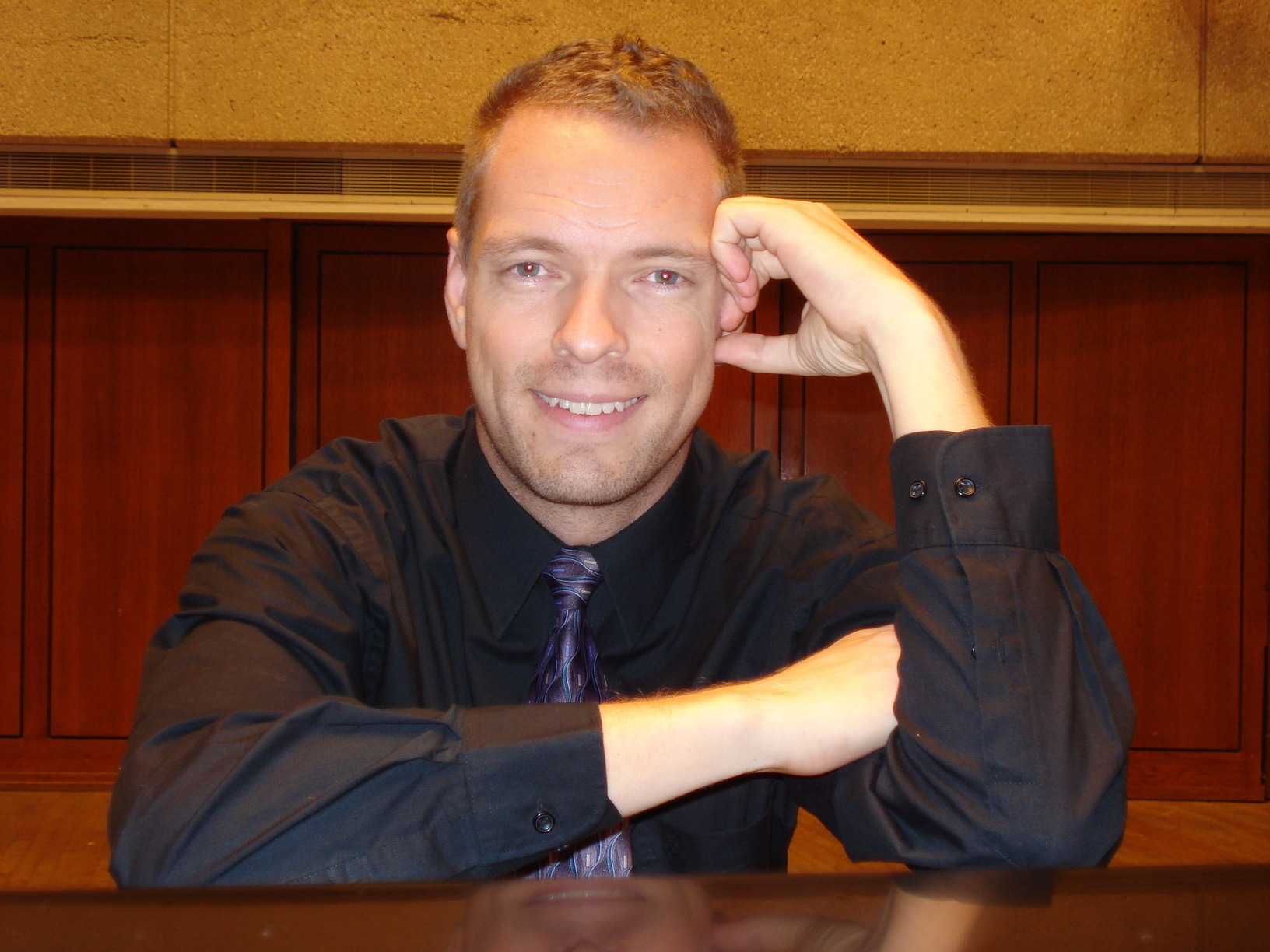
Johan Botes is known for his extraordinary versatility as a soloist, collaborative musician, and teacher; a career which has brought him recognition in concerts around the world. A native of South Africa, Botes showed musical promise from an early age. Among many notable awards in his native country, he was the 2007 First Prize Winner of the Third UNISA/Vodacom National Piano Competition playing Rachmaninoff’s technically demanding Third Piano Concerto to a standing ovation; a performance for which he also won the Desmond Willson Memorial Prize for best concerto in the final round. Most recently, he was chosen as 2nd Prizewinner in the American Prize national non-profit competition for the performing arts in both the solo and concerto divisions.
As a soloist, Botes has performed in venues worldwide. He has appeared as soloist with the Chamber Orchestra of South Africa, the KwaZulu-Natal Philharmonic Orchestra in Durban, Juneau Symphony (AK), Bainbridge Symphony (WA), Auburn Symphony (WA) as well as the Texas Chamber Orchestra. He also performed in Prague with the Hadrec Kralove Orchestra and toured to Bulgaria in 2005 where he played with the Varna Philharmonic Orchestra.
An equally accomplished organist, he passed the Performers Licentiate in Organ of UNISA in 2006 with distinction and was invited for the overseas bursary competition, where he was awarded the Stephanus Zondagh Overseas Music Scholarship.
In 2010, Botes won the Sidney M. Wright Presidential Scholarship Competition in Piano Accompaniment at The University of Texas at Austin and in the same year began collaborative Piano Trio work with cellist Francesco Mastromatteo. Their first performance in October 2010 resulted in critical acclaim, winning them Prize for the best Chamber Music Recital at The University of Texas at Austin in 2011. Dr. Botes holds a D.M.A in Piano Performance from the University of Texas at Austin and a M.M from the Guildhall School of Music and Drama in London. He received another M.M. as well as his B.M. from the University of Pretoria in South Africa. He is currently Professor of Piano at Marshall University in Huntington, WV. During the summers, he is also the Piano Area Coordinator at Interlochen Arts Camp in Michigan, USA
Thanks for attending our performances. If you have enjoyed your experience, please consider donating to the College of Musical Arts in support of our students and programming. Donate online at bgsu.edu/givecma, or call Karmen Concannon at 419-372-2424.
To our guests with disabilities, please indicate if you need special services, assistance or appropriate modifications to fully participate in our events by contacting Accessibility Services, access@bgsu.edu, 419-372-8495. Please notify us prior to the event.
Audience members are reminded to silence alarm watches, pagers and cellular phones before the performance. As a matter of courtesy and copyright law, no recording or unauthorized photographing is allowed. BGSU is a nonsmoking campus.
Updated: 10/09/2026 08:40PM