
Making Sound Futures (2025) : Marianthi Papalexandri Alexandri
Concept, composition, and choreography by Marianthi Papalexandri Alexandri. Commissioned by and written for Tacet(i), with support from the Ernst von Siemens Music Foundation and the Cornell Humanities Innovation Impact Grant, with chain devices by Pe Lang.
Making Sound Futures (2025) by Marianthi Papalexandri Alexandri invites performers to design and construct instruments guided by evolving sonic “recipes” provided by the composer. Built from acrylic, rice paper, rice grains, metal chain, motors, wax, incense, twine, water, and syringe, the instruments combine organic and non-organic materials with motorized elements. Through a ritualistic, elegant, and minimal process, a shifting sound world emerges—shaped by the unpredictable transformations that bring these organic and perishable materials to life over sculpted time. As performers engage with the fragility of the instruments in real time, the piece reveals a gradual sonic and material metamorphosis. Intended to evolve as it travels from place to place, the work grows like a living organism in which instrument, form, and composition develop together. Shaped by living materials that alter sound as they change, Making Sound Futures explores processes of growth beyond direct human control, while remaining deeply dependent on human interaction to come fully alive.
Timbre Studies (2018): Ken Ueno
Timbre Studies was conceived as a pedagogical work for my residencies with student new music ensembles. University groups often face two recurring challenges: their instrumentation is rarely fixed until the last moment, and young musicians must learn how to inhabit the sonic world of contemporary music—particularly the use of extended techniques and non-idiomatic playing.
This open instrumentation piece addresses both issues. Structured as ten short movements, each presents a distinct provocation of color, gesture, and imagination. In this sense, the work fulfills in timbral space a practical function that Terry Riley’s In C has served in rhythmic and harmonic space. One movement even pays tribute to Riley’s masterpiece: restricted to a single pitch, C, but opened out through microtonal inflections.
Rather than prescribing fixed sounds, the score encourages performers to invent their own timbral vocabularies. In workshops, I guide players toward extended techniques specific to their instruments, but the piece itself invites curiosity, risk, and play. Timbre Studies is less about technical display than cultivating an ear for possibility—listening deeply, and finding freedom in sound.
Hell Raiser (2026): Siravith Kongbandalsuk
Hellraiser (2026) for steel strings, springs, and objects is a sound sculpture performance centered on an instrument built from metal-based materials, including steel strings and metal springs as sound generators attached to stainless steel buckets functioning as resonators. Through techniques such as bowing, harmonic playing, and scraping with nylon strings and springs, the sculpture produces an acoustic amalgamation of shattering metallic timbres and blurred, unpredictable results that hover between noise and randomization of pitches, shaped by the inherent properties of metal.
Simultaneously, the performer’s hands are physically connected to the sculpture via springs, creating a situation in which every movement and gesture generates sound. The performer’s body thus becomes an integral component of the instrument, contributing both visually and sonically to the work’s unfolding materiality.
hammer, bell, song (2026): John Eagle
If I had a hammer, I’d hammer in the morning,
I’d hammer in the evening, all over this land.
I’d hammer out danger, I’d hammer out a warning.
I’d hammer out love between my brothers and my
sisters, all over this land.
If I had a bell…
If I had a song…
— If I Had a Hammer (The Hammer Song), Pete Seeger and Lee Hays (1949)
hammer, bell, song was first conceived as a piece about environmental interaction stemming from Bernie Krause’s acoustic niche hypothesis — that species in an ecosystem utilize unique places in frequency space and time in order to avoid sonic competition in their communications. This presupposes a certain level of balance in an ecosystem. But what if that system were out of balance? In danger of collapsing?
Shrimps v. 2 (2026): Piyawat Louilarpprasert
"Shrimps/Raptors” is an “army”, and a collection of my new instruments designed to create a specific sound and immersive sonic experience. Shrimps/Raptors produce a variety of sounds, ranging from gentle squeaks to delicate tones to powerful overloads. The piece offers the idea of do-it-yourself instruments (DIY), where everyday objects can be transformed into musical tools and vice versa. It raises questions about why we stick to traditional instruments and what defines their function. By rethinking musical creativity and sound innovation, these instruments, along with us, will transform into an army of sounds, offering a unique and self-created experience. Please take a moment to think about your sounds, instruments and your life.
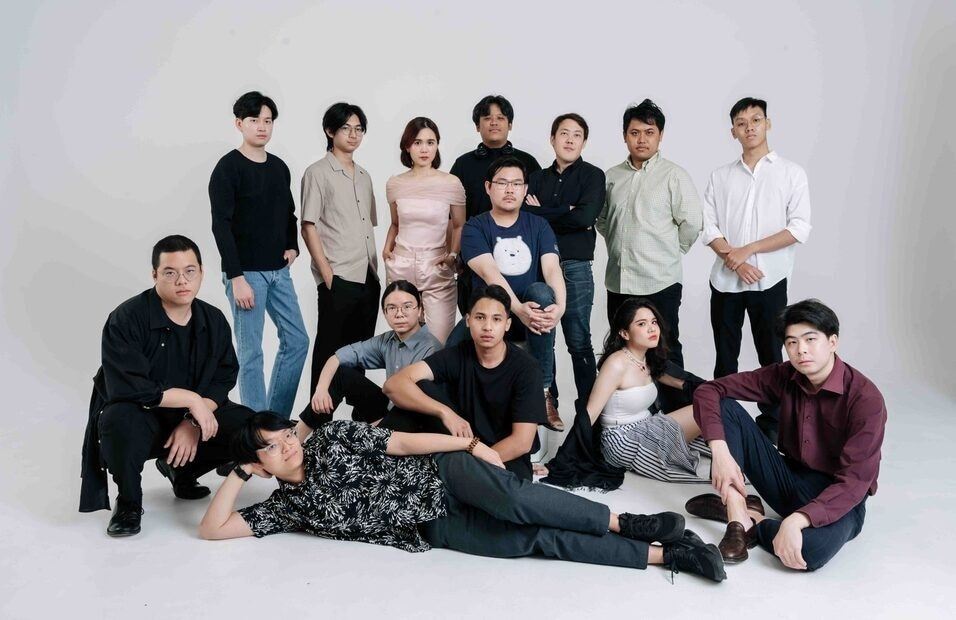
Established in 2014, Tacet(i) is Southeast Asia’s leading new music ensemble dedicated to creating new compositions by both local and international composers and artists. Tacet(i) explores new works that integrate elements of music technology, improvisation, and interdisciplinary collaboration. Annually, Tacet(i) premieres and collaborates on over 50 new pieces per year, showcasing its repertoire in Thailand, Asia, Europe, and the United States.
The ensemble has been performing in festivals such as Thailand New Music and Arts Festival (TNMAS), China-ASEAN New Music Festival (China), Tesselat Collective Collaboration Project (Japan), Cornell Council of Arts (CCA, New York), Crossover Contemporary Music (Netherlands), Diffused Portrait (United Kingdom),IntAct Festival (Thailand), International Computer Music Conference – ICMC (China), Spectrum New York (USA), Thailand-European Composers (Netherlands) and many more. Tacet(i) is awarded and funded by prestigious organizations and supporters such as Siam Cement Group Foundation (SCG Foundation, Thailand), British Council Grants – Connection through Cultures (CTC – UK),Office of Contemporary Art And Culture (Thailand), Japan Foundation Grants (Japan), Prohelvetia, Swiss Art Council (Switzerland), Princess Galyani Vadhana Institute of Music (PGVIM, Bangkok), Cornell Council of the Arts (USA), Vasinee Food Corp (USA). Recently, the ensemble was broadcasted by CNN Worlds as a part of the composer’s interview, Piyawat Louilarpprasert’s exclusive interview, “Young and Gifted the series: Meet the rebel Thai composer taking music to unheard heights.
Tacet(i) was founded by Piyawat Louilarpprasert with a group of Thai contemporary musicians with strong intention to lead the new music scene in Thailand since 2014. In recent years, Tacet(i) has conducted residencies and creative projects at esteemed institutions in Asia, Europe, and the USA, including the Amsterdam Conservatory (Netherlands), Bansomdejchaopraya Rajabhat University (Thailand), Chiang Mai University (Thailand), College of Music – Mahidol University (Thailand), Chinese University of Hong Kong in Shenzhen (China), Cornell University (USA), Graduate Center CUNY (USA), Guangxi Arts University (China), Ithaca College (USA), Royal College of Music (UK), Royal Academy of Music (UK), Peabody Institute of The Johns Hopkins University (USA), Princess Galyani Vadhana Institute of Music (Thailand), Yong Siew Toh Conservatory of Music (Singapore), and Zurich University of the Arts (Switzerland).
From 2014 – 2016, Tacet(i) had produced variety of works such as: concert music, music and arts, electronic music, and sound installation which includes “Tacet(i) Debut Concert” (College of Music Mahidol University, 2014), “CMC Experimental Sound Project No.1: Hor” (Chiangmai University, 2015), “Shuttling the Space sponsor by Japan Foundation (See-Scape Chaingmai Gallery, 2015), “Thai Composer and Music” (broadcasted nationwide, 2015), and the Tacet(i) Call for Scores 2016 (Collaboration with composers from several prestigious music institutions in Thailand: Chulalongkorn University, Kasetsart University, Rangsit University, Chiang Mai University, College of Music Mahidol University, and Princess Galyani Vadhana Institute of Music, 2016)
In 2017, Tacet(i) has made the partnership with “Thailand Music and Art Organisation (TMAO)”, in order to articulate the conception of new collaborative Music and Art. Tacet(i) and TMAO have curated several creative projects which included professional concerts and educational workshops for young musicians in Thailand and Europe, such as: Royal College of Music (London), Royal Academy of Music (London), Studio Loos (The Hague), Amsterdam Conservatorium (Amsterdam) Zurich Conservatorium (Zurich), and St. Cyprian Church (London). TMAO also directed “Music Days 2017: Saxophone and Composition Workshop” which specially meant to support the young composers, saxophonists, and to anyone who interested in learning and experiencing contemporary music and art. The event was held at College of Music Mahidol University, Bansomdejchaopraya Rajabhat University, and Assumption College. Recently, we initiated the first annual Thailand New Music and Art Symposium(TNMAS) which focuses on the diversity of ethnicity, society and culture where the definition of “new art”, possibly, can convey to people the new contexts of artistic language, purpose and spirit without separating the identity of disciplinary. TNMAS 2019 was held at Bangkok Art and Culture Center (BACC) with the theme, “Beyond Boundaries”. The recent years, the festival has been engaged with with more than 300 submissions of artists from around the world and 3,000 attended audiences at BACC per year.
In 2024, Tacet(i) celebrates its 10th anniversary. The ensemble remains committed to enriching the contemporary music scene locally in Southeast Asia and globally. Tacet(i) pursues this mission through dedicated research in sound studies, technology, and interdisciplinary exploration, fostering collaborations with diverse artists, composers, and performers.
For more information regarding our artists details and Tacet(i) performances and events: www.tacetiensemble.com and www.tmaomusic.com.
Thanks for attending this performance. If you have enjoyed your experience, please consider donating to the College of Musical Arts in support of our students and programming. Donate online at bgsu.edu/givecma, or call Sara Zulch- Smith at 419-372-7309.
To our guests with disabilities, please indicate if you need special services, assistance or appropriate modifications to fully participate in our events by contacting Accessibility Services, access@bgsu.edu, 419-372-8495. Please notify us prior to the event.
Audience members are reminded to silence alarm watches, pagers and cellular phones before the performance. As a matter of courtesy and copyright law, no recording or unauthorized photographing is allowed. BGSU is a nonsmoking campus.
Updated: 03/27/2026 12:42PM