

Scientist at BGSU finds toxins from algal blooms present in air samples
Estimated Reading Time:
James Metcalf, Ph.D, analyzed samples to find airborne toxins, even in places that weren’t near active blooms
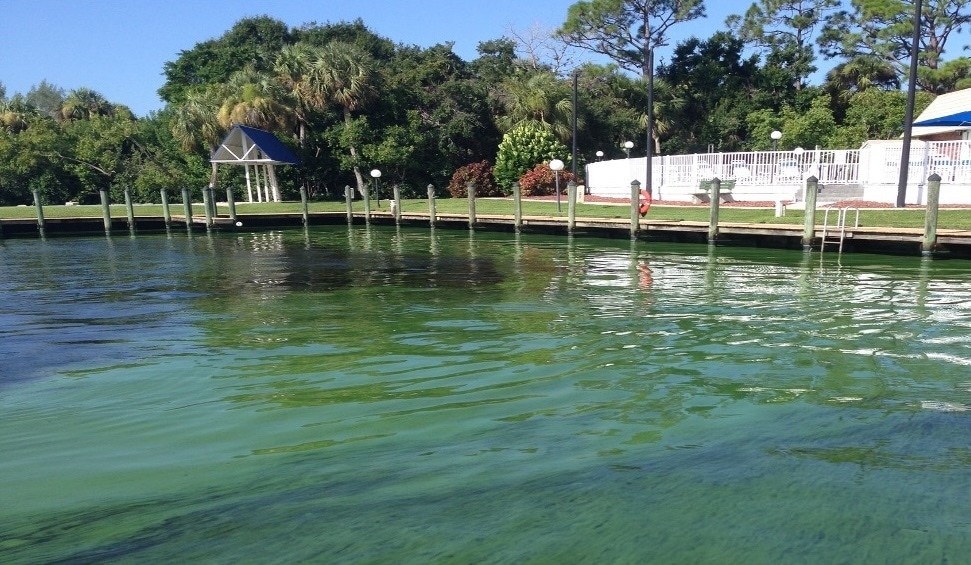
New research by a Bowling Green State University scientist found that harmful algal blooms, the primary issue facing Lake Erie, release toxins into the air that can be inhaled by humans at distances hundreds of miles from the site of a bloom.
James Metcalf, Ph.D., a toxicologist and the Hollingsworth Smith Endowed Chair in Biological Sciences at BGSU, analyzed 21 air samples from southwestern Florida and found that airborne toxins were present at low levels in most of them – despite no large-scale blooms at the sampling locations.
Metcalf, who collaborated with Brain Chemistry Labs in Wyoming and Calusa Waterkeeper in Florida, published the findings in the leading journal Toxins.
The research adds another wrinkle to Ohio’s monitoring of algal blooms in Lake Erie, which typically take place in the summer.
“We didn’t see blooms next to our air sampler, but it’s in the air, which tells us that this stuff is traveling quite some distance,” Metcalf said. “We know that long-term exposure to cyanobacterial toxins does have links to adverse health effects, which can be everything from cancer to Alzheimer’s and ALS.
“For public health, it comes down to risk: we want to understand how important it is that there is airborne exposure.”
Air quality issues have been top of mind for the entire Great Lakes region as forest fires in Canada recently blanketed the region in smoke.
Metcalf said further study into cyanobacterial toxins will have to answer questions about their presence in the greater portrait of air quality, which also includes variables like human-made pollution, weather patterns and temperature.
Because weather systems can move particles great distances – dust from the Sahara Desert has previously traveled across the Atlantic Ocean to the United States – Metcalf said scientists want to learn how low levels of airborne cyanobacterial toxins from algal blooms impact human health.
“That’s the question that nobody quite knows the answer to right now,” Metcalf said. “The wildfire smoke is showing how important it is to have good air quality for human health. Cyanobacteria are just one element of what might be in the air that can affect someone through either short-term or long-term exposure.”
Alex Gronkiewicz, a second-year doctoral student from Demotte, Indiana, is studying air quality while in Metcalf’s lab at BGSU.
While it was known previously that cyanobacteria could be aerosolized and that weather systems can move particles, Gronkiewicz said the concentrations and distances from blooms came as a surprise.
“If you have smaller colonies and individual bacteria, it’s not too surprising that it can travel in concentrations that can be detected,” he said. “There have been previous studies that found cyanobacteria can be aerosolized near beaches, but it’s surprising how much there was and at what distance it was found.”
Metcalf’s research previously discovered that water-level decreases in the Great Salt Lake led to an increased presence of the neurotoxin BMAA in air samples.
With the findings from Florida, Metcalf hopes to expand the airborne cyanobacterial toxins research into the Lake Erie footprint.
In future years, Metcalf said, the presence of algal blooms could affect air quality ratings, which impact everyone.
“If you have contaminated water, you can stop drinking it. If fish are contaminated, don’t eat the fish. But we can’t stop breathing,” he said. “You can’t avoid it, and if it’s there, it’s going to go inside your body, inside your tissues, and possibly cause issues. That’s where we need to go now with Lake Erie. We need to know what’s going on.”
Related Stories



Media Contact
Michael Bratton | mbratto@bgsu.edu | 419-372-6349
Updated: 08/27/2026 03:18PM