
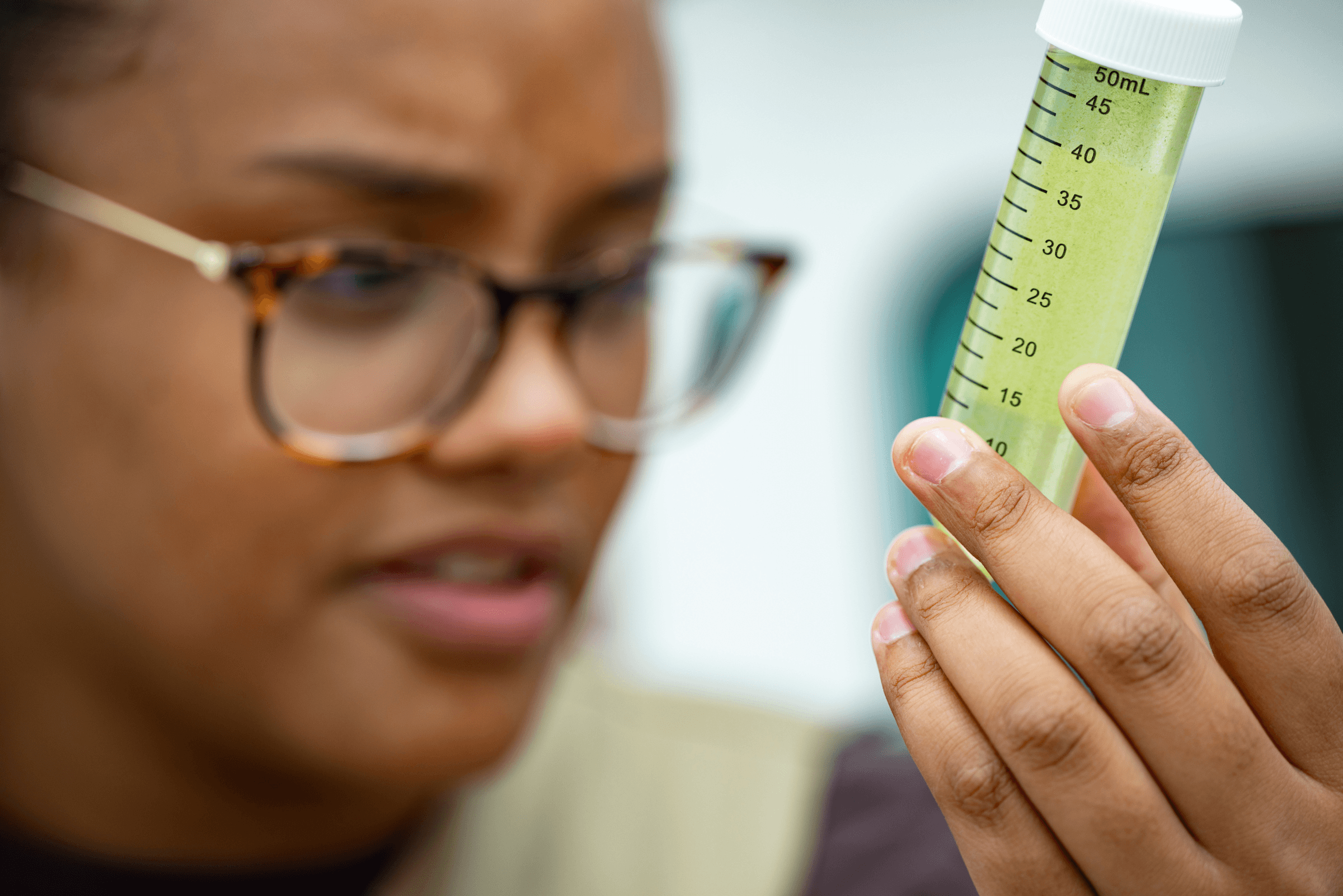
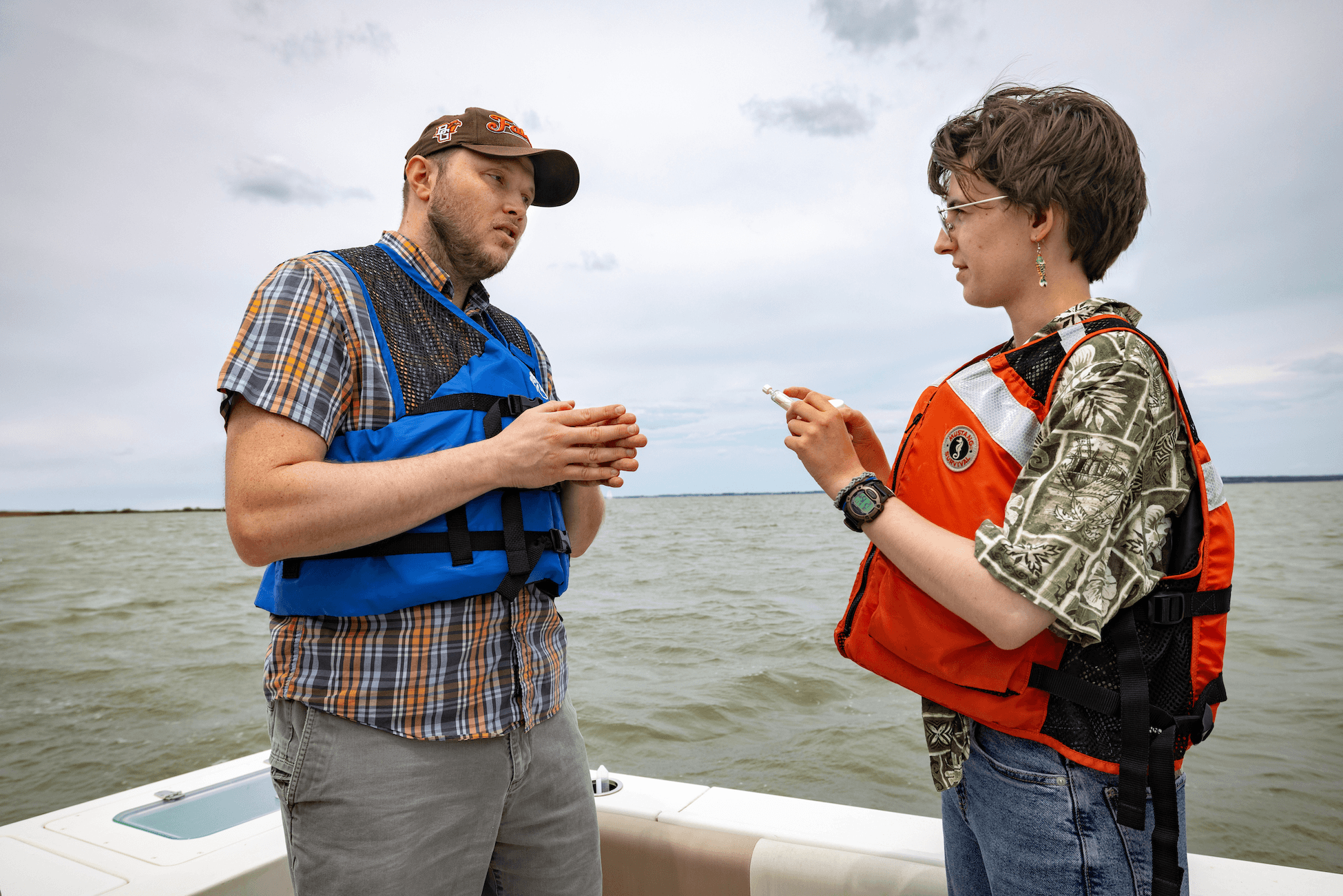
A pilot program that debuted in 2026 created an environment for five BGSU students to apply research topics from a variety of academic disciplines to the Great Lakes, a new interdisciplinary research approach that adds to the University's long history of water-quality research. (BGSU photo / Haven Conn '22)
Students from a variety of degree programs learn interdisciplinary watershed research through field experiences
The Center for Great Lakes and Watershed Studies at Bowling Green State University launched a new pilot program that is expanding freshwater research into new academic disciplines. This year, five students are taking part in the pilot, which will allow them to combine a variety of fields with science to gain a more thorough understanding of water-quality research.
Key Highlights
Initiative: Center for Great Lakes and Watershed Studies pilot proram
Location: Lake Erie watershed
Degree program: Any
Hands-on learning
A new pilot program at Bowling Green State University is guiding five students through interdisciplinary research into the Great Lakes, allowing them to pair other academic disciplines with water-quality research and learn from experts in multiple fields.
Building on a solid foundation
Bowling Green is a destination university for students looking to study water quality, as the University has played an instrumental role in Ohio and beyond for its research into freshwater systems.
A uniquely BGSU approach
The Center for Great Lakes and Watershed Studies at BGSU is pairing students with two faculty members – a primary mentor from their field and a secondary mentor – to create a holistic research approach to study one of the region’s most important natural resources.
“This experience is preparing me for my future career by getting me familiar with lab techniques and talking with scientists about things that haven’t been completely discovered. I’m familiarizing myself with critical thinking while out in the field, which is definitely different than in class.”
BRIANNA PIMENTEL
BGSU MICROBIOLOGY/PRE-DENISTRY STUDENT






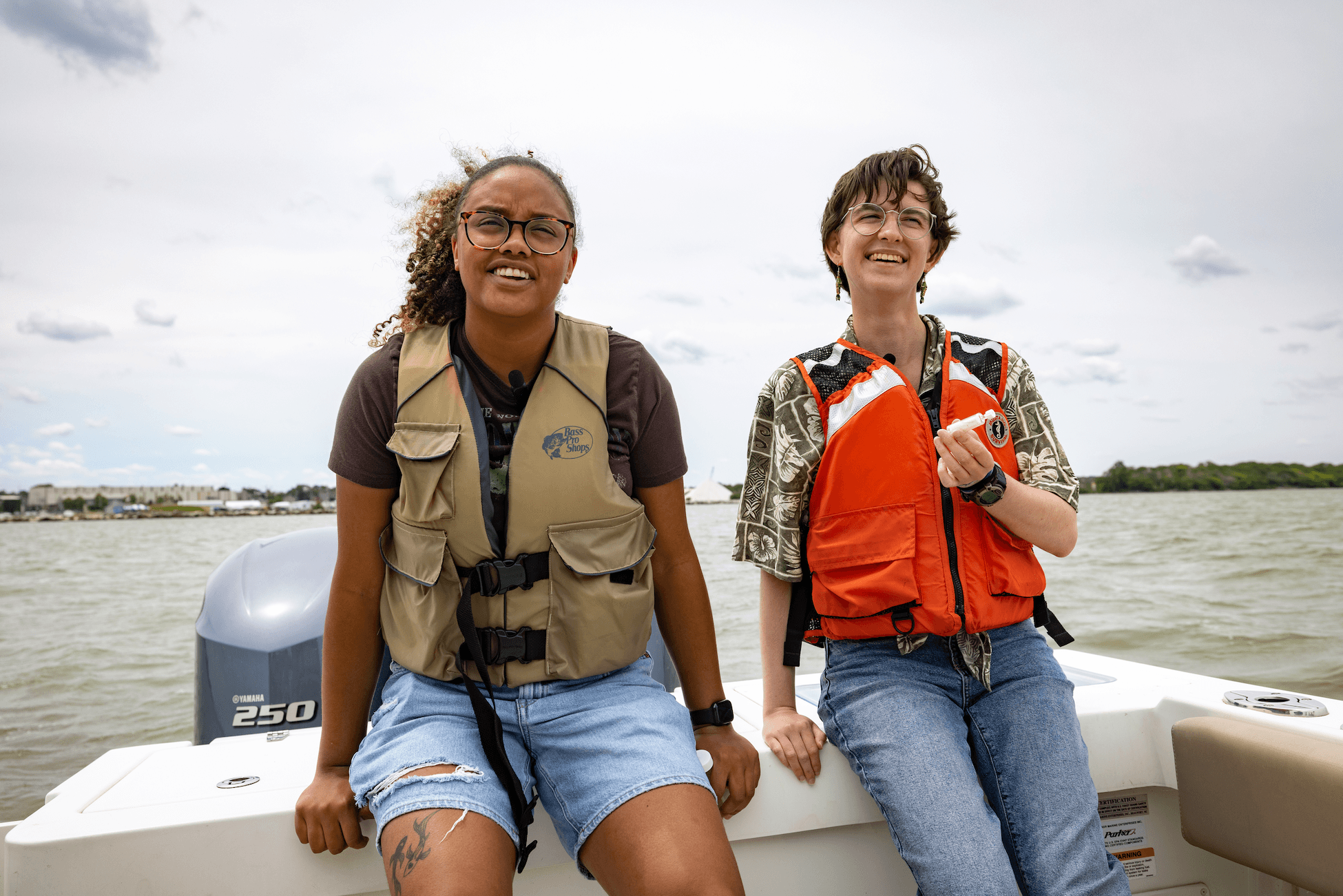
Lake Erie might not be the first setting that comes to mind for history major Jaksyn Trimbach’s research project.
But through an innovative pilot program at Bowling Green State University, Trimbach is one of five students using an additional academic discipline to study the Great Lakes, bringing a new layer to the University’s long history of water quality research.
During the summer, the renowned Center for Great Lakes and Watershed Research (CGLWS) at BGSU launched the program, which provides each of the students with two faculty mentors, one in their chosen field and another outside of it, to spark a new wave of interdisciplinary research into one of the world’s greatest natural resources.
Using land surveys dating back to the 1820s, Trimbach is researching how historical records can inform modern-day issues within the Lake Erie watershed, in the process gaining key experience in another discipline by working with faculty and students in biological sciences.
“As a history major, we have a very flexible degree,” Trimbach said. “By doing this, I’m getting exposed to more biology, so I can see how history can go in an ecological direction and how you can use environmental history to help the public.”
While the experience of conducting research as an undergraduate often helps shape post-graduation decisions, Trimbach hopes the project can provide key data points for future efforts aimed at preserving Lake Erie’s well-being.
“What we can do with that information is see what the ecological environment was like before the swamp was drained in the Great Lakes watershed,” Trimbach said. “Then we can apply that information to conservation and restoration efforts.”
Mason Murphy, Ph.D., an assistant teaching professor of biology and the manager of the BGSU Herpetology Lab, helped design the program alongside CGLWS director Sarah Emery, Ph.D., with the idea that a pilot program could expand water-quality research beyond the traditional disciplines like ecology, chemistry and biology.
By focusing specifically on the Great Lakes – a hugely important resource in Bowling Green’s home region – and equipping students with two mentors, the pilot program creates new connections as scientists study the watershed.
“One, we really wanted this to be a place-based program where the focus is on the Great Lakes and the watershed, and two, we wanted it to be interdisciplinary,” Murphy said. “At a lot of research programs, students get a chance to work with someone, but they stay in one lab and don’t really veer away from that or learn what other students are doing.”
For Brianna Pimentel, a biology student on the pre-dentistry track, the pilot program represents the opportunity to learn from practicing scientists and earn additional skills as an undergraduate.
“This experience is preparing me for my future career by getting me familiar with lab techniques and talking with scientists about things that haven’t been completely discovered,” she said. “I’m also familiarizing myself with critical thinking while out in the field, which is definitely different than in class.”
At Bowling Green, gaining research experience as an undergraduate is a reality. The Center for Undergraduate Research and Scholarship (CURS) provides funding and stipends for hundreds of research, scholarly and creative projects from all disciplines, as well as travel grants and three annual events to highlight undergraduate work.
A record number of BGSU students presented at last year’s CURS Undergraduate Symposium for Research and Scholarship, and experiences like the CGLWS pilot program often prove invaluable as students prepare for life after graduation.
During the 2026-27 academic year, Bowling Green has its largest enrollment in nearly two decades, yet continues to offer the best of both sides of a university experience: big enough to offer significant opportunities, yet small enough that students can make personal connections with faculty.
In the first year of the pilot program, the early returns for ambitious research ideas have been promising.
“The size of BGSU is really perfect for something like this,” Murphy said. “We are large enough that we have a really robust research program – we have a lot of research on the Great Lakes going on in biology, chemistry and other departments – but we’re still small enough that students get to interact one-on-one with both their primary and secondary mentors.”
Related Stories
Updated: 10/14/2026 09:21PM