
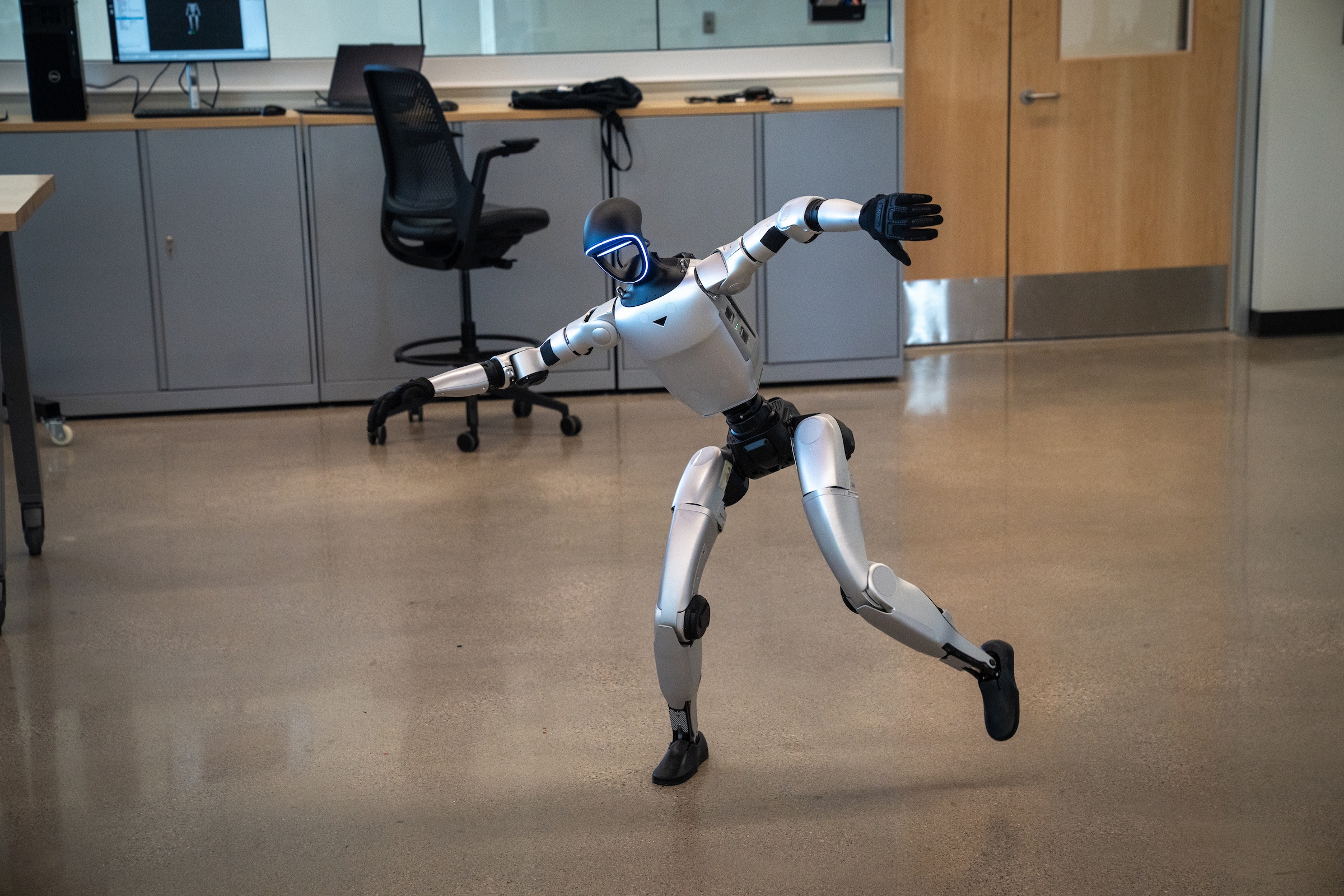
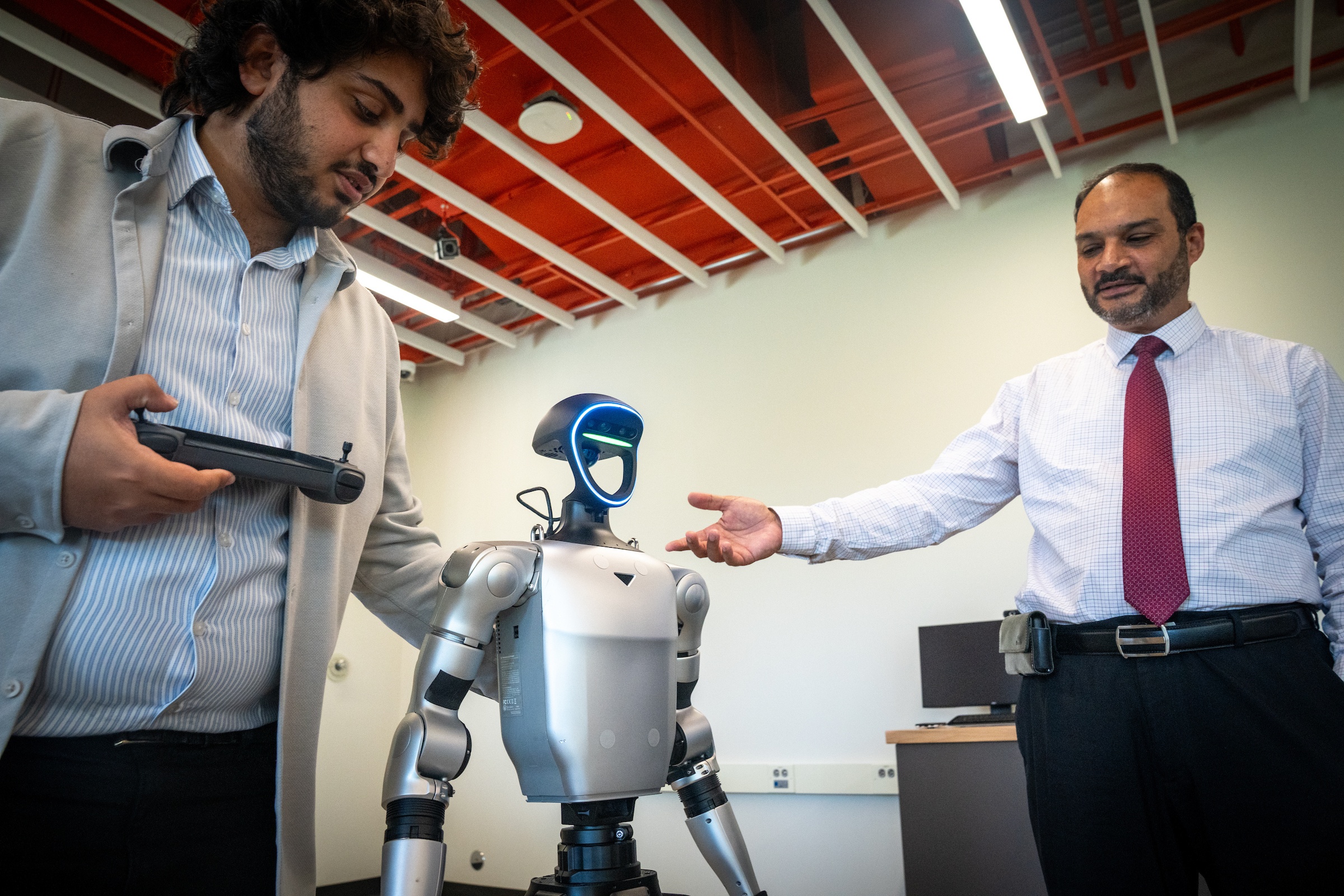
The introduction of Hannah into the classroom allows BGSU students to work with and program a robot that will be the future in engineering and manufacturing industries. (BGSU video/Benjamin Boutwell '24 and BGSU student employee Noah Walter)
Preparing the next generation for the future of automation
At BGSU, engineering students are gaining early hands-on coding experience with Hannah, an advanced humanoid robot with real-time spatial awareness and environmental mapping capabilities. This type of G1 humanoid robot has not yet been fully integrated into industry, which offers BGSU students a distinct advantage in preparing them to lead in the region's thriving robotics industry.
Key Highlights
The robot: Hannah, G1 humanoid
Features: AI learning capabilities, full-programmability and 360-degree functionality
Impact: Undergraduate students can begin programming Hannah as early as their freshman year
Lifelike robotics provides BGSU students with a unique learning opportunity
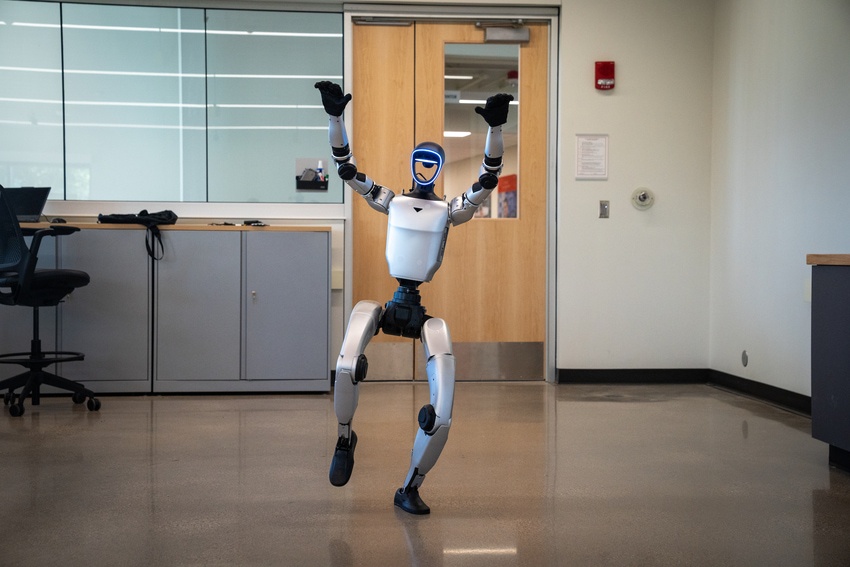
Standing at four feet two inches tall and weighing around 80 pounds, Hannah can walk, talk, dance and do kung fu. More importantly, it can be fully programmed by undergraduate students, providing hands-on learning and application with a state-of-the-art robot.
Working with next-generation robotics
The ability to code multi-body dynamics, including programming a three-dimensional robot with 360-degree motion, serves as a major differentiator for BGSU. Humanoid robots like Hannah are not yet fully integrated into industry, giving students an incredible competitive advantage.
Cutting edge of innovation
Hannah's introduction comes on the heels of the opening of the University's new Engineering and Innovation Center, which added 24,000 square feet to the current structure, allowing for seven specialized labs with flexible spaces to support high-tech equipment, tools and innovative learning.
“With robotics being a key part of industries in this region, it is critical to get this level of advanced robotics into the hands of our students as soon as possible. Once these robots enter the industry, BGSU graduates will already be familiar with them and be able to be hands-on in the coding, mechanics and mechatronics of the robots.”
WAEL MOKHTAR, PH.D
DEAN, BGSU COLLEGE OF ENGINEERING AND INNOVATION


Seeing a humanoid robot walking in the hallways of the Engineering and Innovation Center is not a scene from a movie – it’s state-of-the-art technology being utilized by engineering students at Bowling Green State University.
Standing at four feet two inches tall and weighing around 80 pounds, the G1 humanoid robot named Hannah can walk, talk, dance and do kung fu. Equipped with 3D LiDAR and a depth camera, Hannah has real-time spatial awareness and environmental mapping capabilities. Combining that with a multi-microphone array and speaker for voice processing, the robot is driven by imitation and reinforcement learning, allowing it to learn new tasks, communicate and walk.
While Hannah can pull a 3,000-pound car, it offers more than impressive strength and dance moves to students in the classroom. Hannah provides students with the opportunity to program, practice coding and apply what they learn in class to real-world applications.
“This allows our students to code multi-body dynamics, where they are programming a three-dimensional robot with 360-degree motion,” said Wael Mokhtar, Ph.D., dean of the College of Engineering and Innovation. “Unlike traditional and more industrial robots, our students are required to move every single joint of the robot. This is expanding the envelope of learning and allowing students to go beyond current industry robots and work with something that is still in the process of coming to the industry.”
Because northwest Ohio and southern Michigan feature the highest concentration of industrial robots in the United States, Hannah serves as a major differentiator for BGSU.
“With robotics being a key part of industries in this region, it is critical to get this level of advanced robotics into the hands of our students as soon as possible,” Mokhtar said. “Once these robots enter the industry, BGSU graduates will already be familiar with them and be able to be hands-on in the coding, mechanics and mechatronics of the robots.”
Hannah's introduction comes on the heels of the opening of the new Engineering and Innovation Center, which added 24,000 square feet to the current structure, allowing for seven specialized labs with flexible spaces to support high-tech equipment, tools and innovative learning.
Ahmed ElGamasy is a second-year graduate student in the technology management program at BGSU. When Hannah was introduced, he was chosen to set up the robot for undergraduate students to use, giving him hands-on experience and creating opportunities for future BGSU students.
“I am lucky enough to be in a program that offers this level of technology and equipment and actually allows students to use and learn on,” ElGamasy said. “I am not just working with robots that you find in the industry; I’m working with a robot that we’ll see in the industry in the coming years. Being on the forefront of that has not only been an exciting opportunity to apply my skills, it also makes me more employable following graduation.”
Traditionally, engineering students must design and assemble a robot before they can program it. Thanks to ElGamasy’s setup, undergraduates can bypass hardware construction and begin testing algorithms on a state-of-the-art humanoid immediately.
“They will be able to use Hannah for their implementation and start applying their classroom knowledge to real-world robotics,” he said. “I am thankful for the hands-on learning this has provided me, and I’m excited for students to have opportunities that I wish I had as an undergrad.”
Ahmed ElGamasy is the second-year graduate student at BGSU tasked with programing Hannah and preparing the robot for undergraduate students. (BGSU video/Benjamin Boutwell '24 and BGSU student employee Noah Walter)
Related Stories

Updated: 10/22/2026 04:11PM