
BGSU scientists make startling discovery – and find a possible new ally – in the opioid crisis
Estimated Reading Time:
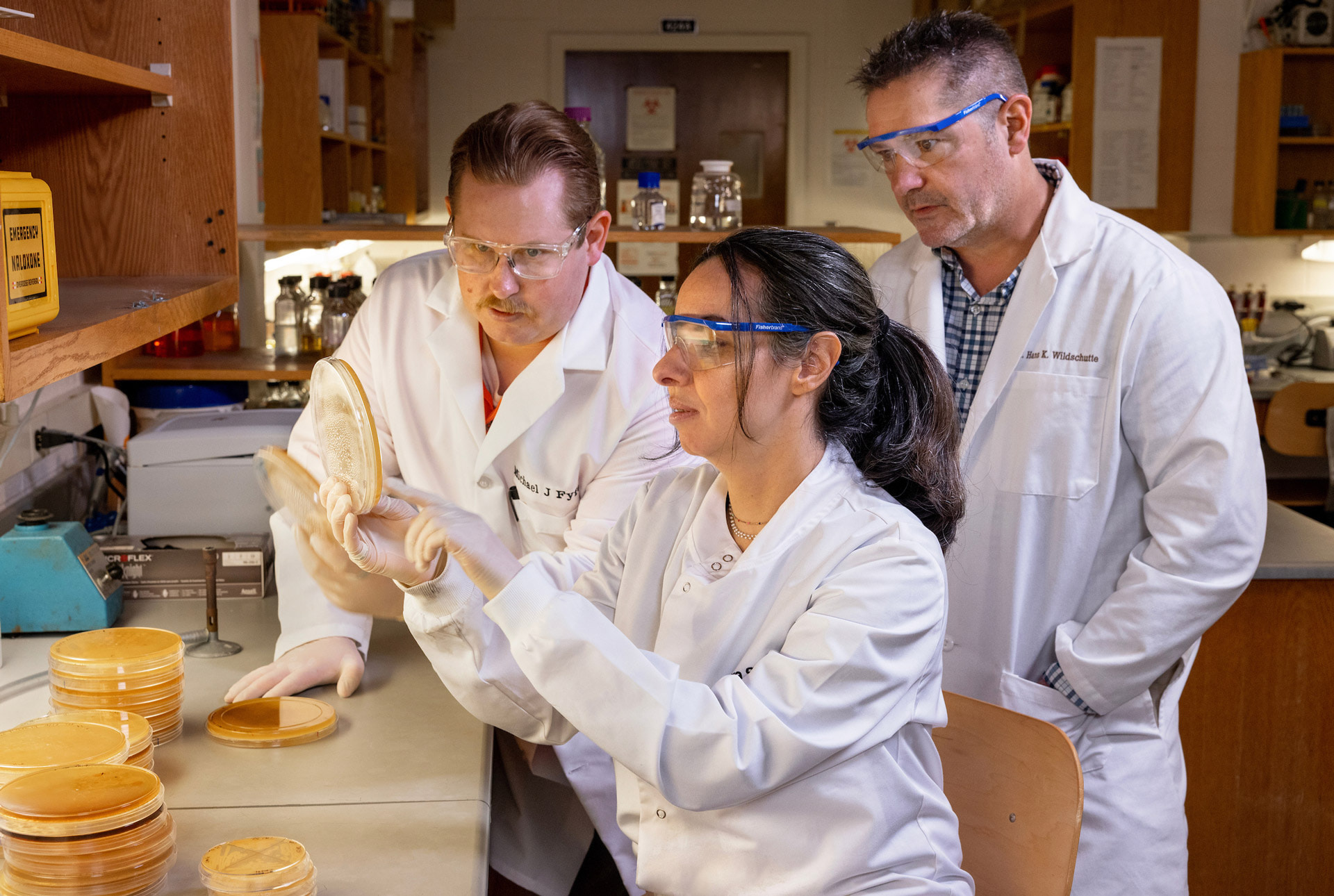
A research team led by BGSU professor Hans Wildschutte, Ph.D., uncovered a soil-based bacteria that can kill a deadly, drug-resistant fungus found in used needles
Scientists at Bowling Green State University made a series of discoveries that could have wide-ranging implications for the future of the opioid crisis.
Through a partnership with the Toledo Lucas County Health Department, a research team led by BGSU biological sciences professor Hans Wildschutte, Ph.D., analyzed used hypodermic needles from the county’s needle exchange program, Northwest Ohio Safe Services. Researchers wanted to better understand what narcotics actually were in the needles and determine if any non-viral pathogens were present.
What they found was jarring.
In a collaboration with former BGSU faculty member John Boman, now at American University, researchers discovered that the average needle had a whopping eight different compounds, found 86% of needles tested contained the powerful tranquilizer xylazine – suggesting it is far more prevalent in illicit drugs than previously believed – and needles contained the presence of a dangerous fungal pathogen, Candida.
BGSU Video by Calen Gray
The findings suggest that intravenous drug use comes with multiple hidden dangers, as well: far more compounds than users know and the possibility of serious infection caused by drug-resistant fungus.
“One reason the needle exchange program began is to decrease the spread of HIV and hepatitis, so most people already know that viruses can easily spread through needles,” Wildschutte said. “But there really isn’t a lot known about the non-viral microbes – bacteria and fungi – that’s in these needles.
“We thought there was just going to be bacteria in there, so when there was Candida, for me, that was a big surprise.”
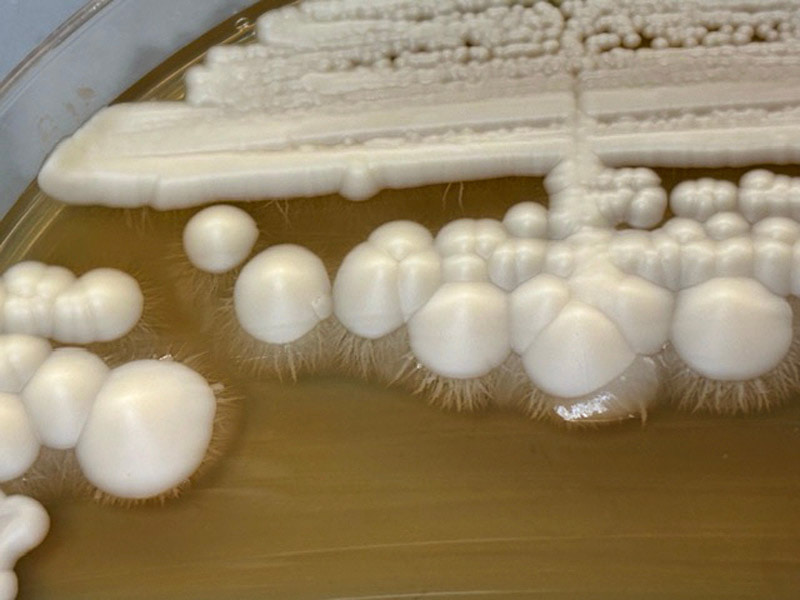
Coming into contact with Candida – which also can cause thrush or urinary tract infections – can be deadly if it causes a blood infection, a realistic scenario when using needles.
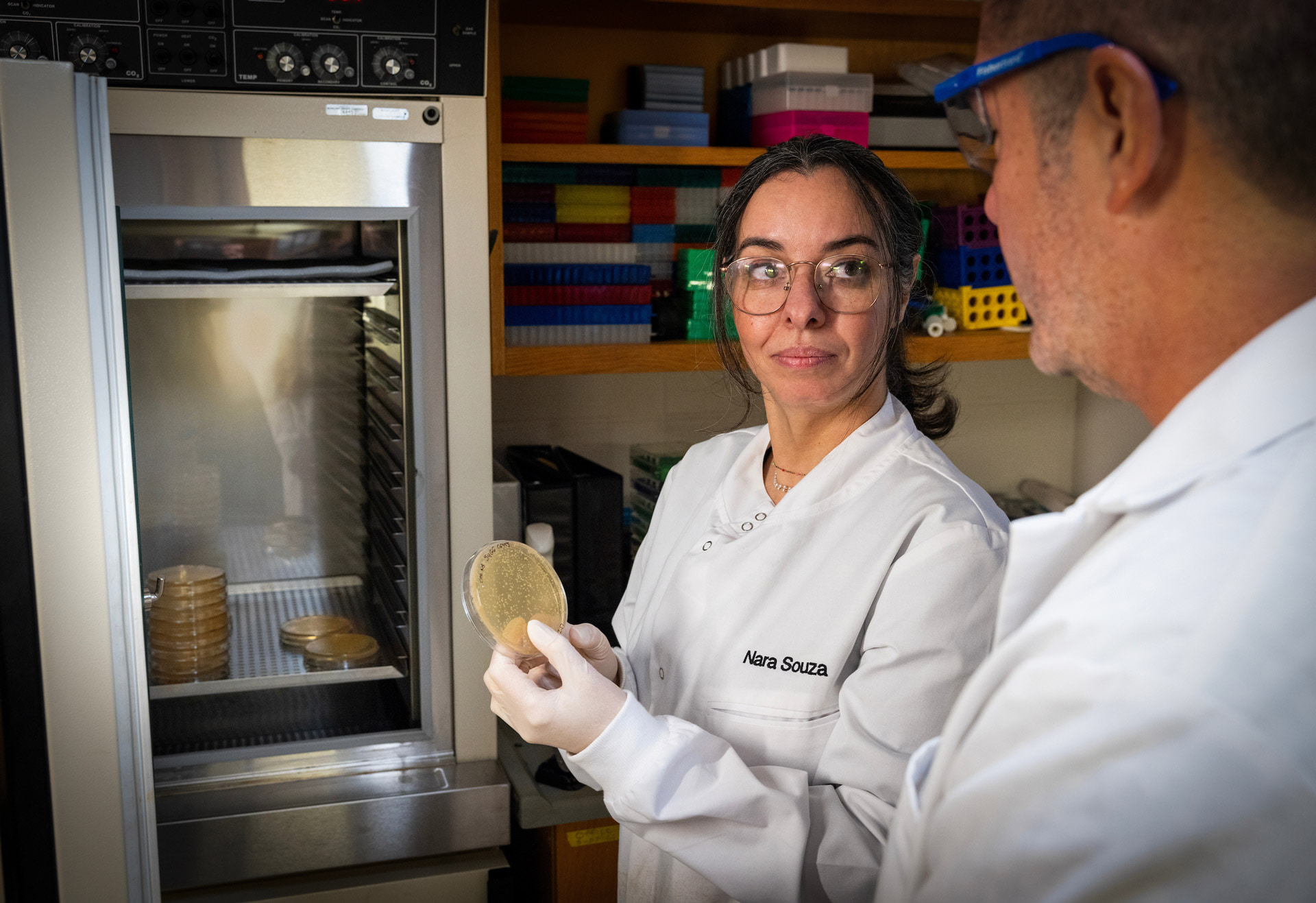
Nara Souza, a Brazilian doctoral student at BGSU who collaborated with Wildschutte on the project, said Candida poses a significant problem for both drug users and healthcare systems that have to treat a complicated, sometimes life-threatening infection.
Candida auris – which is not part of this research, but is closely a related multidrug resistant fungi – is especially dangerous and has been found in hospitals in 27 states.
“We see Candida is already in a lot of hospitals in quite a few states, which is a big concern because we don’t have as many antifungal treatments, especially when compared to antibiotics,” Souza said. “The antifungal medications can have more side effects and can even be toxic to humans, which can limit treatment options. And in addition, the diagnostic testing for fungal infections is more difficult and takes longer.”
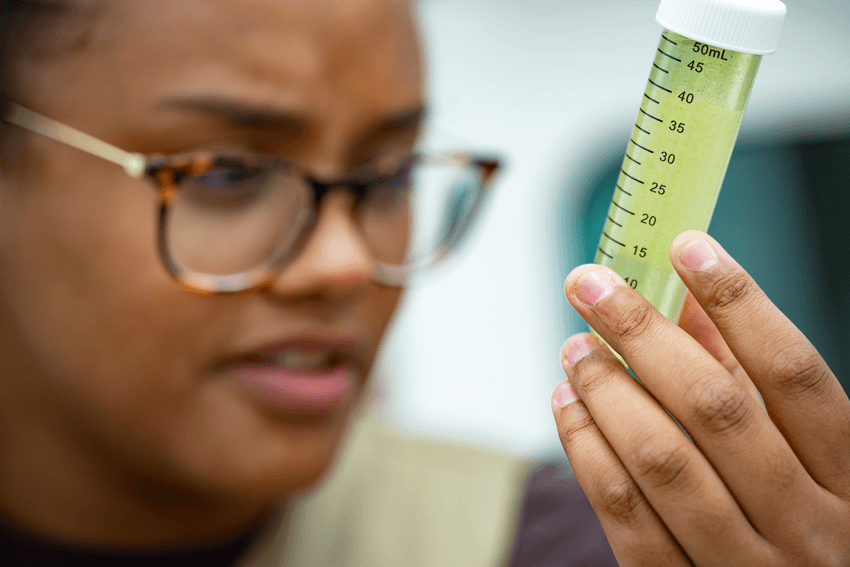
BGSU scientists, however, found an unlikely ally in the form of a soil-based bacterium, Pseudomonas. Researchers found that certain strains killed Candida, which could open a new pathway for natural drug discovery.
The team published its initial findings in the highly regarded scientific journal PLOS One.
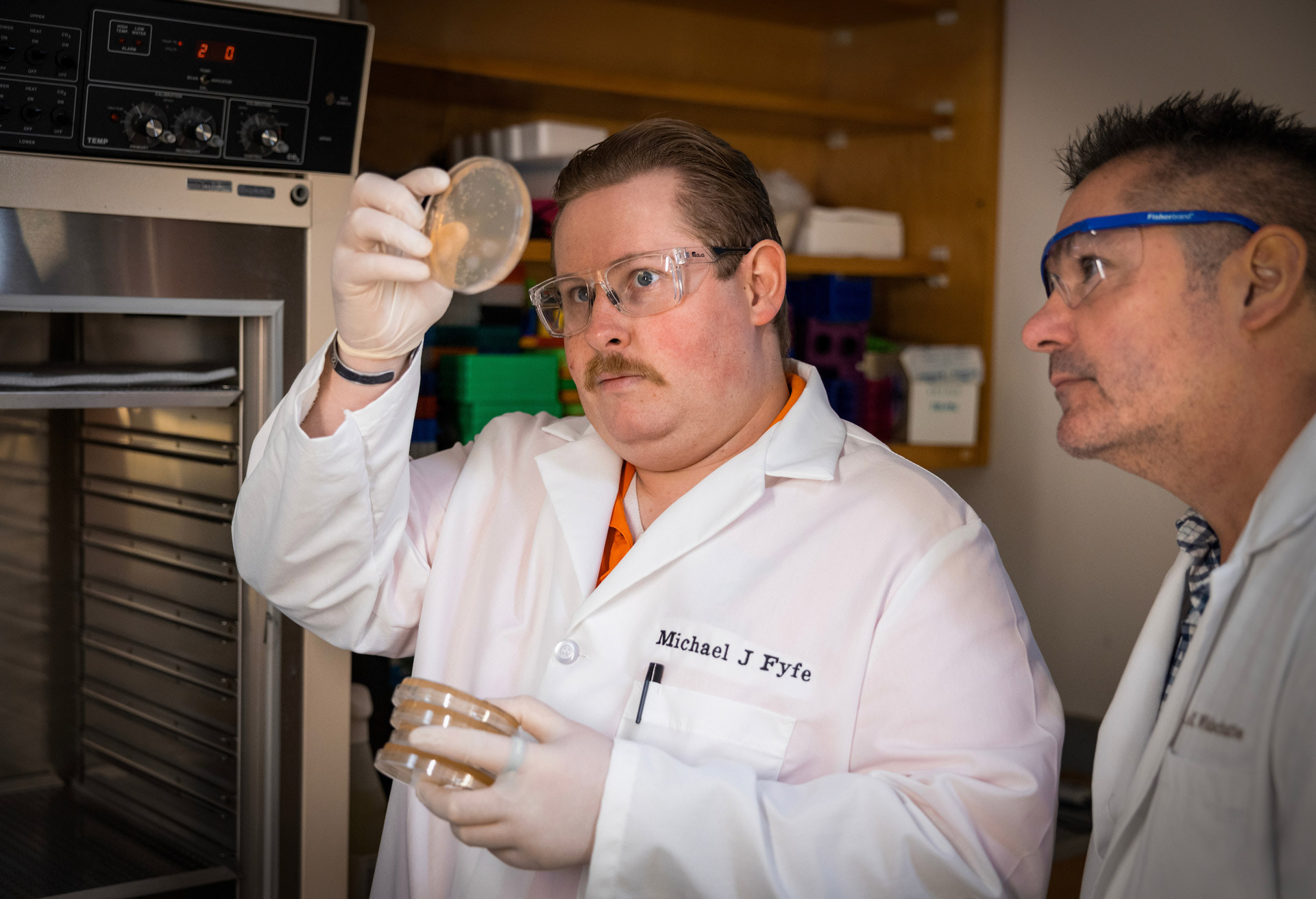
Biological sciences graduate student Michael Fyfe ’24, a Bowling Green native who gained his first research experience as a BGSU undergraduate and continued to work in Wildschutte's lab, said the research has even more promising applications in the future. In the lab, researchers were able to manipulate Pseudomonas to produce desired results.
“We did see some novel interactions that could lead us to some exciting places if we explore this further,” Fyfe said. “There were times that we were able to, in essence, edit the genome to produce more of the antifungal compound.”
Not only did the research provide key data points about the opioid crisis in northwestern Ohio, but it also began to address a worldwide public health issue.
More than 100,000 Americans have died each year since 2021 from intravenous drug use. Fungal infections, already a major problem in certain areas of the world, are increasing year over year, with this research suggesting the two could be even more closely linked in the future.
“There just isn’t a lot of research being done on fungi, but it’s one of the leading causes of infections,” Wildschutte said. “There are about two million people worldwide who die from fungal infections every year, and that number is going up because we don’t have a lot of medications with antifungal properties. There’s been a lot of interest in this.”
While more research is required, Wildschutte said the initial findings have offered a promising route to addressing a growing health concern.
“Every time we do these tests, it’s really remarkable that these bacterial strains are able to kill not only these dangerous fungi, but even some multi-drug-resistant pathogens," he said. “Obviously, that’s been really exciting.”
Related Stories


Media Contact
Michael Bratton | mbratto@bgsu.edu | 419-372-6349
Updated: 07/21/2026 09:03PM