
75 years in the field: BGSU geology camp marks milestone in experiential learning
Estimated Reading Time:
The field course, which travels to southern Colorado and northern New Mexico each year, provides an invaluable experience for geology students
More than 25 years have passed since Ryan Murphy ’02, ’06 attended geology field camp as a Bowling Green State University undergraduate, but the trip remains one of the most formative experiences of his life.
Now in public service for the City of Toledo as a commissioner of solid waste management, Murphy gained key experience in his field before graduation day by taking Field Geology, a long-standing course at BGSU that will celebrate its 75th occurrence in 2026.
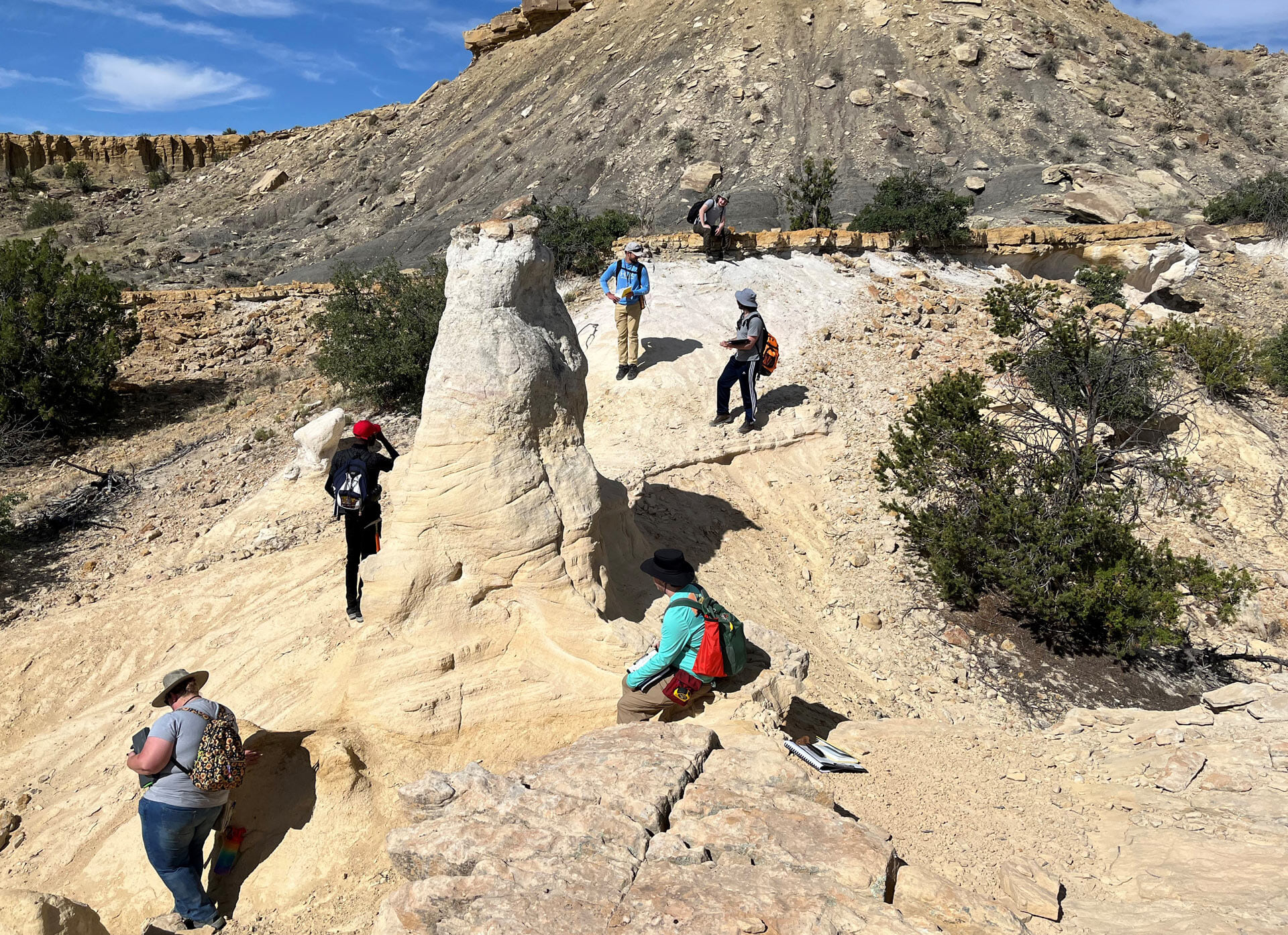
The immersive, five-week summer course has taken place in southern Colorado and northern New Mexico during most of its recent history, offering students firsthand experience into being a practicing geologist.
For Murphy and the generations of BGSU geology students both before and after, field camp was the crystallization of their college experience: The chance to apply their classroom learning to picturesque real-world settings, to learn from professionals in the field and to work as a part of a team.
“Nothing drives it all home like physically seeing the things you learned about and being given the opportunity to analyze data in the field yourself, especially with a professor right there beside you to help challenge you and answer questions in real time,” Murphy said. “For me, field camp brought everything together.”
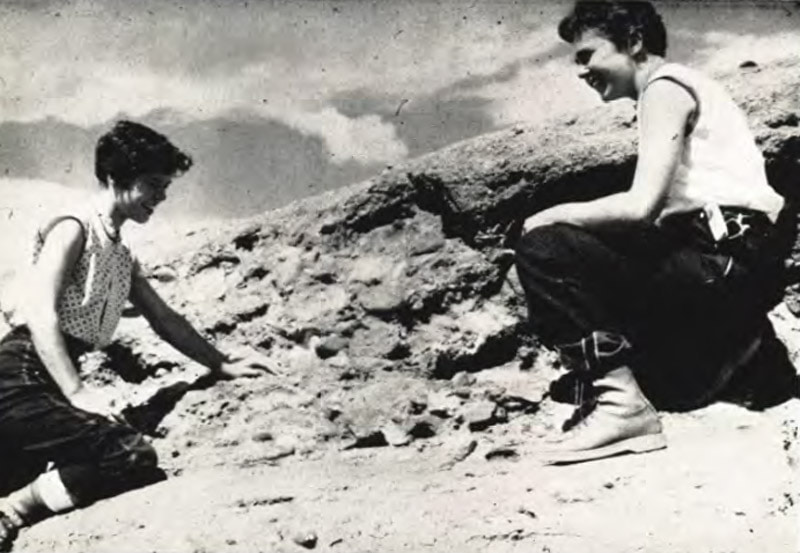
Then, as now, BGSU was at the forefront of creating experiential learning opportunities by providing a setting where students could apply knowledge gained from coursework in a physical environment. Originally led by late faculty member Jack Coash, Ph.D., BGSU has offered its field course every year since the early 1950s, missing only 2020 due to the coronavirus pandemic.
The experience is so unique that students from other universities join the BGSU field camp each year because their institutions do not offer an analogous experiential course.
Jeffrey Snyder, Ph.D., the former field course director and an associate dean in the College of Arts and Sciences, said field camp often can be a launching point for students' next steps.
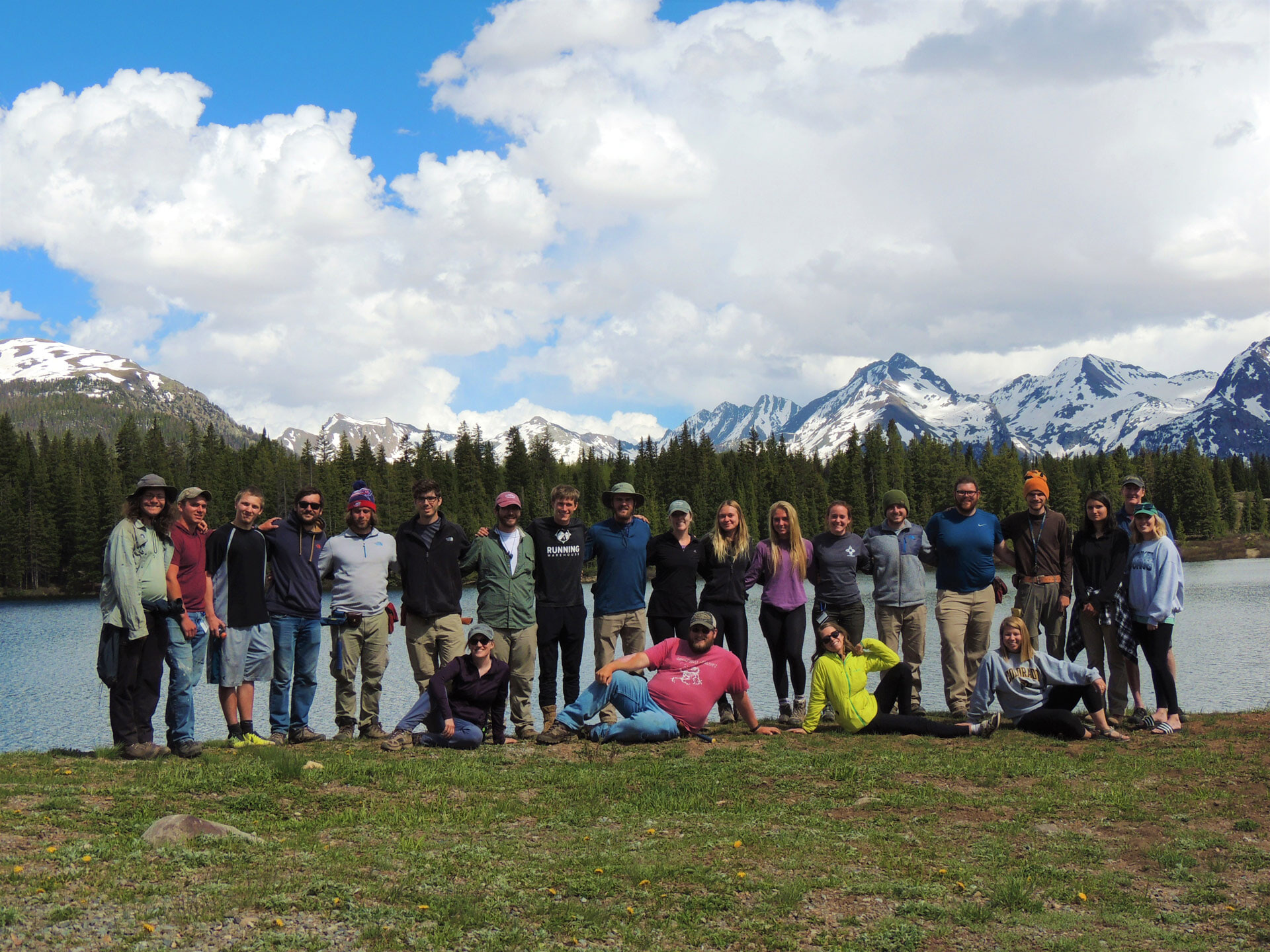
During the month-plus time at field camp, students work together to collect data in numerous remote settings, analyze their findings and collate reports – just as they will as practicing geologists.
“The experience brings together a lot of things that are taught in the classroom and applies them to a real environment,” Snyder said. “That gives students an idea of what the Earth really looks like in some diverse settings, which is really important. Most employers look for things like this as a key experience for geology students, not only for the content, but for the ability to work within a team.”
The current location not only exposes students to a variety of climates – ranging from high desert to high alpine – but provides invaluable settings from which to gather data for individual projects, all while under the tutelage of a practicing faculty geologist.
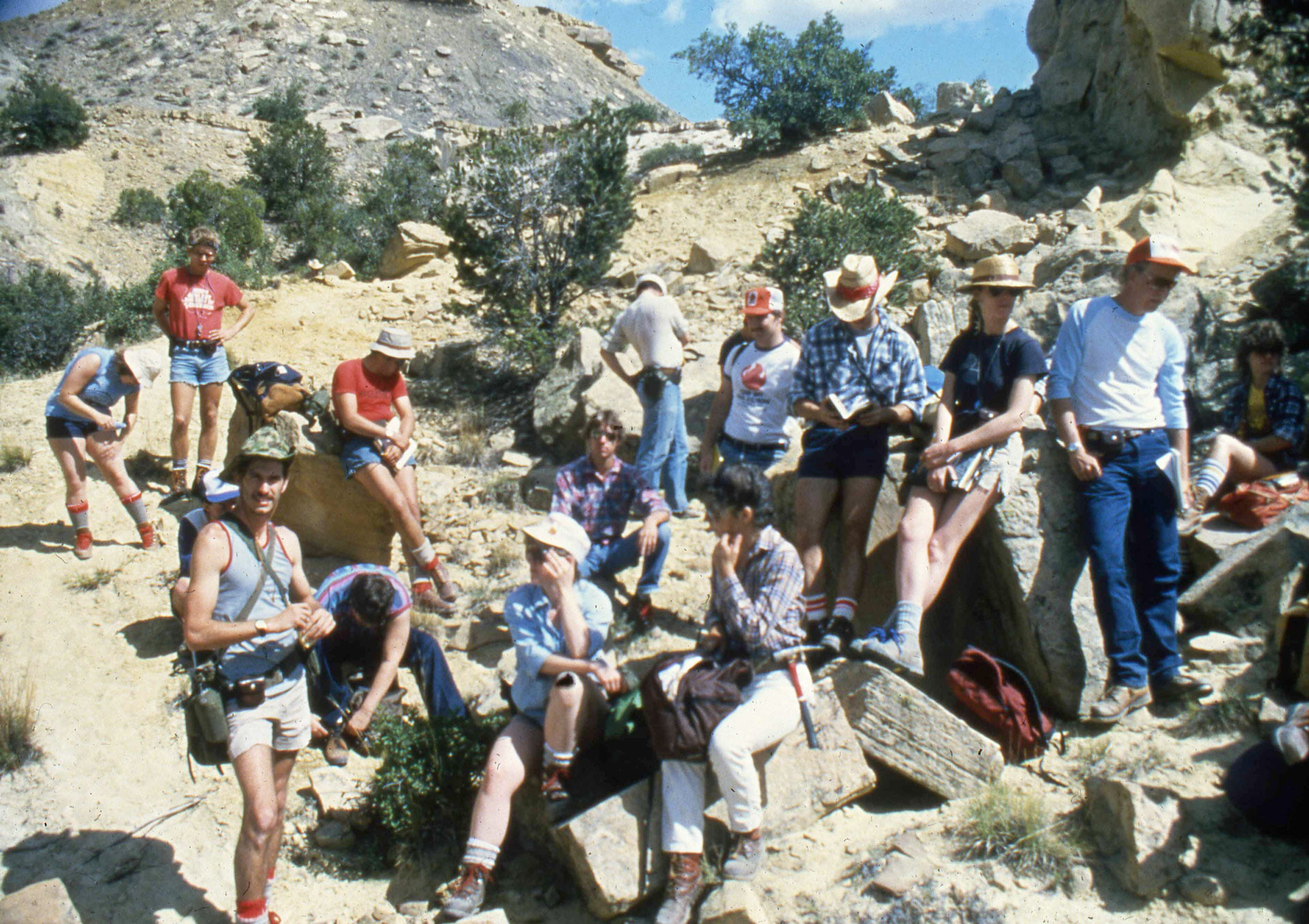
“We expose them to geologic history that spans from billions of years ago up to thousands of years ago, so they get this broader sense of Earth’s history and the broader sense of processes that have to take place over very long periods of time,” said geology professor Kurt Panter, Ph.D.
“You can often see students really gel with the experience of being at field camp. It’s like trying to solve a puzzle: you can see them in the field, really examining things and running from one place to another to pull their projects together.”
For Murphy, his experience at field camp led to an internship with the U.S. Geological Survey, at which he was asked to complete tasks akin to those he completed alongside Panter and Snyder in Colorado and New Mexico.
“In one of my first positions, I spent a lot of time in the field to gather data, came back to the office to interpret the data and began to compile a report – which was very similar to what I had already done at field camp,” Murphy said. “Going to field camp gave me my first experience doing that type of work.
“The chance to work alongside professors who gave you an idea of the expectations of a working geologist really helped you improve, even in the short time you’re there.”
Alumni and supporters of the BGSU Geology program can make a One Day donation to help students attend field camp by selecting "College of Arts and Sciences" in the designation drop-down menu. Within the second "College of Arts and Sciences" tab, there is a selection for the Geology Field Camp Fund.
Even now, Murphy said he remains grateful that his time as a BGSU undergraduate included the chance to broaden his horizons with a lengthy field experience that proved valuable.
“Field camp was challenging, but I really do believe it helped broaden my critical thinking skills,” he said. “I’ve carried that with me through every position, every job I’ve had since then. I still use what I learned at field camp to this day.”
Related Stories
Media Contact
Michael Bratton | mbratto@bgsu.edu | 419-372-6349
Updated: 03/25/2026 01:29PM