
Refined Marriage Rate in the U.S.: Geographic Variation, 2024
Family Profile No. 30, 2025
Author: Krista K. Westrick-Payne
Using data from the 2024 American Community Survey, this profile updates our series on geographic variation in the refined marriage rate in the United States. For the U.S., each state, and Washington, DC, we present the refined rate, defined here as the number of women who married in the past 12 months per 1,000 unmarried women aged 15 and older (Siegel & Swanson, 2004). These estimates represent the population eligible to marry, differing from crude marriage rates (number of marriages per 1,000 total population) published by NCHS and general marriage rates (number of marriages per 1,000 population aged 15 and older) published by the U.S. Census Bureau. The refined rate is considered a superior demographic measure when there is significant state-level variation in both age composition and sex ratios (Ruggles, 2012). The margins of error (at a 90% confidence interval) were also calculated and are presented alongside the refined rates. For detailed information on the refined marriage rate from 2008-2024, see “Charting Marriage & Divorce in the U.S.: The Refined Marriage Rate” (Westrick-Payne, 2025).
U.S. Refined Marriage Rate, 2024
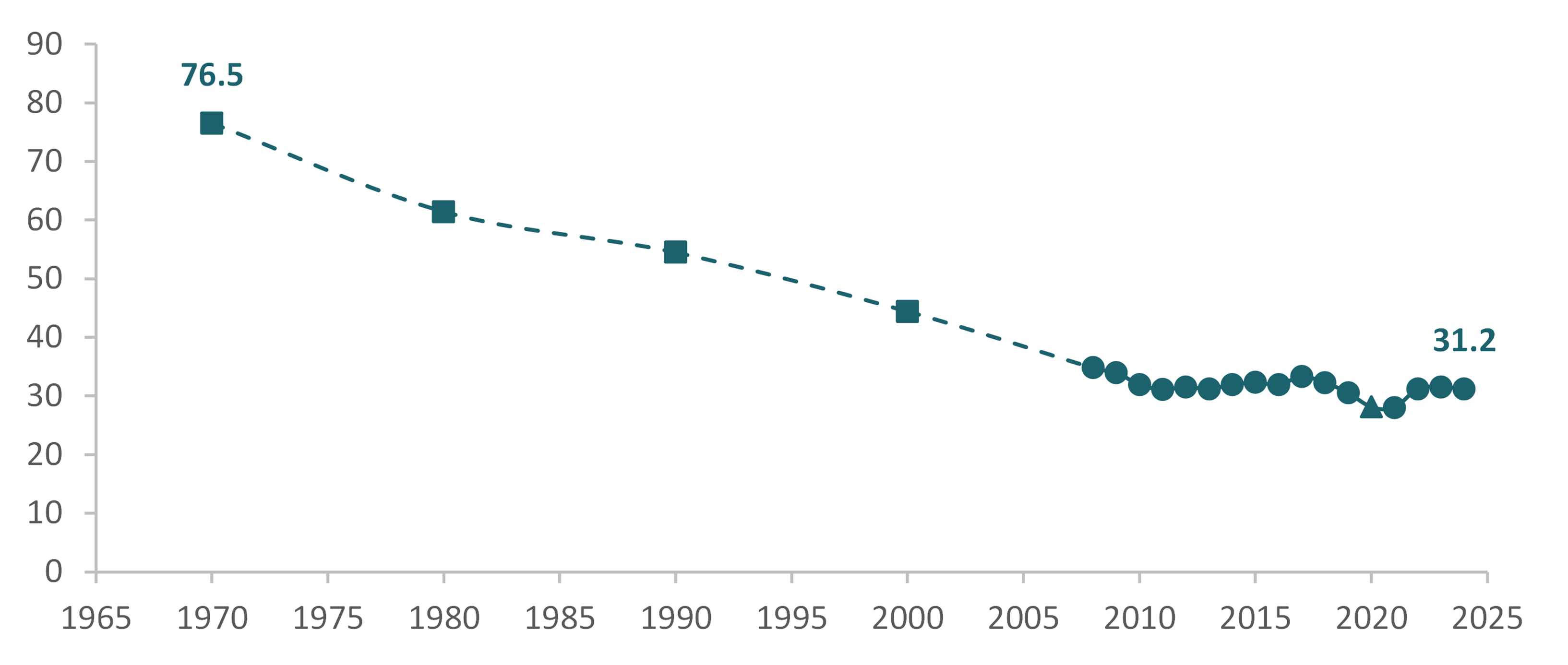
- With 31.2 women marrying per 1,000 unmarried women, the U.S refined marriage rate remained stable in 2024.
- More than 2 million women (2,390,482) married in 2024, a nominal increase of 29,452 women from 2023 when 2,361,030 women married.
Figure 1. Women’s Refined Marriage Rate, 1970-2024
Five Highest and Lowest Marriage Rates, 2024
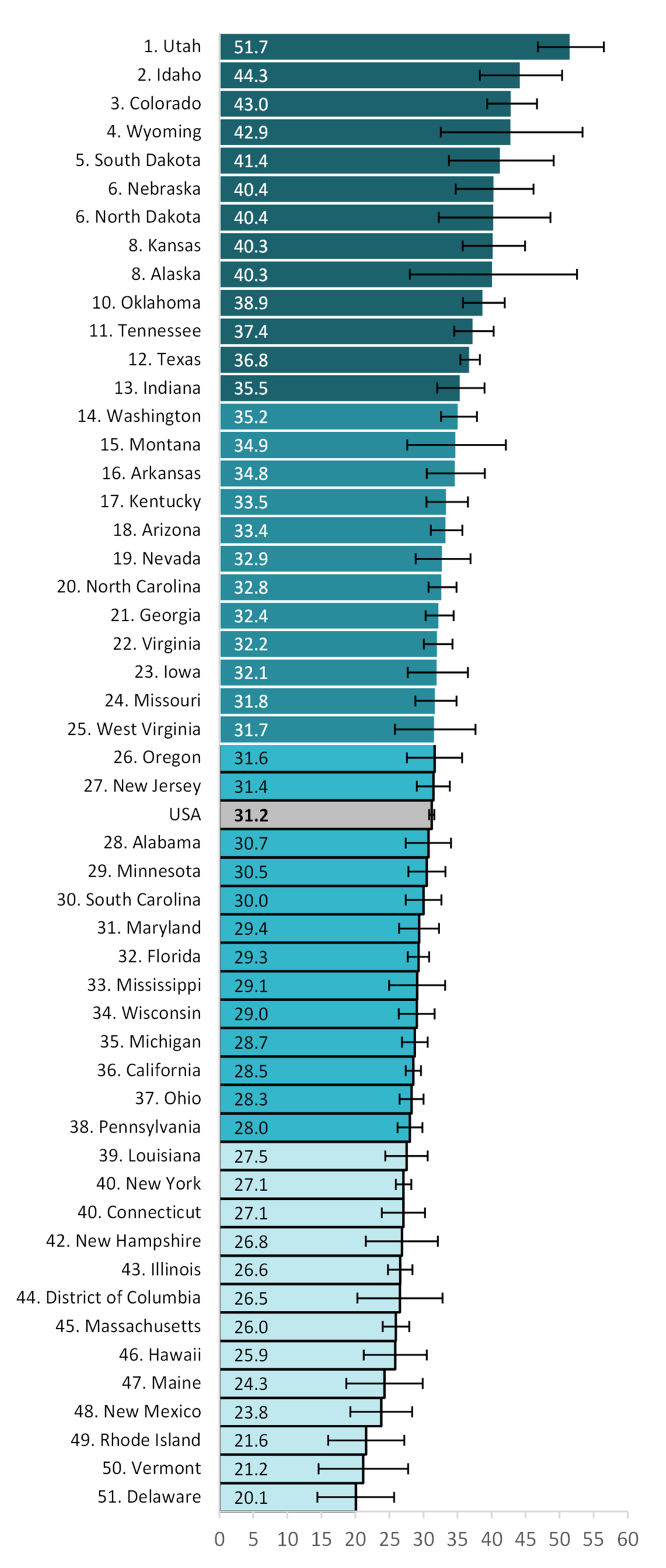
Figure 2. Women's Highest and Lowest Refined Marriage Rates, 2024
| Rank | State | Rate | MOE | |
| 1. | Utah | 51.7 | +/- | 4.8 |
| 2. | Idaho | 44.3 | +/- | 6.0 |
| 3. | Colorado | 43.0 | +/- | 3.7 |
| 4. | Wyoming | 42.9 | +/- | 10.4 |
| 5. | South Dakota | 41.4 | +/- | 7.7 |
| USA | 31.2 | +/- | 0.4 | |
| 47. | Rhode Island | 24.3 | +/- | 5.6 |
| 48. | Connecticut | 23.8 | +/- | 4.5 |
| 49. | New Mexico | 21.6 | +/- | 5.6 |
| 50. | Louisiana | 21.2 | +/- | 6.6 |
| 51. | Delaware | 20.1 | +/- | 5.6 |
Source: NCFMR analyses of American Community Survey 1-year estimates, Tables B12001 & B12501, 2024
- Utah had the highest refined marriage rate for the fifth consecutive year, rising from 49.0 in 2023 to 51.7 per 1,000 unmarried women in 2024.
- Delaware had the lowest refined marriage rate in both 2023 and 2024, falling from 23.7 in 2023 to 20.1 per 1,000 unmarried women in 2024.
State Rankings in Refined Marriage Rates, 2024
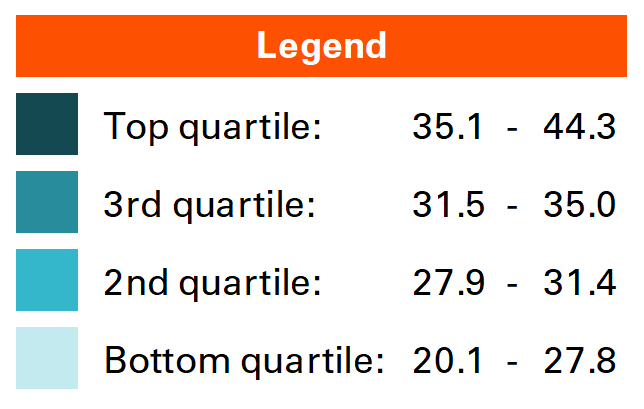
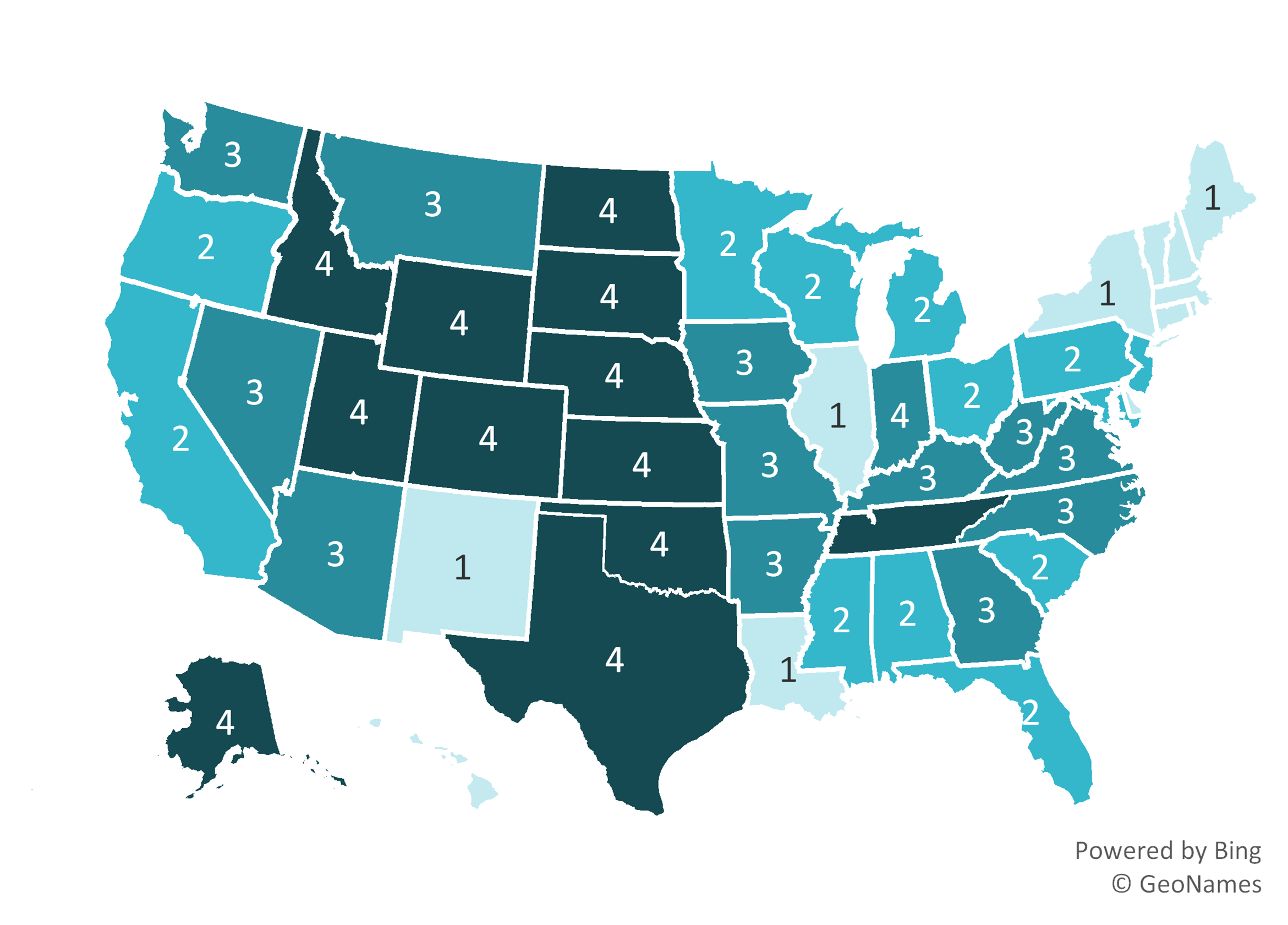
- The states with the highest marriage rates and representing the top quartile in 2024 had rates of at least 35.1 marriages per 1,000 unmarried women aged 15 and older.
- The states with the lowest levels of marriage and representing the bottom quartile in 2024 had 27.8 or fewer marriages per 1,000 unmarried women.
Figure 3. State-Level Women’s Refined Marriage Rate by Quartile, 2024
Regional Variation in Refined Marriage Rates, 2024
- More than two-thirds of the states in the Western region of the country had high marriage rates (third or fourth quartile), with 38% in the fourth/top quartile and 31% in the third quartile.
- Of the four quartiles, the largest share of Midwestern states was in the fourth quartile at 42%, making them the Census Region with the highest share in the fourth quartile. Another 17% were in the third quartile.
- Only one Midwestern state, Illinois, was in the first quartile.
- About one fifth (18%) of Southern states were also in the fourth quartile. However, Southern states were most concentrated in the third quartile (35%).
- Most states in the Northeast exhibited low marriage rates with none in the fourth or third quartiles. Over three-fourths (78%) fell into the bottom/first quartile.
Figure 4. Regional Variation of Women’s Refined Marriage Rate, 2024
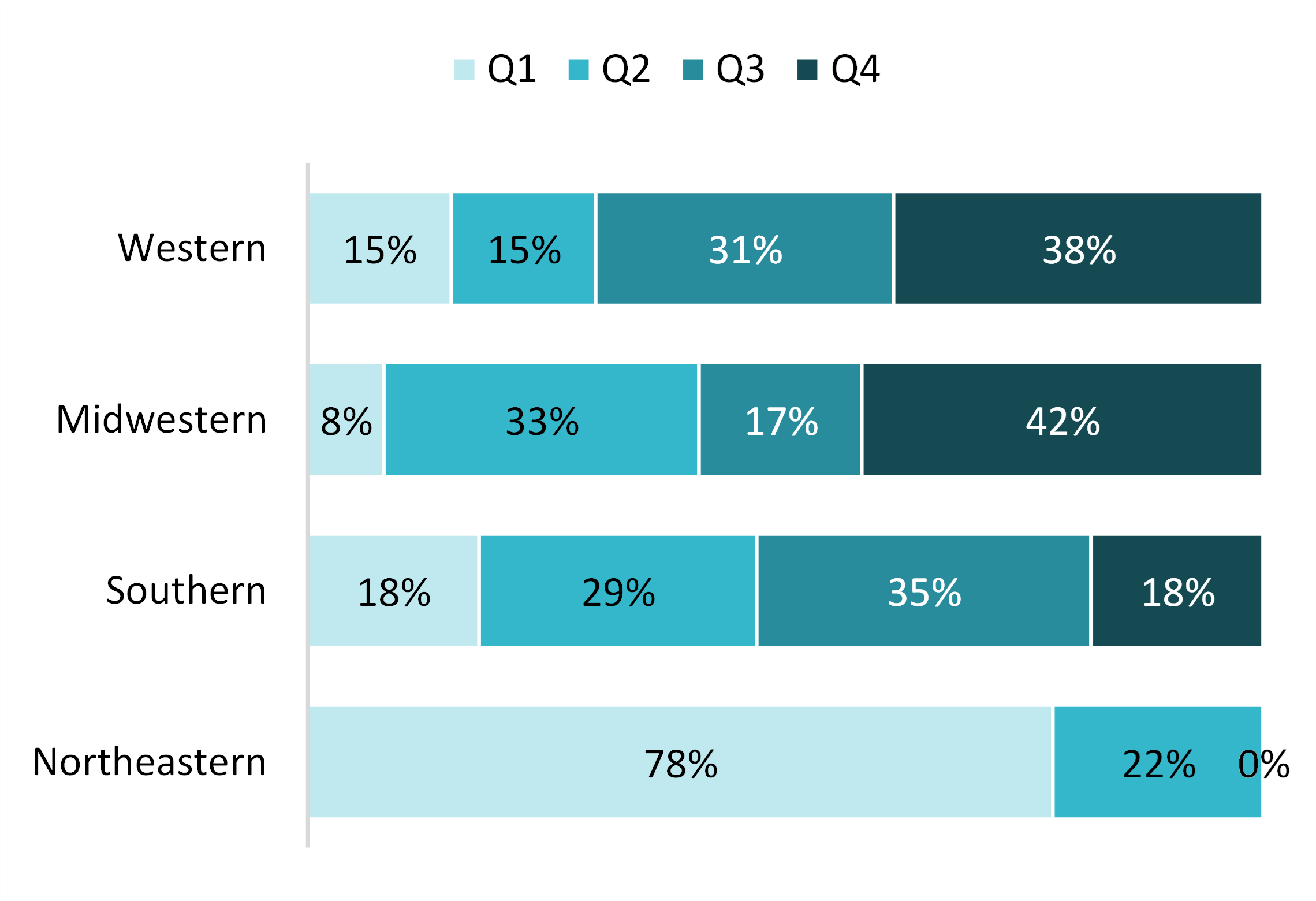
Figure 5. State-level Map of Women’s Refined Marriage Rate in the U.S., 2024
Data Sources:
Clarke. S. C. (1995). Advanced report of final marriage statistics, 1989 and 1990. Monthly Vital Statistics Report, 42(12). National Center for Health Statistics. https://www.cdc.gov/nchs/data/mvsr/supp/mv43_12s.pdf
National Center for Health Statistics (1974). Summary report final marriage statistics, 1970. Monthly Vital Statistics Report, 23(2), Supp.1. U.S. Department of Health, Education, and Welfare. https://www.cdc.gov/nchs/data/mvsr/supp/mv23_02s1acc.pdf
National Center for Health Statistics (1983). Advance report of final marriage statistics, 1980. Monthly Vital Statistics Report, 32(5), Supp. U.S. Department of Health and Human Services. https://www.cdc.gov/nchs/data/mvsr/supp/mv32_05s.pdf
National Center for Health Statistics (2001). Births, marriages, divorces, and deaths: Provisional data for January-December 2000. National Vital Statistics Report, 49(6), Associated Table 3. Department of Health & Human Services, Center for Disease Control and Prevention. https://www.cdc.gov/nchs/data/nvsr/nvsr49/nvsr49_06.pdf
U.S. Census Bureau (2024). American Community Survey, 2021 - 2024 1-Year Estimates [Table B12001]. Retrieved from: https://data.census.gov/cedsci/table?q=B12001&tid=ACSDT1Y2021.B12001
U.S. Census Bureau (2024). American Community Survey, 2021 - 2024 1-Year Estimates [Table B12501]. Retrieved from: https://data.census.gov/cedsci/table?q=B12501&tid=ACSDT1Y2021.B12501
U.S. Census Bureau (2021). American Community Survey, 2020 1-year Experimental PUMS
References:
Allred, C. (2019). Marriage rate in the U.S.: Geographic variation, 2018. Family Profiles, FP-19-22. Bowling Green, OH: National Center for Family & Marriage Research. https://doi.org/10.25035/ncfmr/fp-19-22
Cruz, J. (2013). Marriage Rate in the U.S., 2011. Family Profiles, FP-13-11. Bowling Green, OH: National Center for Family & Marriage Research. https://www.bgsu.edu/content/dam/BGSU/college-of-arts-and-sciences/NCFMR/documents/FP/FP-13-11.pdf
Faust (2004). Marriage, Divorce, and Family Groups by Faust (2004) in J. S. Siegel & D. A. Swanson (Eds.), The Methods and Materials of Demography, 2nd edition.
Hemez, P. (2016). Marriage rate in the U.S.: Geographic variation, 2015. Family Profiles, FP-16-22. Bowling Green, OH: National Center for Family & Marriage Research. https://doi.org/10.25035/ncfmr/fp-16-22
Hemez, P. (2017). Marriage rate in the U.S.: Geographic variation, 2016. Family Profiles, FP-17-25. Bowling Green, OH: National Center for Family & Marriage Research. https://doi.org/10.25035/ncfmr/fp-17-25
Juteau, G. (2022). Marriage rate in the U.S.: Geographic variation, 2021. Family Profiles, FP-22-25. Bowling Green, OH: National Center for Family & Marriage Research. https://doi.org/10.25035/ncfmr/fp-22-25
Loo, J. (2023). Marriage rate in the U.S.: Geographic variation, 2022. Family Profiles, FP-23-23. Bowling Green, OH: National Center for Family & Marriage Research. https://doi.org/10.25035/ncfmr/fp-23-23
Payne, K. K. (2009). Marriage Rate in the U.S., 2008. Family Profiles, FP-09-01. Bowling Green, OH: National Center for Family & Marriage Research. https://www.bgsu.edu/content/dam/BGSU/college-of-arts-and-sciences/NCFMR/documents/FP/FP-09-01.pdf
Payne, K. K. (2014). Marriage Rate in the U.S., 2013. Family Profiles, FP-14-15. Bowling Green, OH: National Center for Family & Marriage Research. https://www.bgsu.edu/content/dam/BGSU/college-of-arts-and-sciences/NCFMR/documents/FP/FP-14-15-marriage-rate-2013.pdf
Reynolds, L. (2020). Marriage rate in the U.S.: Geographic variation, 2019. Family Profiles, FP-20-24. Bowling Green, OH: National Center for Family & Marriage Research. https://doi.org/10.25035/ncfmr/fp-20-24
Ruggles, S. (2012). The future of historical family demography. Annual Review of Sociology, 38(18), 423-441. https://doi.org/10.1146/annurev-soc-071811-145533
Schweizer, V. J. (2018). Marriage rate in the U.S.: Geographic variation, 2017. Family Profiles, FP-18-20. Bowling Green, OH: National Center for Family & Marriage Research. https://doi.org/10.25035/ncfmr/fp-18-20
Westrick-Payne, K. K. (2022). Marriage rate in the U.S.: Geographic variation, 2020. Family Profiles, FP-22-07. Bowling Green, OH: National Center for Family & Marriage Research. https://doi.org/10.25035/ncfmr/fp-22-07
Westrick-Payne, K. K. (2025). Charting marriage and divorce in the U.S.: The refined marriage rate, 2008-2024. Bowling Green, OH: National Center for Family & Marriage Research. https://www.bgsu.edu/content/dam/BGSU/college-of-arts-and-sciences/NCFMR/documents/RBT/chart-mar-div-2024-mar-ud-2025-09-19-kkp.pdf
Westrick-Payne, K. K. (2024). Marriage rate in the U.S.: Geographic variation, 2023. Family Profiles, FP-24-25. Bowling Green, OH: National Center for Family & Marriage Research. https://doi.org/10.25035/ncfmr/fp-24-25
Wu, H. (2015). Marriage Rate in the U.S.: Geographic Variation, 2014. Family Profiles, FP-15-20. Bowling Green, OH: National Center for Family & Marriage Research. https://www.bgsu.edu/ncfmr/resources/data/family-profiles/wu-marriage-rate-geo-2014-fp-15-20.html
Suggested Citation:
Westrick-Payne, K. K. (2025). Marriage rate in the U.S.: Geographic variation, 2024. Family Profiles, FP-25-30. Bowling Green, OH: National Center for Family & Marriage Research. https://doi.org/10.25035/ncfmr/fp-25-30


Updated: 07/08/2026 07:40PM