
Chemistry and Photochemical Sciences Newsletter 2026
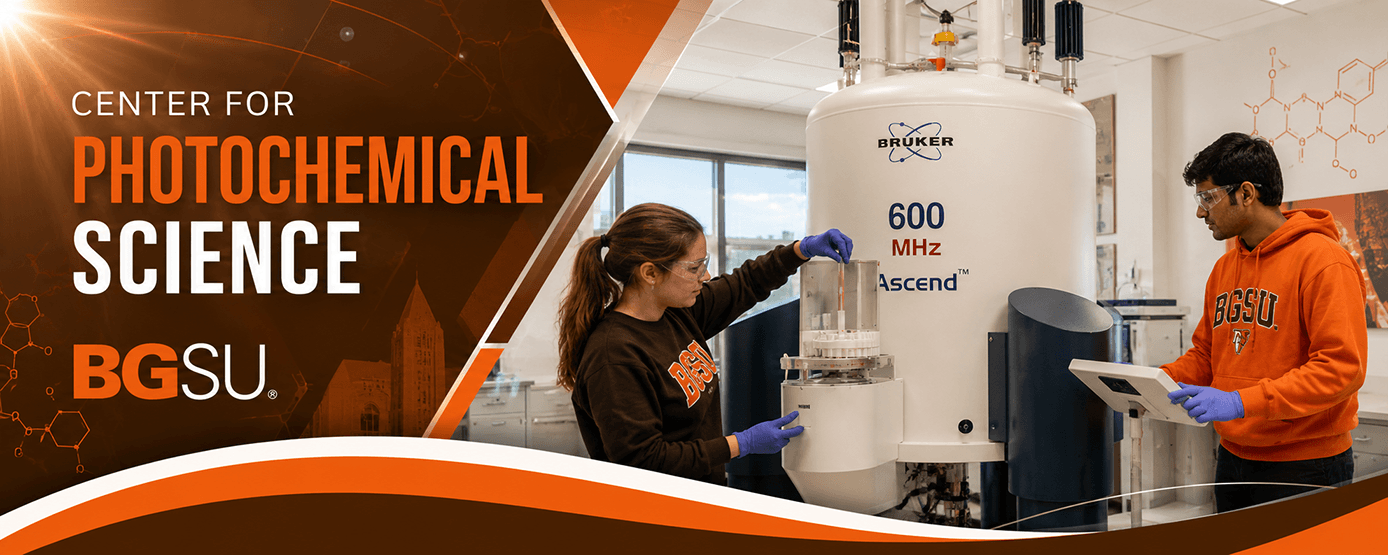
Welcome to the latest edition of the Center for Photochemical Sciences newsletter.
As we continue to advance the frontiers of chemistry and photochemical research at Bowling Green State University, we are proud to share the remarkable achievements, discoveries, and milestones that define our community. The Center remains a hub for innovative research, interdisciplinary collaboration, and student success, providing opportunities for scientists at every stage of their careers to contribute to solutions for some of society's most pressing challenges.
This year has been marked by exciting progress across several major research initiatives. Faculty, students, and staff are actively engaged in projects spanning photochemistry, spectroscopy, materials science, renewable energy, environmental analysis, and biomedical applications. These efforts continue to attract significant external support, enabling the acquisition of advanced instrumentation, the expansion of collaborative partnerships, and the pursuit of groundbreaking discoveries. In this issue, we highlight several major grants and research accomplishments that are strengthening the Center's reputation as a leader in photochemical sciences.
We also celebrate important milestones in the history of the Center and the Department of Chemistry. Anniversaries provide an opportunity to reflect on the vision and dedication of those who established the strong foundation upon which we continue to build today. Through special events, alumni engagement, and recognition of past achievements, we honor the legacy of innovation and excellence that has shaped generations of scientists and educators.
Beyond the laboratory, the Center remains committed to fostering a vibrant scientific community. From seminars and outreach activities to student presentations, professional development opportunities, and community partnerships, we continue to create meaningful connections that inspire learning and discovery. We invite you to explore the stories featured in this newsletter and join us in celebrating the people, research, and accomplishments that make the Center for Photochemical Sciences a dynamic and impactful part of Bowling Green State University.
Message from the Director of the Center for Photochemical Sciences
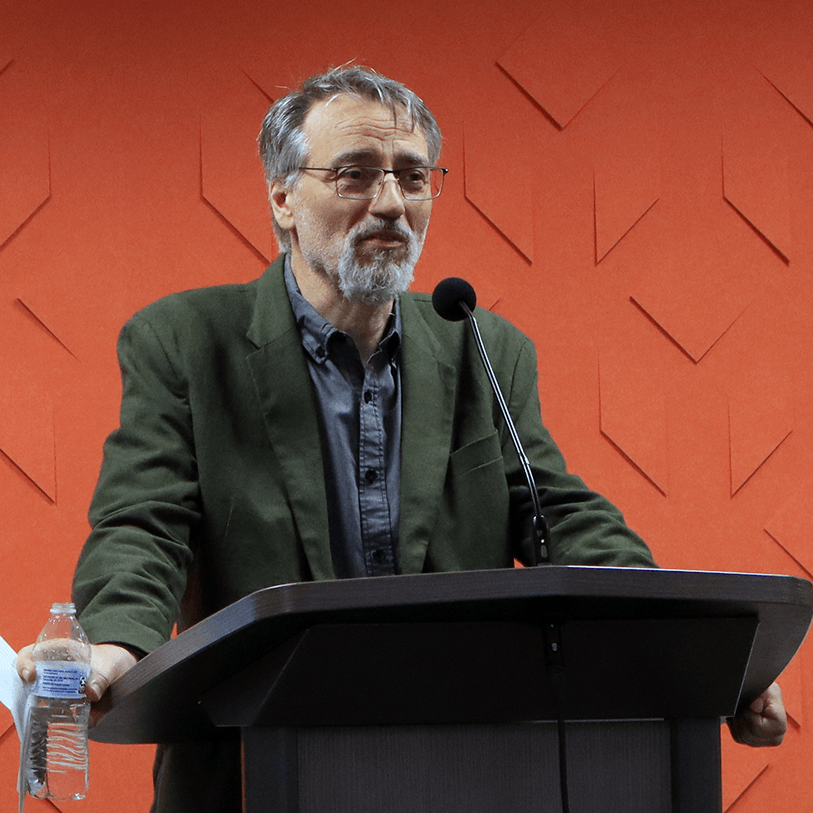

Message from the Chair Department of Chemistry
Four Decades of Brilliance
The Center for Photochemical Sciences Marks 40 Years of World-Class Research
When the Center for Photochemical Sciences opened its doors in 1985, its founders had a bold vision: build a truly interdisciplinary home where chemistry, physics, and biology would converge in the study of light and matter. Forty years later, that vision has not only endured — it has flourished into one of the most distinctive research institutions in the world.
The Center remains home to the world's only Ph.D. program exclusively dedicated to the photochemical sciences — a distinction it has held for four uninterrupted decades. That singular focus has attracted exceptional graduate students and faculty from across the globe, producing research breakthroughs that reach far beyond the lab: from light-activated therapies advancing diagnostic medicine, to sustainable polymer chemistry and next-generation solar energy technologies.
For alumni and friends of the Center, the anniversary is a moment to reflect on a shared legacy. CPS graduates now lead research teams, hold faculty positions, and drive innovation across six continents — in industries spanning semiconductors, pharmaceuticals, and renewable energy. The expertise they gained at BGSU travels with them wherever their careers lead.
As CPS steps into its fifth decade, the Center's commitment to pushing the boundaries of light-science research remains as strong as ever. We are grateful for the community — mentors, alumni, collaborators, and supporters — who have made forty years of discovery possible. The best, we believe, is still ahead.
“The world’s only Ph.D. program in photochemical sciences — for 40 years and counting.”
Learn more at bgsu.edu/photochemical-sciences
A New Dimension in Molecular Insight
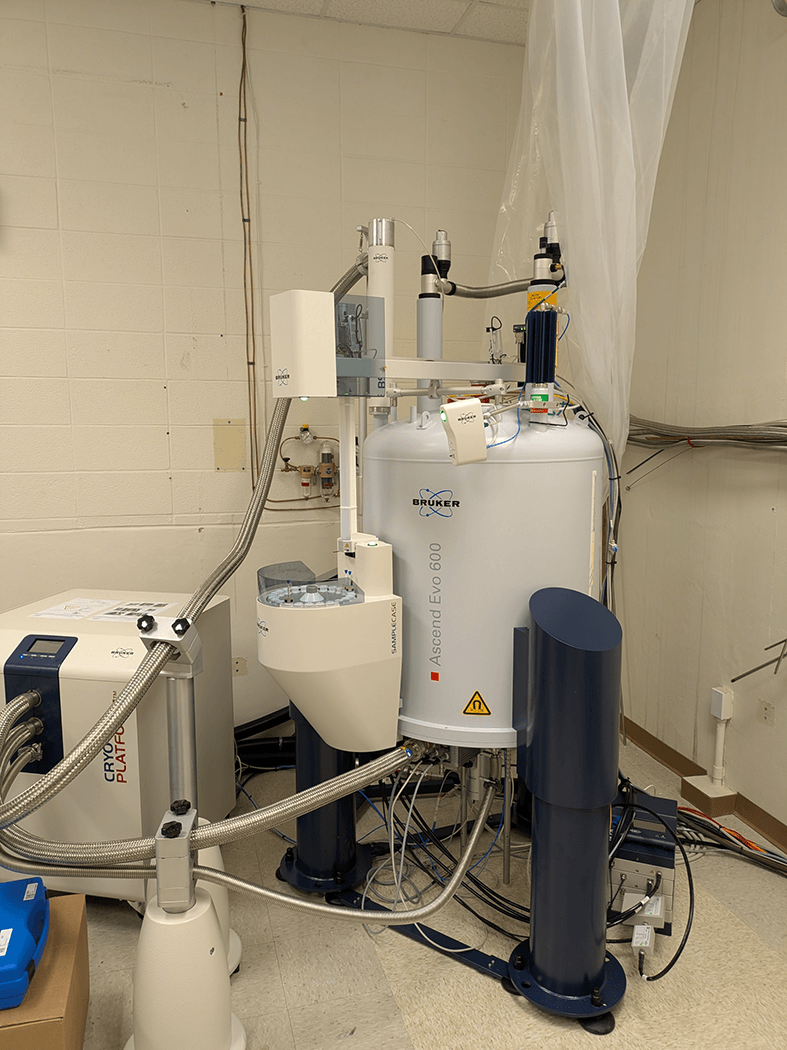
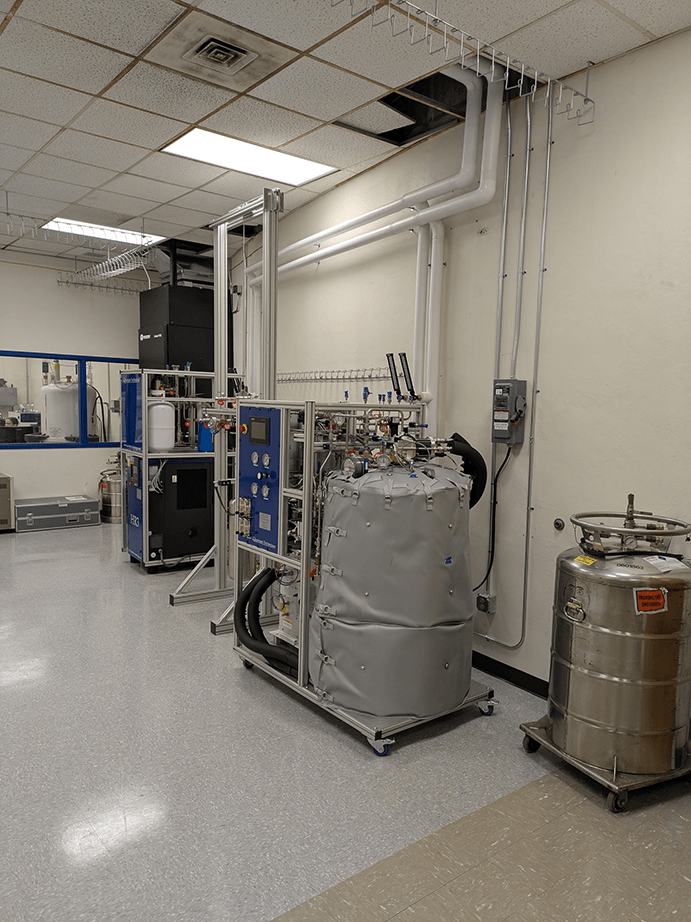
NSF-funded Bruker AVANCE NEO 600 MHz NMR with cryogenic probe technology joins the CPS instrumentation suite
The Center for Photochemical Sciences is proud to announce a transformative addition to its research infrastructure: a Bruker AVANCE NEO 600 MHz NMR spectrometer, acquired through National Science Foundation Award No. 2408556. This instrument represents one of the most significant upgrades to the Center’s analytical capabilities in recent memory, and positions CPS researchers at the forefront of modern structural and mechanistic chemistry.
At the heart of the system is a helium-cooled cryogenic probe — a technology that dramatically increases sensitivity by cooling the detector electronics to near absolute zero, allowing researchers to detect signals from very small or dilute samples that would be invisible to conventional probes. The system is equipped with two specialized cryoprobes: a double-resonance BBO CryoProbe optimized for direct observation of a broad range of nuclei, including phosphorus, nitrogen, and everything in between, with fluorine and proton decoupling capability; and a triple-resonance iProbe configured for both direct X-nuclei detection and indirect proton observation across an extended nuclei range that includes fluorine and silver. Together, these probes give researchers exceptional flexibility across an extraordinarily wide range of experiments.
The spectrometer is further enhanced by a 24-sample automatic sample changer for high-throughput workflows, a supercool probe with open-cooling architecture for extended sensitivity applications, and — notably — a helium recycling system that recovers and recirculates the cryogenic helium consumed by the probe. This last feature reflects a growing commitment across the scientific community to sustainable instrumentation practices, reducing both operating costs and the Center’s reliance on the increasingly constrained global helium supply.
The CPS community extends its sincere gratitude to the National Science Foundation (Award No. 2408556) for the funding that made this acquisition possible, and to Principal Investigator Dr. Pavel Anzenbacher and co-Principal Investigators Dr. Jayaraman Sivaguru, Dr. Joseph C. Furgal, Dr. Xiaohong Tan, and Dr. Nathan C. Tice for their collaborative effort in securing this award. This instrument will serve researchers across chemistry, photoscience, and related disciplines for decades to come — opening doors to questions we are only beginning to ask.
A Bold Bet on the Future of Photochemistry
Dr. Joseph Furgal awarded the Dr. Thomas Kinstle Professorship in Chemistry
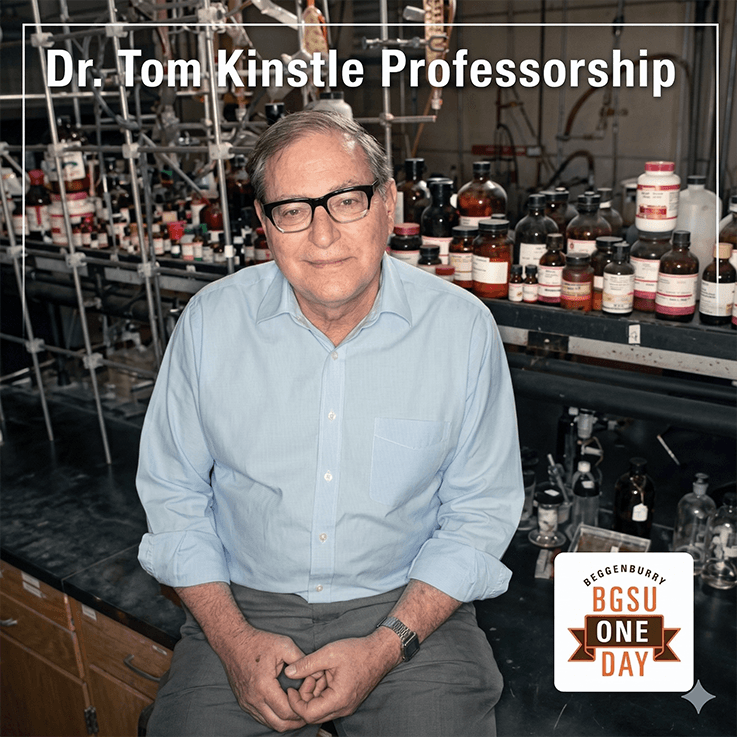
The Center for Photochemical Sciences is proud to celebrate one of its own: Dr. Joseph Furgal has been named the recipient of the Dr. Thomas Kinstle Professorship in Chemistry, one of the most distinguished faculty recognitions the BGSU Department of Chemistry bestows. The award honors researchers whose work exemplifies the spirit of scientific courage — and in Dr. Furgal's case, that spirit shines through in every dimension of his research program.
The Kinstle Professorship is not awarded for safe, incremental science. As defined in the fund agreement, it is reserved for proposals that are "high-risk, high-reward or otherwise innovative" with strong potential to attract future external funding. A distinguished panel of evaluators reviews submissions and makes their recommendations directly to the Provost — meaning this recognition carries both peer esteem and institutional weight. That Dr. Furgal's proposal rose to the top of that process is a testament to the originality and ambition that define his lab.
His winning project — "Fundamental photochemical synthesis of flexible inorganic polymers from simulated lunar regolith" — is exactly the kind of science the professorship was built to champion. The work explores whether photochemical processes can be harnessed to synthesize functional polymer materials from lunar soil simulants, a question with profound implications for in-situ resource utilization in space exploration. It is research that sits at the intersection of photochemistry, materials science, and the emerging field of off-world manufacturing — and it could not find a more natural home than the CPS, where interdisciplinary thinking has always been the foundation.
Dr. Furgal joined the Center for Photochemical Sciences with a research vision rooted in making new materials using light, and this professorship reflects how fully that vision has taken root at BGSU. The entire CPS community extends its warmest congratulations to Dr. Furgal — and looks forward to watching where this bold science leads.
"High-risk, high-reward science is exactly what we're here for."



26 Years of Keeping the Science Running
Recognizing Mary Toth, Chemical Stockroom Supervisor, for more than two decades of dedicated service to the BGSU Chemistry Department
Behind every successful research department, there are people whose contributions are felt in every corner of the building — even when their names don’t appear on publications. Mary Toth is one of those people. Since stepping into the role of Chemical Stockroom Supervisor in May of 2000, Mary has been an indispensable part of the BGSU Chemistry Department, quietly and expertly ensuring that the work of science can go forward, day after day, year after year.
For 26 years, Mary has maintained a safe, meticulously organized laboratory environment for generations of faculty, graduate researchers, and undergraduate students. Her responsibilities span far more than inventory management: she oversees chemical safety compliance, coordinates supply logistics across the department, and serves as a steady institutional resource for researchers navigating the practical realities of laboratory work. When something is needed — whether it’s a reagent, a piece of glassware, or simply a knowledgeable answer — Mary is the person people turn to.
What sets Mary apart, those who work alongside her will tell you, is the culture she’s built around her. She doesn’t simply train stockroom assistants in procedures and protocols — she mentors them, building a genuine sense of community with a blend of warmth, humor, and professionalism that leaves a lasting impression. Students who have worked with Mary carry that experience with them: a deep respect for laboratory safety and a sense of what it means to show up for your colleagues with consistency and care.
As the Center for Photochemical Sciences marks its 40th anniversary, it is a fitting moment to recognize the staff members whose dedication makes this institution what it is. Mary Toth is one of those people. The department extends its deepest gratitude for her 26 years of service — for her expertise, her commitment, and the warmth she brings to the BGSU family every single day. Thank you, Mary.
“She doesn’t just teach procedures — she builds a community.”
Thank you for 26 years of exceptional service to BGSU Chemistry.
A Gift That Keeps Giving — Literally
BGSU alumna Dr. Kelly Lambright and NSG/Pilkington donate a state-of-the-art GC-MS workstation to the Center for Photochemical Sciences
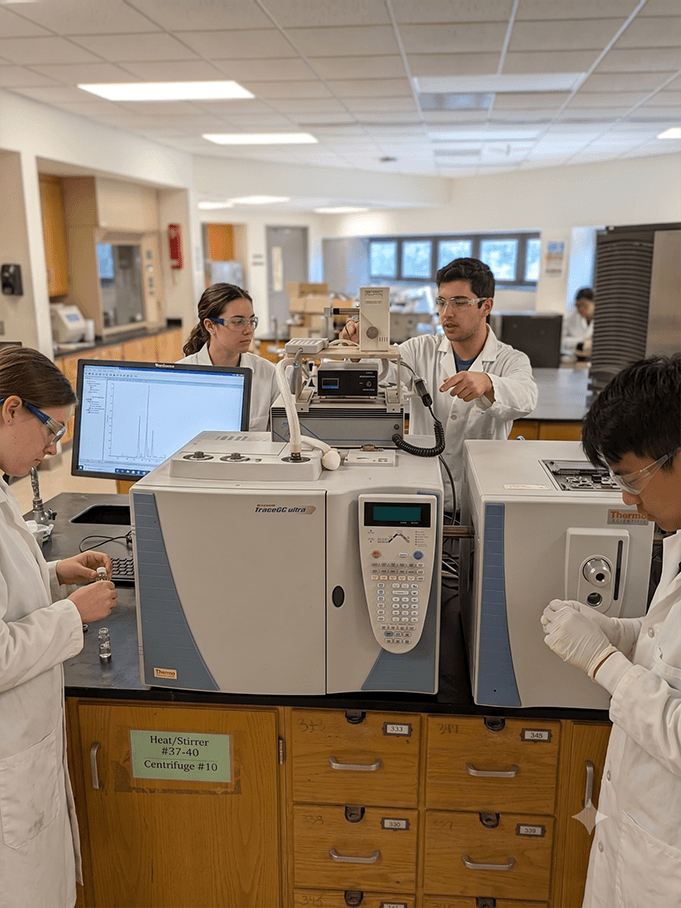
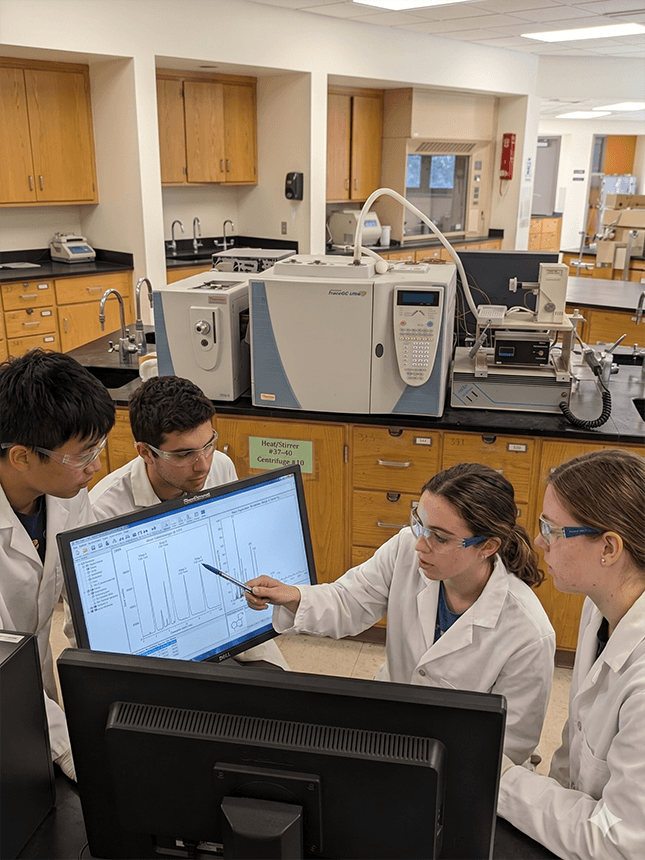
Sometimes the best scientific instruments find their way home. The Center for Photochemical Sciences recently welcomed a significant addition to its analytical capabilities: a fully customized gas chromatography–mass spectrometry (GC-MS) workstation, generously donated by global glass manufacturer NSG/Pilkington and made possible through the thoughtfulness of BGSU alumna Dr. Kelly Lambright.
Dr. Lambright’s connection to BGSU runs deep. As an undergraduate at the university, she began her scientific journey within the Center for Photochemical Sciences, conducting research under the mentorship of Dr. Pavel Anzenbacher and working closely within his research group. That foundational experience shaped her trajectory in science and instilled a lasting affinity for the place that first trained her.
It is no surprise, then, that when Dr. Lambright recognized an opportunity at NSG/Pilkington—where the GC-MS instrument was being decommissioned—she chose to act. Rather than see a capable and highly specialized system retired, she championed its donation to her alma mater, knowing firsthand the kind of research it could enable. Her initiative is a testament to the lasting bond that CPS alumni carry with them long after leaving Bowling Green.
A Versatile Analytical Powerhouse
The workstation is no ordinary GC-MS. Customized for complex sample matrices, it supports three distinct analytical modes: standard GC-MS for routine compound identification and quantification; thermal desorption and pyrolysis for the analysis of solid materials, polymers, and coatings without solvent extraction; and environmental VOC purge-and-trap analysis for detecting volatile organic compounds at trace concentrations in water and soil samples. This versatility makes it an exceptionally powerful tool for researchers working across environmental science, materials chemistry, and beyond.
The Center is deeply grateful to both Dr. Lambright and NSG/Pilkington for their generosity. Donated instruments of this caliber represent far more than equipment—they represent a shared belief in the mission of CPS and a commitment to ensuring that the next generation of photochemical scientists has every tool they need to make their mark. We are proud to put this instrument to work.
“She came to us as an undergraduate curious about chemistry—and chose to give back to the place that shaped her.”
Interested in supporting CPS? Visit bgsu.edu/photochemical-sciences

Chemistry Is More Fun Together
The BGSU Chemistry Club is building community, sparking curiosity, and making chemistry accessible — one event at a time
For undergraduate students navigating the rigors of chemistry coursework, the BGSU Chemistry Club offers something the classroom alone cannot: a sense of belonging. As an academic and social organization open to chemistry and biochemistry students alike, the Club has made it its mission to connect students with each other, with faculty, and with the broader world of chemistry — in ways that are as engaging as they are educational.
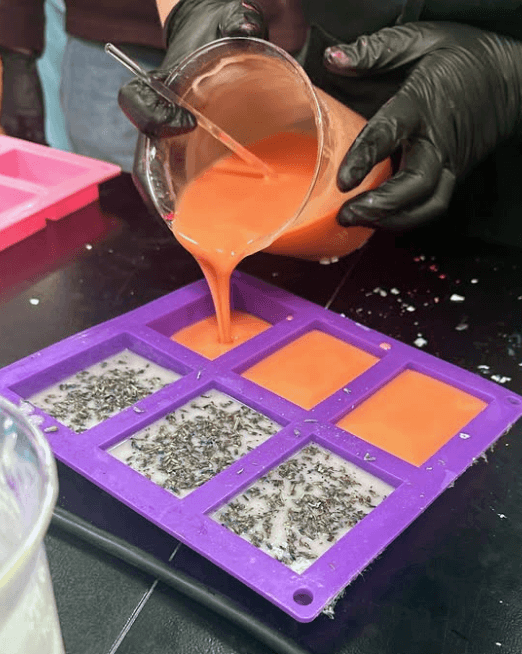
Club activities run the full spectrum from hands-on lab experiences — including festive holiday experiments where students gather in proper lab attire for an evening of science and pizza — to career-focused events featuring faculty researchers and BGSU alumni sharing their paths beyond graduation. Recent meetings have included talks by Dr. Joseph Furgal and Dr. Julie Peterson on current research opportunities, as well as a presentation from a BGSU alumnus now working as a patent agent, giving students a window into the diverse careers a chemistry degree can open.
The Chemistry Club embodies something the Center for Photochemical Sciences has always believed: that great science grows from great community. By creating space for students to explore chemistry beyond the lecture hall — with curiosity, laughter, and genuine connection — the Club is cultivating the next generation of researchers, professionals, and lifelong science enthusiasts. Follow their latest activities on Instagram at @bgsu_chemclub.
“Great science grows from great community.”
Follow the BGSU Chemistry Club on Instagram: @bgsu_chemclub
Pushing Students Into the Deep End — And They Love It
Dr. Jayaraman Sivaguru’s P.I.C.N.I.C.S. program has grown into a hallmark of BGSU’s commitment to science outreach — one high school student at a time
It started with a phone call. When Dr. Jayaraman Sivaguru — Distinguished BGSU Professor and Associate Director of the Center for Photochemical Sciences — was a faculty member at North Dakota State University, he noticed a high school just outside his office window every morning and decided to act. He called the principal and asked whether he could do something meaningful for the students there. That conversation became the seed of P.I.C.N.I.C.S.: Parents Involvement with Children Nurturing Intellectual Curiosity in Science, a six-week summer research program that has since grown into one of BGSU’s most celebrated educational outreach initiatives.
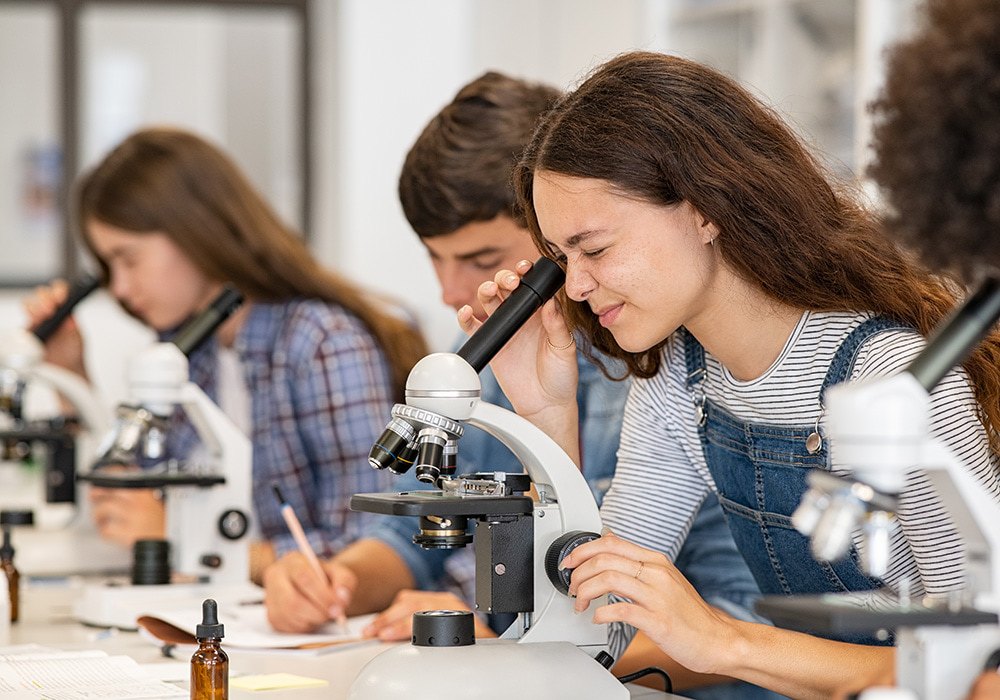
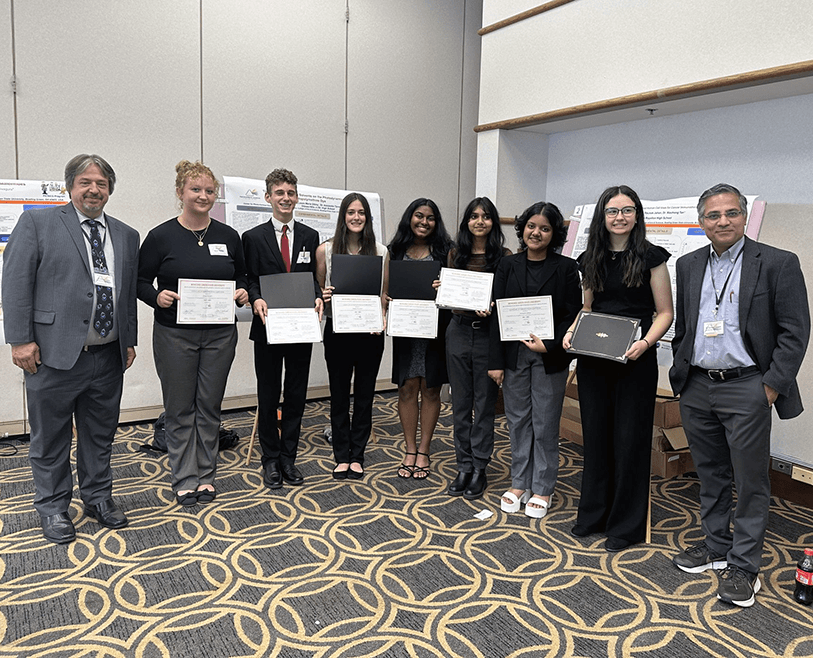
When Dr. Sivaguru joined BGSU in 2017, the program came with him. Hosted jointly by the Center for Photochemical Sciences and the Chemistry Department, P.I.C.N.I.C.S. now draws high school students from nine schools across northwestern Ohio. Participants spend six weeks working directly in state-of-the-art university laboratories alongside BGSU graduate students and faculty — conducting real research, operating sophisticated instruments, and experiencing the rhythms of professional scientific inquiry. The program concludes with a public poster presentation where students present their findings to families and community members, building the communication skills that define a working scientist.
The impact is hard to overstate. “I attended a genetics camp at another university, but that was more of a college lab modified for high school students,” said Mason Konesky, a Bowling Green High School junior who participated in the 2024 program. “The PICNICS camp at BGSU was like getting pushed off into the deep end, and I loved it.” For Konesky, the experience even redirected her career ambitions: “I discovered my real passion is in the lab. I love being able to manipulate materials at such a microscopic level and see how big those small changes can be.” Fellow participant Phoenix Coon of Eastwood High School echoed that sentiment: “You don’t have to be an expert and you don’t have to know everything, so long as you’re dedicated and willing to learn.”
Supported in part through Dr. Sivaguru’s National Science Foundation grants and with backing from BGSU leadership at every level, the program has expanded steadily since its Ohio launch. “We started with four local schools,” Sivaguru noted. “Now there are nine schools participating from our region.” His ambition for P.I.C.N.I.C.S. continues to grow — he envisions future expansions that connect the program to BGSU’s engineering disciplines in robotics, electronics, and mechanical manufacturing. For Dr. Sivaguru, the mission has always been deeply personal: “It’s a substantial commitment for everyone involved, but the impact it makes is everlasting.” The Center for Photochemical Sciences is proud to stand behind that commitment.
“It’s a substantial commitment for everyone involved, but the impact it makes is everlasting.”
— Dr. Jayaraman Sivaguru, Distinguished BGSU Professor & Associate Director, CPS

Submit an update or event
Have an update or event you want to submit to this newsletter? Click here for a link to the submission form
Unsubscribe from this newsletter To unsubscribe from this list, email photochem@bgsu.edu with “unsubscribe” in the subject line



Updated: 06/03/2026 08:47PM