
The History of BGSU Chemistry
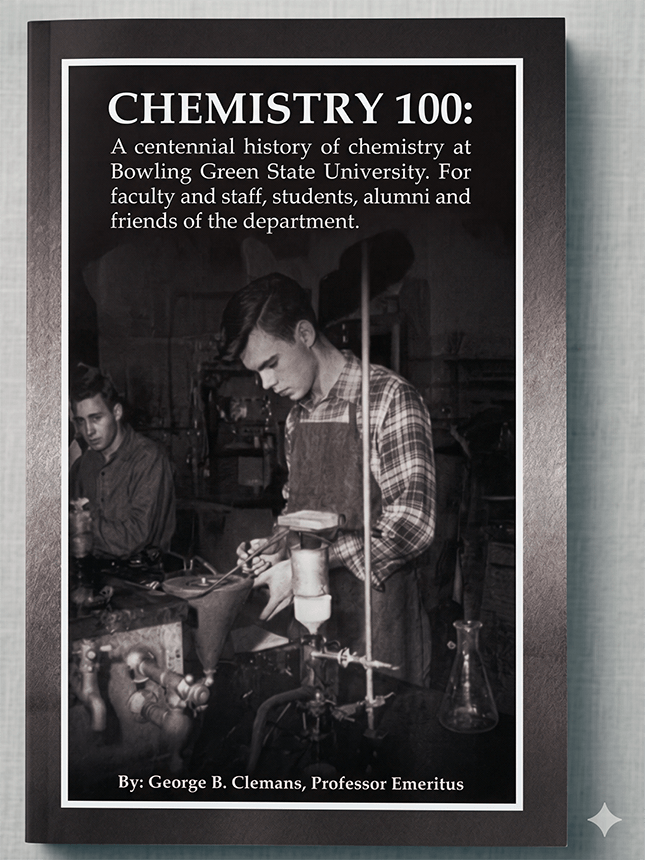

CHAPTER 1
The Moseley Years, 1910–1923
Bowling Green State Normal College was founded by the Ohio Lowry Act of 1910. The college opened in fall 1914, temporarily holding classes in the National Guard armory at the corner of Prospect and East Wooster. The first B.Sc. degree was awarded in 1917.
The Chemistry Program
The first chemistry courses in 1914–1915 were diploma-level offerings: General Chemistry (6 hrs.) and Chemistry of Food (3 hrs.). By 1915–1916 the program was upgraded to degree status. By 1920–1921, organic and preparatory chemistry had briefly appeared and then disappeared from the catalog.
The Chemistry Faculty
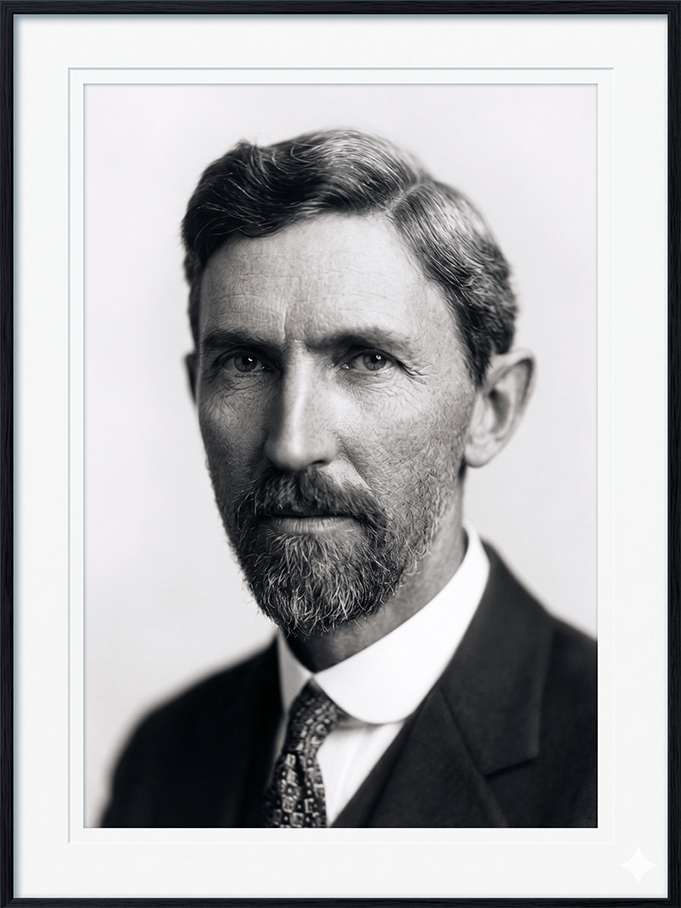
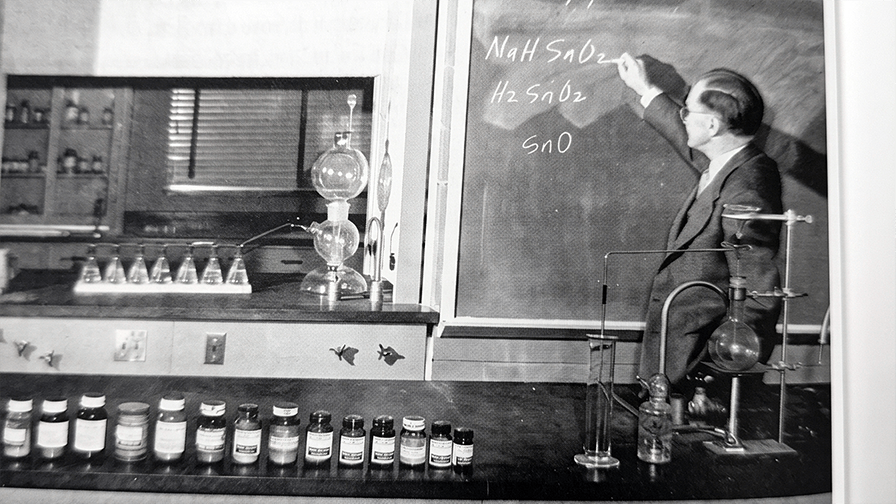
Edwin Lincoln Moseley (1865–1948) was the sole scientist on the first faculty, chairing the Department of Physical Science and teaching all courses — chemistry, biology, physics, geography, geology, astronomy, and at times English, philosophy, Latin, geometry, and hygiene. He taught at various levels for 45 years without missing a single class. He is perhaps best known for his research identifying milk sickness as the result of cows grazing on white snakeroot — the same disease that claimed the life of Nancy Hanks Lincoln, Abraham Lincoln's mother.
"Most importantly he established from the outset a strong tradition of scientific research and the use of research as a teaching tool for his students. This emphasis has carried over into all of the chemistry programs that later developed at Bowling Green."
The "Great Blizzard of 1917" closed the college at Christmas, and a tornado in April 1920 badly damaged the Administration Building, Science Building, and power plant. When Moseley died in June 1948, the entire northwest Ohio community mourned deeply.
CHAPTER 2
The Faculty Class of 1923, 1923–1929
In 1923 a large influx of new faculty arrived who would fundamentally transform the institution. The so-called "Faculty Class of 1923" became famous among faculty and students for many years thereafter. Their arrival accelerated a long-running debate about the college's identity — teachers college versus liberal arts institution — which culminated in 1929 with the Emmons-Hanna Act, renaming the institution Bowling Green State College and authorizing B.Sc. degrees in education as well as liberal arts classes. BGSU was divided into a College of Education and a College of Liberal Arts.
The Chemistry Program
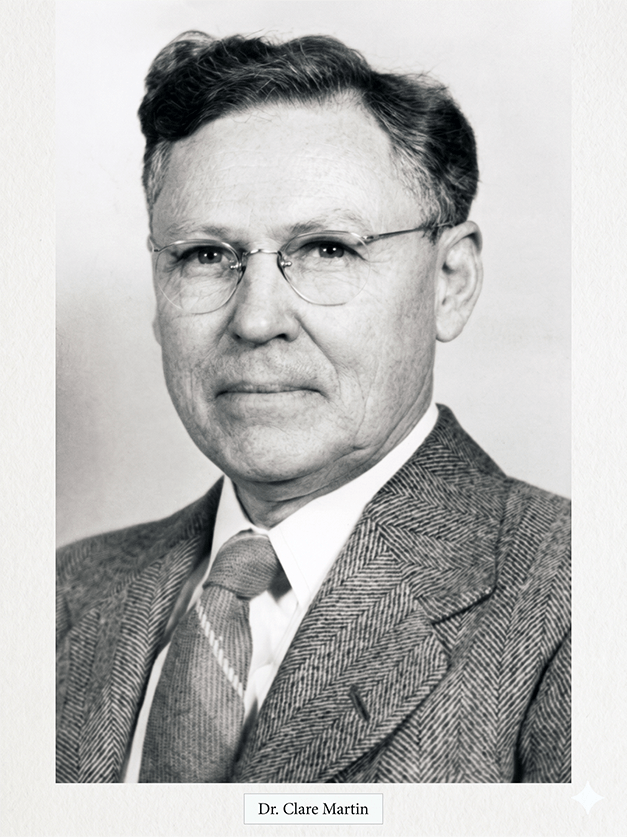
The Faculty Class of 1923 brought the first chemist to Bowling Green: Dr. Clare S. Martin (Ph.D., Ohio State). His addition split the Physical Science Department and reintroduced organic chemistry and quantitative analysis (8 hrs.). When the College of Liberal Arts formed in 1929, an attempt to create a full chemistry major briefly appeared in the catalog — but was immediately quashed and would not reappear for another seven years.
The Chemistry Faculty
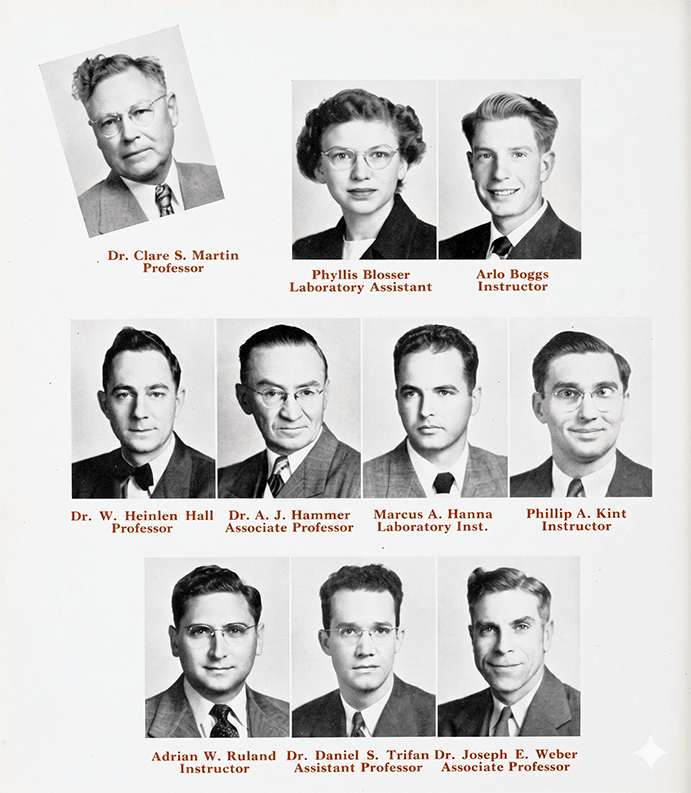
Dr. Clare S. Martin (1888–) earned his Ph.D. at Ohio State in 1923 and joined BGSU immediately after. His teaching load was extraordinary: in one semester he taught Chemistry 74 (General), Chemistry 78 (Organic), Physics 76 (Electricity and Magnetism), and Science 71 (Teaching Science) — 24 contact hours per week across four diverse areas. He depended heavily on student employees, including Louis Veler, who put in 128 hours one month checking students in and out of labs, working in the stockroom, oiling desks, and painting table tops. Laboratory deposits from students ranged from $2.50 to $5.00 per semester. A 1925 glassware price comparison: a 250 ml beaker cost $0.28 then vs. $6.33 at the time of publication.
In the six years from 1923 to 1929, BGSU transformed from a state teachers college into a liberal arts college — opening new avenues for chemistry, but the Great Depression was about to arrive.
CHAPTER 3
The Doubtful Years, 1930–1935
The Great Depression brought severe turbulence. Loss of the chemistry major in 1930 returned the program to service course teaching only. State funding dropped sharply and faculty faced a 21% salary cut with another 10% promised. Class crowding became extreme — one Organic Chemistry section ran 8:00 A.M. to 3:20 P.M. on Saturdays.
"The crowding in the department gets worse all the time. We were unable to find the customary instructor or laboratory time… So the class in Organic Chemistry 80 is scheduled from 8:00 A.M. to 3:20 P.M. on Saturdays. Furthermore, we have strictly limited the class to six students… I am making no definite plans for next year, for no one can predict what is likely to happen. We may even have to close down for lack of funds."
— Dr. Clare Martin, letter to Willard Singer, c. 1932
In 1933 a movement arose in the Ohio legislature to close BGSU and convert its buildings into a mental hospital. The alarmed college community organized the Northwestern Ohio Educational Protective Association, distributing pamphlets and visiting towns across northwest Ohio. The decisive argument — that local students could not afford to travel to distant institutions — defeated the bill in the Finance Committee.
Even in the darkest years Dr. Martin was always planning. By 1932 he was anticipating a new chemistry hire and was already discussing detailed plans for new laboratory buildings. He also found time for inventiveness, developing a buret meniscus reader and an improved chemical air dryer, drawing interest from Central Scientific and Fisher Scientific. By 1935, a brighter day was about to dawn.
CHAPTER 4
New Vistas, 1935–1945
In May 1935, the state legislature renamed the institution Bowling Green State University and crucially authorized graduate courses and the awarding of master's degrees for the first time. A separate Graduate College was wisely avoided; a Graduate Committee administered the program instead. Dr. Martin lost his wife of 22 years, Hazel Breese Martin, in November 1935, but persevered in building the department.
The Chemistry Program
With university status it became realistic for the first time to envision a full professional undergraduate chemistry major and even a Ph.D. program. In the 1936–1937 catalog the chemistry major abruptly reappeared as a full-fledged program. In 1939 the department was officially renamed the Department of Chemistry and Physics. During World War II, the V-12 Navy College Training Program brought 92 naval officer candidates to campus in 1943–1944, enrolling heavily in upper-level chemistry and costing the department nearly $500 in expenses. The program ended October 1945.
The Chemistry Faculty
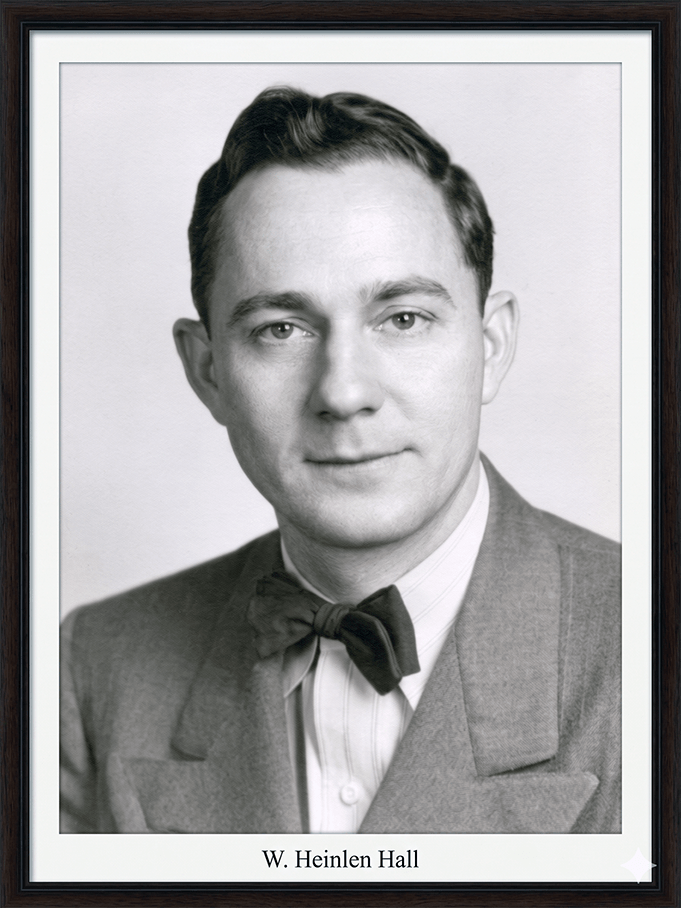
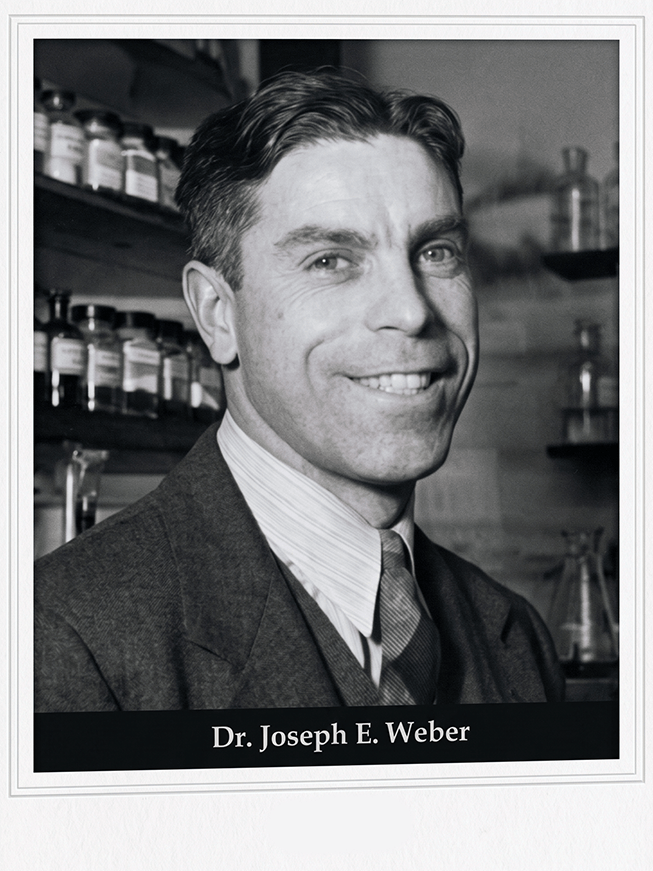
Within two years the department tripled in size with the addition of W. Heinlen Hall (A.B., Muskingum; later Ph.D., Ohio State 1939) as Instructor in 1936, and Joseph E. Weber (Ph.D., Indiana) as Assistant Professor in 1937. The 1943 university yearbook (Key) profiled all three:
Dr. Clare S. Martin (Chemistry) — likes square dancing… drives the biggest campus car… a scientist with a love for the arts.
Dr. W. Heinlen Hall (Chemistry and Physics) — B.G.'s No. 1 researcher… keeps lonely vigils in the Science Building cellar… quiet and neat.
Dr. J. Elliott Weber (Chemistry) — faculty's eligible bachelor… hunts quail in Indiana… likes french fried potatoes… Nest's No. 1 faculty patron.
Dr. Hall served on virtually every major university committee during the war years — Post War Planning, Long Range Academic Planning, Senate Reorganization, and others — positioning the chemistry program to benefit enormously from the postwar expansion about to begin.
CHAPTER 5
Winds of Change, 1945–1960
When the war ended in 1945, enrollment jumped from 1,652 to 4,525 in just two years, fueled by returning veterans. The Department of Chemistry and Physics was separated into independent Chemistry and Physics Departments in 1947. The university now consisted of four colleges: Education, Arts and Sciences, Business, and a Graduate School.
Campus unrest also grew. Strict social policies generated repeated student demonstrations. In May 1957 a large torch-light protest closed East Wooster Street (then U.S. Route 6) completely, requiring the State Highway Patrol — twelve students were expelled. President McDonald eventually resigned in 1961.
The Chemistry Program
The postwar enrollment surge created severe staffing shortages. At one point one instructor had 201 Chemistry 101 papers to grade; nine days later he had completed only 79. The department expanded from one room in Moseley Hall to occupying three of its four floors, plus temporary federal surplus buildings used as freshman labs. By 1950, ACS certification of the chemistry major was achieved. A new Chemistry Building was completed in 1950 with 52,600 sq. ft. of floor space, 856 student lockers, and seating for 400. In 1960 it was renamed Overman Hall — the name it still bears today.
By 1964 BGSU ranked second only to Ohio State among Ohio universities in the number of degrees awarded in the physical sciences. By 1968, some 50 alumni had earned chemistry Ph.D.s while over 450 had entered the chemical profession. The department received its first nuclear magnetic resonance spectrometer with NSF support. The Glidden Company provided funds for the Glidden Lectures in Chemistry, and the Lubrizol Foundation supported student scholarships.
The Chemistry Faculty
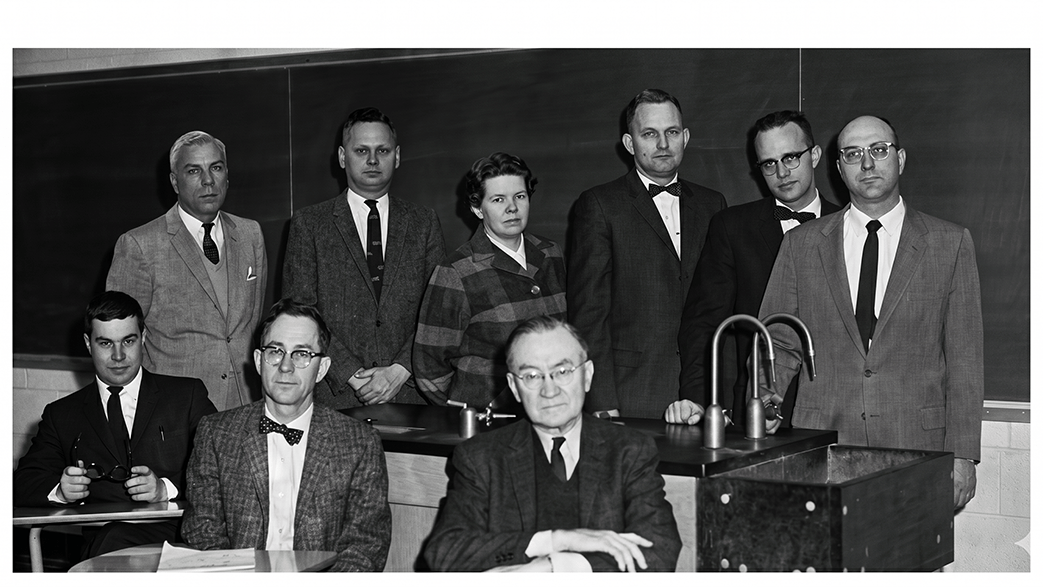
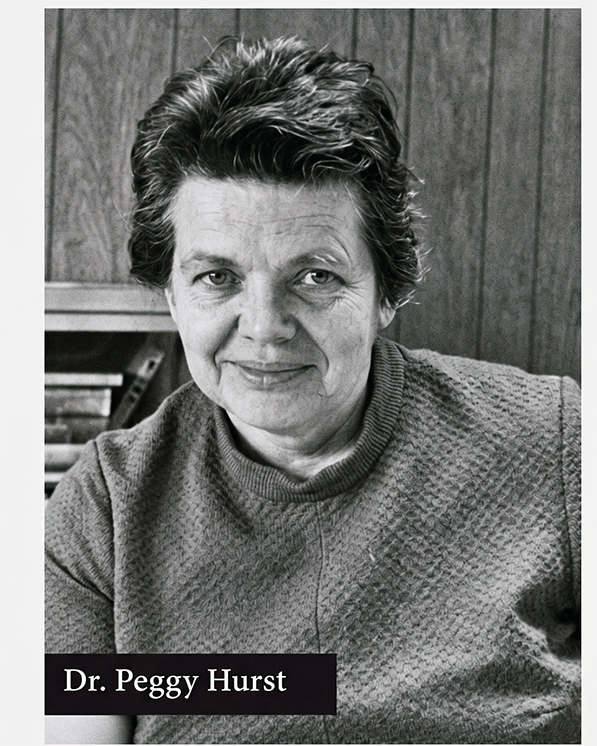
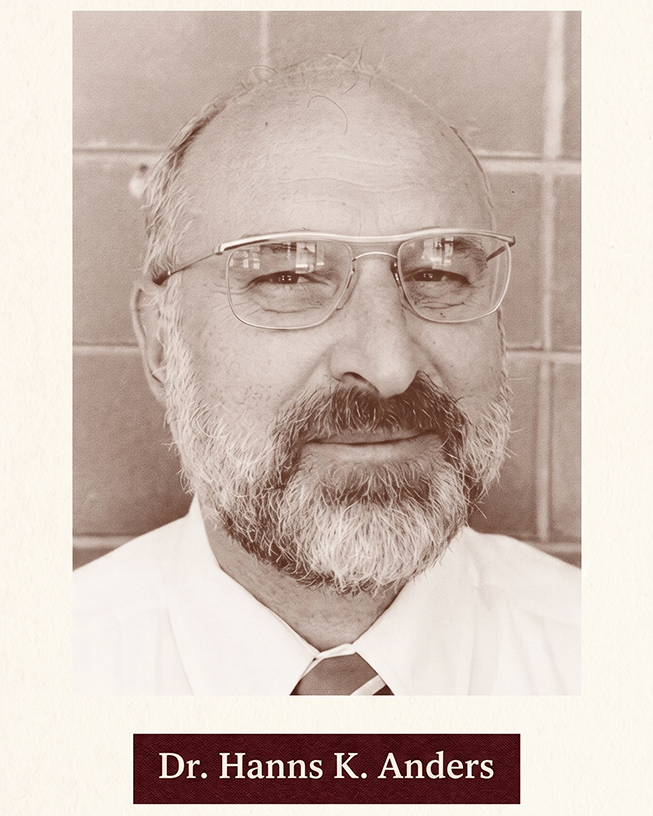
Significant new additions: A. J. Hammer (Ph.D., Iowa State, 1946), Peggy Hurst (Ph.D., Wisconsin, 1956), Hanns Anders and Arlo Boggs (both Ph.D., Ohio State, 1958), Norman Meyer (Ph.D., Kansas) and Wilburt Hutton (Ph.D., Michigan State, 1960). Dr. Martin relinquished the chairmanship in 1958 after 31 years of service. Dr. Hall assumed the chair and would take the department to its first graduate program.
"Overman was a man who really influenced my career at the university more than anyone else… he was chairman of the Post War Planning Committee out of which grew a great many of the fundamental changes in faculty organization."
— Dr. Hall, 1985 Oral History Project interview
CHAPTER 6
The Masters Program, 1960–1980
Campus tensions culminated in a student riot in March 1961, again closing Route 6. Faculty protests over denied tenure and eventual resignation of President McDonald in 1961 followed. The larger national conflict culminated in the shootings at Kent State in May 1970, after which campus tensions finally subsided. In May 1972 a small iron pipe bomb was found in Room 130 of Overman Hall — it apparently detonated without causing significant damage, though it added to lingering department anxiety.
The Chemistry Program
Having achieved ACS certification in 1950, the department's next logical step was a graduate program. Dr. Hall's first M.A. proposal was submitted to the Graduate Council on November 23, 1960 — and was emphatically rejected by President McDonald two months later. The reason: too expensive. Little more than two weeks later, Dr. Hall submitted a memo to McDonald outlining an interim plan. The new two-year master's program — built on integrated course sequences in structure and bonding and in thermodynamics and kinetics — was published in the Graduate Bulletin by April 1961, little more than two months after the original proposal had been so firmly rejected.
In 1963 the department also established, with NSF support, a summer in-service institute for high school chemistry teachers, allowing them to earn an M.A. in chemistry in three summers. By the mid-1970s over 200 individuals had graduated from these two programs. One graduate, Janet Harris, won the James B. Conant Award from the American Chemical Society for excellence in high school teaching.
Also in the early 1960s, Hall and Hurst participated in the Midwest Program on Airborne Television Instruction (MPATI), an experimental educational television system originating from Purdue University broadcasting lectures via high-flying B-29 aircraft to some five million high school and college students. Some 200 local schools participated. MPATI was terminated in 1968.
The Chemistry Faculty
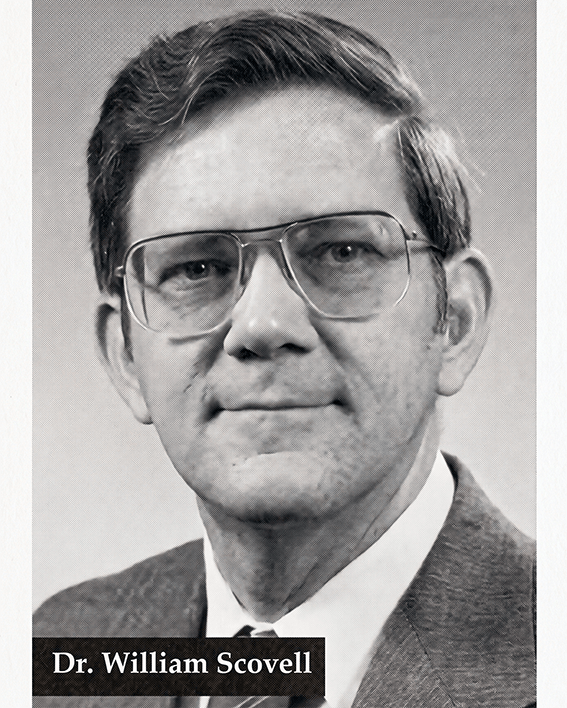
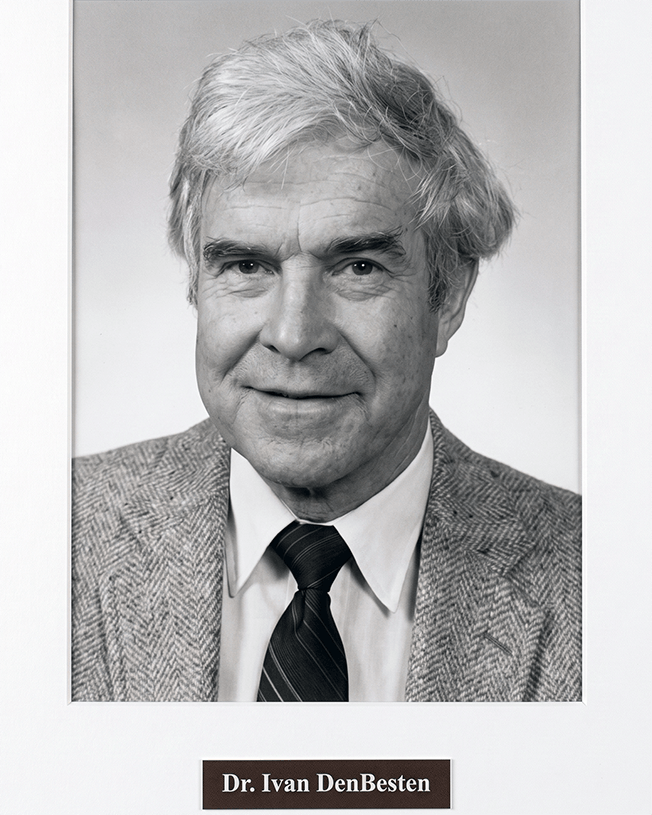
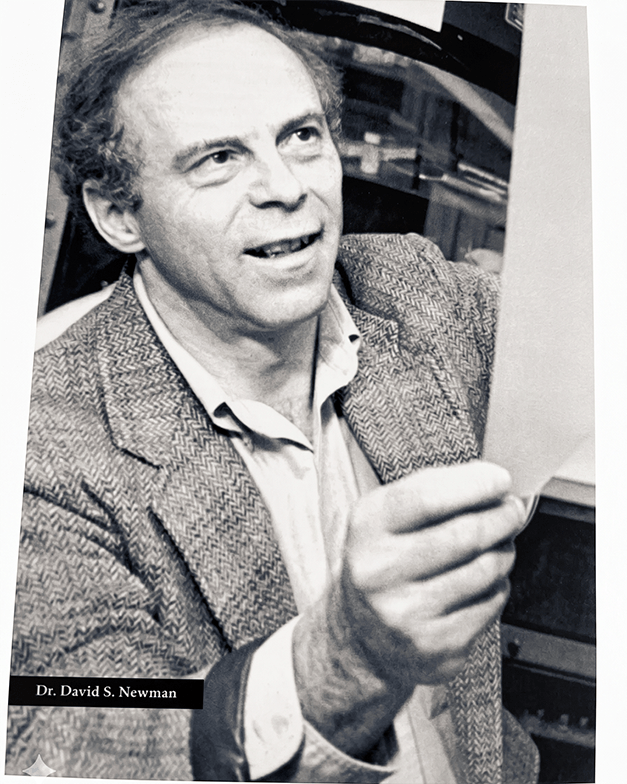
Significant faculty expansion occurred: Ivan DenBesten (Ph.D., Northwestern, 1961), David Newman (Ph.D., Pennsylvania, 1965), George B. Clemans (Ph.D., Duke) and George Rendina (Ph.D., Kansas, 1967), and through the late 1970s Elliot Blinn (Ph.D., UCLA), Arthur Brecher (Ph.D., Rochester), William Scovell (Ph.D., Minnesota), Thomas Kinstle (Ph.D., Columbia), and J. Christopher Dalton (Ph.D., Columbia).
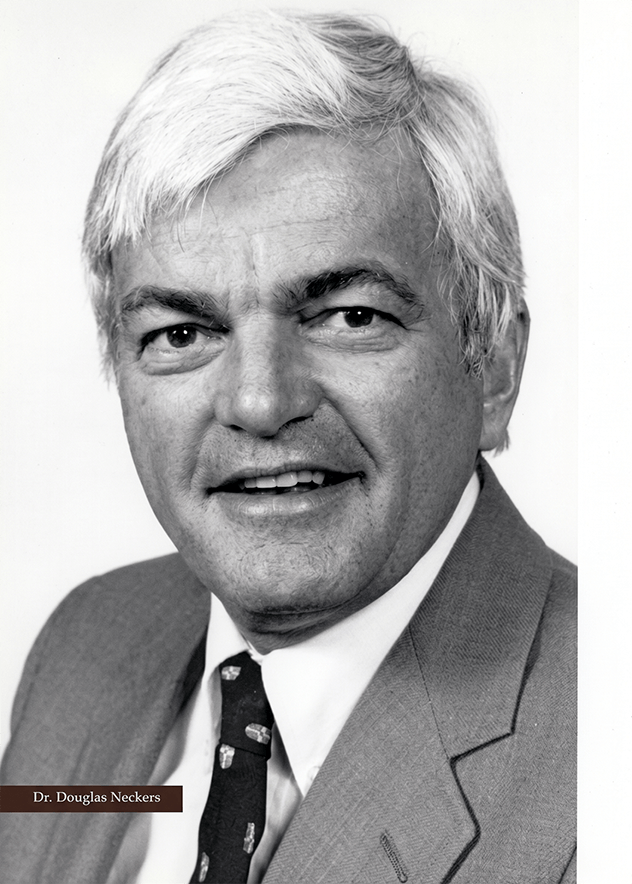
In 1973 Douglas Neckers (Ph.D., Kansas) was named as the new department chair. He introduced creative innovations including an "antique sale" to replace obsolete double-pan analytical balances with modern digital ones, and sent the Student Affiliates into the chemistry stockroom to pull out old reagents and equipment — dealers came from as far as Cleveland and hundreds of dollars were raised for a new scholarship.
To honor Dr. Hall upon his retirement, the W. Heinlen Hall Lecture Series was established in 1974, bringing leading research chemists to campus each summer. Speakers included Paul A. Scaap (Wayne State), Jerome A. Berson (California Institute of Technology), Harry B. Gray (California Institute of Technology), Ned A. Porter (Duke University), and J. Michael Ramsey (University of North Carolina).
In May 1973 an explosion ripped through the basement laboratory of Dr. Elliot Blinn, the subsequent fire gutting it completely. No cause was ever determined; fortunately no one was present. Dr. Blinn died suddenly in 1997 after nearly thirty years on the faculty, and was one of the best-liked members of the department.
"The department had clearly entered a new era by 1980, and even more spectacular advances were soon to be realized. The greatest period of growth and development in the history of the chemistry program at Bowling Green was about to begin. The department would soon have to 'hold on to its hat.'"
CHAPTER 7
The Doctoral Program, 1980–2014
The 1980s began with declining state support and severe budget cuts, freezing undergraduate lab assistant hiring and canceling several service courses. By 1987 the situation was so dire that at one point the department would not make it through the year on the operating budget assigned. Nonetheless, the eighties proved to be the most remarkable decade in the department's history.
The Chemistry Program
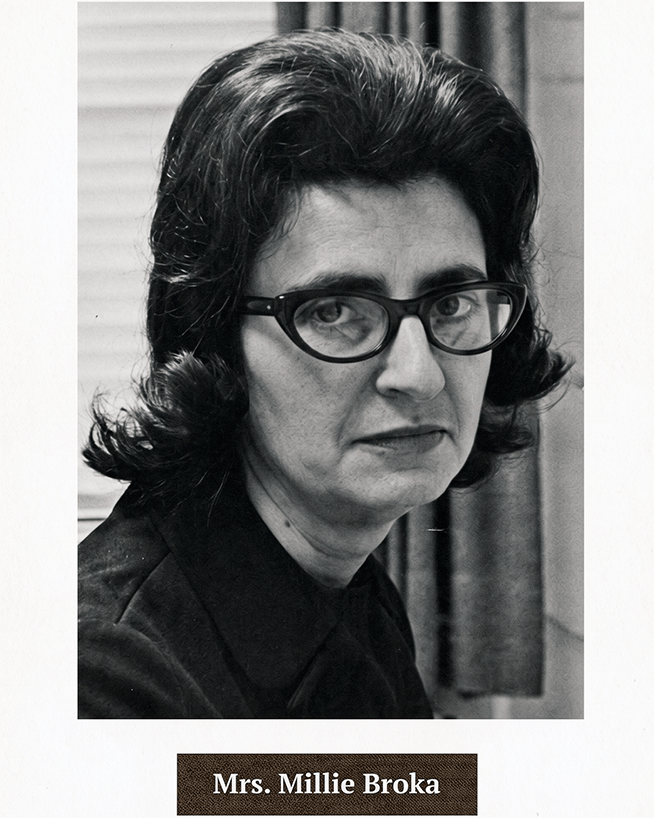
The department had been thinking seriously about a Ph.D. program since the mid-1960s. A first proposal to the Graduate Council in 1967 was approved with suggested revisions, then ultimately failed. In the early 1970s, Dr. George Rendina began developing an alternative proposal in biochemistry, assisted by Mrs. Millie Broka who worked long hours in the basement of Overman Hall helping put the proposal together. Simultaneously, Dr. Neckers had initiated talks with the University of Toledo and the Medical College of Ohio for a joint Ph.D. program in chemistry. Neither proved fruitful.
Then came the "Big Bang" of 1984. On April 16, 1984, the new Physical Sciences Laboratory Building (PSLB) was dedicated — its name harking back to Edwin Moseley's original Department of Physical Science. The $3.4 million appropriation was nearly returned to the state after plans came in massively over budget, but the department gambled on the legislature's desire to stimulate Ohio's economy with new construction, and the timing was perfect. The PSLB provided 18 teaching and research laboratories, nine instrument rooms, special purpose rooms, and offices across five floors of the new building adjacent to Overman Hall.
Almost simultaneously the department received a Program Excellence Award from the Ohio Board of Regents, which provided $169,000 for undergraduate research and new equipment.
In 1985, the department's proposal for a Center for Photochemical Sciences was approved. The Center was established as a component part of the Department of Chemistry, with the purpose of preparing postdoctorals and other professionals in photochemistry, photophysics, spectroscopy, and polymer photochemistry. It emphasized the interdisciplinary nature of photochemistry and its applications in many emerging high-tech industries. In its first nine months, the Center attracted over $1.3 million in state and corporate support — including $35,000 from Xerox Corporation and $300,000 from Meade Corporation.
In 1986 the department received both Academic Challenge and Research Challenge awards. By 1989 the Center for Photochemical Sciences had received $204,321 through the Academic Challenge program. The department also received a Board of Regents Eminent Scholar Award — the first ever to a non-Ph.D.-granting entity — providing endowed chairs matched with $500,000 from private sources.
A Ph.D. program proposal focused on photochemical sciences was duly submitted and ultimately approved. The new program, virtually unique in the country, was initiated in 1989. The first Ph.D. degree was awarded by the Center in 1993 — 76 years after the first B.Sc. degree from Bowling Green Normal College in 1917.
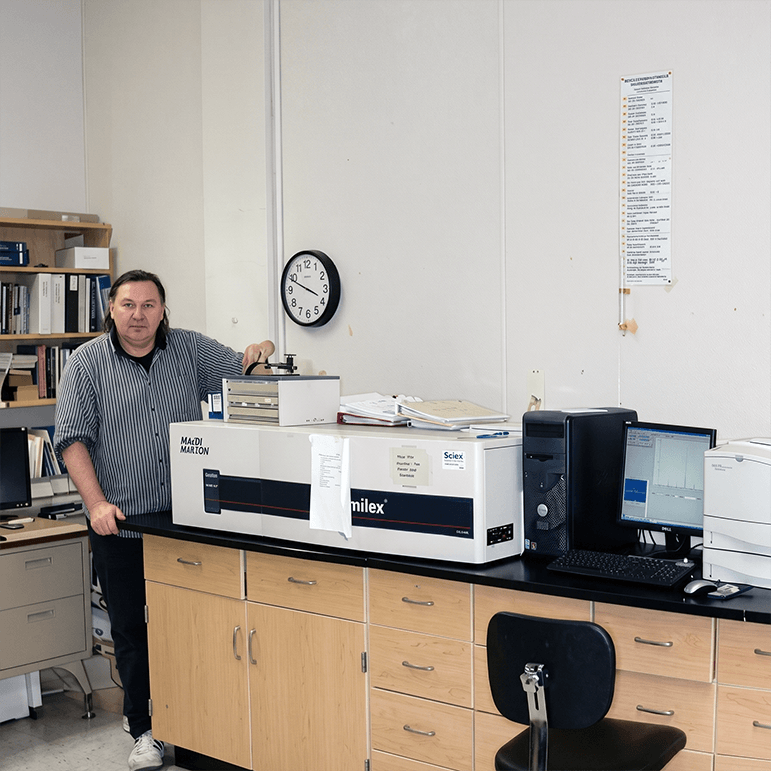
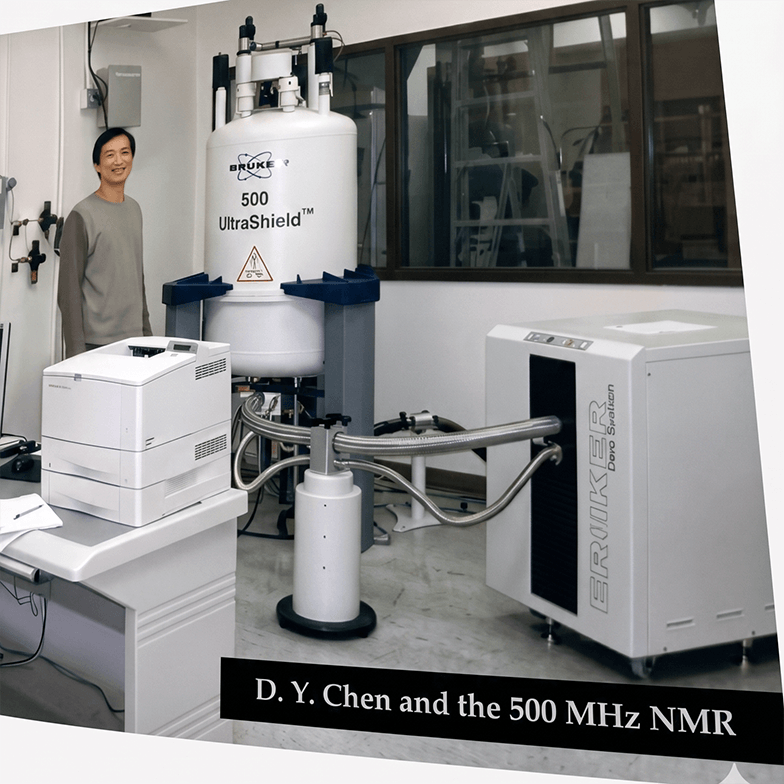
With the Ph.D. program in place, the Center grew rapidly in instrumentation: three nuclear magnetic resonance spectrometers (300–500 MHz), a number of GC/mass spectrometers, HPLC, FT-IR, UV-Vis, near-IR spectrophotometers, gas chromatographs, an elemental analyzer, a peptide synthesizer, and various laser systems. In 2002 the Ohio Laboratory for Kinetic Spectrometry (OLKS) was established within the Department of Chemistry, and in 2006 the Laboratory for Computational Photochemistry and Photobiology (LCPP) was created.
38% of BGSU's Phi Beta Kappa initiates in 1986 were chemistry majors — at the 1989 spring commencement, 28% of honors B.Sc. graduates from Arts and Sciences were chemistry majors. Dr. Scovell developed a biochemistry specialization within the chemistry department that became so popular that a majority of the department's majors specialized in biochemistry. In 1985 the department's American Chemical Society Student Affiliate Chapter (ACSSA) was named one of 15 outstanding chapters nationwide.
The Chemistry Faculty
The appointment of Dr. Michael A. J. Rodgers (Ph.D., Columbia) as Ohio Board of Regents Eminent Scholar in the Center for Photochemical Sciences in May 1987 was a major addition. Former director of the Center for Fast Kinetics at the University of Texas, Dr. Rodgers brought internationally recognized research developing techniques for studying reaction intermediates on a sub-nanosecond time scale, and was well known for expertise in photo therapy techniques for treating cancer patients.
Younger faculty were added: Deanne Snavely (Ph.D., Yale), Neocles Leontis (Ph.D., Yale), John Cable (Ph.D., Cornell), Robert Midden (Ph.D., Ohio State), and Michael Ogawa (Ph.D., Northwestern).
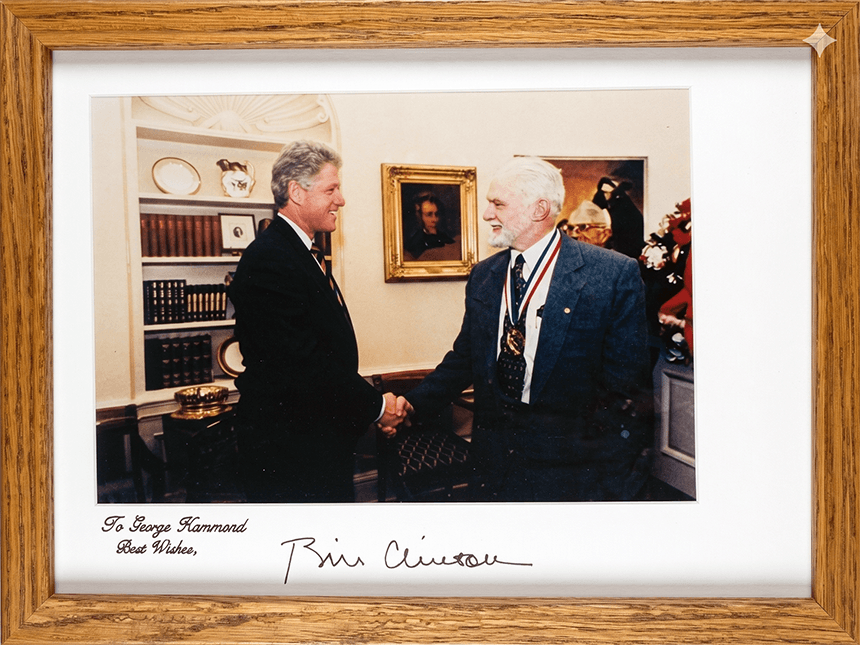
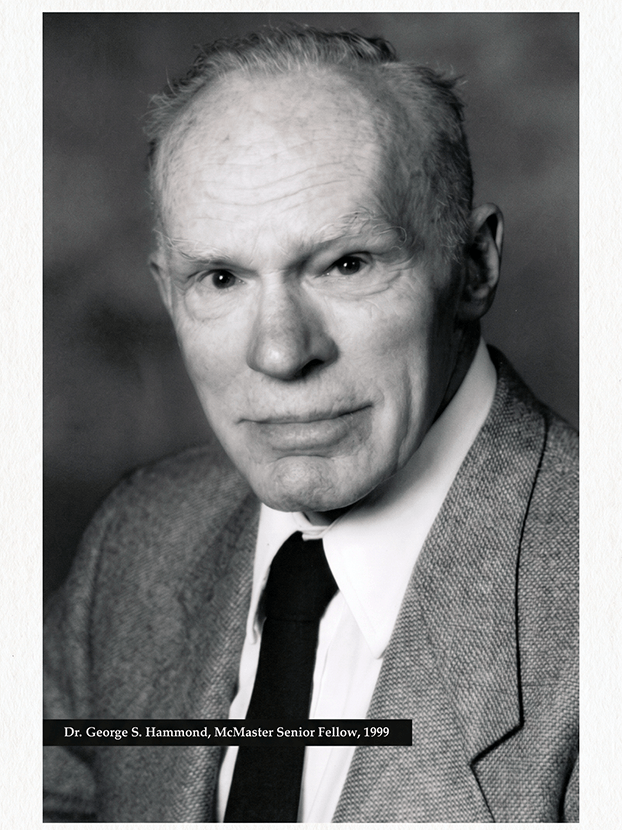
A truly outstanding addition was Dr. George Hammond (1921–2005), a Senior McMaster Fellow in the Center, a Nobel Prize nominee, and a pioneer in the field of physical organic chemistry. Dr. Hammond received numerous awards including the James Flack Norris Award (1968), the Priestley Medal (1976), and the National Medal of Science (1994). He is also credited as an innovator in chemical education, and his textbook (with Donald Cram and James Hendrickson) Organic Chemistry was among the first to abandon the traditional functional group approach in favor of a mechanistic one. He was well remembered by all members of the department as a generous and friendly colleague.
A new generation of scholars took on leadership: Pavel Anzenbacher (Ph.D., Czech Academy of Sciences, Prague), Felix Castellano (Ph.D., Johns Hopkins), Ksenija Glusac (Ph.D., University of Florida), and Alexander Tarnovsky (Ph.D., Vavilov State Optical Institute, St. Petersburg). By 2005 both Drs. Anzenbacher and Castellano had received the Olscamp Research Award, and Dr. Tarnovsky received two NSF grants totaling over one million dollars. In 2006 the second Regents Eminent Scholar, H. Peter Lu (Ph.D., Columbia University), joined the department, developing single molecule techniques to understand molecular dynamic processes, with work invited to address Nobel symposia.
"As the university approaches its centennial, Dr. Michael Ogawa is the latest to take up the mantle that has been worn by the distinguished chairmen of the past. For in the careers of Edwin Moseley, Clare Martin, W. Heinlen Hall and Douglas Neckers we can trace the continuous thread of chemistry that runs through one hundred years of Bowling Green chemistry. These four men are truly the giants on whose shoulders we stand today. And from that lofty vantage looking forward we can view much of promise, looking back much to celebrate — in this our centennial year."
CENTENNIAL FACULTY & STAFF
The Centennial Chemistry Department
Department Chair & Director of CPS: Michael Y. Ogawa · Regents Eminent Scholar: H. Peter Lu
Emeriti: Arlo Boggs, George B. Clemans, Christopher Dalton, Ivan DenBesten, Norman Meyer, Douglas Neckers, David Newman, George Rendina, Michael A.J. Rodgers
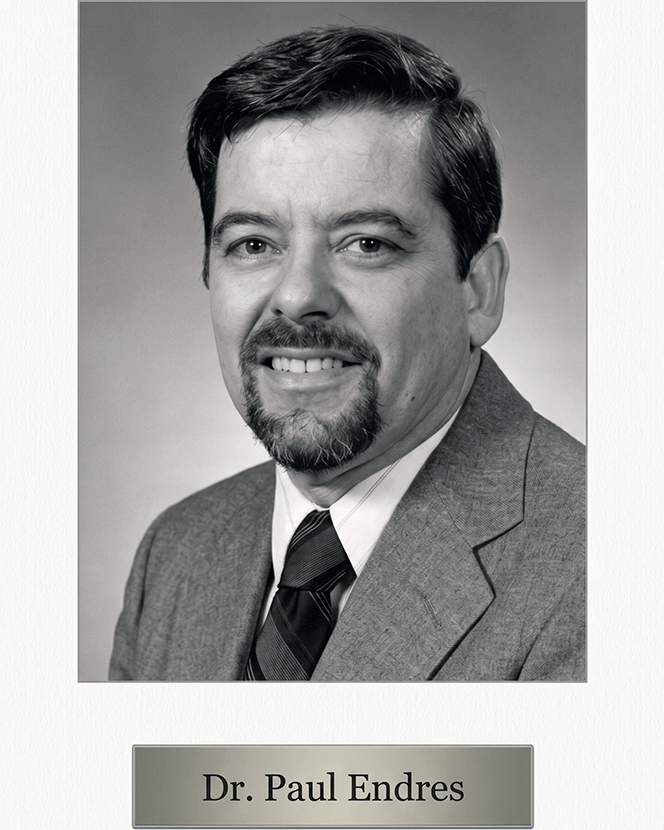
Professors: Arthur Brecher, Felix N. Castellano, Paul Endres, Thomas Kinstle, Neocles Leontis, Massimo Olivucci, William Scovell, Deanne Snavely, Marshall Wilson
Associate Professors: Pavel Anzenbacher, John R. Cable, W. Robert Midden
Assistant Professors: Ksenija D. Glusac, Alexander Tarnovsky
Instructors/Lecturers: Peter Blass, Steven Chung, David Erickson, Stephania Messersmith
Staff: Nora Cassidy (Program Coordinator), D.Y. Chen (NMR), Charles Codding (Machinist), Alita Frater (Secretary), Douglas Martin (Electronics), Kate Mejeritski (Intro Labs), Jackie Otiso (Clerk), Jedrzej Romanowicz (GCMS), Lisa Rood (Secretary), Mary Toth (Lab Supervisor), Stacey Williams (Budgets)
About the Author
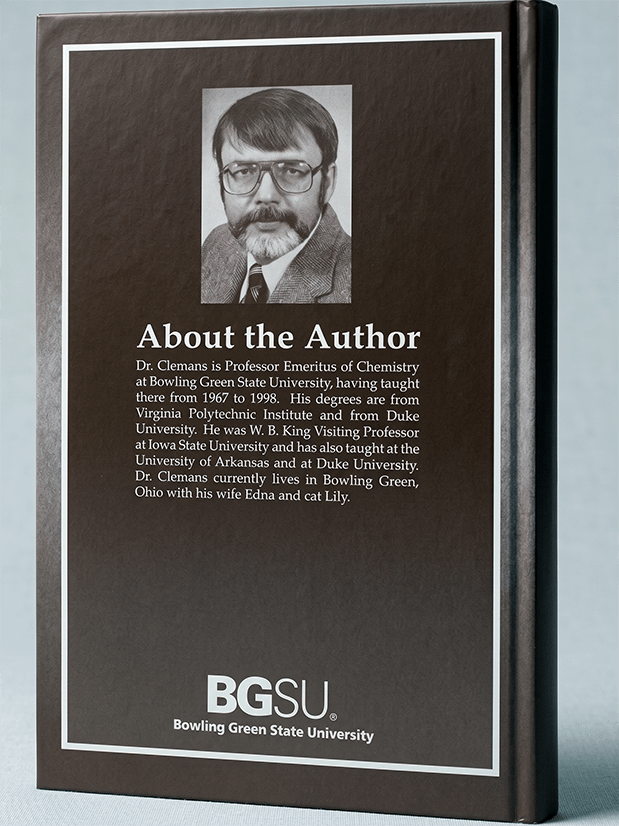
Dr. George B. Clemans is Professor Emeritus of Chemistry at BGSU, having taught there from 1967 to 1998. His degrees are from Virginia Polytechnic Institute and Duke University. He was W. B. King Visiting Professor at Iowa State University and has also taught at the University of Arkansas and Duke University. He lives in Bowling Green, Ohio.
Updated: 05/18/2026 02:53PM