
Water-Related
Majors and Programs
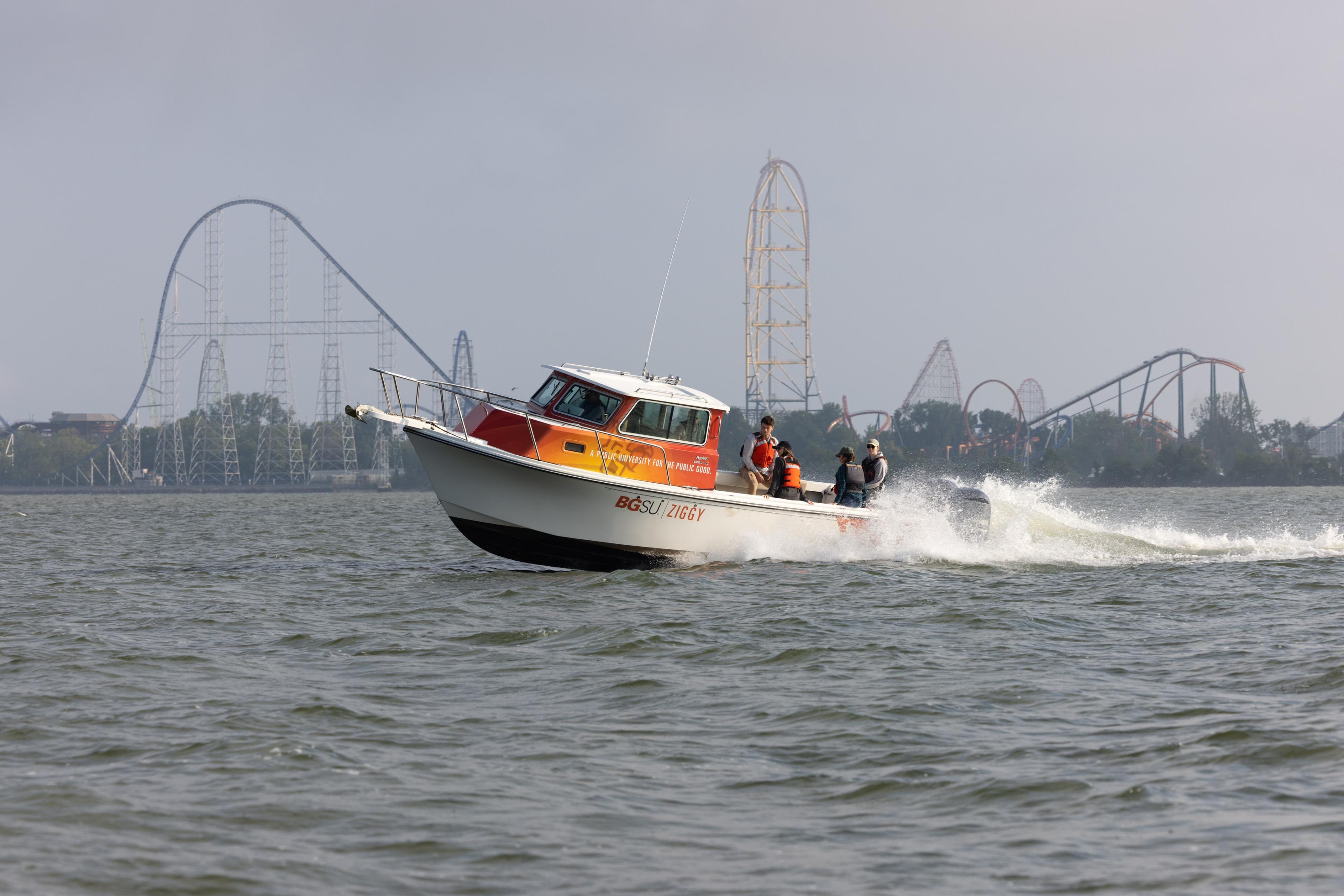
BGSU has several programs and research initiatives dedicated to the protection and restoration of our planet, specifically in regard to fresh waters and watersheds in Ohio and around the world. This area of study has become increasingly important as we recognize our responsibility for pollution, resource depletion, and land abuse. Integrating interdisciplinary research, education, and community engagement, we address critical issues that threaten fresh waters and watersheds and the living organisms that depend on them.
School of Earth, Environment and Society
Bachelor of Science in Environmental Science, Water Resources Minor
- Environmental science at BGSU is an interdisciplinary major that places priority on the natural sciences to provide the knowledge, skills and holistic perspectives to help build a cleaner, sustainable and more resource-efficient future.
- Environmental science examines the interrelationship between human activities and the biophysical world and assesses and addresses environmental conflicts.
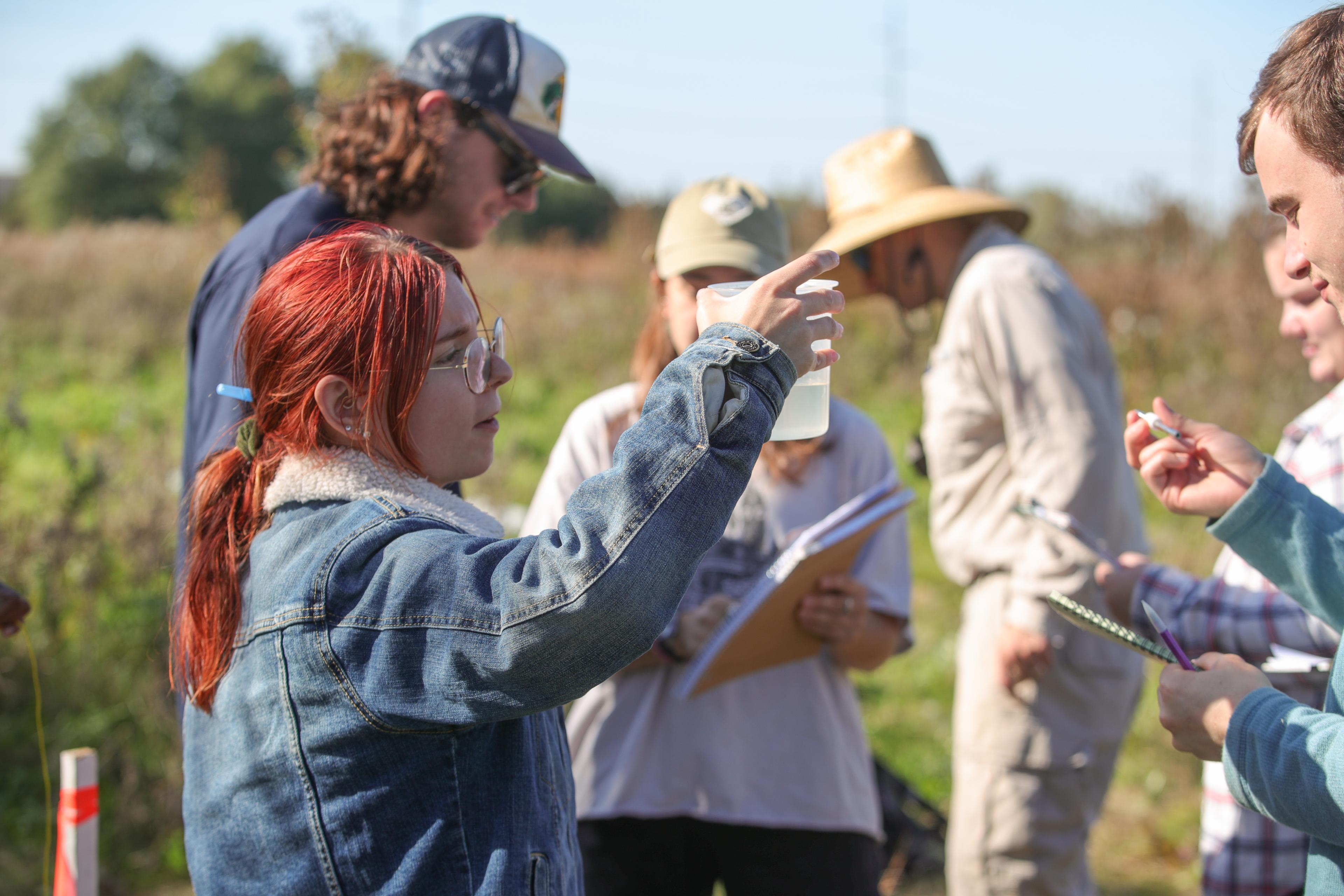
- Experiential learning is key to our environmental science degree program. Fieldwork and research allow students to study real-world environmental challenges.
- The water resources minor teaches students about the water cycle and the associated physical, biological, and geochemical processes.
- Students are prepared for employment in areas such as natural resource management, watershed management, conservation biology, and environmental remediation.
- BGSU also offers minors in environmental studies, sustainability, geology, applied geospatial science, and paleontology.
Bachelor of Science in Geology, Water Resources Minor
- The geology program features the study of global environmental changes and considers the Earth in a broad context that integrates atmosphere, biosphere, and hydrosphere using geospatial sciences and multidisciplinary views.
- Students complete a required five-week summer field course in New Mexico and Colorado; and the department periodically offers trips to the Appalachian Mountains in Pennsylvania and West Virginia, the Ozark Mountains in Missouri, Mammoth Cave in Kentucky, and more.
- The water resources minor teaches students about the water cycle and the associated physical, biological, and geochemical processes.
- Facilities include a GeoInformatics Lab, G-ECO Remote Sensing Lab, Paleontology Lab, and Aqueous and Terrestrial Geochemistry Lab.
- Students are prepared for employment in areas such as hydrogeology, environmental engineering, and water resource management.
- BGSU also offers minors in environmental science, environmental studies, sustainability, applied geospatial science, and paleontology.
- Environmental studies at BGSU takes a broad, interdisciplinary approach that merges social sciences, humanities and environmental science to address sustainability, policy and conservation issues.
- The specialization focuses intensely on the profound natural and social impacts of climate change – and how people, economies and the planet can adapt more resiliently to it.
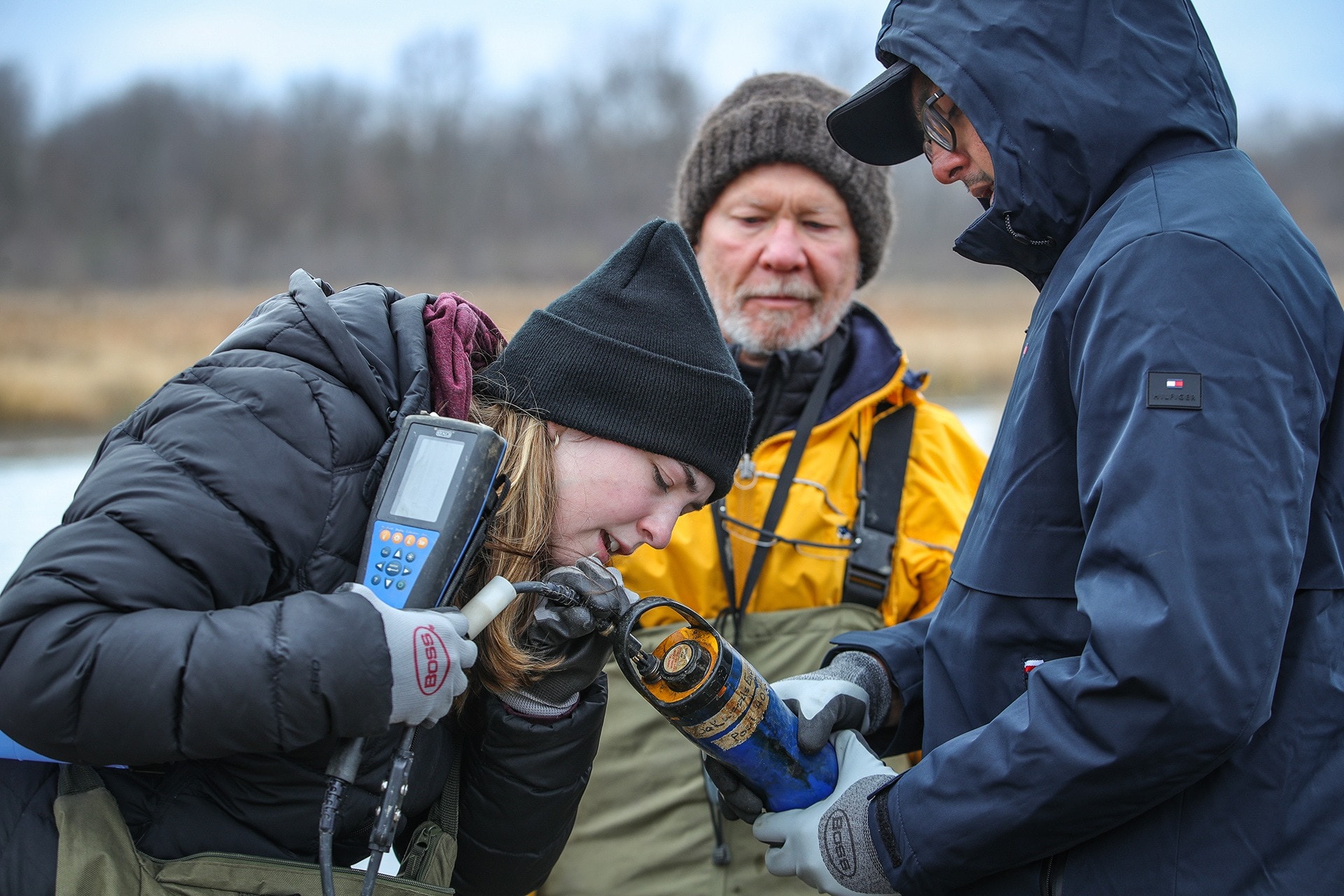
- Students participate in fieldwork and research involving local ecosystems, urban planning projects, environmental policy, and ecological conservation and restoration.
- Students are prepared for employment in areas such as environmental policy, urban planning, sustainability coordination, and conservation management.
- BGSU offers minors in environmental science, sustainability, water resources, geology, applied geospatial science, and paleontology.
Biological Sciences
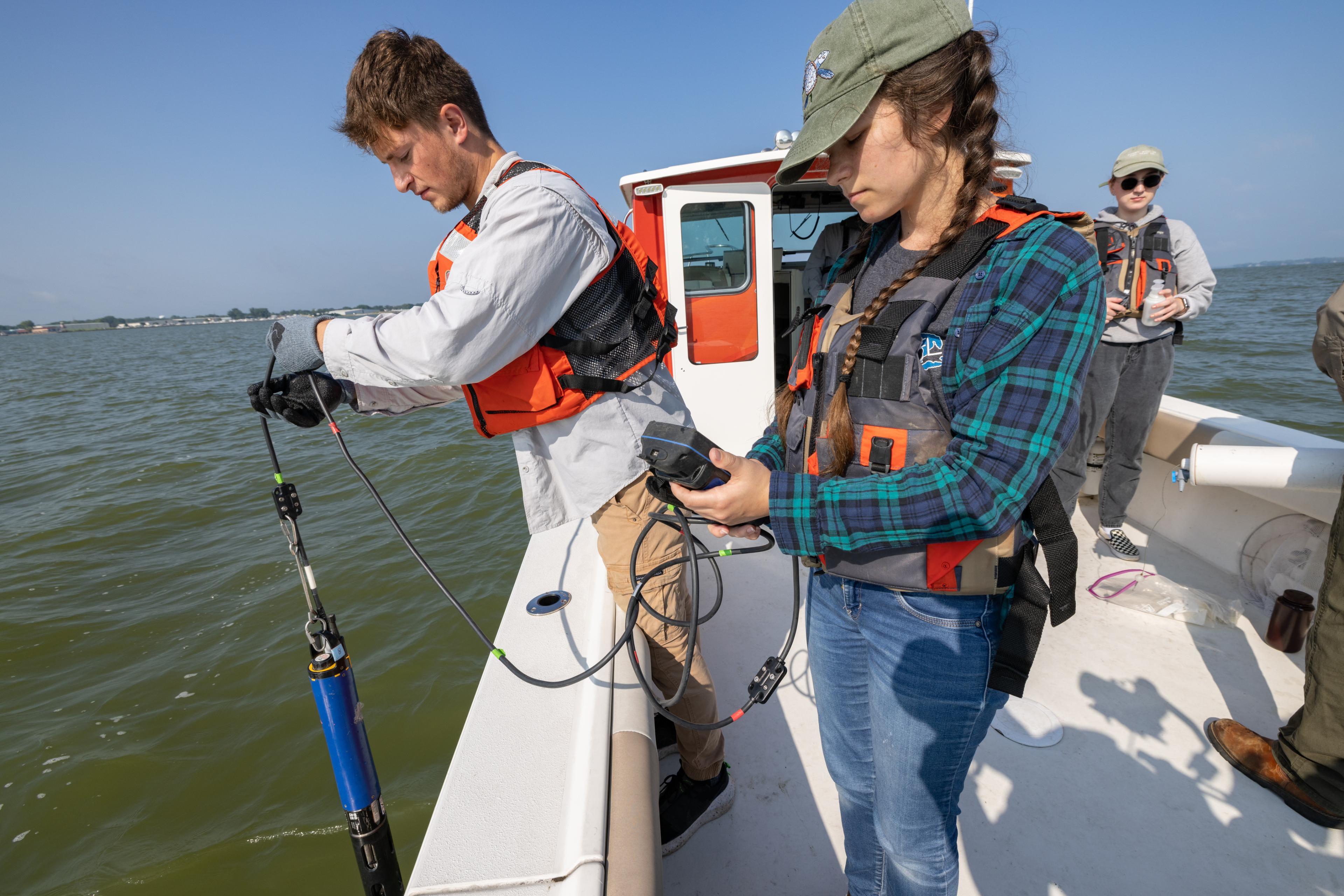
Bachelor of Arts or Bachelor of Science in Biology, Marine and Aquatic Biology Specialization
- This biology specialization studies marine and freshwater organisms, their behaviors, and interactions with the environment.
- The program offers hands-on experience with a variety of animals in the BGSU Marine Lab; field trips to the University of Southern Mississippi’s Gulf Coast Research Lab, Florida and North Carolina; and a partnership with the Toledo Zoo.
- Students learn principles of performing field research by using scientific instruments and techniques from environmental sondes, flow meters, acoustic fish finders, seines, and thermographs to snorkeling and scuba diving.
- Students are prepared for employment in areas such as coastal management and conservation, fisheries surveys, aquaculture, pollution control, and research.
Chemistry
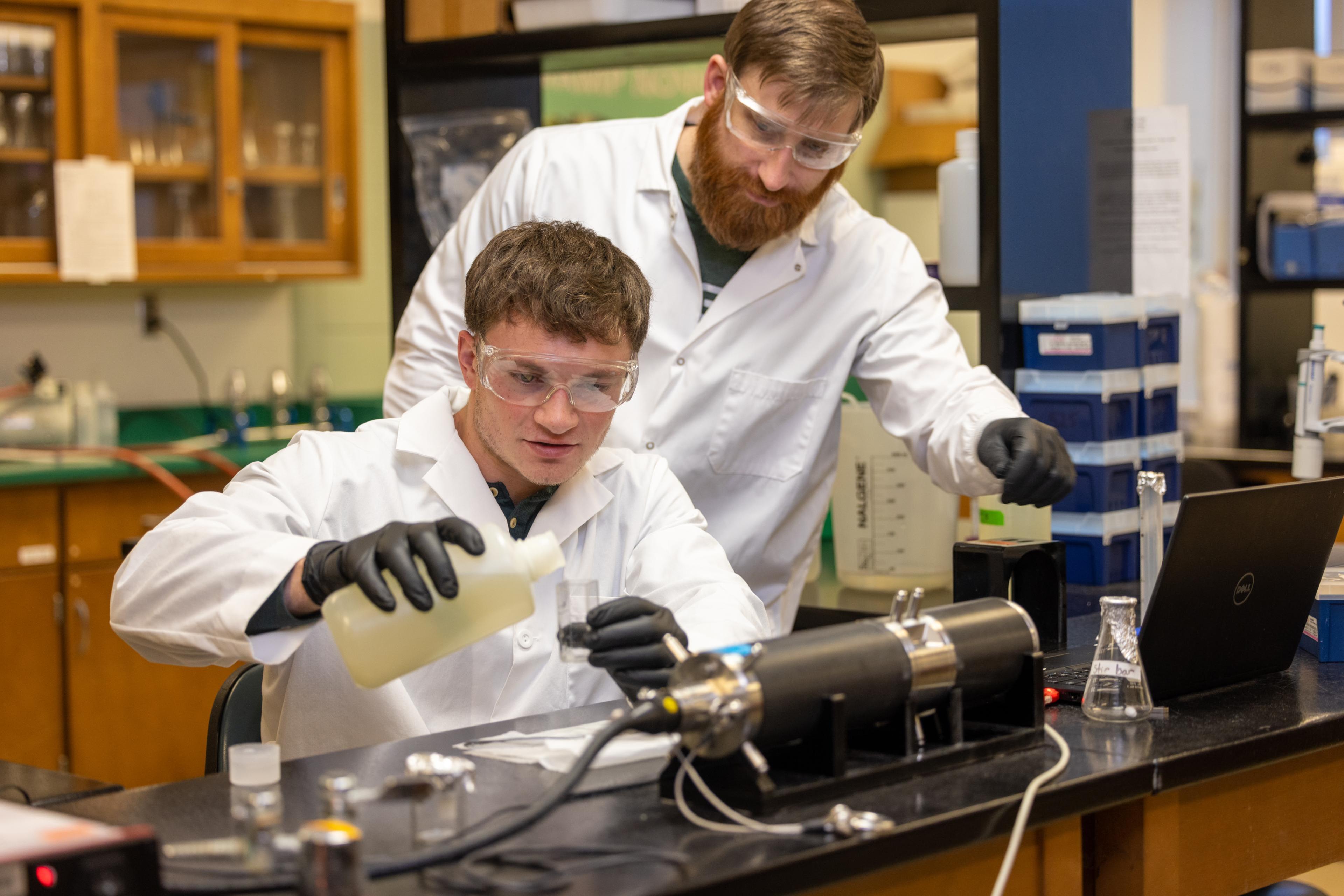
Bachelor of Science in Chemistry, Biochemistry Specialization
- The biochemistry specialization is designed for students interested in the chemistry/biology interface.
- Biochemistry majors study the chemical processes within and relating to living organisms.
- Students have opportunities to contribute to and lead undergraduate biochemistry research projects as summer projects or through an independent study course.
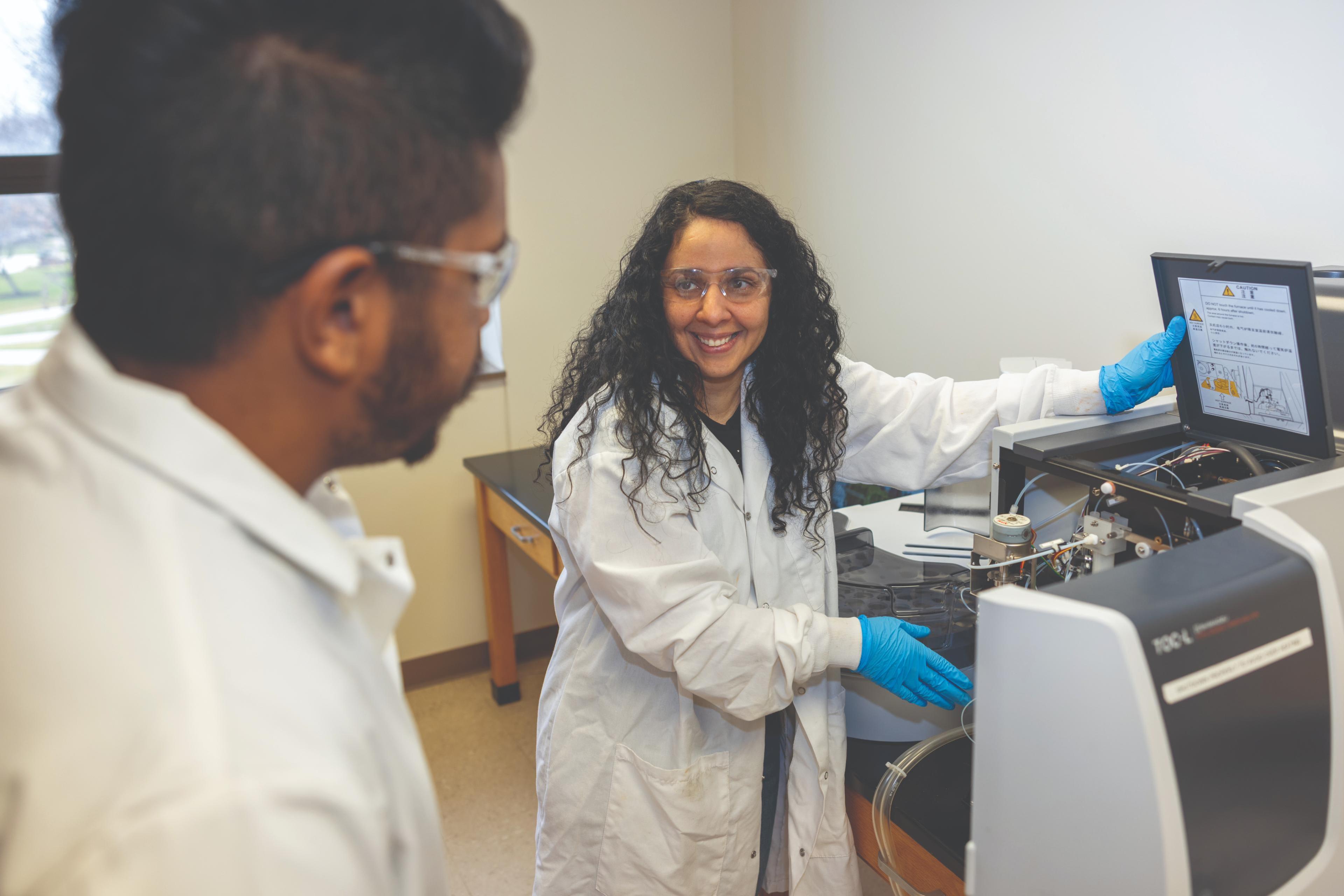
- Students learn how to use highly sophisticated equipment such as mass spectrometers, gas and liquid chromatographs, ultracentrifuges, and laser systems.
- Students are prepared for employment is areas such as water quality research, agricultural research, medicine and pharmaceuticals.
Research
Center for Great Lakes and Watershed Studies
The Center for Great Lakes & Watershed Studies (CGLWS) conducts collaborative, interdisciplinary research to advance the understanding of watershed science. The CGLWS researches not just Lake Erie, but the entire watershed – from agricultural fields, to wetlands, to freshwater ecosystems and the Great Lakes – to help further our understanding and management of biodiversity, ecosystem function, land use practices, and water quality and restoration.
Students have opportunities to be involved in this research through independent study courses, summer fellowships, or through the Center for Undergraduate Research and Scholarship (CURS).
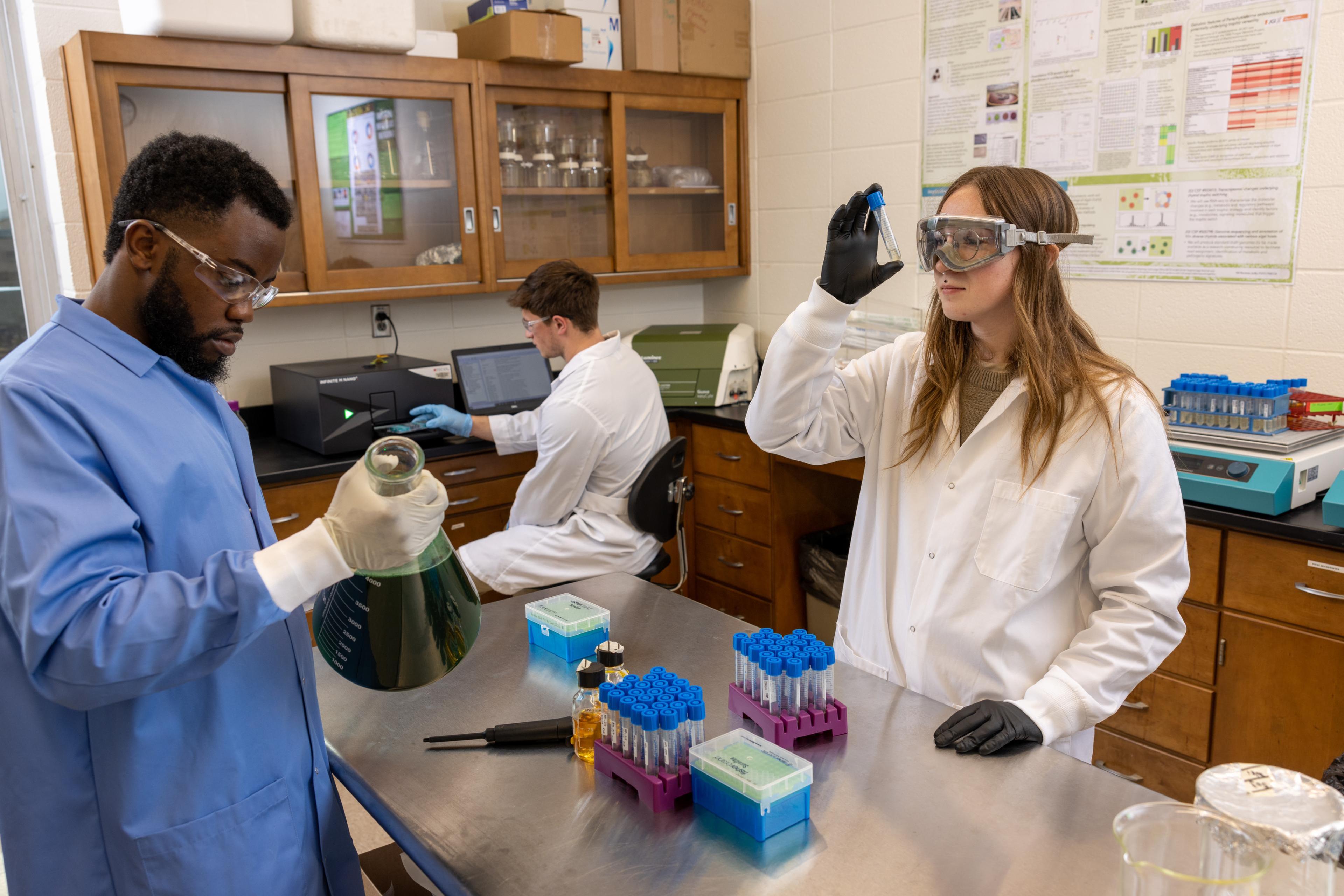
Experiential Learning

The Marine Biology Lab is a 1,500 square-foot facility which contains over 4,000 gallons of seawater in over 60 aquaria. Animals in the Marine Lab are maintained by students for class study and research projects but are also present for the appreciation of visitors.
The Aquatic Research Lab is a 1,450 square-foot facility dedicated to fresh and saltwater aquatic research for undergraduate students.
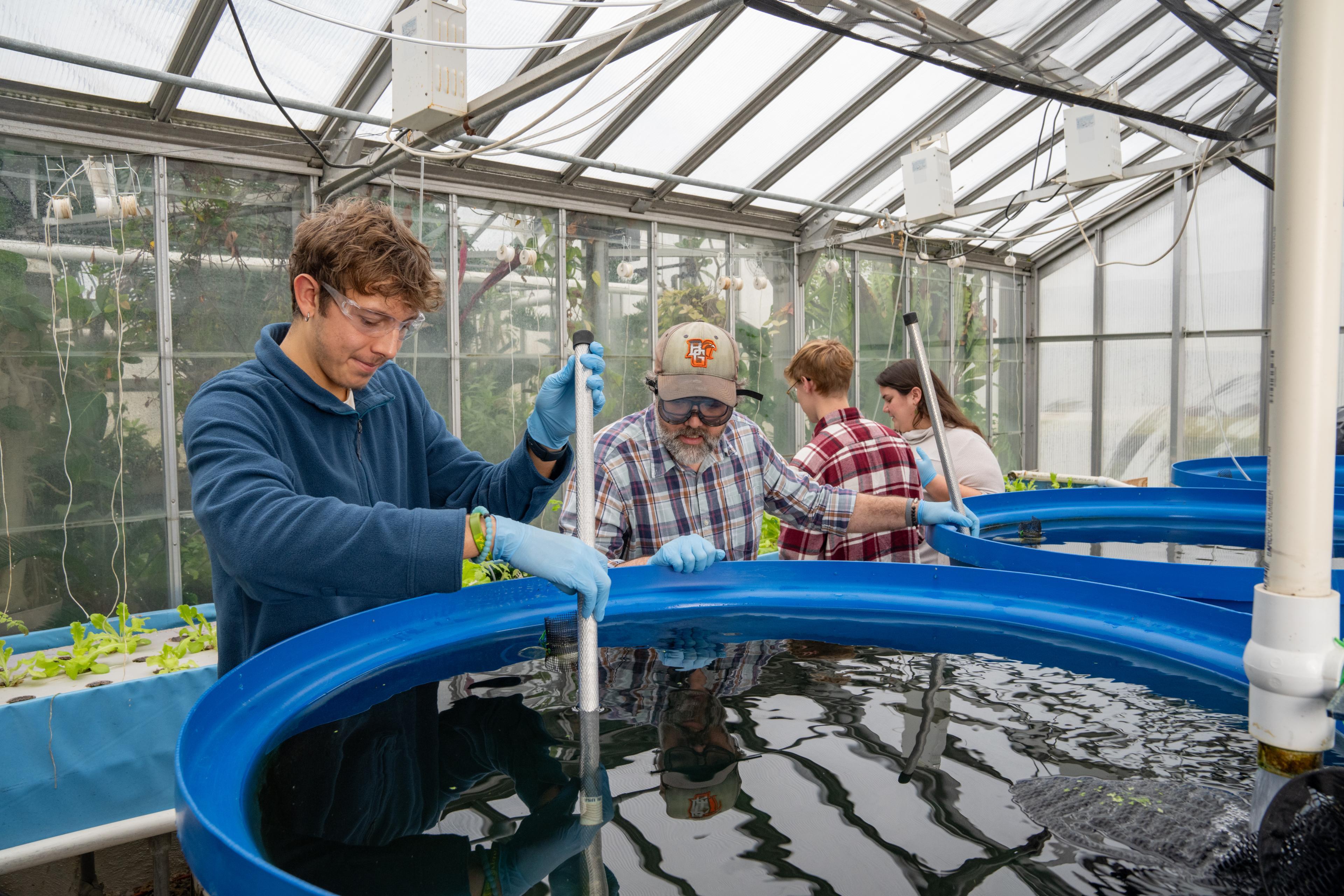
The Greenhouse Complex consists of four greenhouses containing research projects and teaching collections. Highlights include a desert area, tropical floor planting, and aquaculture and aquaponics research projects.
For Information about these Programs:
Contact
Center for Great Lakes and Watershed Studies
419-372-3892
School of Earth, Environment and Society
419-372-2925
Department of Biological Sciences
419-372-2332
Department of Chemistry
419-372-2031
Updated: 05/20/2026 03:36PM