
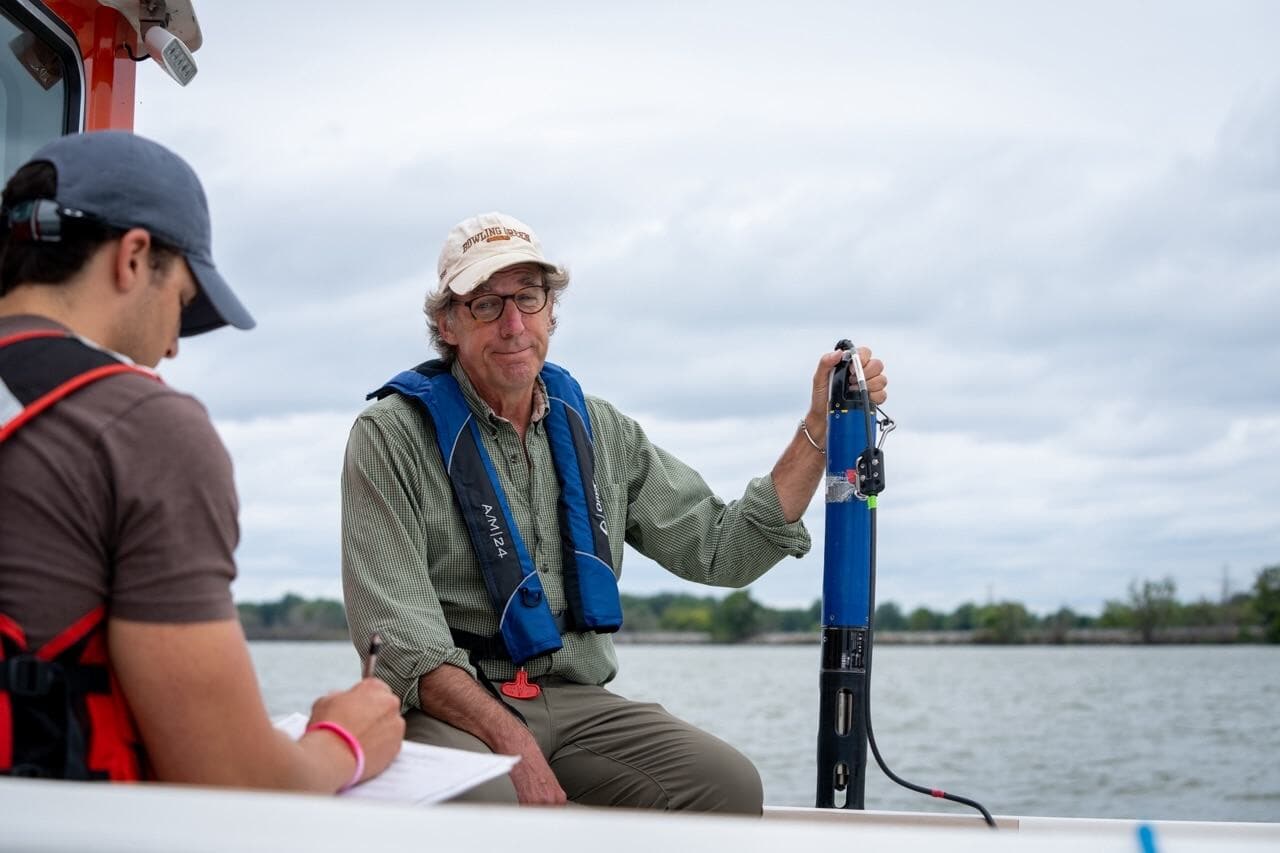
George Bullerjahn, Ph.D. (pictured right) is one of 23 researchers that gathered to create a five-year global strategy to prevent toxic cyanobacteria. (BGSU photo)
George Bullerjahn, Ph.D., joins international researchers to bridge critical gaps in water quality research
BGSU research and faculty expertise are helping to shape a global strategy to understand and prevent toxic cyanobacteria. As the only representative from an Ohio university and one of only three from the United States, renowned BGSU researcher George Bullerjahn, Ph.D. worked with a team of the world's top researchers to publish a five-year plan to help scientists better understand the causes of algal blooms, in hopes of finding better ways to prevent and manage them in the future.
Key Highlights
Faculty member: George Bullerjahn, Ph.D.
Research focus: Predicting, managing and preventing toxic algal blooms
Aim: Uncover gaps related to cyanobacterial algal blooms to lay the groundwork for future research
World-renowned water quality research
With more than 30 years of research on freshwater microbes, George Bullerjahn's expertise resulted in an invitation to join the world's top researchers to study how to mitigate algal blooms.
Algal blooms are a global issue
The threat of cyanobacteria affects nearly all countries, particularly developing countries where communities rely heavily on access to clean water for their health, livelihoods and local economies.
Protecting freshwater
Bullerjahn worked with the research team to publish a five-year plan to help scientists better understand the causes of algal blooms, in hopes of finding better ways to prevent and manage them in the future.
"This five-year plan is an amazing opportunity for our students, faculty and the Center for Great Lakes and Watershed Studies not only to help lead the charge for meaningful research over the next five years, but also to create a lasting impact worldwide."
GEORGE BULLERJAHN, Ph.D.
BGSU EMERITUS PROFESSOR







As toxic algal blooms intensify across the globe, researcher George Bullerjahn, Ph.D., continues to lead the global conversation on how to prevent them, keeping Bowling Green State University and its Center for Great Lakes and Watershed Studies at the forefront of water-quality research.
Bullerjahn, a renowned microbiologist and BGSU emeritus professor, has studied freshwater microbes for more than 30 years. His expertise and years of research at BGSU were recognized when he was invited to join 22 of the world's top researchers in Kunming, China, to develop a global research priority plan to address research gaps in cyanobacterial algal blooms – the organisms that produced the toxins that led to the Toledo water crisis in 2014.
As the only representative from an Ohio university and one of only three from the United States, Bullerjahn worked with the team to publish a five-year plan to help scientists better understand the causes of these blooms, in hopes of finding better ways to prevent and manage them in the future.
In Ohio, toxic algal blooms threaten the health of residents and the state's vibrant water tourism industry, which generates billions for the economy and supports hundreds of thousands of jobs. Globally, the threat is equally significant, particularly in developing countries where communities rely heavily on access to clean water for their health, livelihoods and local economies.
The plan was published in "Trends in Ecology and Evolution," featuring contributions from Bullerjahn and researchers from Denmark, Canada, Germany, China, South Korea, Austria and New Zealand.
"We put together a list of the highest priorities going forward regarding toxic algal blooms that we see in fresh waters," Bullerjahn said. "They are getting worse worldwide, happening more frequently, getting more intense and being found in both temperate and tropical zones."
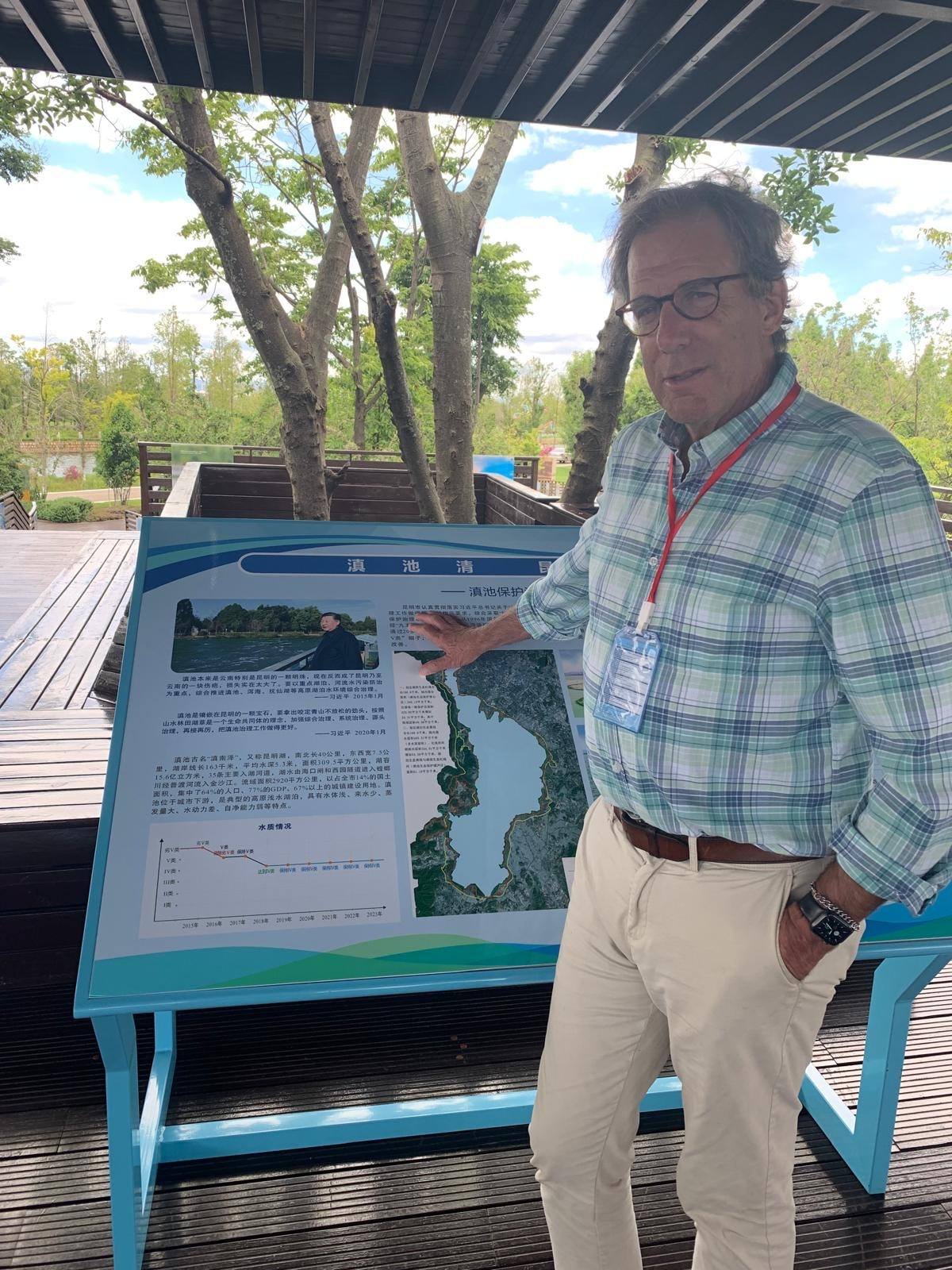
By reviewing their own research and citing literature from the past five years, Bullerjahn and his colleagues laid the groundwork for the next half-decade of study.
Together, the team uncovered the following four research gaps related to cyanobacterial algal blooms:
1. Addressing the drivers that allow certain genetic strains to dominate algal blooms:
"These drivers that include loadings of nitrogen and phosphorus from the landscape can allow blooms to change quickly from harmless to humans to highly toxic," Bullerjahn said. "We saw this in 2014 when an offshore bloom in Lake Erie produced relatively high levels of microcystins that exceeded Environmental Protection Agency permissible limits, forcing the city to utilize bottled water."
2. Utilizing state-of-the-art genetic tools:
"We hope to unravel cellular-level and environmental controls on the production of microcystins and other harmful chemicals that algal blooms produce," Bullerjahn said. "We need to identify and understand the internal structure of cyanobacteria to be able to predict what specific internal triggers induce these cells to start synthesizing toxins."
3. Understanding interactions between members of the microbiome:
"Harmful cyanobacteria co-occur with many other microbial species in lakes, but interactions are very poorly understood," Bullerjahn said. "Understanding the relationships between members of the microbiome will allow us to understand better how and when hazardous algal blooms form, persist, decline and become toxic."
4. Identifying how biological and physical factors can influence the formation and persistence of cyanobacterial algal blooms:
"The team sought to identify how the abundance and species composition of blooms are affected by nutrient, temperature and light conditions," Bullerjahn said. "We also sought to identify top-down controls, including zooplankton, fish grazing and cell breakdown caused by bacteria and viruses."
Researchers noted that, despite algal blooms occurring worldwide, less work is being done on tropical systems than on temperate systems due to the funding and resources available in more developed countries. Additionally, tropical and subtropical zones are seeing benthic blooms that occur on the bottom of waterways, making them harder to detect.
"This five-year plan is an amazing opportunity for our students, faculty and the Center for Great Lakes and Watershed Studies not only to help lead the charge for meaningful research over the next five years, but also to create a lasting impact worldwide," Bullerjahn said. "Our research locally has been instrumental in driving change in Lake Erie and Ohio, but our research on Lake Victoria in Africa has become even more relevant globally, when you consider the lack of research being done in tropical zones.
"I look forward to seeing what the future holds at BGSU and in water-quality research."
Related Stories

Updated: 07/10/2026 07:40PM