
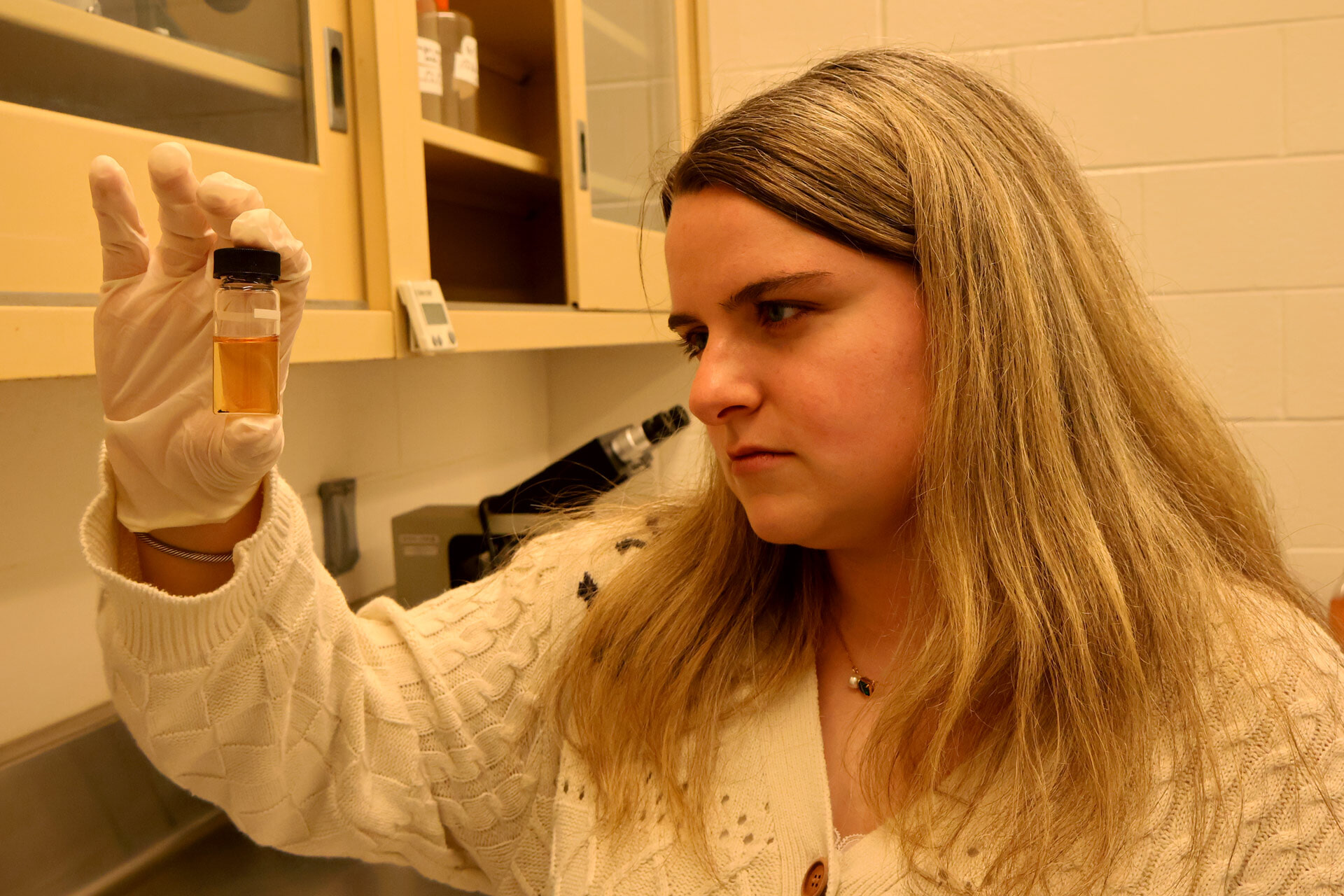
BGSU grad student studying rare freshwater fish that came back from near extinction
Estimated Reading Time:
Cassidy Parker ’24 is researching the effects of nitrate pollution on the tequila splitfin, which was once declared extinct in the wild
A Bowling Green State University graduate student has a front-row seat to learning more about an unusual species of fish that has “come back from the dead.”
Cassidy Parker ’24 is studying the effects of nitrate pollution on the reproduction of the tequila splitfin – a small freshwater fish with a bright yellow tail that is native to central Mexico – a species that was once declared extinct in the wild.
The tequila splitfin is a fascinating species that, unlike most fish, gives live birth instead of laying eggs.
But the species has faced many challenges that pushed it to the brink of extinction. The tequila splitfin was declared extinct in the wild in 2013, when a restoration effort reintroduced it to its natural habitat on the 2017 Day of the Dead.
Now declared critically endangered, Parker’s research aims to shed light on the species' long-term ability to reproduce in a water system prone to runoff from nearby farms.
“There are tons of threats that these fish face every day,” Parker said. “Mainly, it’s the agricultural runoff from a lot of nearby fields. The regulations aren’t as strict in Mexico, so pollution often gets into the water, and invasive species play a huge role as well. They’re itty-bitty fish, so they’re snack-sized for some of the other fish in that basin.”
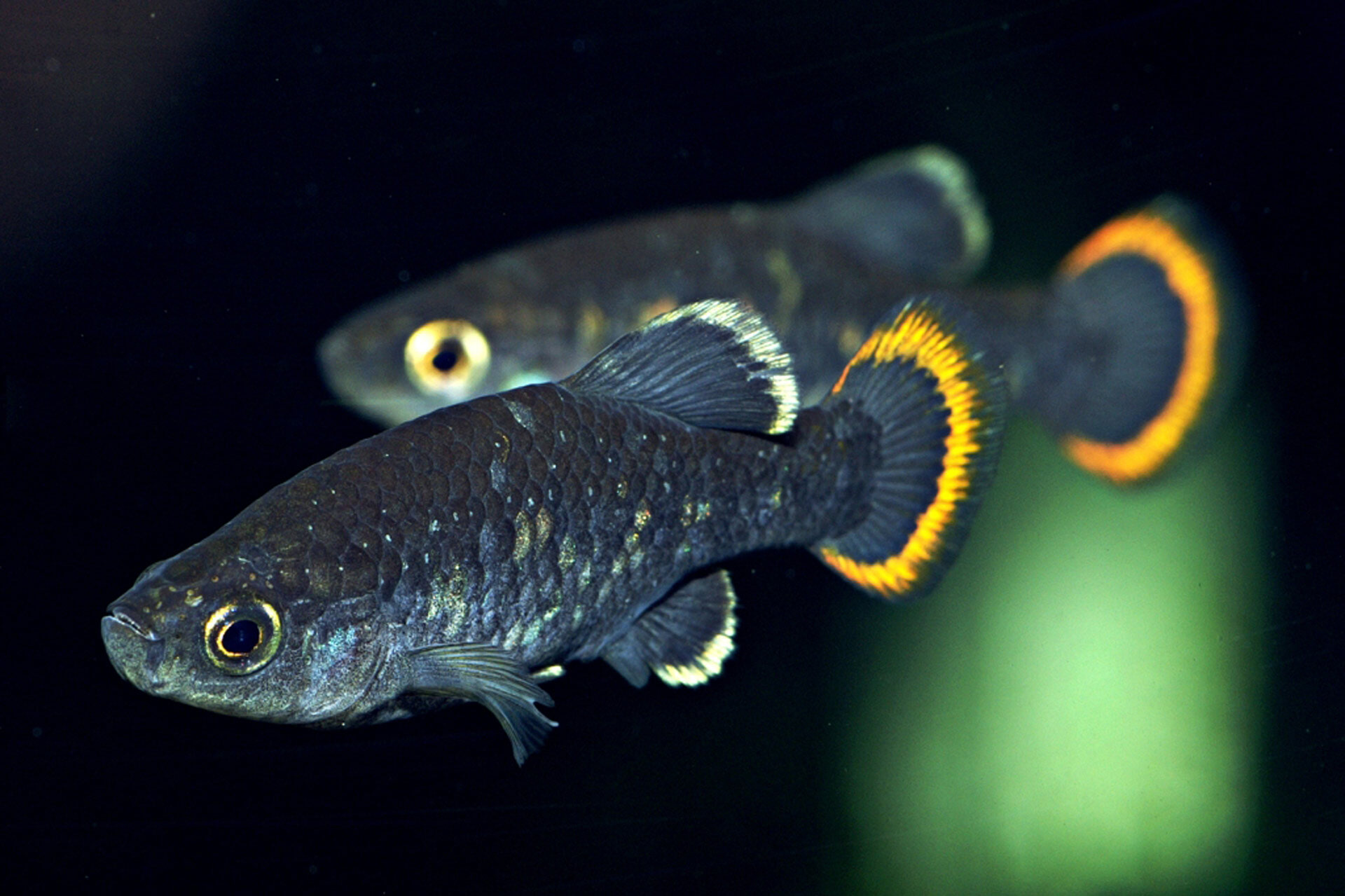
Parker, a native of Columbus who played trumpet in the Falcon Marching Band, set up the experiment with three systems: one with little to no nitrate pollution, one with a low concentration of nitrate pollution and one with high nitrate pollution. She is examining how each concentration impacts gestation periods, how often the splitfin reproduces, the number of offspring per brood and the growth rates of both offspring and adults.
Kevin Neves, Ph.D., an associate teaching professor in the BGSU Department of Biological Sciences who is working closely with Parker on the project, said a better understanding of small invertebrates like the tequila splitfin can serve as a blueprint for species closer to home.
Though it is only native to a relatively small area in Mexico, its plight was connected to agricultural runoff – the very same issue that has contributed to algal blooms in Lake Erie.
“The tequila splitfin is important because it serves as an example of how it is possible to essentially undo the damage caused by human activities and bring a species back from extinction,” Neves said.
Further, because the species were kept alive by a network of scientists and conservationists, Neves said the chance to study them provides an interesting look into preserving the existence of a special creature.
“Because these fish are small and relatively easy to keep, they serve as the perfect inspirational organism for students interested in conservation,” Neves said. “I can give someone a pair of these critically endangered fish, and they are personally invested in preventing the species from going extinct forever. It's hard to do that with a sea turtle or whale.”
Parker hypothesizes that higher levels of pollution will show a correlation to worse birth outcomes.
Ideally, the results from Parker’s three tanks will provide key data points in the overall restoration of the tequila splitfin and other small freshwater species facing threats from nitrate pollution.
“My research is hopefully going to be a stepping stone for restoration efforts happening in Mexico for endangered fish,” Parker said. “The biggest issue is water quality, and these fish are already endangered. Water quality isn’t the best, so how is what we’re doing affecting them? What can we do to fix it?”
While at BGSU, Parker said she hoped to be involved in science that mattered, and that the chance to gain intimate knowledge of a fish facing extinction has been a rewarding experience.
“As any scientist would, you want to do something meaningful with your research,” Parker said. “If I can make a difference, that would be the most rewarding thing that I could get out of this project.”
Related Stories

Media Contact
Michael Bratton | mbratto@bgsu.edu | 419-372-6349
Updated: 05/04/2026 06:29PM