
BGSU scientists find evidence of new volcanic activity in Antarctica
Estimated Reading Time:
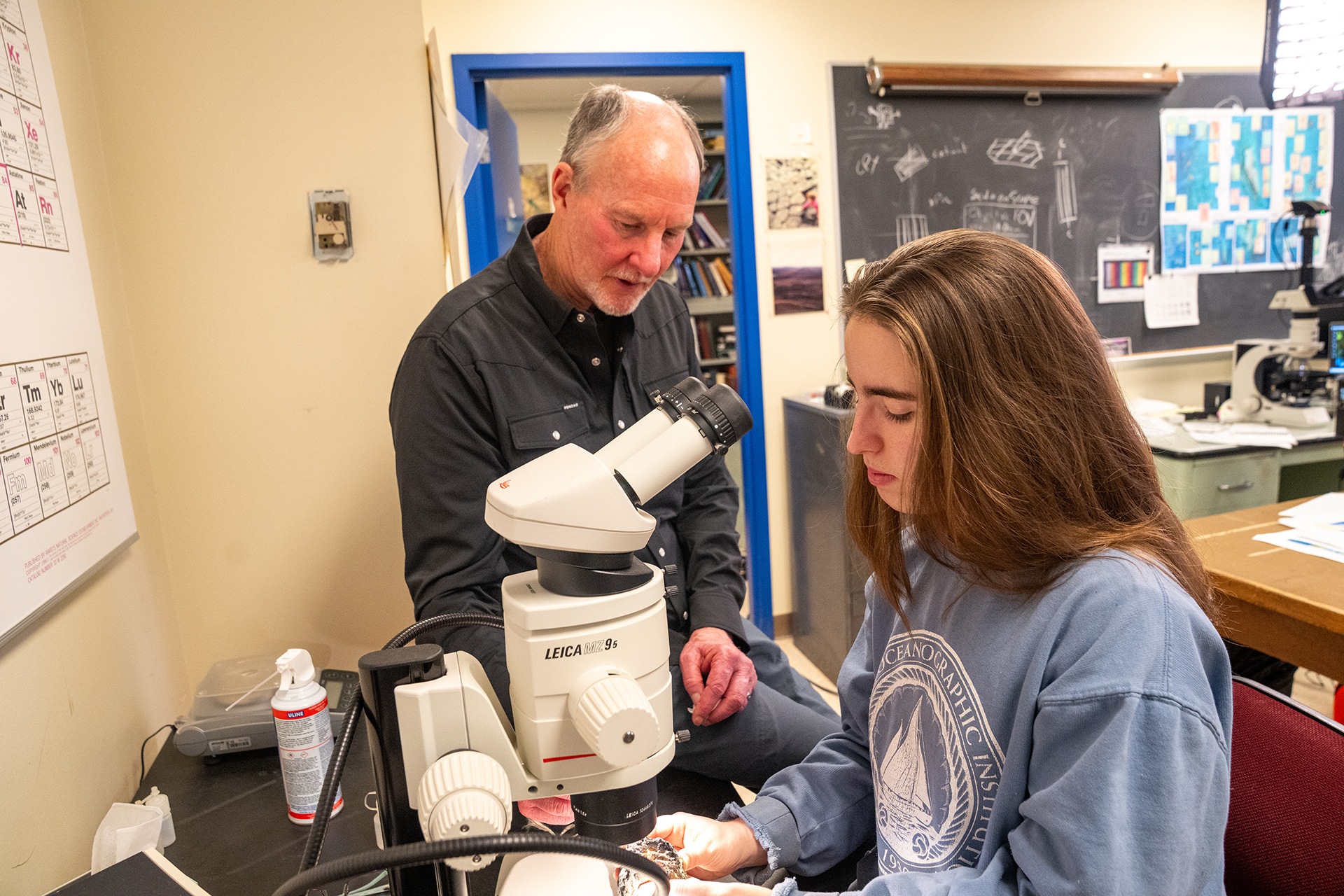
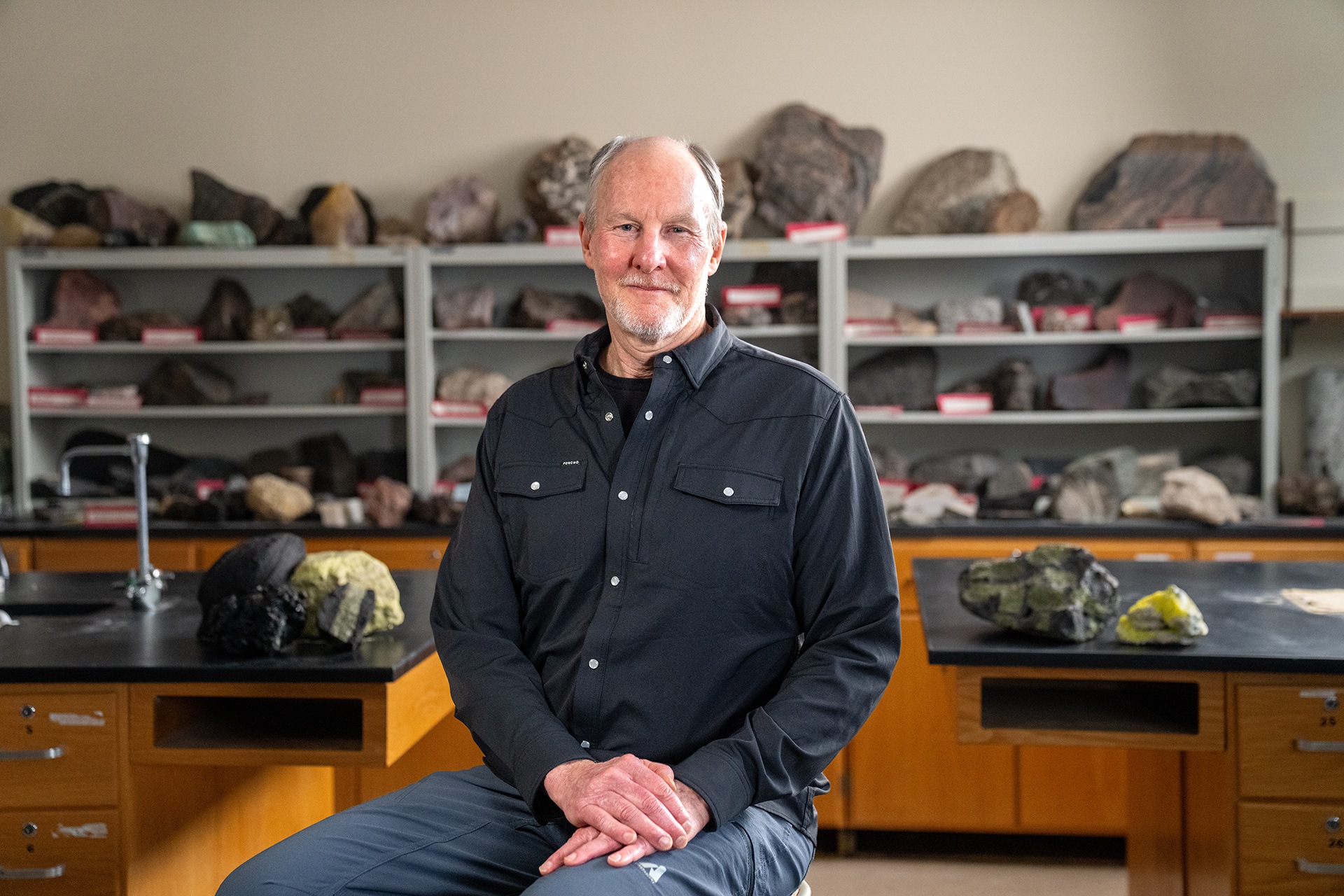
Geology professor Kurt Panter, Ph.D., led a voyage to Antarctica that made key discoveries in the western Ross Sea
Researchers from Bowling Green State University found new evidence that two large volcanic seamounts on the seafloor in Antarctica have been recently active underneath the surface of the ocean.
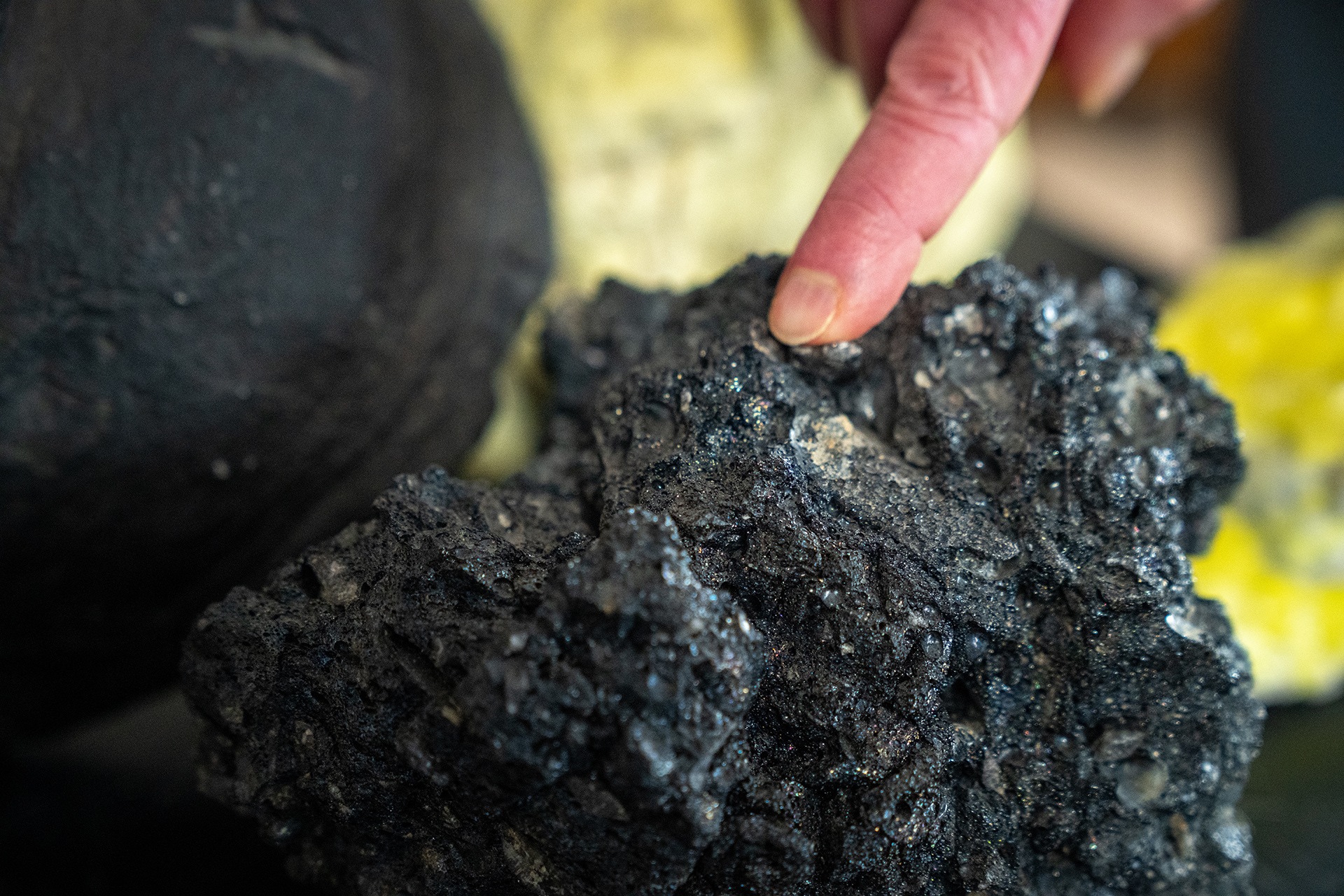
Researchers also unearthed samples that concluded more than 20 flat-top seamounts in the western Ross Sea are volcanic, providing evidence that they previously erupted in a restricted environment beneath the continental ice sheets at various points in the past, when ice covered the Ross Sea.
The two landmark findings, obtained from a National Science Foundation-funded voyage aboard the Nathaniel B. Palmer in 2025, discovered that the volcanic seamounts were uninhibited by ice, allowing volcanic rock to disperse on the seafloor without restrictions.
BGSU geology professor Kurt Panter, Ph.D., said researchers were well aware of nearby volcanism with Mount Erebus, but they were surprised the two newly discovered volcanoes had been active not long ago.
“We knew there was activity pretty close by, but we weren’t expecting any of the volcanoes on the ocean bottom to be active,” Panter said. “That’s a hit-or-miss thing: You can’t see them and observe any eruption. But some of their features indicated very, very recent activity.”
Published in Communications Earth & Environment, a prestigious environmental science journal, the findings to which BGSU scientists contributed have been a major development in the world of geology.
The findings give geologists and climate scientists across the globe a better understanding of the interaction between volcanism, ice and the ocean, which provides key data points about volcanoes' role in the overall climate. A better understanding of undersea volcanoes in Antarctica also could provide a window into other similar, difficult-to-reach submarine volcanoes like those in the Greenland Sea and off the coast of British Columbia in Canada.
Active volcanoes in Antarctica? 🤯
(BGSU video by Benjamin Boutwell '24)
The team flew from the United States to New Zealand, then traveled by ship in February 2025 to Antarctica during the Southern Hemisphere’s summer.
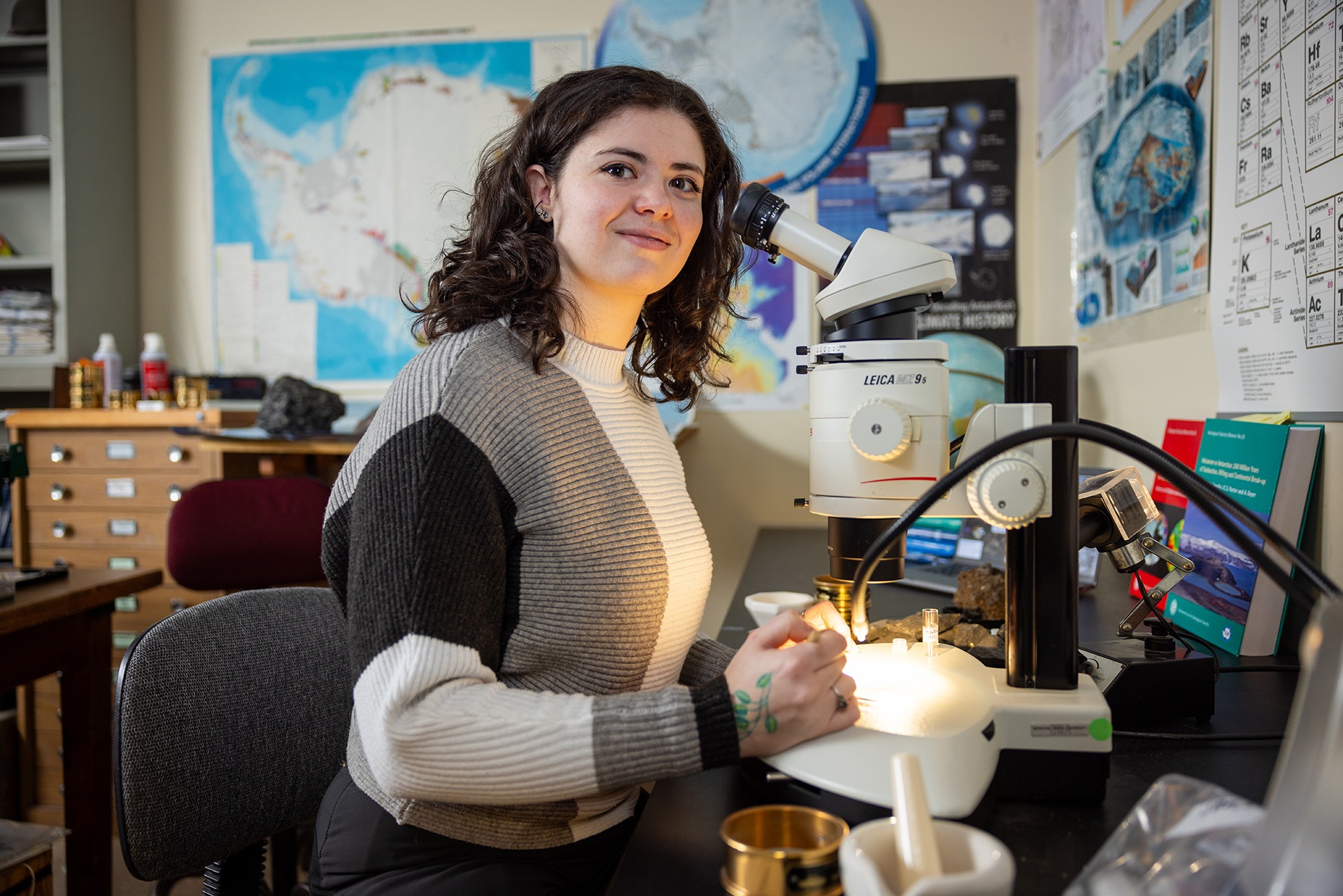
Two BGSU geology students, Katie Shanks ’24 and Jacci Kalemba ’24, who played key parts in obtaining samples and data that led to the team’s findings, traveled alongside Panter aboard the Nathaniel B. Palmer and were contributing authors on the publication.
Through obtaining dredged samples from the ocean floor, BGSU scientists set out to settle an ongoing debate within the world of geology research: if the flat-top seamounts in the region were volcanic or sedimentary. Kalemba, whose thesis project at BGSU is focused on two of the flat-top seamounts, said the team's first batch of rocks from the ocean floor answered that question right away.
“The moment we brought up the first dredge, we got one look at the rocks and said, ‘These are volcanic,’” Kalemba said. “We hadn’t even made it through washing or sorting the rocks yet, but we knew as soon we started brushing the mud off that they were volcanic.
“It was really cool to definitively have that answer, and even more fascinating that I got to be there, even as a grad student, to be one of the first people to figure this out.”
Both also played a lasting role in shaping further research into the western Ross Sea by naming seamounts in one of the least-studied places in the world.
Seamounts that have flat tops, which researchers surmised could have been related to their juxtaposition to ice, resemble pancakes, an area they began to call Flapjack Field.
Shanks thought one of the seamounts looked like a hat with a feather and named it Feather Top. The other looked like it had tentacles, leading to another name that found its way into the research’s lexicon.
“Jokingly, I started calling it Squid Ridge,” Shanks said. “When we were looking at the rocks and categorizing them, we called it Squid Ridge, and some of the others loved it. From there, it just stuck.”
Because the volcanic activity takes place underwater, Panter said their characteristics are different than what most people expect from volcanoes in tropical locations like Hawaii or Fiji, albeit with the same mechanism: shifting plate tectonics.
“When we think about active volcanoes, it’s lava flows, explosions and billowing black or white clouds rising up into the atmosphere,” Panter said. “An active volcano from a volcanological perspective is showing signs of life – which could be hot springs, signs of gas coming out, or seismic vibration we can measure with instruments.
“But it’s the same basic mechanism that occurs in Antarctica – it’s not the climate or weather that controls the volcanic activity, but much, much deeper processes.”
Though researchers traveled to Antarctica late in its summer, the region’s inhospitable climate still presented significant challenges.
Near the end of the visit, the U.S. Navy advised the ship to begin making its way to warmer waters, as thick sea ice began forming in the Ross Sea, complicating the ship’s return voyage. Even with a slightly shorter journey than they hoped, Panter said the Nathaniel B. Palmer, an icebreaker, was forced to contend with roughly 100 miles of ice before making its way back to New Zealand safely.
The course of the trip, however, still achieved its ultimate goal by unearthing an exciting finding from one of the most difficult places to reach on Earth.
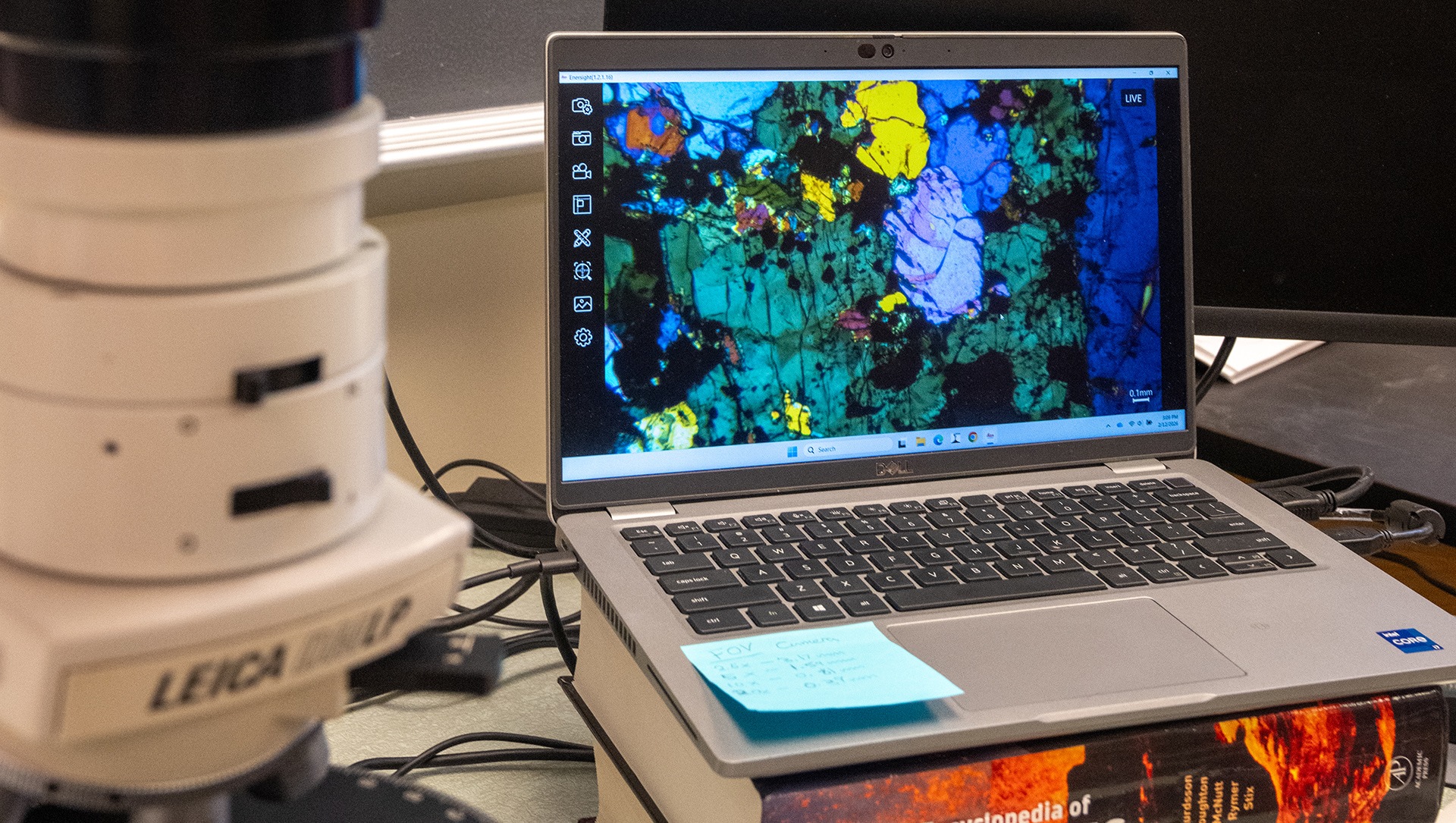
“We’re dealing with material that’s never been looked at before from areas that have never been explored before,” Panter said. "I really do love my work. I’m excited all the time, especially with these new discoveries: putting a fresh rock under the microscope and discovering new things that we’ve never seen before. That idea of discovery has always fascinated me.”
Related Stories


Media Contact
Michael Bratton | mbratto@bgsu.edu | 419-372-6349
Updated: 08/04/2026 02:56PM