
Preserving a legacy of discovery

A career set in motion at BGSU
Goldstein arrived at BGSU in 1970 with an interest in paleontology. Growing up in northeast Ohio, she had been fascinated to discover marine fossils in a state hundreds of miles from the ocean – evidence of the ancient seas that once covered the region.
When it came time to choose a university, Goldstein pored over the college catalogs available in her high school counselor’s office. BGSU stood out in large part because of the courses Steinker offered.
“Don’s courses had the most interesting titles,” she said.
Those courses introduced Goldstein to marine ecology and foraminifera, tiny single-celled organisms that would ultimately become the foundation of her geology career.
Steinker also helped take learning beyond the classroom. During a spring break field course in the Florida Keys, Goldstein and her classmates snorkeled on a reef and explored environments that could help them interpret the fossil record.
“In retrospect, I think it was very brave for these two faculty members to take a bunch of crazy geology students on such a trip, but it shows their dedication to students and quality, experiential education,” she said.
With Steinker’s encouragement, Goldstein pursued a master’s degree at the University of Florida and shifted the focus of her thesis to foraminifera, Steinker’s speciality. When she needed help identifying specimens, Steinker met with her during one of his trips to Florida.
He later recommended that she pursue her Ph.D. at the University of California, Berkeley, where she studied with the same professor who had advised Steinker. Steinker was his first doctoral student; Goldstein was his last.
Goldstein went on to spend 37 years on the geology faculty at the University of Georgia, including six years as department head, and became a respected leader in her field. After retiring in 2020, she began considering how she could help students studying paleobiology. She ultimately returned to the place where her own journey had begun.
“My goal was to set up a paleobiology fund where it would have a positive impact and where I thought the need would be greatest,” Goldstein said. “BGSU had a strong legacy, and I wanted to see these opportunities continue there.”
Questioning, exploring and thinking broadly
Steinker joined the BGSU geology faculty in 1967 and spent his entire 43-year academic career at the University. Shortly after his arrival, he helped develop a paleontology concentration within the undergraduate geology degree. Renamed the paleobiology specialization in the mid-1970s, the program combines geology and biology to study ancient life and the environments in which it evolved.
It was an interdisciplinary approach that reflected Steinker’s expansive view of science and education.
“He really pushed for geology as a whole to be very interdisciplinary,” said Peg Yacobucci, Ph.D., a BGSU professor of geology who worked alongside Steinker and now oversees the paleobiology program. “As a person, he was very much an advocate of these big ideas. His role as a faculty member was to advocate for science literacy, scientific reasoning, critical thinking and a real respect for very broad questions.”
Steinker believed geology should do more than prepare students for the field’s industrial applications, which at the time were often concentrated in areas such as oil and gas exploration. He saw it as a way to investigate larger questions: What could fossils reveal about ancient ecosystems? How had life and the Earth changed over time? And how could evidence from multiple disciplines help scientists understand that history?
That questioning mindset had been present since his childhood in small-town Indiana. A collector of bugs and observer of plants, Steinker loved exploring the natural world.
His academic path eventually led him to Berkeley during an era when researchers were beginning to think differently about geology and paleontology. Steinker became part of a movement that looked beyond what fossils revealed about rocks to ask what they could reveal about life, evolution and entire ecosystems.
At BGSU, that perspective shaped both the curriculum he helped create and the experiences he believed students needed. Paleobiology students were expected to conduct independent research, develop strong scientific writing skills and test their knowledge through fieldwork and close observation.
“He really felt that the most important thing he could do was impact his students,” Yacobucci said. “Working one-on-one with undergraduates in our paleobiology specialization, in particular, could help launch their careers.”
That commitment extended beyond his own students. Steinker developed general education courses designed to build scientific literacy among nonscience majors, advised the BGSU chapter of the national earth science honor society Sigma Gamma Epsilon for 41 years and served as an editor of the “Journal of Paleontology,” the flagship publication of the Paleontological Society.
In that role, he evaluated research spanning the breadth of the paleontology, from fossil plants and dinosaurs to microscopic organisms and some of Earth’s earliest life.
“The editor really shapes what kinds of research are broadcast to the community,” Yacobucci said. “It really requires someone with that interdisciplinarity and very broad mindset.”
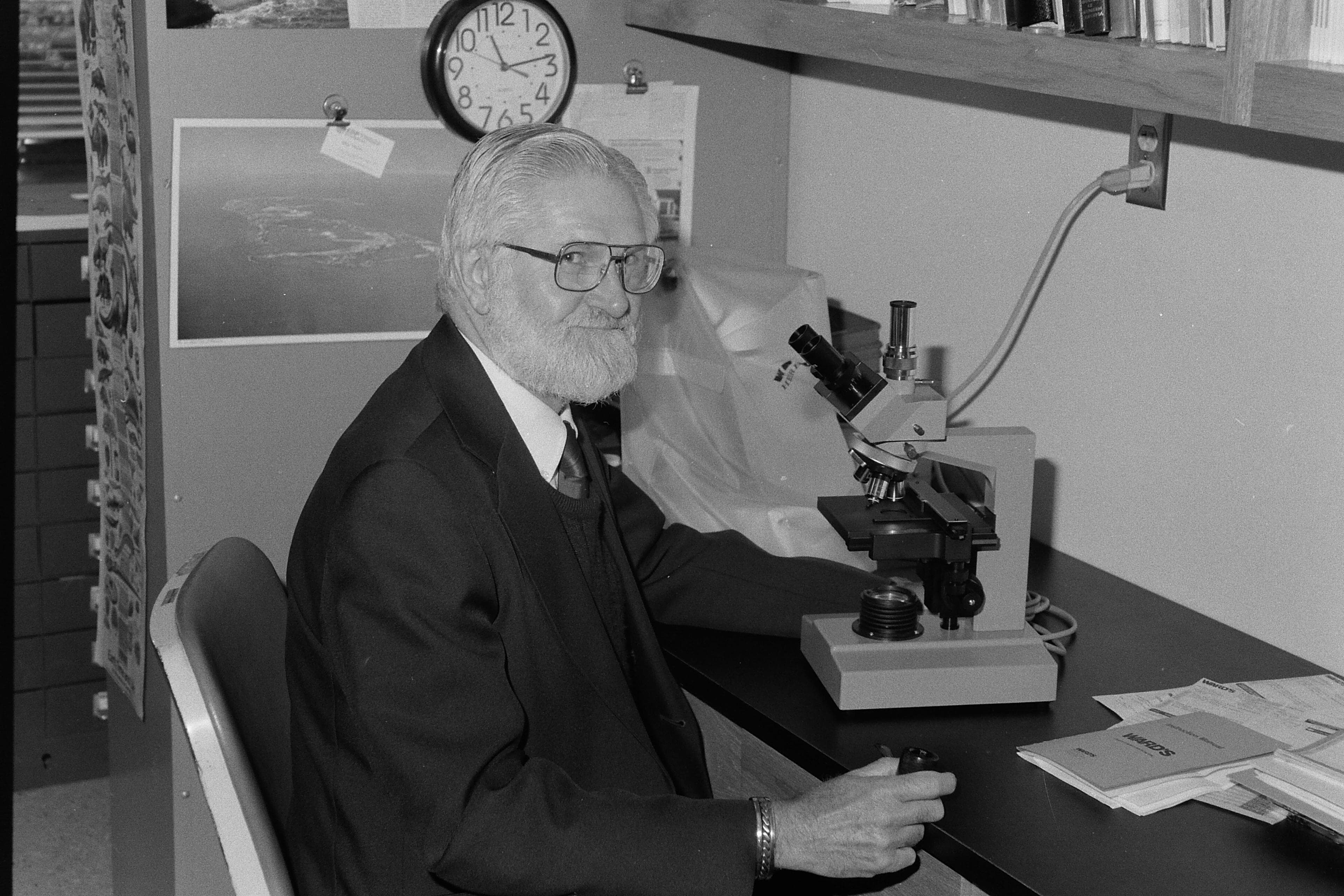
In person, Steinker looked every bit the quintessential professor: nearly always in a suit, often carrying a book and, for many years, accompanied by his pipe. He was extraordinarily well-read, famously reluctant to adopt new technology and known among close colleagues for a dry wit delivered quietly during faculty meetings. He used a typewriter nearly until his retirement.
Although reserved by nature, Steinker was a persistent advocate for students, scientific rigor and ideas he believed mattered. When BGSU hired Yacobucci directly from her doctoral program in 1999, it was Steinker who persuaded his colleagues to take a chance on the young scholar.
“It is no exaggeration to say I owe my career as a BGSU faculty member to Don’s advocacy and support,” she said.
Carrying his work forward
Steinker retired in 2010, but his connection to BGSU never truly ended. He continued coming to campus, sitting in his office to read and checking in on the paleobiology program he had helped build.
“He arrived here fresh out of his Ph.D., and his entire career – his life – was built around Bowling Green State University,” Yacobucci said. “Even after he retired, he was here every day.”
When Goldstein established the endowed fund in his honor, Steinker responded by letter – he never fully embraced email – to say he was “pleasantly surprised.” His involvement soon became even more significant.
After his wife, Paula, died unexpectedly in fall 2025, Steinker told Yacobucci that he was in hospice care and needed to revise his estate plans. He had decided to direct his estate to the fund Goldstein created. Through his gift, he sought to protect something he considered irreplaceable: the opportunity for students to study paleobiology at BGSU.
“Part of the goal of his gift was that this would help ensure that there is always paleobiology at BGSU,” Yacobucci said. “The generosity here is just extraordinary.”
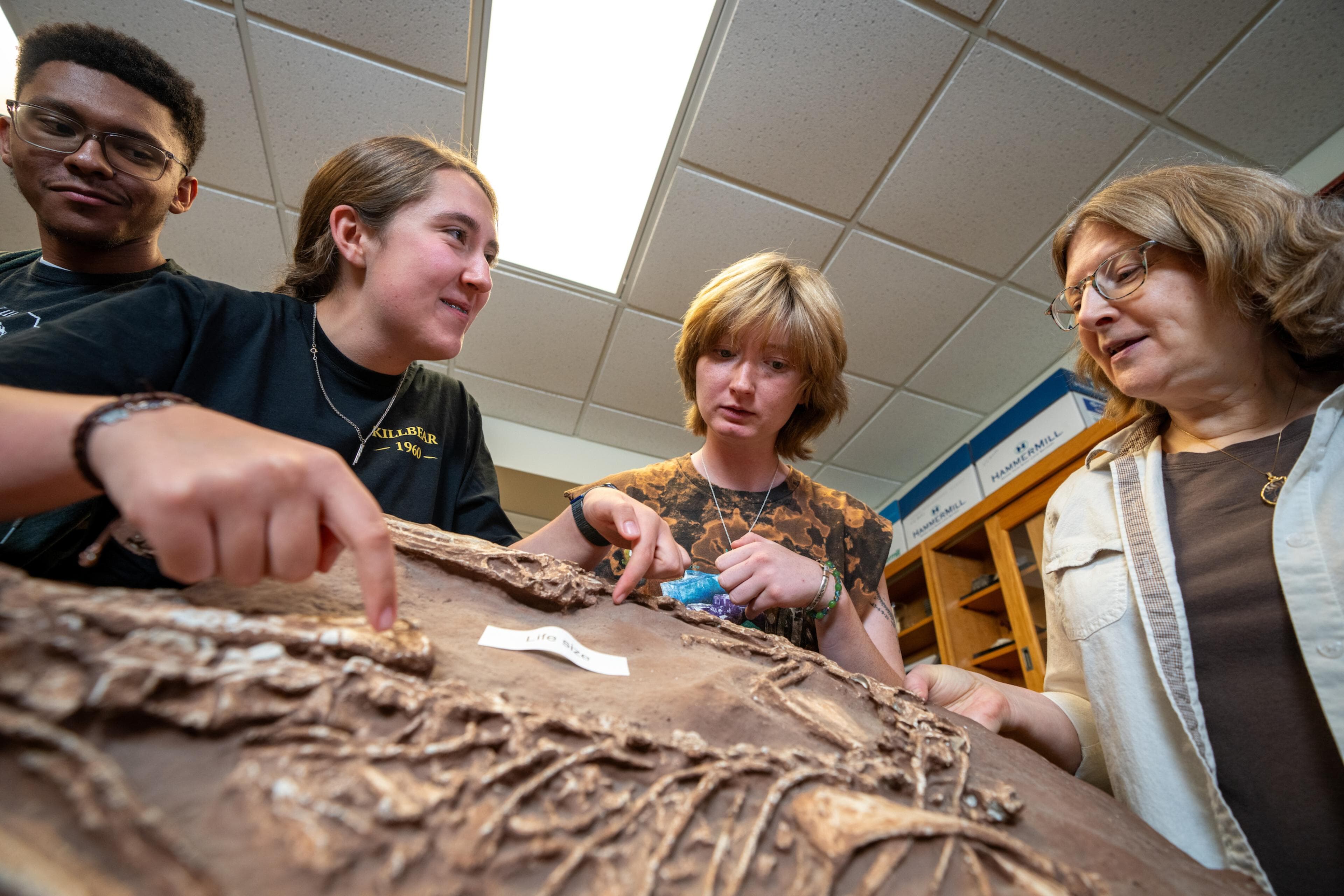
The specialization Steinker helped establish nearly six decades ago remains one of only a small number of undergraduate programs in the country where students can concentrate specifically in paleobiology, attracting students from across the U.S.
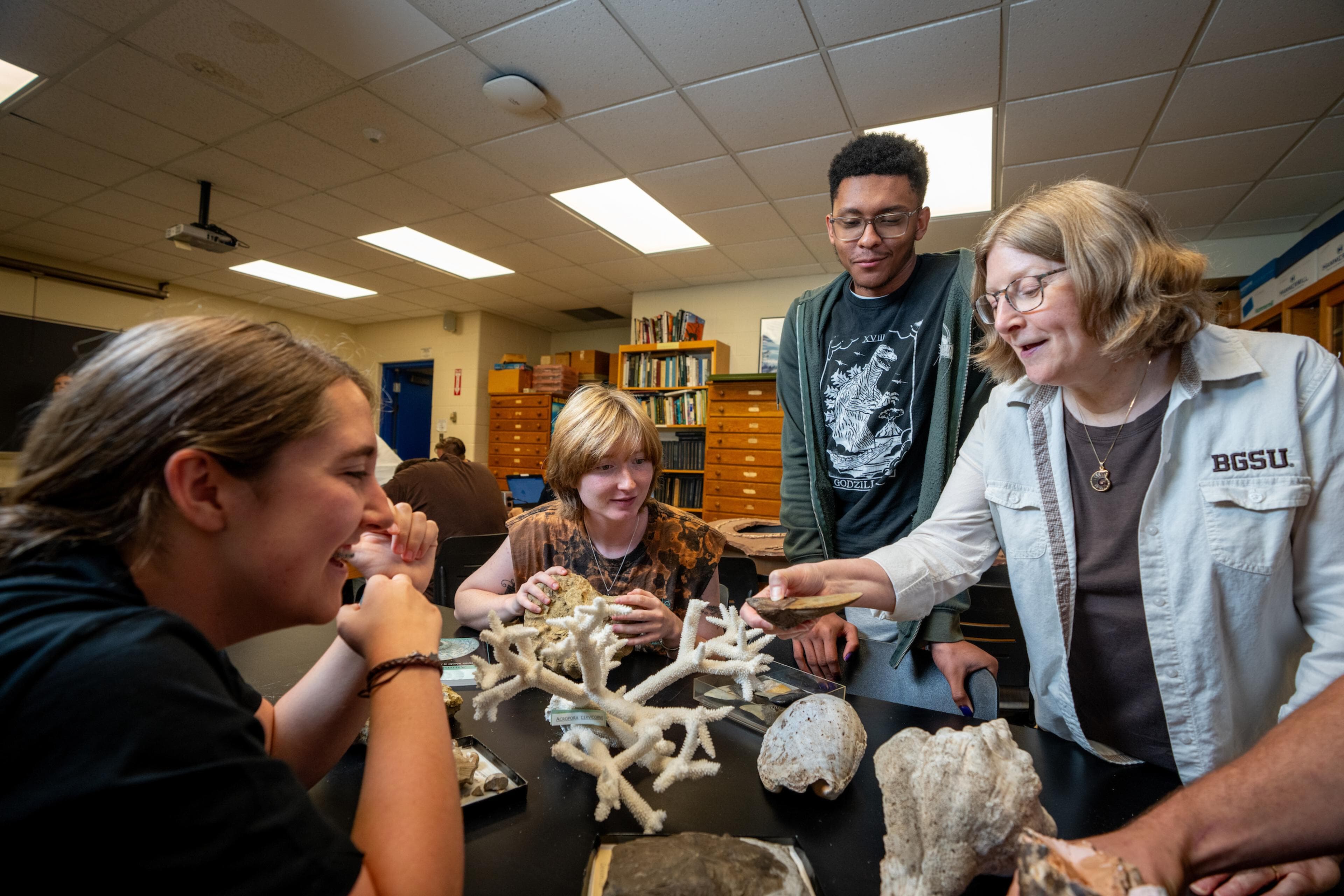
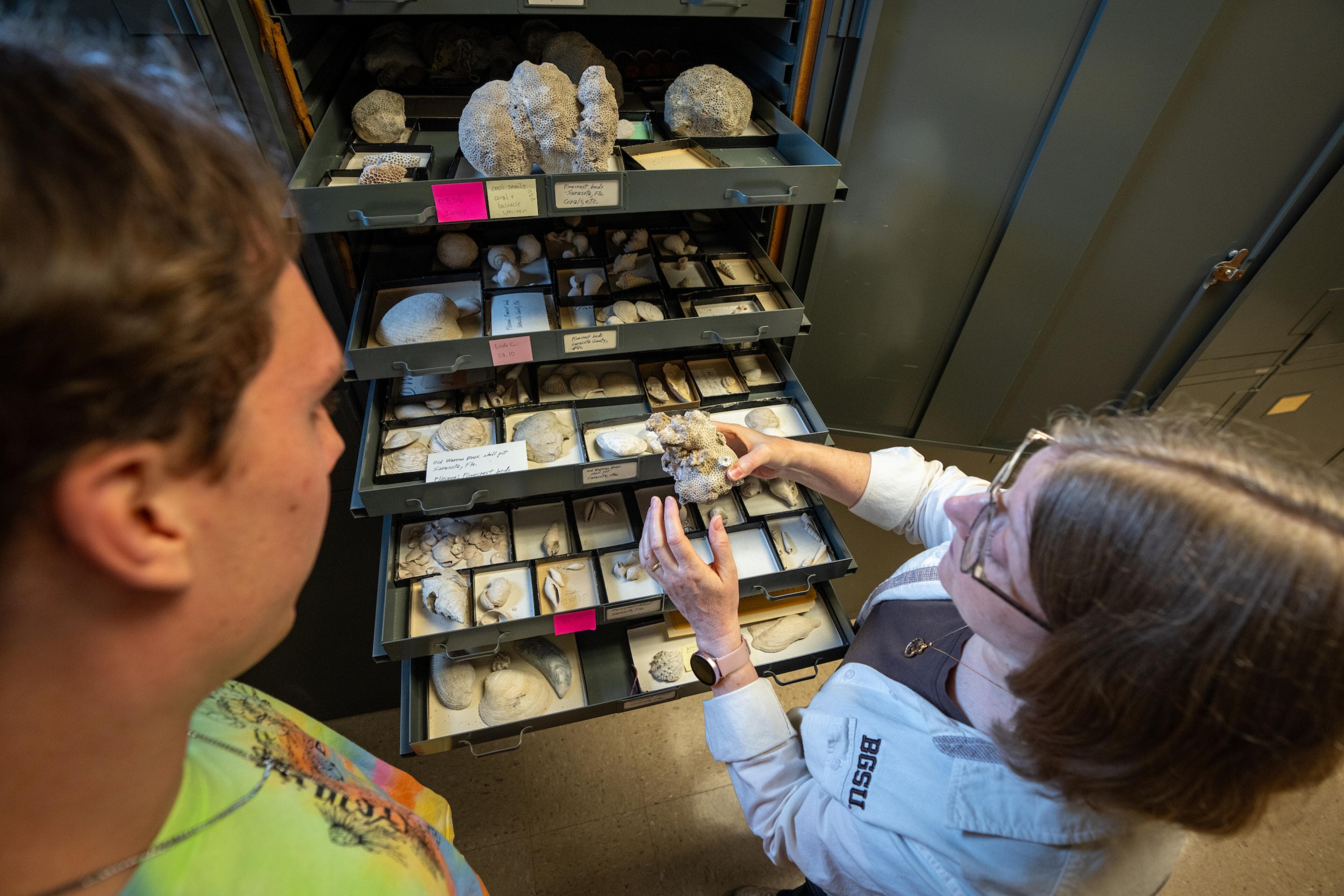
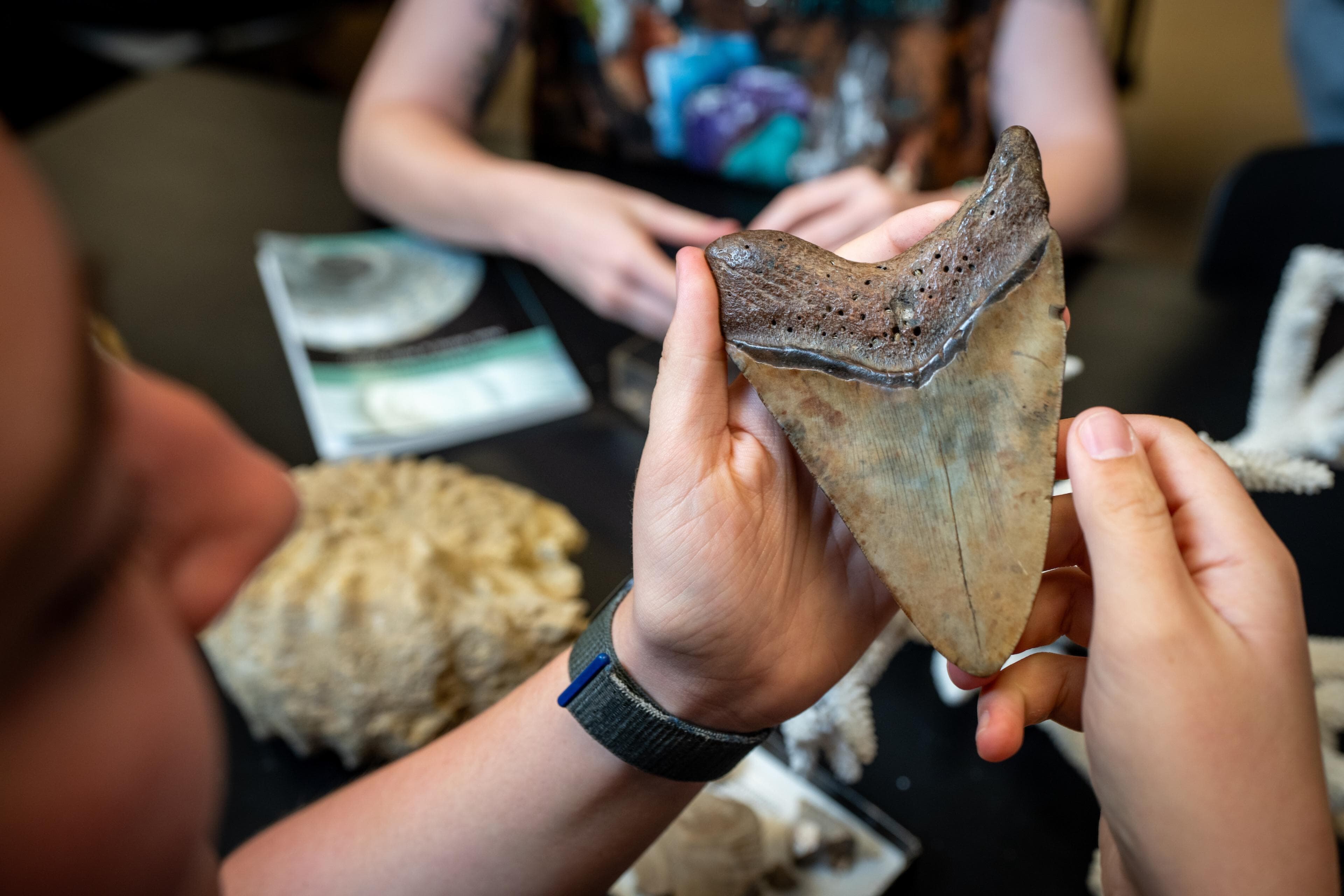
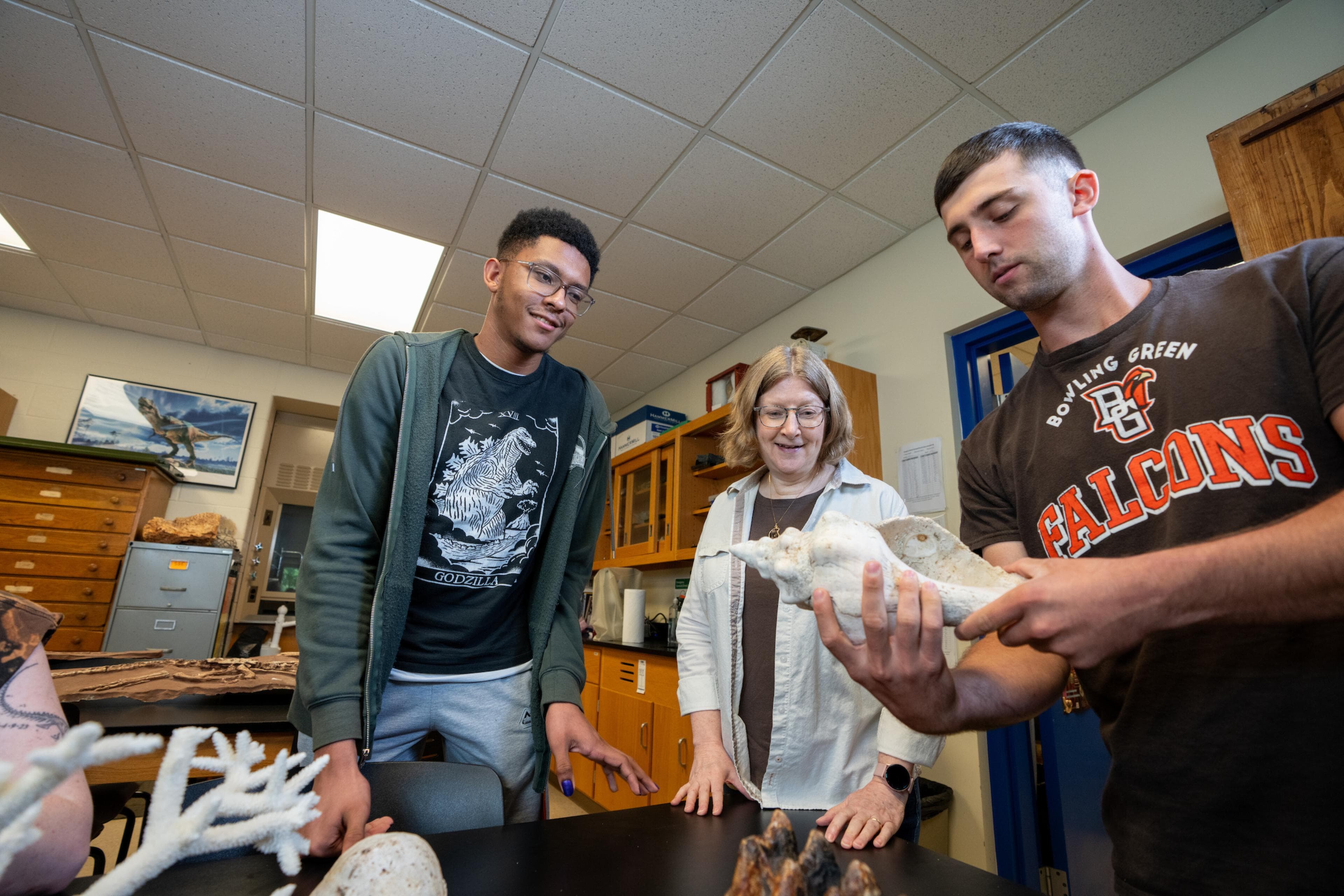
BGSU also maintains one of Ohio’s largest fossil collections, built through decades of work by Steinker, his colleagues and their students. The collection provides another enduring foundation for student learning and research.
Steinker frequently drew upon an idea from anthropologist Loren Eiseley: that each person encounters a defining mentor – a “magician” – who helps shape who they become. His advice to students was simple: Find yours.
For Goldstein and generations of BGSU students, Steinker was that person. Now, the fund she established and the gift he made will extend that mentorship into the future, preserving a distinctive program while giving new generations of students the freedom to question, explore and discover.
Updated: 09/22/2026 05:16PM