
Parenthood by Relationship Status Among U.S. Adults Aged 56+, 2022
An Aging Family Portrait (AFP-26-07)
Gabrielle Juteau & Susan L. Brown

Introduction
Nearly all (90%) older adults have children (authors’ calculation). Even so, older parents differ in how many children they have, their relationships to their children (i.e., biological, adoptive, step), where their children live, and whether they are grandparents. Using the Health and Retirement Study(1), this Aging Family Portrait explores the constellations of children among older adults aged 56 and over with a focus on variation by relationship status.
(1) The HRS (Health and Retirement Study) is sponsored by the National Institute on Aging (grant number NIA U01AG009740) and is conducted by the University of Michigan.
Number of Children
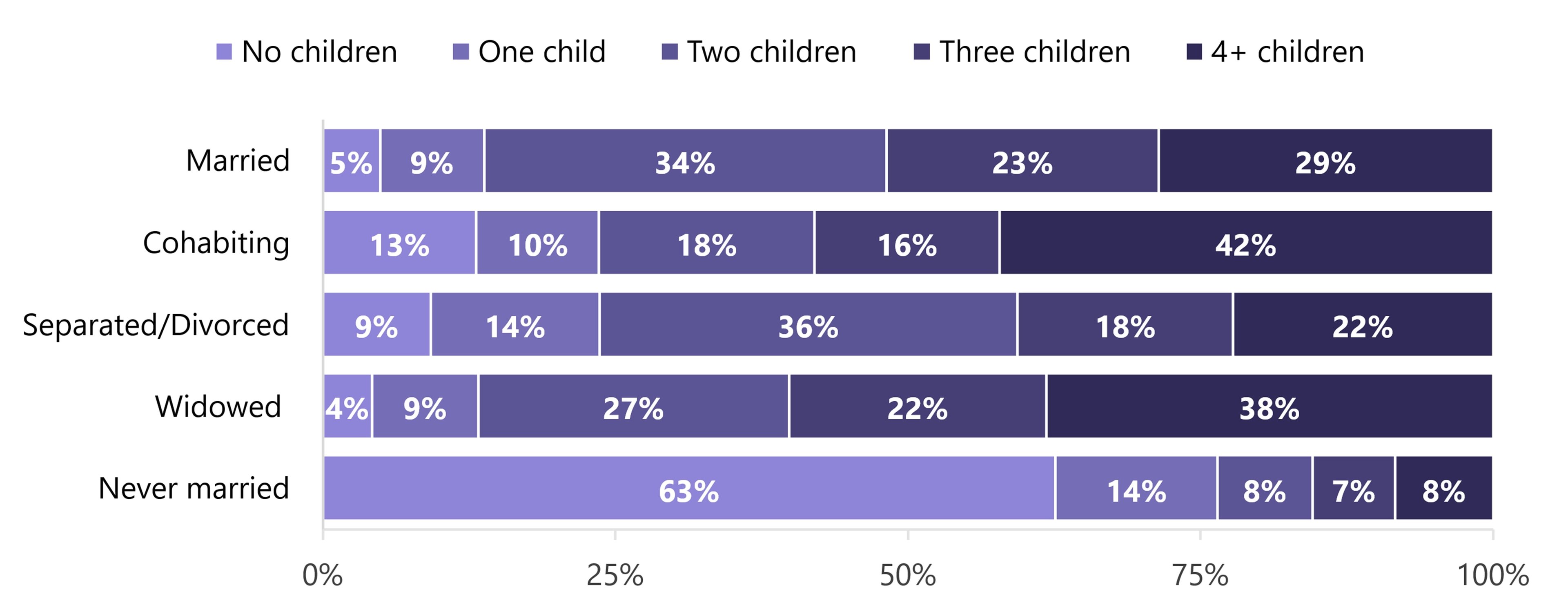
Childlessness ranged from 63% among never-married older adults to 4% among widowed older adults.
- The modal category varied widely across relationship status. More than a third of married (34%) and separated/divorced adults (36%) had two children. However, four-tenths of cohabiting individuals (42%) had four children or more, closely followed by their widowed counterparts (38%).
Figure 1. Number of Biological, Adoptive, and Step Children by Relationship Status, U.S. Adults Aged 56+, 2022
Source: CAF analysis of Health and Retirement Study, 2022 (RAND HRS)
Note. Categories may not sum to 100% due to rounding.
Relationships to Children
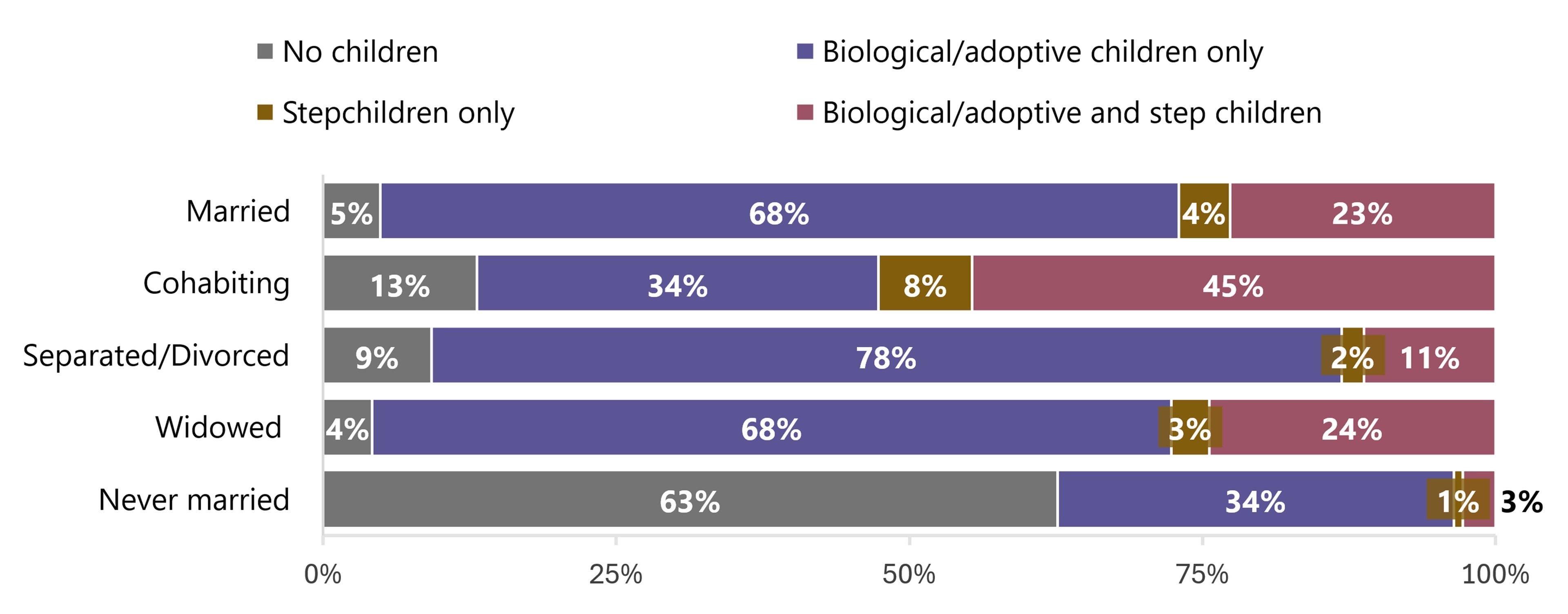
Currently and previously married older adults most often had biological/adoptive children only.
- More than half of cohabiting older adults (53%) had stepchildren, compared to about 27% of married and widowed older adults. Only having stepchildren was rare, ranging from 8% among cohabiting older adults to 1% among never-married older adults.
Figure 2. Children’s Relationship Type by Relationship Status, U.S. Adults Aged 56+, 2022
Source: CAF analysis of Health and Retirement Study, 2022 (RAND HRS)
Note. Categories may not sum to 100% due to rounding.
Residential Status of Children
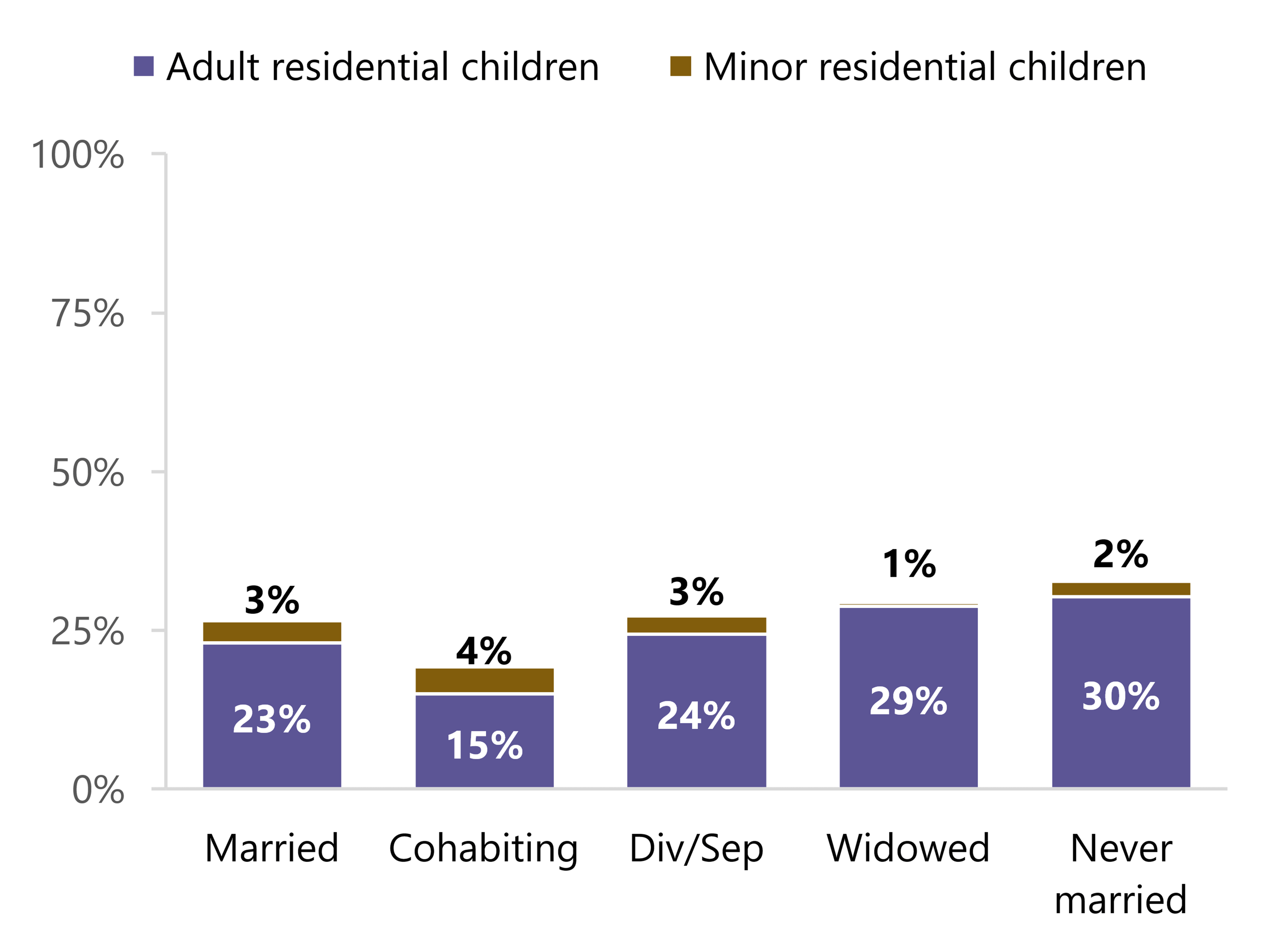
Between one-fifth and one-third of older parents lived with their children.
- Never-married older parents more often lived with their child(ren), with about one-third (32%) of them having a residential child. Cohabiting parents had the lowest share of co-residence with children, but the highest share of minor children living with them (4%).
Figure 3. Children’s Residential Status by Relationship Status, U.S. Parents Aged 56+, 2022
Source: CAF analysis of Health and Retirement Study, 2022 (RAND HRS)
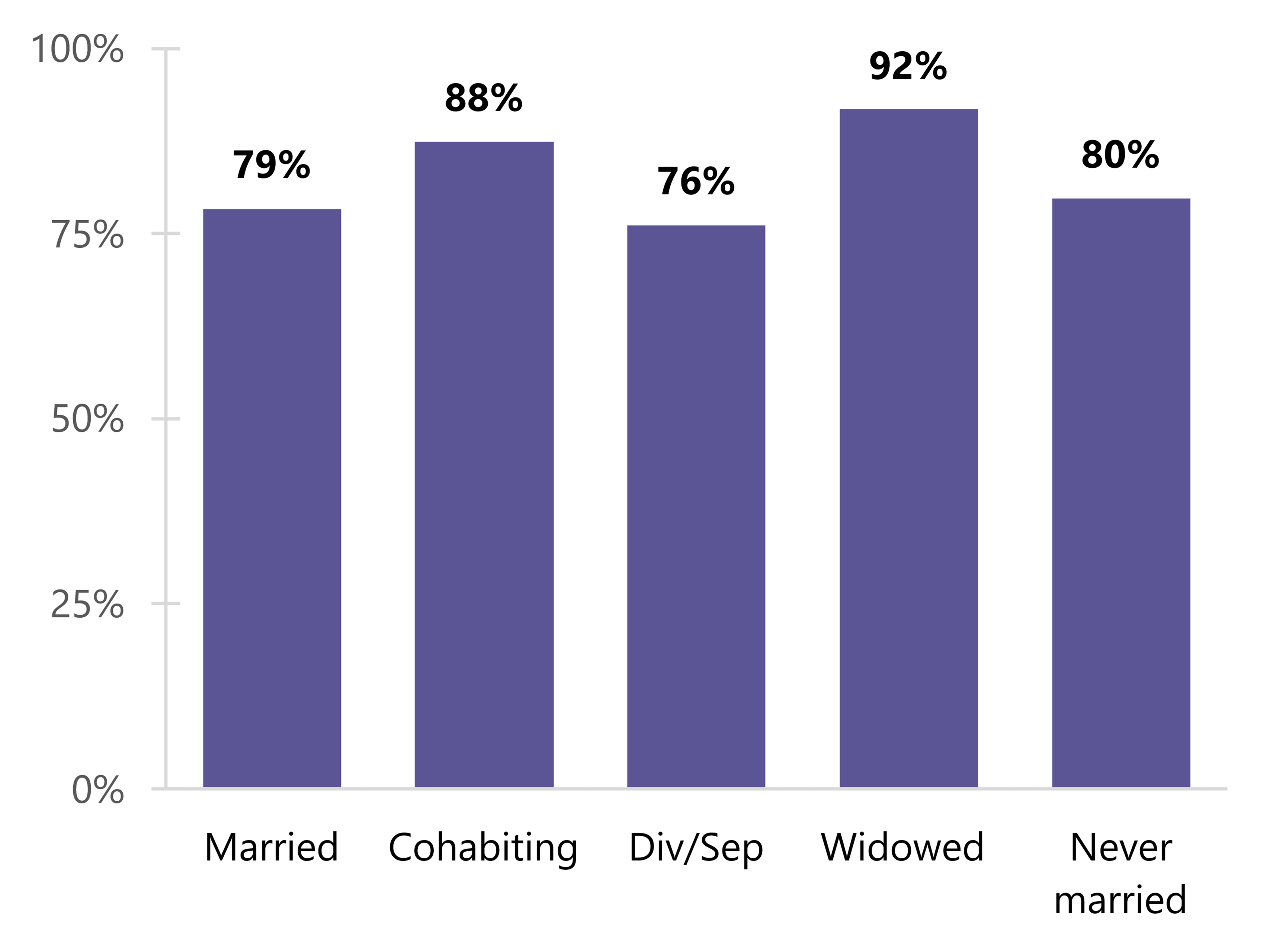
Figure 4. Grandparenthood Status by Relationship Status, U.S. Parents Aged 56+, 2022
Source: CAF analysis of Health and Retirement Study, 2022 (RAND HRS)
Grandparenthood
The majority of older parents were grandparents.
- Widowed older parents had the largest share of grandparenthood (92%) followed by cohabiting and married older parents (88% and 80%, respectively).
Data Source
Health and Retirement Study, (RAND HRS Longitudinal File 2022 (V1)) public use dataset. Produced and distributed by the University of Michigan with funding from the National Institute on Aging (grant numbers NIA U01AG009740 and NIA R01AG073289). Ann Arbor, MI, (May, 2025).
RAND HRS Longitudinal File 2022 (V1). Produced by the RAND Center for the Study of Aging, with funding from the National Institute on Aging and the Social Security Administration. Santa Monica, CA (May, 2025).
RAND HRS Family Data 2022 (V1). Produced by the RAND Center for the Study of Aging, with funding from the National Institute on Aging (grant numbers NIA U1AG009740 and R01AG073289) and the Social Security Administration. Santa Monica, CA (December, 2025).
Suggested Citation
Juteau, G. & Brown, S. L. (2026). Parenthood by relationship status among U.S. adults aged 56+, 2022. An Aging Family Portrait, AFP-26-07. Bowling Green, OH: Center for Aging Families. https://doi.org/10.25035/caf/afp-26-07
Research reported in this publication was supported by the National Institute on Aging of the National Institutes of Health under award number P30AG096979. The content is solely the responsibility of the authors and does not necessarily represent the official views of the National Institutes of Health.
Updated: 10/22/2026 12:33PM