
Living Arrangements by Age Among U.S. Adults Aged 50+, 2024
An Aging Family Portrait (AFP-26-03)
Krista K. Westrick-Payne & Susan L. Brown

Introduction
The living arrangements of community-dwelling older adults intersect with their marital status. Most older adults reside with either their spouse/partner or alone. Multigenerational households are on the rise (Cohn et al., 2022) as older adults increasingly live with children or grandchildren. Drawing on the 2024 American Community Survey, this portrait describes the living arrangements of U.S. adults aged 50-64 and 65+.
Relationship to Householder
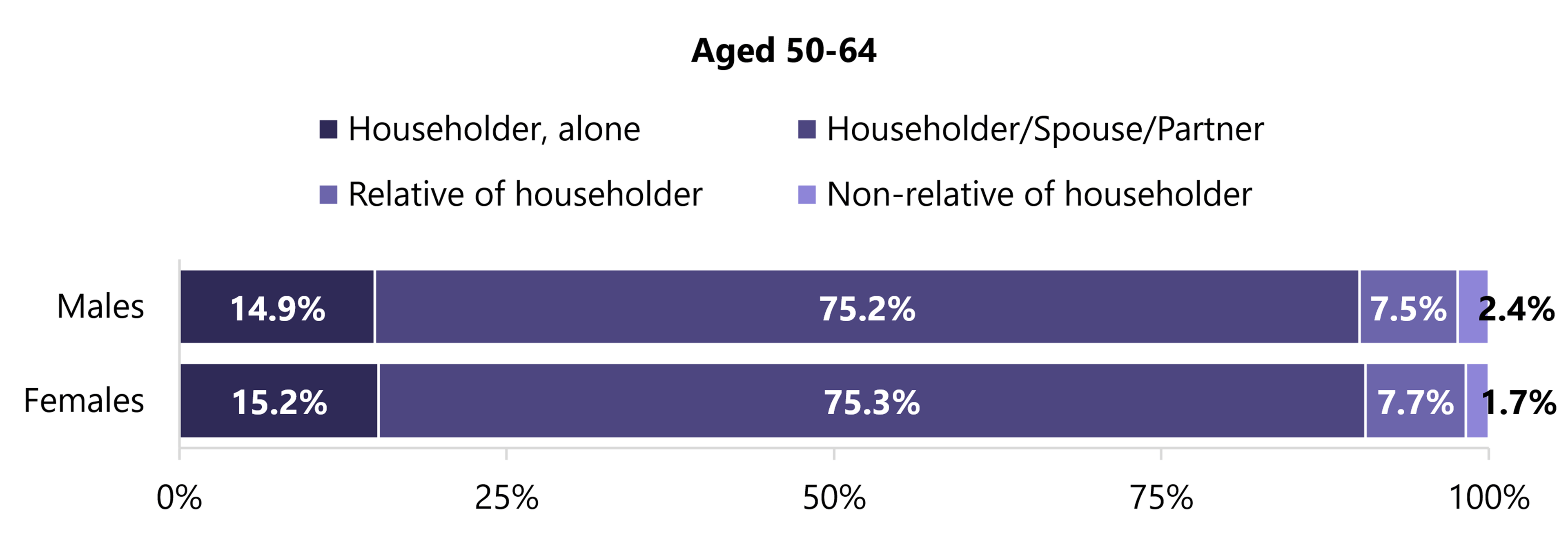
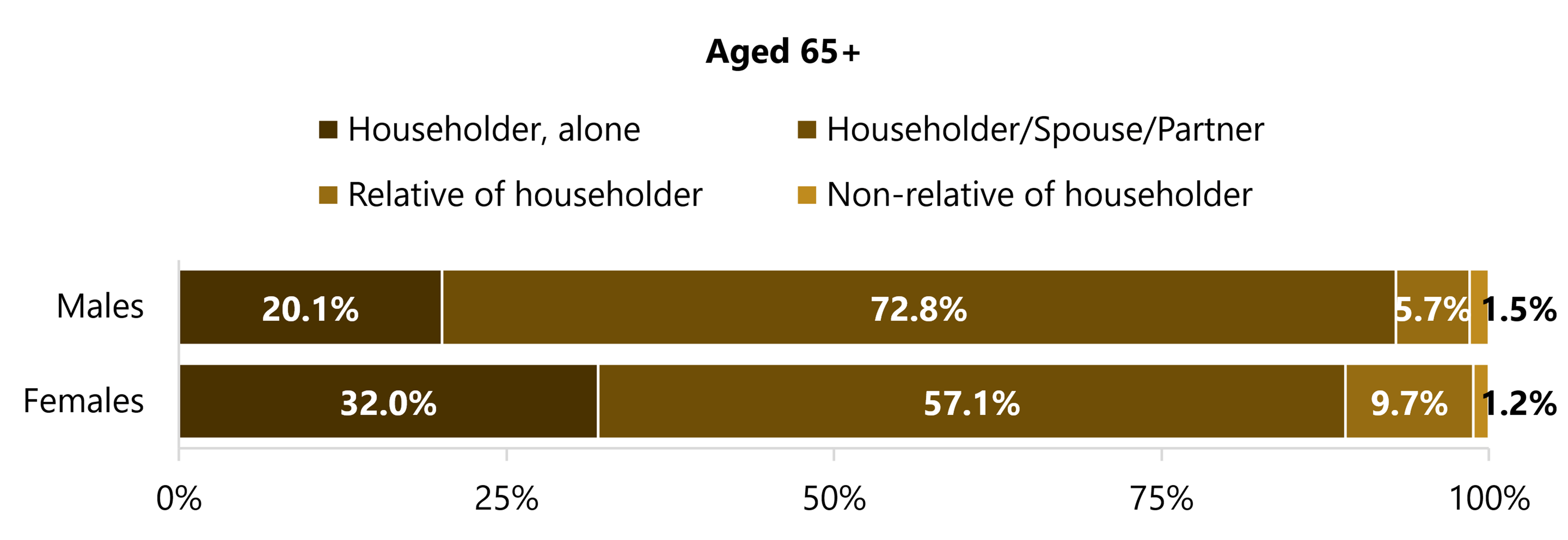
Most adults aged 50+ were householders living with a spouse or partner.
Shares living alone were similar for males and females aged 50-64 but diverged at older ages, with higher shares among females aged 65+ (32%, or about 10.4 million, compared with 20%, or about 5.4 million among males).
Figure 1. Relationship to Householder by Age Group & Sex, U.S. Adults Aged 50+, 2024
Source: CAF analysis of U.S. Census Bureau, American Community Survey, 1-year files, 2024 (IPUMS USA)
Note. Categories may not sum to 100% due to rounding.
Multigenerational Households
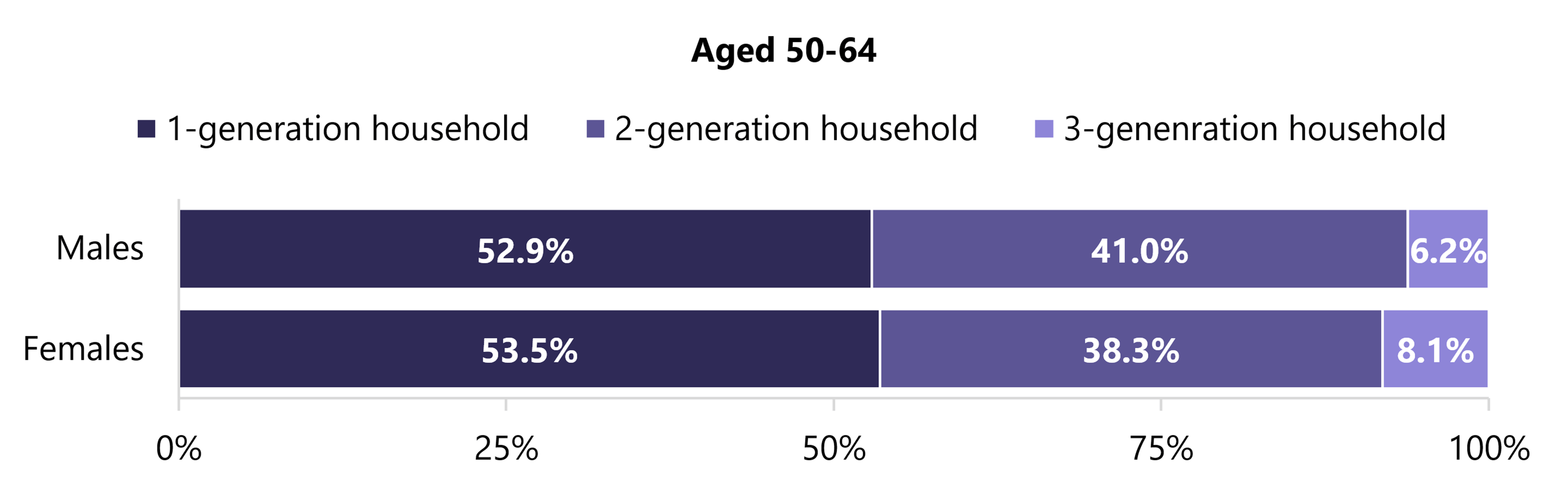
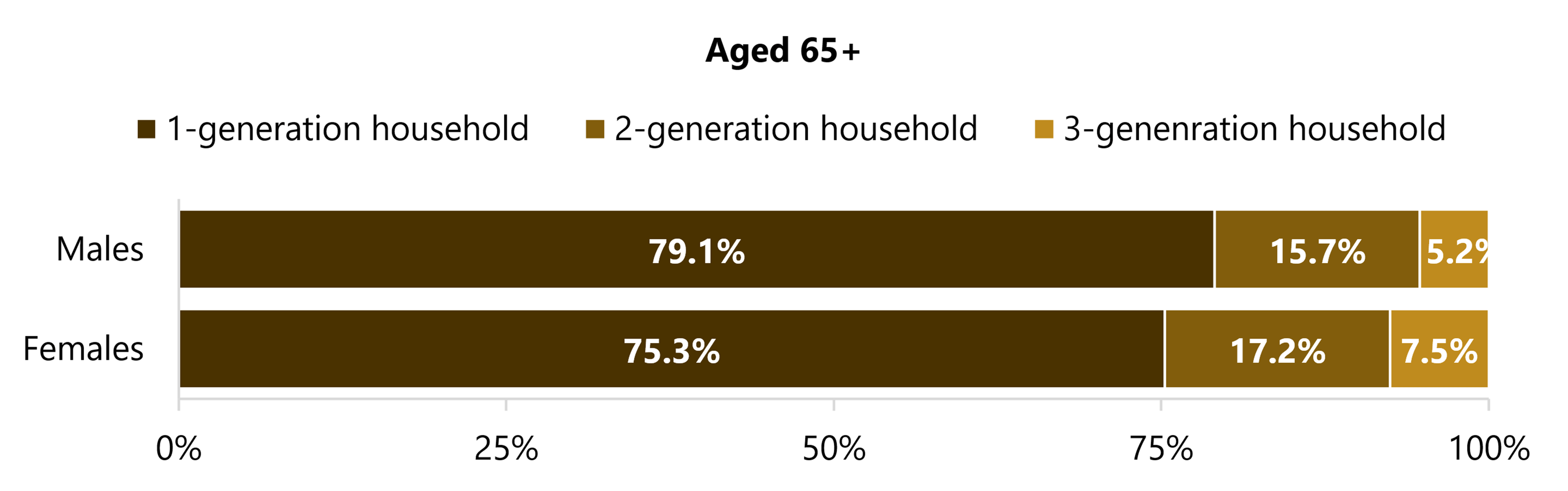
About one-quarter of adults aged 65+ lived in multigenerational households.
Two-generation households were more common among adults aged 50–64, whereas one-generation households were most common among those aged 65+. Three-generation households were uncommon in both age groups.
Figure 2. Household Generational Structure by Age Group & Sex, U.S. Adults Aged 50+, 2024
Source: CAF analysis of U.S. Census Bureau, ACS, 1-year files, 2024 (IPUMS USA)
Note. Categories may not sum to 100% due to rounding.
Role Within Multigenerational Households
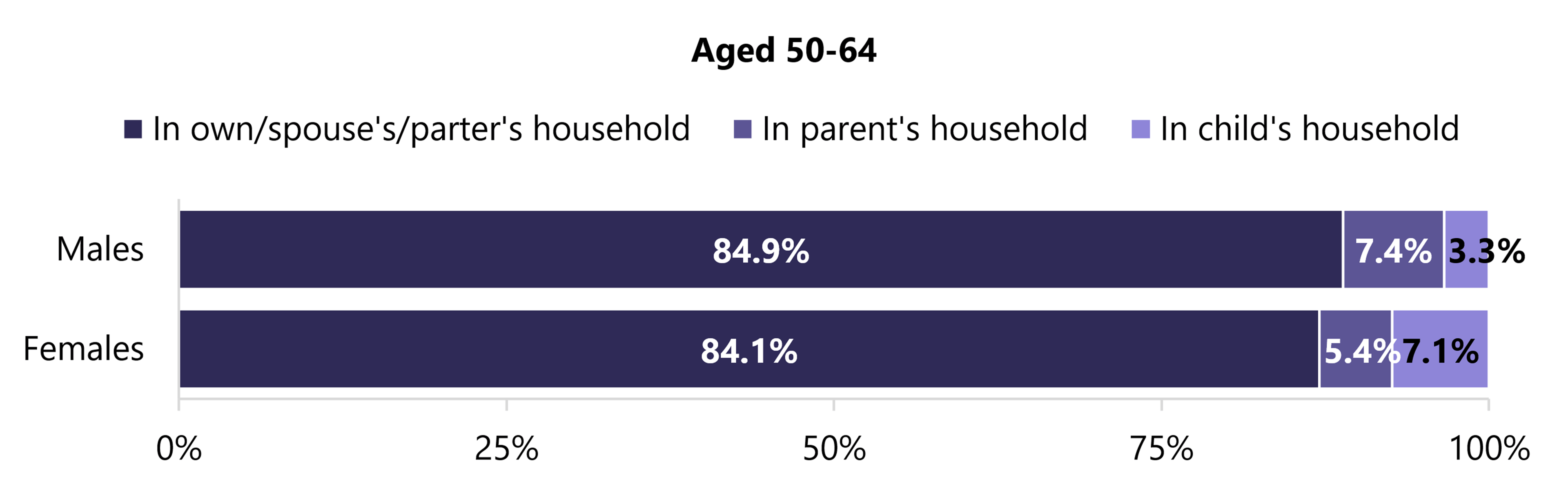
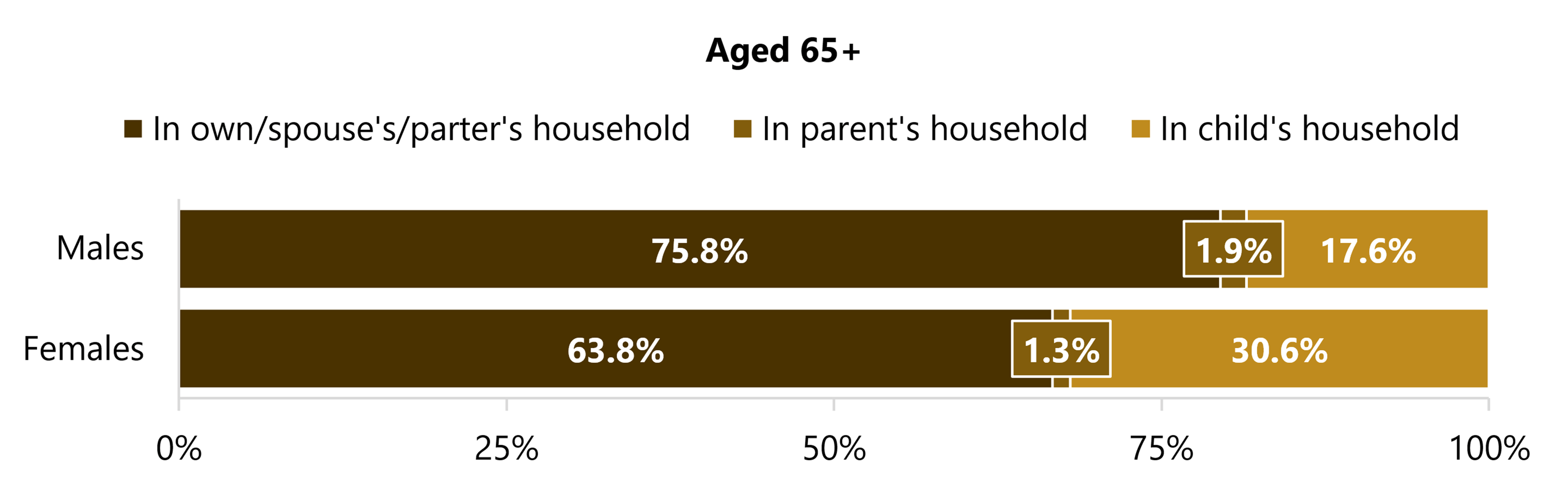
Nearly one-third of females aged 65+ in multigenerational households lived in a child’s household.
Most adults aged 50+ in multigenerational households lived in their own household or that of a spouse or partner. Among those aged 65+, this share was larger for males than for females.
Figure 3. Household Role Among U.S. Adults Aged 50+ in Multigenerational Household by Age Group & Sex, 2024
Source: CAF analysis of U.S. Census Bureau, ACS, 1-year files, 2024 (IPUMS USA)
Note. Categories may not sum to 100% due to rounding.
Living With a Child
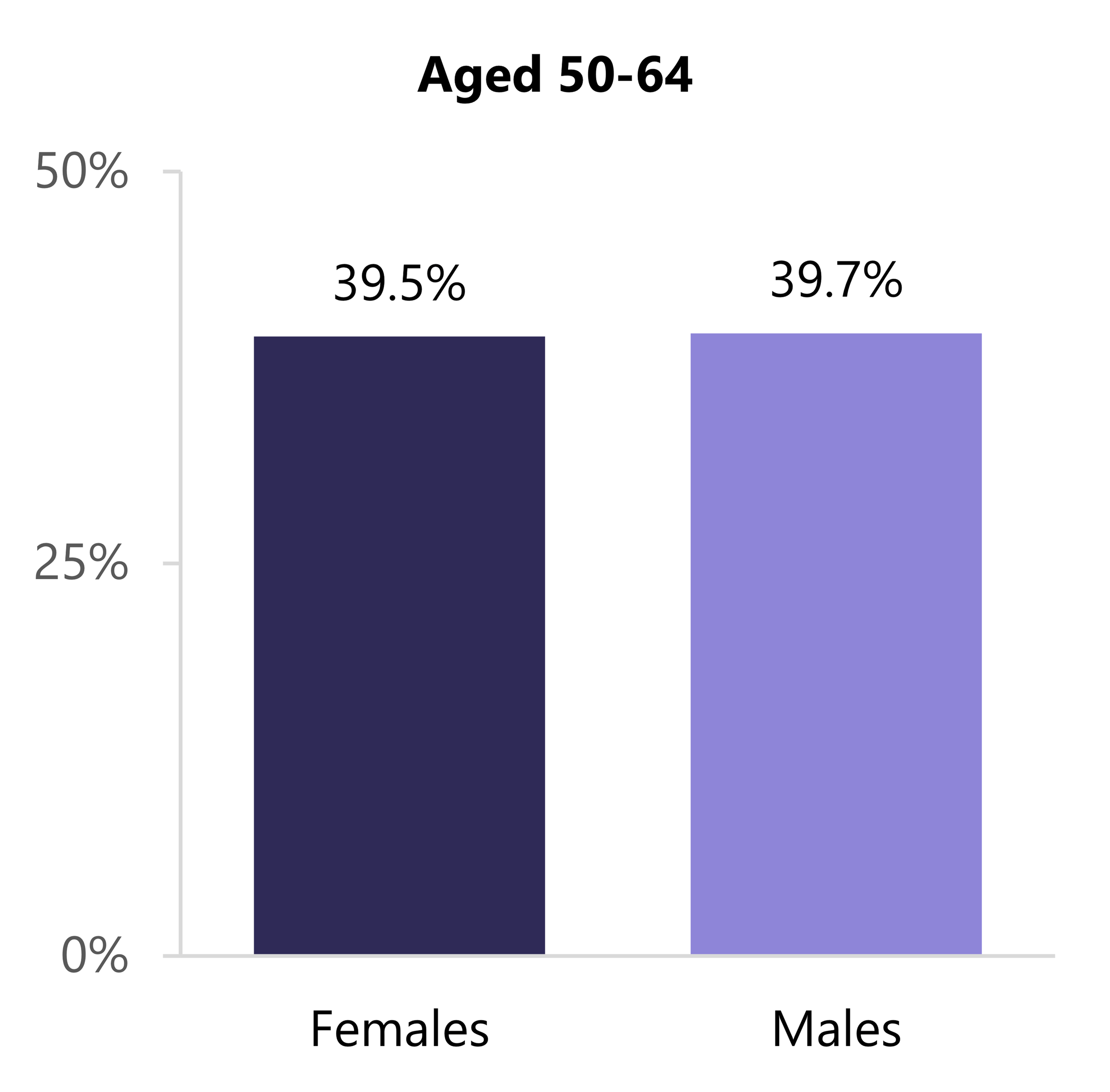
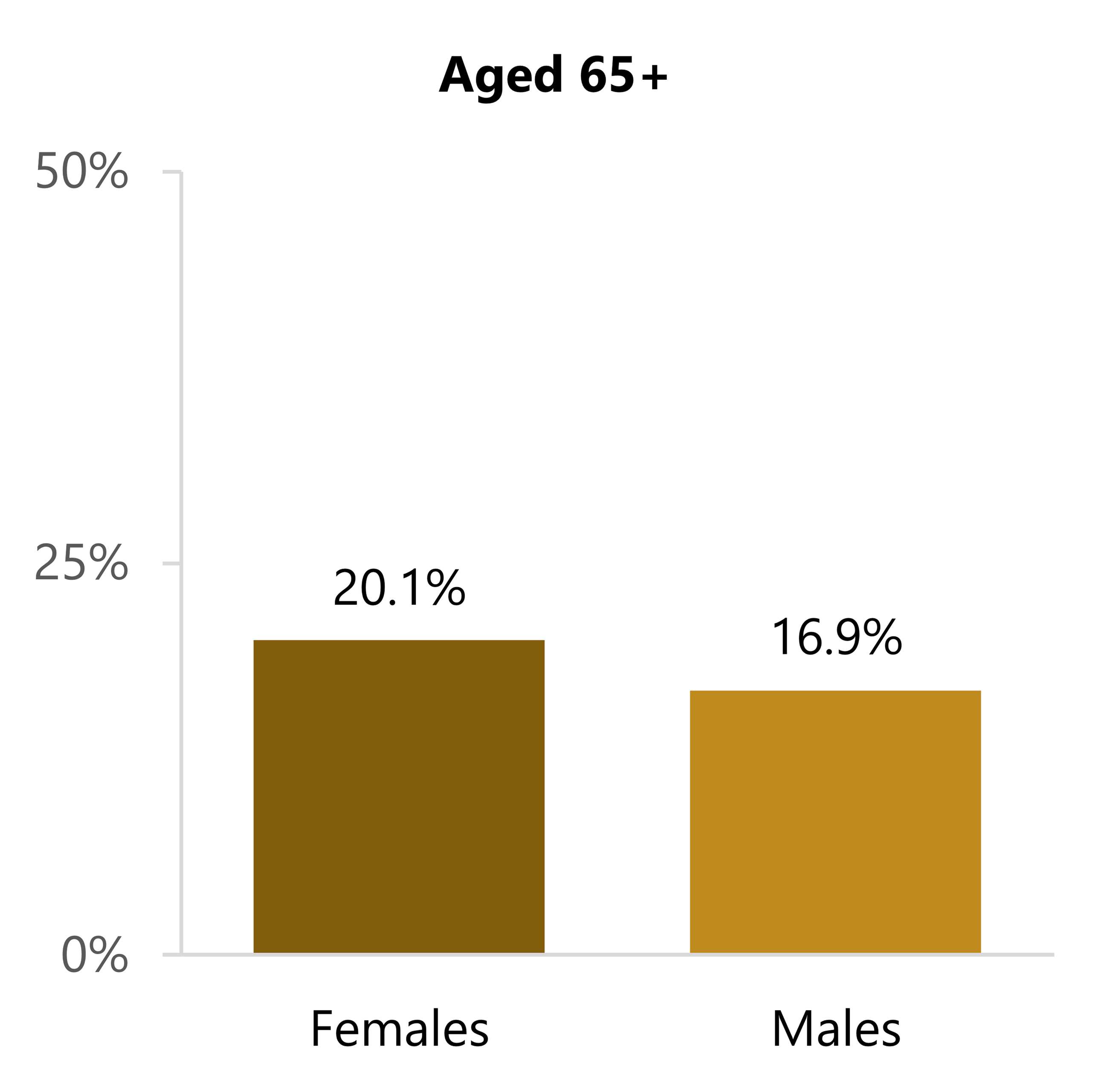
About two-in-five adults aged 50-64 lived with at least one child.
Differences by sex were minimal at ages 50-64 but larger among those aged 65+.
Figure 4. Living With a Child by Age Group & Sex, U.S. Adults Aged 50+, 2024
Source: CAF analysis of U.S. Census Bureau, American Community Survey, 1-year files, 2024 (IPUMS USA)
Living With a Grandchild
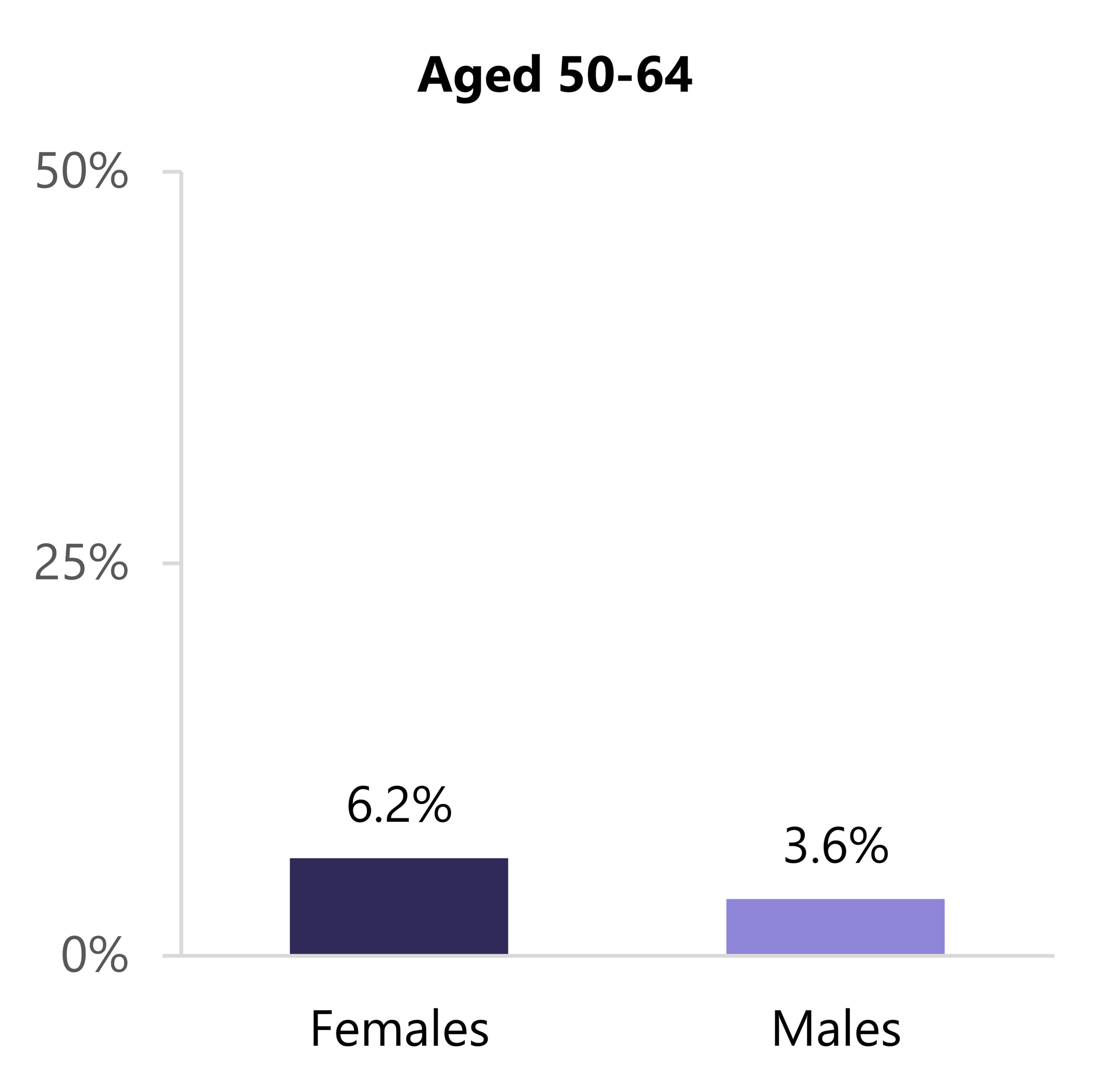
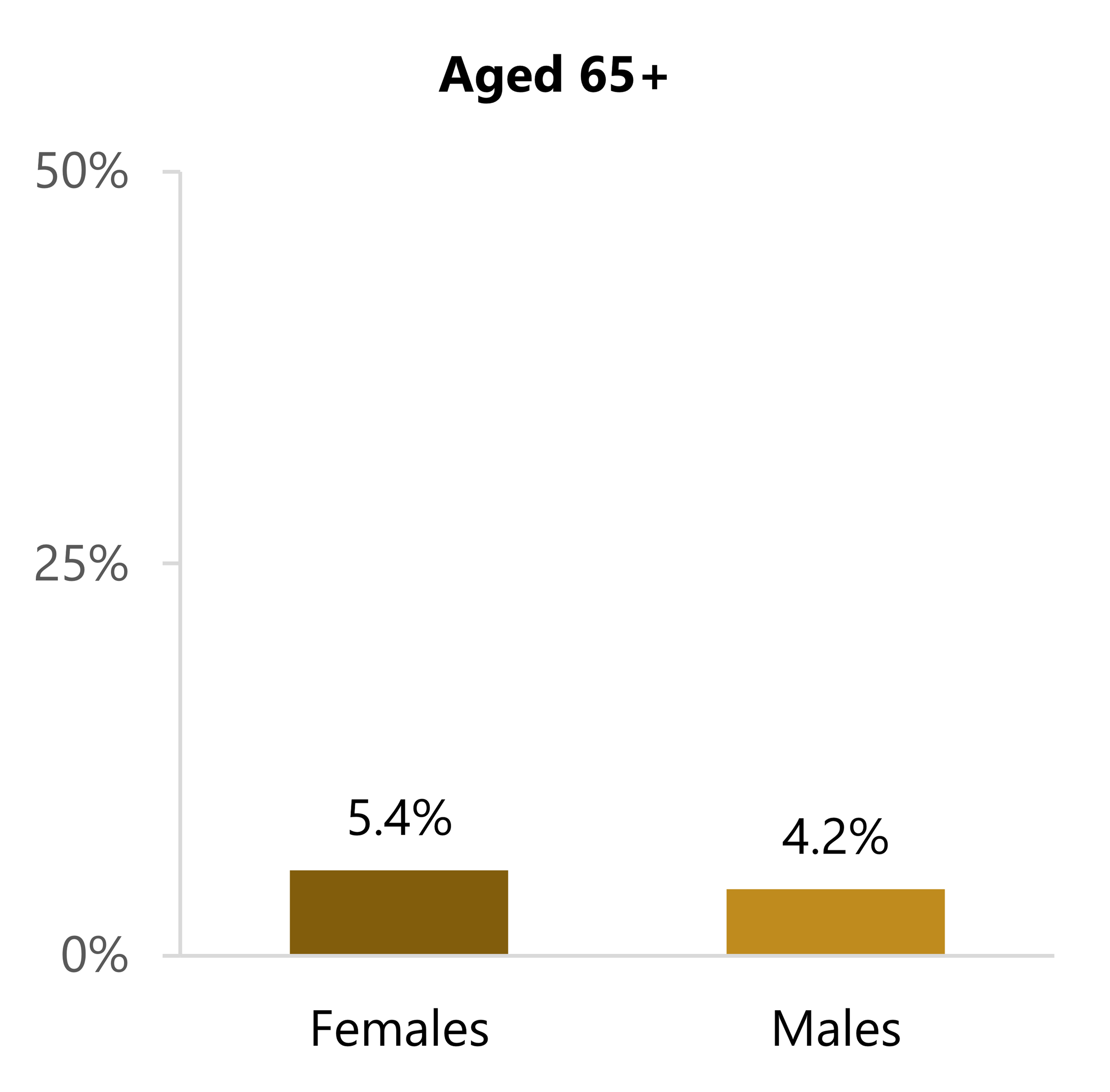
Fewer than 1-in-10 adults aged 50+ lived with a grandchild.
Shares living with a grandchild were small in both age groups and were slightly higher among females.
Figure 5. Living With a Grandchild by Age Group & Sex, U.S. Adults Aged 50+, 2024
Source: CAF analysis of U.S. Census Bureau, ACS, 1-year files, 2024 (IPUMS USA)
Data Source
Ruggles, S., Flood, S., Sobek, M., Backman, D., Cooper, G., Rivera Drew, J. A., Richards, S., Rodgers, R., Schroeder, J., & Williams, K. C. W. (2025). IPUMS USA: Version 16.0 [Dataset]. Minneapolis, MN: IPUMS. https://doi.org/10.18128/D010.V16.0
References
Cohn, D., Horowitz, J., Minkin, R., Fry, R., & Hurst, K. (2022). Financial issues top the list of reasons U.S. adults live in multigenerational homes. Pew Research Center. https://www.pewresearch.org/social-trends/2022/03/24/the-demographics-of-multigenerational-households/
Suggested Citation
Westrick-Payne, K. K., & Brown, S. L. (2026). Living arrangements by age among U.S. adults aged 50+, 2024. An Aging Family Portrait, AFP-26-03. Bowling Green, OH: Center for Aging Families. https://doi.org/10.25035/caf/afp-26-03
Research reported in this publication was supported by the National Institute on Aging of the National Institutes of Health under award number P30AG096979. The content is solely the responsibility of the authors and does not necessarily represent the official views of the National Institutes of Health.
Updated: 05/12/2026 06:51PM