
Priority Area 1: The 'Natural Experiment' of COVID-19
Priority Area 1: The 'Natural Experiment' of COVID-19
Report Submitted: 2023
By: Christopher P. Dum, PhD, Elias Nader, PhD, and Starr Solomon, PhD
COVID-19 Pandemic Changes
At the end of March 2020, the Ohio Supreme Court issued guidelines for court systems and judges in Ohio to consider as a part of the COVID-19 pandemic. The goal of this was to retain access to the courts while attempting to reduce the risks of COVID-19 transmission. Importantly, this guidance was based on policy the Supreme Court of Ohio had written in 2019 as a part of their Judicial Guide to Public Health. These Ohio’s Supreme Court guidelines included a range of recommendations across court functions, with several items focused on the pre-trial portion of the judicial process. The guidelines included minimizing physical appearances in courts as much as possible, using discretion to release individuals held in jail, and encouraging the issuance of recognizance bonds at bail hearings unless there is clear and convincing evidence that recognizance release would present a substantial risk of harm.
Current Study
Ultimately, these directives marked a short-term shift in pre-trial practices while under the state of emergency in Ohio. Each jurisdiction within Ohio was able to make choices at their own discretion about how to implement these directives and to what extent. It remains unclear if jurisdictions attempted to implement these guidelines, and if they did, what impacts this had on community risks to public safety. In Priority Area 1, we sought to explore how changes in pretrial guidelines at the start of the COVID-19 pandemic affected both the use of bond and the occurrence of crime in Ohio.
Data and Methods
Two exploratory research questions guided Priority Area 1 of our study. First, we explored if pre-trial practices changed as a result of these guidelines. Second, we examined if changes in crime coincided with an increased application of pre-trial release.
Data
We collected two types of administrative data to answer these research questions. First, in order to examine if pre-trial practices changed as a result of this guidance, we sought incidentlevel data from county courts in Ohio, ranging from January 2016 to December 2022. This time period allowed us a sufficient range to examine trends both pre- and post-COVID-19. The second type of administrative data we collected was crime data from OIBRS. This data was provided by the Ohio Office of Criminal Justice Services upon request to match the county court data we were able to collect.
We were able to secure county-level data from two counties in Ohio: Columbiana and Summit. We attempted to design our sample of counties to include both urban and rural counties. In addition, we worked with our grant funder, BGSU’s Center for Justice Research, to identify counties for inclusion that were known to collect and store the necessary data. Importantly, because our analysis was dependent on the availability of stable and consistent OIBRS data, our selection of counties across the state was limited. In total, we requested data from seven additional counties: Cuyahoga, Delaware, Franklin, Lorain, Lucas, Montgomery, and Wood. Each of these had various levels of interest and responses to the inquiry of study participation, ranging from no response, to not interested in participation, to interested but not able to share data.
Thus, we ended up with a case study to examine each of the county types: Summit for the urban counties and Columbiana for the rural counties. For each of the two counties, we examined the proportion of cases in which a bond was granted across all incidents of crime (i.e., Total Crime). We additionally examined the effects across two crime types for the highest-level crime per case. These crime types included Violent Crime (excluding crimes of a sexual nature) and Non-Violent Crime (excluding drug-related crimes such as drug use, possession, and sales). Given the nature of data storage among our sample, we had to adjust the scope and specificity of the analysis in order to work with the data available. Specifically, we were unable to collect data on misdemeanors, the type of bond issued (i.e., release on recognizance, secured bond), and the implications of these bonds on court appearances (i.e., rearrest while awaiting trial, failure to appear) as originally outlined in our research proposal.
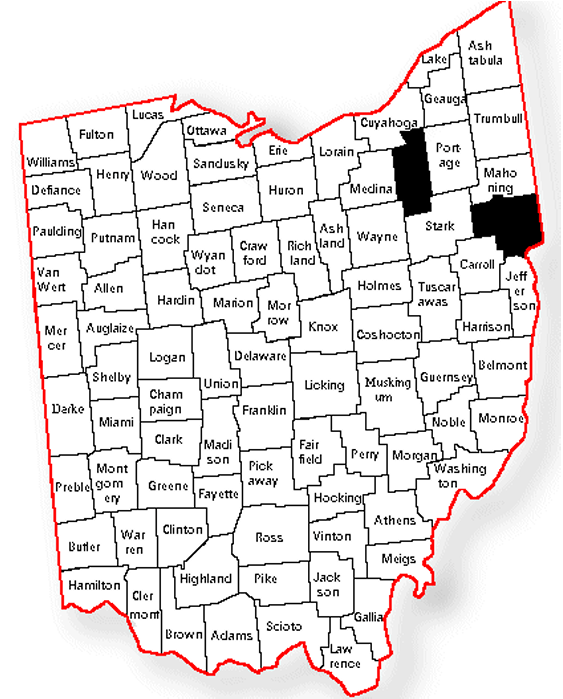
Figure 1 shows Summit and Columbiana counties colored in black. Summit County, which is the northwest of the two counties, is an urban county with a population of approximately 540,000, with a density of 1,313 people per square mile. The county is 80 percent White and has a median income of approximately $48,000. Columbiana County is a rural county on the border of Ohio with Pennsylvania, with a population of approximately 102,000, with a density of 210 people per square mile. This county is 96 percent White and has a median income of approximately $34,000.
Analytic Approach
To conduct this ‘natural experiment’, a quasi-experimental design was applied to evaluate the impact of the COVID-19 recommendations on both the use of pre-trial release and crime. To do this, we ran interrupted time series models with ARIMA (auto-regressive integrated moving average) modeling. This technique estimates the causal impacts of an intervention across time using repeated measurements of an outcome of interest (Lecy & Fusi, 2020; McDowall & McCleary, 2014; Taylor, 1994). When randomized controlled trials are not appropriate or practical, interrupted time series modeling allows for an ideal quasi-experimental design over other forms of quasi-experiments, cross-sectional designs, and simple pre-post analyses (Biglan et al., 2000). One of the strengths of this design is the utilization of a long baseline period of data, which strengthens the internal validity of the ‘natural experiment’ presented here (Shadish et al., 2002).
Through our interrupted time series modeling with ARIMA, we can account for preexisting or natural trends in longitudinal data (i.e., already decreasing trends in crime; seasonality of crime; trends in pre-trial release practices) separately from the effects of the intervention (i.e., COVID-19 recommendations). For example, as crime may often be seasonal and cyclical (i.e., peaking every year in the summer), the ARIMA modeling accounts for this type of expected peak in crime during the summer months if the trend becomes established in the baseline period. This allows us to parse out the effects of the COVID-19 recommendations on the outcomes of interest (pre-trial release practices and crime) from competing causal factors.
Results
For each crime type in each county, the data was analyzed in two phases to leverage both the longitudinal nature of the natural experiment and the type of data available from county court systems. Thus, for each crime type in each county, a unique interrupted time series model with ARIMA was computed. Results are presented below for the three crime types: Total Crime, Violent Crime (excluding sexual crime), Non-violent Crime (excluding drug crime). Within each type, four models are presented in the following order: the proportion of cases granted bond in Summit County; the crime trends in Summit County; the proportion of cases granted bond in Columbiana County; and the crime trends in Columbiana County.
Each interrupted time series analysis provides us with three points of analysis with a corresponding significance test (Lecy & Fusi, 2020):
- the trends of crime pre-COVID-19,
- the immediate (i.e., short term) change after the issuance of COVID-19 guidelines
- the long-term change after the issuance of COVID-19 guidelines
The first significance test, associated with point one, tells us if our outcome was increasing or decreasing at a statistically significant level prior to the COVID-19 pandemic. This allows us to understand the baseline trend of bond usage and crime prior to the pandemic, from January 2016 to March 2020. Again, because the model is conducted using the ARIMA framework, these significance tests account for the cyclical and seasonal nature of crime.
The second significance test, associated with point two, tells us if there was a significant change in our outcome in the short term (i.e., one month) after to the issuance of the COVID-19 pandemic guidelines. This allows us to understand the short-term effects of these guidelines on bond usage and crime in the month of April 2020, immediately subsequent to the issuance of guidelines.
The third significant test, associated with point three, tells us if there was a significant chance in our outcome in the longer term since the issuance of the COVID-19 pandemic guidelines. This allows us to understand the longer term effects of these guidelines on bond usage and crime in the months from April 2020 through December 2022.
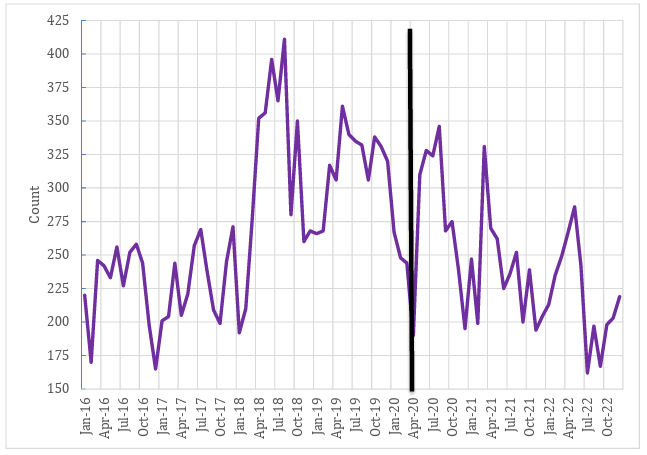
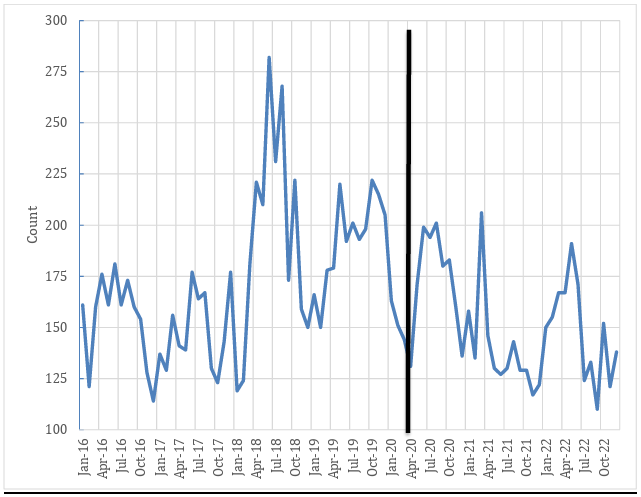
Along with each model, a graph is presented that shows the observed trends for each of the two counties (Summit and Columbiana) across our two outcomes (the proportion of cases granted a pre-trial release and the count of crimes). For each of these trend graphs, a black vertical line indicates the date of the COVID-19 pandemic and guidelines issued by the Ohio Supreme Court. Importantly, while each of these trend graphs demonstrate the observed data per month, they do not reflect the significance testing associated with the ARIMA models. This is run separately on the data, the results of these are discussed in-text below.
Total Crime
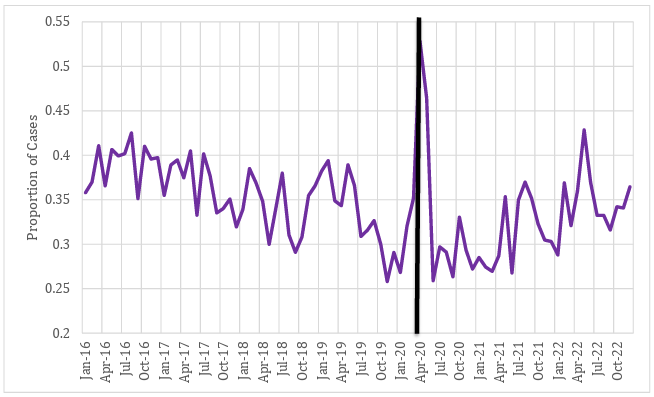
The proportion of cases per month granted bond across all crime types in Summit County are presented in Figure 2. For Summit County, the interrupted time series analysis tells us that the usage of pre-trial release did not change across the baseline period prior to COVID-19. After the issuance of the pandemic guidelines, there was still no statistically significant change in the usage of pre-trial release in the short or long term. Interestingly, while we see a spike in the proportion of cases granted bond in the month after the issuance of the pandemic guidelines, this spike is not large enough to achieve statistical significance from what would have been the expected proportion of cases granted bond in April 2020.
Summit County - Proportion of Total Crime Cases Granted Bond (per month)
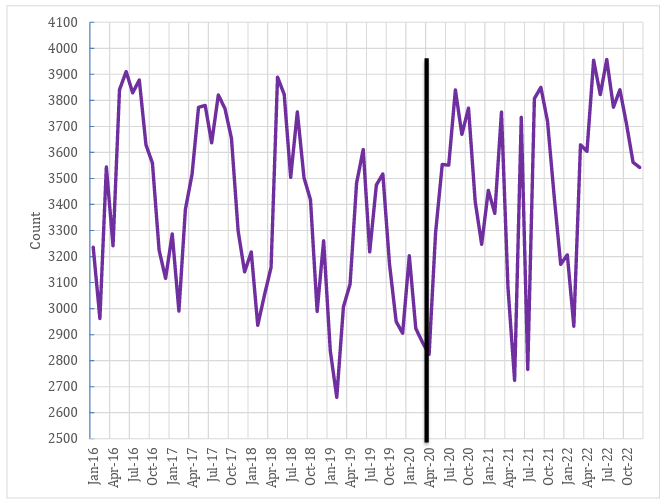
The monthly count of total crime incidents in Summit County is presented in Figure 3. For Summit County, the interrupted time series analysis tells us that the total crime in the county was increasing overall in the total baseline period from January 2016 to March 2020. After the issuance of the pandemic guidelines, there was a significant increase in the total crime count in the short term, or immediately after the issuance, compared to the count of crime expected based on the baseline trends of crime prior to the pandemic. In the long term since, there has been a significant decrease in total crime count compared to what would have been expected had the pandemic and associated guidelines not occurred.
Summit County - Total Crime Incident Count (per month)
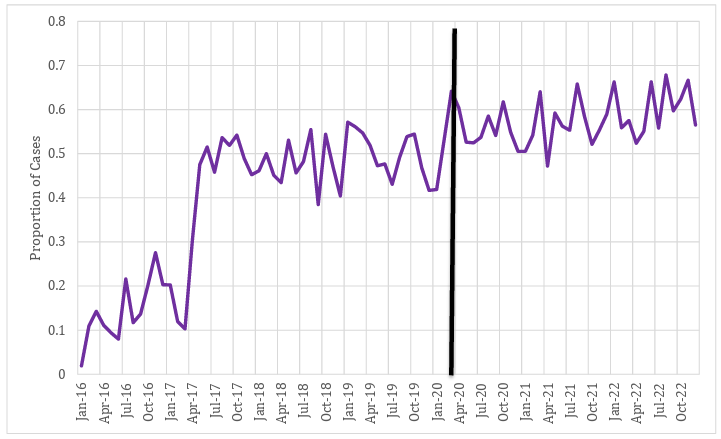
The proportion of cases per month granted bond across all crime types in Columbiana County are presented in Figure 4. For Columbiana County, the interrupted time series analysis tells us that the usage of pre-trial release was significantly increasing during the baseline period from January 2016 to March 2020. After the issuance of the pandemic guidelines, there was a significant increase in the usage of pre-trial release across all crime types. In the long term since, there has been a significant decrease in the usage of pre-trial release across all crime types compared to what would have been expected based on the significantly increasing baseline trends prior to the pandemic.
Columbiana County - Proportion of Total Crime Cases Granted (per month)
The monthly count of total crime incidents in Columbiana County is presented in Figure 5. For Columbiana County, the interrupted time series analysis tells us that the total crime in the county was decreasing overall in the baseline period from January 2016 to March 2020. After the issuance of the pandemic guidelines, there was a significant decrease in the total crime count in the short term, or immediately after the issuance in April 2020. In the long term since, there has been a significant increase in total crime count compared to the significantly decreasing crime trends observed prior to the pandemic and in April 2020. This increase may be attributed to the observed spikes in crime since April 2020 that are larger than expected, given the baseline cyclical and seasonal nature of observed crime trends.
Columbiana County - Total Crime Incident Count (per month)
Violent Crime
The proportion of cases per month granted bond across violent crime cases (excluding sexual crime) in Summit County are presented in Figure 6. For Summit County, the interrupted time series analysis tells us that the usage of pre-trial release for violent crimes did not change across the baseline period from January 2016 to March 2020. After the issuance of the pandemic guidelines, there was still no statistically significant change in the usage of pre-trial release in the short-term or long-term through December 2022 for violent crime incidents. While across the time period, we see some spikes and dips in the proportion of cases granted bond, these spikes and dips are not large enough and do not constitute sustained trends that mark these changes as statistically significant.
Summit County - Proportion of Violent Crime Cases Granted Bond (per month)
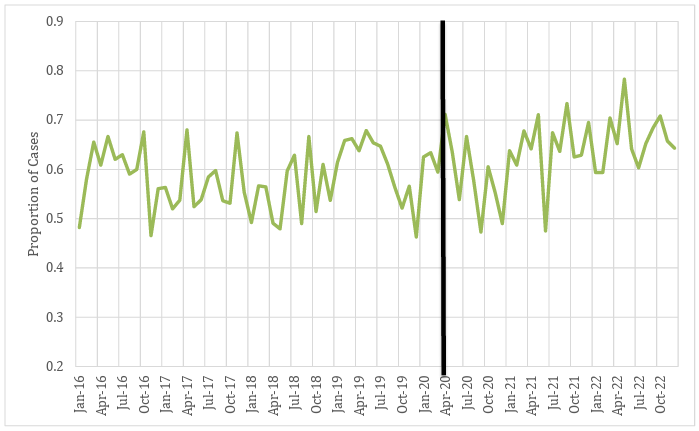
The monthly count of violent crime incidents in Summit County are presented in Figure 7. For Summit County, the interrupted time series analysis tells us that the violent crime in the county did not change at a statistically significant level in the baseline period from January 2016 to March 2020. Again, while we see some spikes and dips in this trend, some of this can be attributed to the seasonal and cyclical nature of crime trends. For example, it is evident in Figure 7 that violent crime tends to peak during the spring and summer months in Summit County from January 2016 through March 2020. The ARIMA model treats these peaks as expected given their reoccurring trends in the same months across years. After the issuance of the pandemic guidelines, there was still no statistically significant change in the incidence of violent crime in the county. Thus, while we see some peaks in crime after April 2020, these are not large enough to establish statistically significant increases in crime trends compared to what would have been expected had the pandemic not occurred.
Summit County - Violent Crime Incident Count (per month)
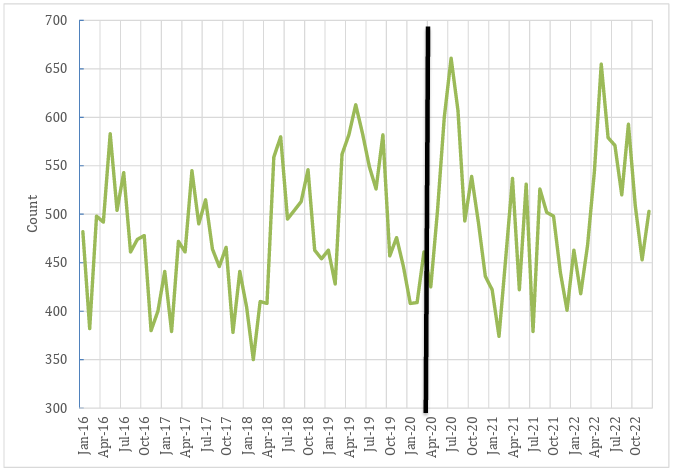
The proportion of cases per month granted bond across violent crime cases (excluding sexual crime) in Columbiana County are presented in Figure 8. For Columbiana County, the interrupted time series analysis tells us that the usage of pre-trial release for violent crime was significantly increasing during the baseline period from January 2016 to March 2020. After the issuance of the pandemic guidelines, there was a significant increase in the usage of pre-trial release across violent crime incidents in April 2020 compared to the expected trend of the proportions in the baseline period. In the long term since, there has been a significant decrease in the usage of pre-trial release across violent crime incidents compared to what trend would have existed had the pandemic not occurred.
Columbiana County - Proportion of Violent Crime Cases Granted Bond (per month)
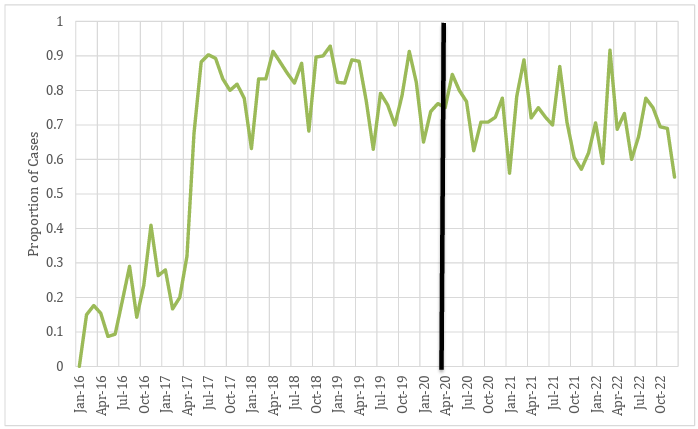
The monthly count of violent crime incidents in Columbiana County is presented in Figure 9. For Columbiana County, the interrupted time series analysis tells us that violent crime in the county was decreasing overall in the baseline period from January 2016 to March 2020. After the issuance of the pandemic guidelines, there was a significant decrease in the violent crime count in the short term, or immediately after the issuance. In the long term since, there has been a significant increase in the violent crime count compared to what would have been expected if the pandemic had not occurred. This may be attributed to a return to the norm in crime incident trends that existed prior to the COVID-19 pandemic, as the pattern of incidents begins to increase after periods of trending decreases in crime prior to and immediately after the start of the pandemic. Notably, these counts of increased crimes seemed to have been sustained largely in 2020 and 2021, with largely lower counts of violent crime incidents per month in 2020, even during normal periods of seasonal peaks in violent crime expected in the spring and summer months in Columbiana County.
Columbiana County - Violent Crime Incident Count (per month)
Non-Violent Crime
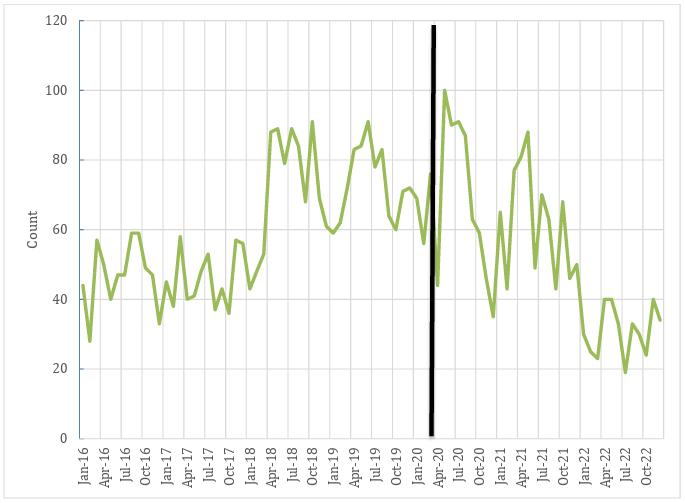
The proportion of cases per month granted bond across non-violent crime cases in Summit County are presented in Figure 10. For Summit County, the interrupted time series analysis tells us that the usage of pre-trial release for non-violent crimes did not change across the baseline period from January 2016 to March 2020. After the issuance of the pandemic guidelines, there was still no statistically significant change in the usage of pre-trial release in the short or long term for non-violent crime incidents. While we see some spiking and dipping of these trends in the middle of 2020 that look uncharacteristic of the trend over time, these changes were not large or sustained enough to deviate from the expected trends of bond usage in the county.
Summit County - Proportion of Non-Violent Crime Cases Granted Bond (per month)
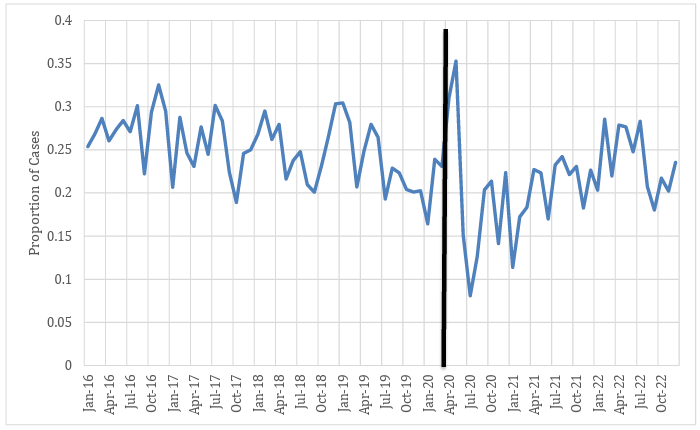
The monthly count of non-violent crime incidents in Summit County is presented in Figure 11. For Summit County, the interrupted time series analysis tells us that the non-violent crime count in the county was significantly increasing in the baseline period from January 2016 to March 2020. After the issuance of the pandemic guidelines, there was a significant increase in the non-violent crime count in the short term, or immediately after the issuance, compared to what trend would have been expected had the pandemic not occurred. In the long term since, there has been a significant decrease in the non-violent crime count compared to the expected trends of crime had the pandemic and associated guidelines not been issued.
Summit County - Non-Violent Crime Incident Count (per month)
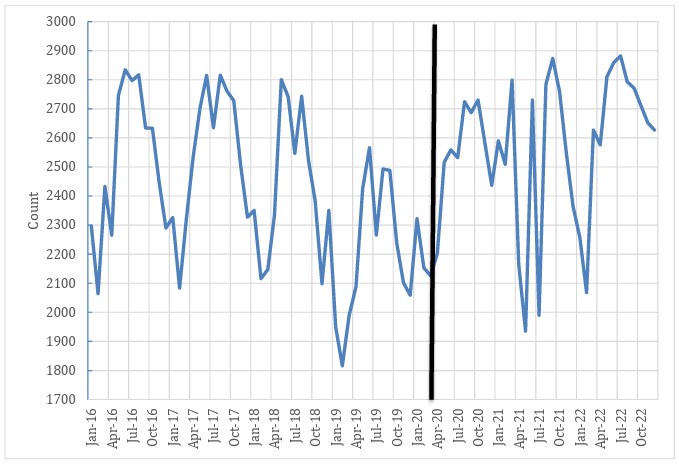
The proportion of cases per month granted bond across non-violent crime cases in Columbiana County are presented in Figure 12. For Columbiana County, the interrupted time series analysis tells us that the usage of pre-trial release for non-violent crime was significantly increasing during the baseline period from January 2016 to March 2020. After the issuance of the pandemic guidelines, there was no statistically significant change in the usage of pre-trial release across non-violent crime incidents compared to what was expected based on the baseline trends. In the long term since, there has been a significant decrease in the usage of pre-trial release across non-violent crime incidents compared to what trend would have existed had the pandemic not occurred.
Columbiana County - Proportion of Non-Violent Crime Cases Granted Bond (per month)
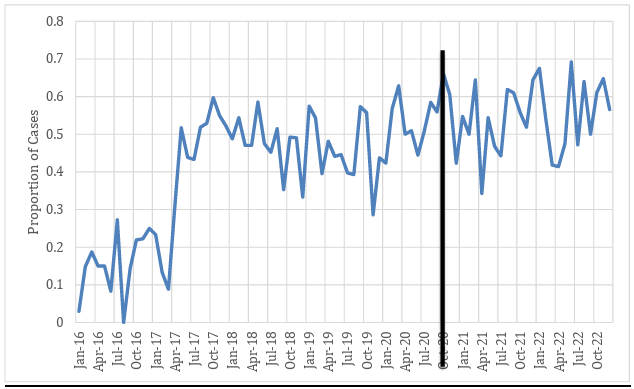
The monthly count of non-violent crime incidents in Columbiana County is presented in Figure 13. For Columbiana County, the interrupted time series analysis tells us that non-violent crime in the county was decreasing overall in the baseline period from January 2016 to March 2020. After the issuance of the pandemic guidelines, there was a significant decrease in the nonviolent crime count in the short term, or immediately after the issuance. In the long term since, there has been a significant increase in the non-violent crime count compared to what trend would have existed had the pandemic not occurred. This may be attributed to a return to the norm in crime incident trends that existed prior to the COVID-19 pandemic, as the pattern of incidents begins to increase after periods of trending decreases in crime prior to and immediately after the start of the pandemic. Notably, there seems to be an uncharacteristic level of nonviolent crime trends in the winter months of 2021 and 2022. These un-seasonal peaks in crime incidents may be driving this significance.
Columbiana County - Non-Violent Crime Incident Count (per month)
Summary & Policy Recommendations
In Priority Area 1, we sought to determine the effects of COVID-19 on the use of pretrial bond and trends of crime. We explored two specific research questions:
- Did the Supreme Court COVID-19 guidelines influence how county courts implemented pre-trial bond practices?
- Did these counties experiences changes in crime during the pandemic and/or under these COVID-19 guidelines encouraging pre-trial release?
We applied a research design utilizing COVID-19 and the issuance of the Supreme Court COVID-19 guidelines as a ‘natural experiment’, allowing us to compare observed trends in pretrial practices and crime with the expected trends had the pandemic not occurred and the associated guidelines not been issued.
Findings for our urban case study in Summit County indicate that there were no significant changes in pre-trial practices in the county for either total crime, violent crime, or non-violent crime types. In addition, while crime was increasing prior to the COVID-19 pandemic, it experienced an overall decrease in incidents immediately after the start of the pandemic and issuance of Ohio Supreme Court COVID-19 guidelines. There were no changes in Summit County for violent crime in the longer term through December 2022, but non-violent crime significantly decreased in the longer term through December 2022.
Findings for our rural case study in Columbiana County indicate that the use of pre-trial bonds was increasing prior to the COVID-19 pandemic and remained increasing immediately after the Ohio Supreme Court issuance of COVID-19 guidelines. In the longer term since the pandemic, though December 2022, there has been a decrease in the usage of pre-trial bonds. This might indicate that the county is returning to the norm of practices that existed prior to the pandemic. This pattern was true for total crime incidents, violent crime incidents, and nonviolent crime incidents.
In addition, for Columbiana County, crime trends were decreasing prior to the COVID-19 pandemic and immediately after the start of the pandemic across total crime, violent crime, and non-violent crime incidents. In the longer term through December 2022, there has been an increase in crime in the county. Given the significant decreases in crime both prior to the pandemic and immediately after, this may be attributed to a return to the norm in crime incident trends that existed prior to the COVID-19 pandemic.
Recommendations
Given the context and results of the study, we provide several policy recommendations. The first set refer to pre-trial practices:
- Ohio counties should continue to consider bail reform practices in line with the COVID19 pandemic guidelines issued by the Ohio Supreme Court, as there was no evidence of resultant crime increases as a result of this ‘natural experiment’.
The second set of policy recommendations refer to the institutionalization of data practices across the state, which can help to ensure Ohio improves its reliance on data and evidence for making policy decisions in the area of bail reform.
- Establish a centralized database that tracks pre-trial release processes in a standardized format in all Ohio counties.
- Establish a legislative committee composed of legislators, criminal justice practitioners, and criminal justice scholars to study the effects of pre-trial release decisions on crime rates in all Ohio counties.
Biglan, A., Ary, D., & Wagenaar, A. C. (2000). The value of interrupted time-series experiments for community intervention research. Prevention Science, 1(1), 31-49.
Lecy, J. & Fusi, F. (2020) Foundations of Program Evaluation: Regression Tools for Impact Analysis. https://ds4ps.org/pe4ps-textbook/docs/index.html
McDowall, D., & McCleary, R. (2014). Interrupted time series models. Encyclopedia of criminology and criminal justice, 2653-2665.
Shadish, W. R., Cook, T. D., & Campbell, D. T. (2002). Experimental and quasi-experimental designs for generalized causal inference. Houghton Mifflin.
Taylor, R. B. (1994). Research methods in criminal justice. McGraw-Hill.
Updated: 04/21/2026 04:38PM