
A Cappella Choir, Collegiate Chorale & University Choral Society
A Cappella Choir,
Collegiate Chorale &
University Choral Society
Sunday, March 29, 2026
3 p.m.
Kobacker Hall
Program
A Cappella Choir
Dr. Adam Luebke, conductor
Kevin McGill, pianist
Grayson Abend, graduate assistant
Be Like the Bird | Abbie Betinis (b. 1980)
Abbie Betinis and Dr. Luebke sat next to one another in Theory II class in college. Based in Minnesota, Betinis has become a widely respected in the choral sphere for blending lyrical warmth and inventive, intricate structures. The composer writes: This canon was composed in 2009, just after I completed cancer treatment for the second time. My parents and I sent it out as our Christmas card that year which continued a tradition started in 1922 by my great grandfather, Rev. Bates G. Burt, who then passed it to his son, my great-uncle Alfred Burt, now famous for carols like "Caroling, Caroling" and "Some Children See Him."
Text:
Be like the bird that, pausing in her flight awhile on boughs too slight,
feels them give way beneath her, and sings knowing she hath wings.
The Road Not Taken | Randall Thompson (1899-1984)
The Road Not Taken is the first work of a Thompson’s seven-song suite, Frostiana, setting the poetry of Robert Frost. Commissioned for the two-hundredth anniversary of the incorporation of the town of Amherst Massachusetts, the premiere performance in 1959 featured Thompson conducting and Frost in attendance. Thompson’s signature compositional voice is evident through a lyrical melody, clear tonal harmony, and sensitive attention to text. He captures the speaker’s introspection and uncertainty with a persistent undulating accompaniment underneath the elegant, yet restrained melody of the singers.
Text:
Two roads diverged in a yellow wood,
And sorry I could not travel both
And be one traveler, long I stood
And looked down one as far as I could
To where it bent in the undergrowth;
Then took the other, as just as fair,
And having perhaps the better claim,
Because it was grassy and wanted wear;
Though as for that the passing there
Had worn them really about the same,
And both that morning equally lay
In leaves no step had trodden black.
Oh, I kept the first for another day!
Yet knowing how way leads on to way,
I doubted if I should ever come back.
I shall be telling this with a sigh
Somewhere ages and ages hence:
Two roads diverged in a wood, and I—
I took the one less traveled by,
And that has made all the difference.
Ch’io ami la mia vita | Claudio Monterverdi (1567-1643)
Claudio Monteverdi’s Ch’io ami la mia vita, from his Madrigali a cinque voci, Libro Primo (1587), reflects the late Renaissance madrigal style while hinting at his later innovations. The text explores the paradox of love and concealed at the onset is a tribute to a lady: ‘Ch’ami la vita mia (That I love my life) can also be heard as ‘Camilla vita mia’ (Camilla, my life). Monteverdi’s mature and dramatic use of musical episodes is striking: by extracting and inserting the vocal lines, repeating the lyric in different pitches and timbres, and making intelligent use of color contrast (light and shade for the antitheses of love—suffering and life—death), he succeeds in building up the tension until the final catharsis.
Text:
Ch'ami la vita mia nel tuo bel nome
par che si legg'ognora,
ma tu voi pur ch'io mora.
Se'l ver porti in te scritto,
acqueta coi begl'occhi il cor afflitto,
acciò letto non sia
ch'ami la morte e non la vita mia.
Translation:
That I love my life in your fair name
It seems it may always be read,
Yet you would have me die.
If within you the truth be written,
Calm with your fair eyes the stricken heart,
So that it be not read
That I love death and not my life.
Chères fleurs | Jules Massenet (1842-1912)
Remembered today primarily for his grand operas, Massenet vocal music also includes 200 mélodie for solos, duets, trios, and quartets. His first cycle for vocal quartet Chansons des Bois d’Amaranth (Songs from the Amaranth Woods) was published in 1901. The third song in the set, Chères fleurs is written in the spirit of a Renaissance madrigal. Graceful melodic lines echo the opening of a flower and the rushing wind, as the speaker warns the tender bud of false love.
Text:
Chères fleurs, ne vous fiez point
Au vent qui vous frôle de l'aile!
Il parle trop d'amour fidèle:
L'amour fidèle parle moins.
Translation:
Dear flowers, do not trust anymore
The wind that brushes past you with its wing!
It speaks too much of faithful love:
Faithful love speaks less.
Lebenslust | Franz Schubert (1979-1828)
One of over 600 lieder he composed, Franz Schubert’s Lebenslust is a vibrant and energetic part-song that celebrating the pleasures of life and companionship. Lively and buoyant in a lilting 6/8 meter, the song is a quintessential example of straightforward, simple music designed for an intimate gathering of friends.
Text:
Wer Lebenslust fühlet, der bleibt nicht allein,
Allein sein ist öde, wer kann sich da freu’n?
Im traulichen Kreise, beim herzlichen Kuss,
Beisammen zu leben, ist Seelengenuss!
Translation:
If you are full of the love lust for life
You will not be alone
It is bleak to be alone, who can be happy that way?
In a cozy circle, with a warm kiss,
To live together is happiness for the soul.
Fólk fær andlit | Hildur Guðnadóttir (b. 1982), arr. Peter Stanley Martin
Academy Award winning Hildur Guðnadóttir is an Icelandic composer and cellist known for her atmospheric, textural approach to film and television scoring. She gained international acclaim for her work on Joker and Chernobyl, becoming one of the most prominent contemporary composers in screen music. About this work she notes: “In December 2015 we followed a series of events that touched most of us there: Albanian children with terminal illnesses were deported from Iceland along with their families who had been denied residence permits. It was deeply distressing to watch the series of events unfold; how people divided into two separate oppositions, for or against - people.”
Text:
Fólk fær andlit
Miskun
Fyrirgefið okkur fyrir
Translation:
People get faces
Mercy
Forgive us for
Fix You | Guy Berryman, Jon Buckland, Will Champion, Chris Martin, arr. George Chung
Chris Martin wrote “Fix You” for his then-wife Gwyneth Paltrow after the death of her father. The lyrics acknowledge both the loss of a loved one, and the challenges we all face in our daily lives. From “when you try your best, but you don’t succeed” to “when you love someone, but it goes to waste,” I have found that every singer feels a strong connection to something in the text. Sharing the burden of grief is a theme repeated throughout, this is a song of steadfast support and encouragement for a loved one in a time of struggle. -Carrie Tennant, Vancouver Youth Choir (commissioner)
Text:
When you try your best, but you don't succeed
When you get what you want, but not what you need
When you feel so tired, but you can't sleep
Stuck in reverse
And the tears come streaming down your face
When you lose something you can't replace
When you love someone, but it goes to waste
Could it be worse?
Lights will guide you home
And ignite your bones
And I will try to fix you
And high up above or down below
When you're too in love to let it go
But if you never try, you'll never know
Just what you're worth
Tears stream down your face
When you lose something you cannot replace
Tears stream down your face, and I
Tears stream down your face
I promise you I will learn from my mistakes
Tears stream down your face, and I
When the Trumpet Sounds | André J. Thomas (b. 1952)
A prolific composer in the African American spiritual genre, André Thomas draws on elements of the African American musical and church traditions. Written in a preacher/congregation call and response format, “When the Trumpet Sounds” incorporates syncopated rhythms, blues chords, and swung eighth notes in a jazz style. The work is imbued with urgency and joy in anticipation the judgement day. Originally representing freedom from enslavement, the message of deliverance continues to resonate. Thomas is Emeritus Professor of Music at Florida State University where Dr. Luebke was one of his students(!). He later served on the faculty at Yale University and is now an Associate Artist with the London Symphony Orchestra.
Text:
Where shall I be when the trumpet sounds?
When it sounds so loud till it wake up the dead,
Tell me where shall I be when the trumpet sounds?
Sinner please don’t let this harvest pass,
The sinner will run on that judgment day.
~~~~~~~~~~~
Collegiate Chorale
Dr. Richard Schnipke, conductor
Heather Goldman, pianist
Aaron Roos, graduate assistant
From Darkness to Light
Tonight Eternity Alone | Rene Clausen
Text:
Tonight eternity alone is near,
The sunset and the dark’ning blue,
There is no space for fear,
Only the wonder of its truth.
O Schöne Nacht | Johannes Brahms, CPDL
Text:
O schöne Nacht!
Am Himmel märchenhaft
Erglänzt der Mond in seiner ganzen Pracht;
Um ihn der kleinen Sterne liebliche
Genossenschaft.
Es schimmert hell der Tau
Am grünen Halm; mit Macht
Im Fliederbusche schlägt die Nachtigall;
Der Knabe schleicht zu seiner Liebsten sacht -
O schöne Nacht!
Translation:
O lovely night!
In the heavens, the moon gleams magically
in all its splendour;
about it, the sweet comradeship
of tiny stars.
The dew glimmers brightly
on the green blades of grass; with great power,
the nightingale sings out in the elder-bush;
the young man steals quietly to his sweetheart -
O lovely night!
Stars I Shall Find | David Dickau
Joseph Stribrny, conductor
Text:
There will be rest,
And sure stars shining,
Over the rooftops crowned with snow,
A reign of rest, serene forgetting,
The music of stillness holy and low.
I will make this world of my devising,
Out of a dream in my lonely mind,
I shall find the crystal of peace, above me,
Stars I shall find.
Stars from Three Songs of Nature | Lloyd Pfautsch
Text:
The stars shine in their watches,
And rejoice; when He calleth them,
They say: Here we be.
And so with cheerfulness,
They show light unto Him that made them.
And so with cheerfulness,
The stars rejoice!
O Radiant Dawn | James MacMillan
Text:
O Radiant Dawn,
Splendour of eternal Light,
Sun of Justice: come,
Shine on those who dwell in darkness,
And the shadow of death.
Isaiah had prophesied,
“The people who walked in darkness,
Have seen a great light,
Upon those who dwelt in the land of gloom,
A light has shone.”
Amen.
Hor che la vaga Aurora | Vittoria Aleotti
Text:
Hor che la vaga Aurora,
sovra un carro di foco
appar in ogni loco,
co’l figlio di Latona
che’l suo dorato crine
a l’Alpi e a le campagne
à noi vicine mostra
con dolci accenti
questi la ben temprata lira suona
onde gli spirti
pellegrini intenti
odono l’armonia
che l’alme nostre al ciel erg’et invia.
Translation:
Oh, how the beautiful dawn
driving a chariot of fire
appears in every location
with the son of Latona
how her golden hair
to the Alps and the countryside
to our vicinity shows
with sweet accents
like the well-tempered lyre
that the spirits
wandering intently
hear the harmony
that invites our souls to heaven
Laudate Dominum | Gyongyosi Levente
Text:
Laudate Dominum de caelis,
Laudate eum in excelsis.
Laudate eum, omnes angeli eius,
Laudate eum, omnes virtutes eius.
Laudate eum, sol et luna,
Laudate eum, omnes stellae lucentes.
Alleluia!
Translation:
Praise the Lord from the heavens;
Praise him in the heights above.
Praise him, all his angels;
Praise him, all his heavenly hosts.
Praise him, sun and moon;
Praise him, all you shining stars.
Alleluia
Unclouded Day | arr. Shawn Kirchner
Text:
O they tell me of a home far beyond the skies,
They tell me of a home far away,
And they tell me of a home
Where no storm-clouds rise:
O they tell me of an unclouded day.
O the land of cloudless days
O the land of an unclouded sky,
O they tell me of a home
Where no storm-clouds rise:
O they tell me of an unclouded day.
O they tell me of a home
Where my friends have hone,
They tell me of a land far away,
Where the tree of life in eternal bloom
Sheds its fragrance through the unclouded day.
They tell me of a King in his beauty there,
They tell me that mine eyes shall behold
Where He sits on a throne
That is bright as the sun
In the city that is made of gold!
~~~intermission~~~
University Choral Society
Dr. William Skoog, conductor
Kevin McGill, pianist
Grayson Abend, graduate assistant
I Will Be a Child of Peace | Elaine Hagenberg
Text:
O Holy Father I will be
a child of peace and purity.
For well I know Thy hand will bless
the seeker after righteousness.
My Soul’s Been Anchored in the Lord | arr. Moses Hogan
Corban Hutchins and Grayson Abend, tenor soloists
Combined University Choral Society
and Collegiate Chorale
Lux Aeterna | Morten Lauridsen
Dr. William Skoog, conductor
Kevin McGill, pianist
Emily Fluty, flute
Michael Berchert, oboe
Willis McClure, clarinet
Jordan Weir, bassoon
Mitchell Hemme and Patrick Scully, horns
Bill Mathis, trombone
Text and translation:
I. Introitus
Requiem aeternam dona eis, Domine,
et lux perpetua luceat eis
Te decet hymnus, Deus, in Sion,
et tibi reddetur votum
in Jerusalem:
Exaudi orationem meam,
ad te omnis caro veniet.
Requiem aeternam dona eis, Domine,
et lux perpetua luceat eis.
Rest eternal grant them, O Lord,
and let perpetual light shine on them.
You are praised, God, in Zion,
And homage will be paid to you
in Jerusalem:
Hear my prayer,
To you all flesh will come.
Rest eternal grant them, O Lord,
and let perpetual light shine on them.
II. In Te, Domine, Speravi
Tu ad liberandum suscepturus hominem
non horruisti Virginis uterum.
Tu devicto mortis aculeo,
aperuisti credentibus regna coelorum.
Exortum est in tenebris lumen rectis.
Miserere nostri, Domine,
miserere nostri.
Fiat misericordia tua, Domine, super nos
quemadmodum speravimus in te.
In te Domine, speravi:
non confundar in aeternum.
Thou, having delivered mankind,
did not disdain the Virgin’s womb.
Thou overcame the sting of death
and opened to believers the kingdom of heaven.
A light has risen in the darkness for the upright.
Have mercy on us, O Lord,
have mercy on us.
Let thy mercy be upon us, O Lord,
for we have hoped in thee.
In thee, O Lord, I have trusted:
let me never be confounded.
III. O Nata Lux
O nata lux de lumine,
Jesu redemptor saeculi,
dignare clemens supplicum
laudes preces que sumere.
Qui carne quondam contegi
dignatus es pro perditis.
Nos membra confer effici,
tui beati corporis.
O born light of light,
Jesus redeemer of the world,
mercifully deem worthy and accept
praises and prayers from your supplicants.
Who once was clothed in the flesh
for those who are lost.
Allow us to become members of
your holy body.
IV. Veni, Sancte Spiritus
Veni, Sancte Spiritus
et emitte coelitus
lucis tuae radium.
Veni, pater pauperum,
veni, dator munerum,
veni, lumen cordium.
Consolator optime,
dulcis hospes animae,
dulce refrigerium.
In labore requies,
in aestu temperies,
in fletu solatium.
O lux beatissima,
reple cordis intima
Tuorum fidelium.
Sine tuo numine,
nihil est in homine,
nihil est innoxium.
Lava quod est sordidum,
riga quod est aridum,
sana quod est saucium.
Flecte quod est rigidum,
fove quod est frigidum,
rege quod est devium.
Da tuis fidelibus,
in te confidentibus,
sacrum septenarium.
Da virtutis meritum,
da salutis exitum,
da perenne gaudium.
Come, Holy Spirit,
And send from heaven
Your ray of light.
Come, Father of the poor,
Come, giver of gifts,
Come, light of hearts.
The best of Consolers,
Sweet guest of the soul,
Sweet refreshment.
In labor, thou art rest,
In heat, thou art the tempering,
In grief, thou art the consolation.
O light most blessed,
Fill the inmost heart
Of all thy faithful.
Without your grace,
There is nothing in us,
Nothing that is not harmful.
Cleanse what is dirty,
Moisten what is dry,
Heal what is hurt.
Flex what is rigid,
Heat what is frigid,
Correct what goes astray.
Grant to thy faithful,
Those that trust in thee,
Thy sacred seven-fold gifts.
Grant the reward of virtue,
Grant the deliverance of salvation,
Grant joy everlasting.
V. Agnus Dei – Lux Aeterna
Agnus Dei, qui tollis peccata mundi, dona eis requiem.
Agnus Dei, qui tollis peccata mundi, dona eis requiem.
Agnus Dei, qui tollis peccata mundi, dona eis requiem sempiternam.
Lux aeterna luceat eis, Domine,
cum sanctis tuis in aeternum,
quia pius es.
Requiem aeternum dona eis, Domine,
et lux perpetua luceat eis.
Alleluia. Amen.
Lamb of God, who takes away the sins of the world, grant them rest.
Lamb of God, who takes away the sins of the world, grant them rest.
Lamb of God, who takes away the sins of the world, grant them rest forever.
May eternal light shine on them, Lord,
as with your saints in eternity,
because you are merciful.
Grant them eternal rest, Lord,
and let perpetual light shine on them,
Alleluia. Amen.

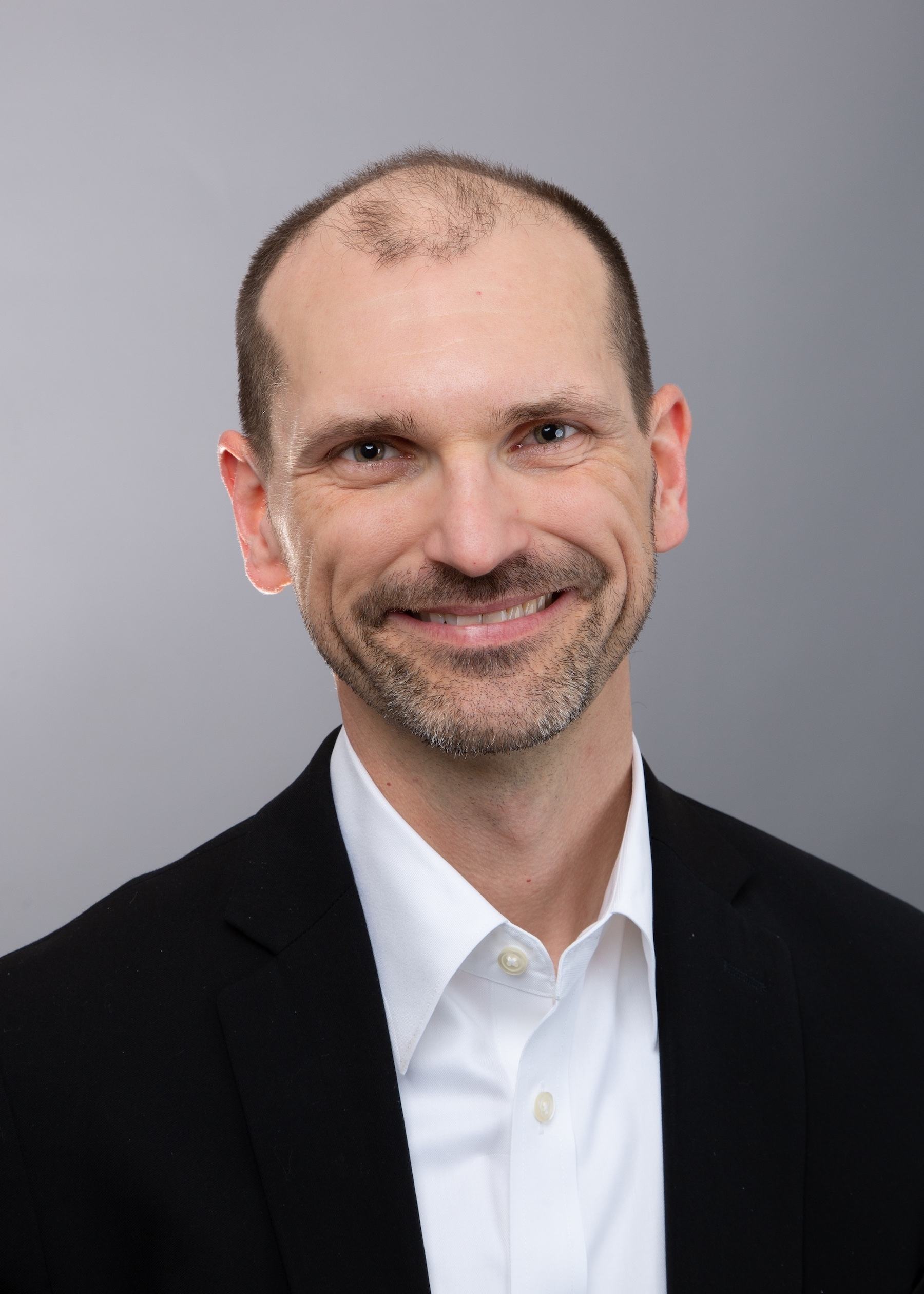
Adam Luebke served as Music Director of the Buffalo Philharmonic Chorus from 2015-2025. He is the winner of the 2020 GRAMMY® for Best Choral Performance and critics have described his choruses as “splendid” (Gramophone), “excellent” (Musical America), and “articulate, unified and vividly expressive” (Chautauqua Daily). He has conducted at Carnegie Hall, Lincoln Center, the Chautauqua Institution, and the Metropolitan Museum of Art and his choruses have been heard on national broadcasts of American Public Media’s Performance Today, and nationally televised on PBS.
He has prepared many of the repertoire’s most revered masterworks as well as pops, film, opera, and musical theater productions working with the Buffalo Philharmonic Orchestra, Chautauqua Symphony Orchestra, Niagara Symphony and ArtPark. During his ten-year tenure with the BPC, he developed a close partnership with the groundbreaking three-time Grammy winning maestro of the Buffalo Philharmonic Orchestra, JoAnn Falletta, and has also worked with Gil Rose, Carl St. Clair, John Morris Russell, and Rossen Milanov, among others. He has worked directly with composers Richard Danielpour, Chen Yi, Paul Moravec, Fabio Luisi, and famed trumpeter and composer Wynton Marsalis—alongside Marsalis’s Jazz at Lincoln Center Orchestra—preparing and performing their music in close collaboration with them.
Currently on the faculty of Bowling Green State University, he was previously associate professor at the State University of New York at Fredonia. He received his earliest musical training at the American Boychoir School, where he toured the world and performed on the world’s great stages with Kurt Masur, Robert Shaw, André Previn, Kathleen Battle, Amy Grant, and more. He holds degrees from St. Olaf College, Westminster Choir College, and Florida State University.
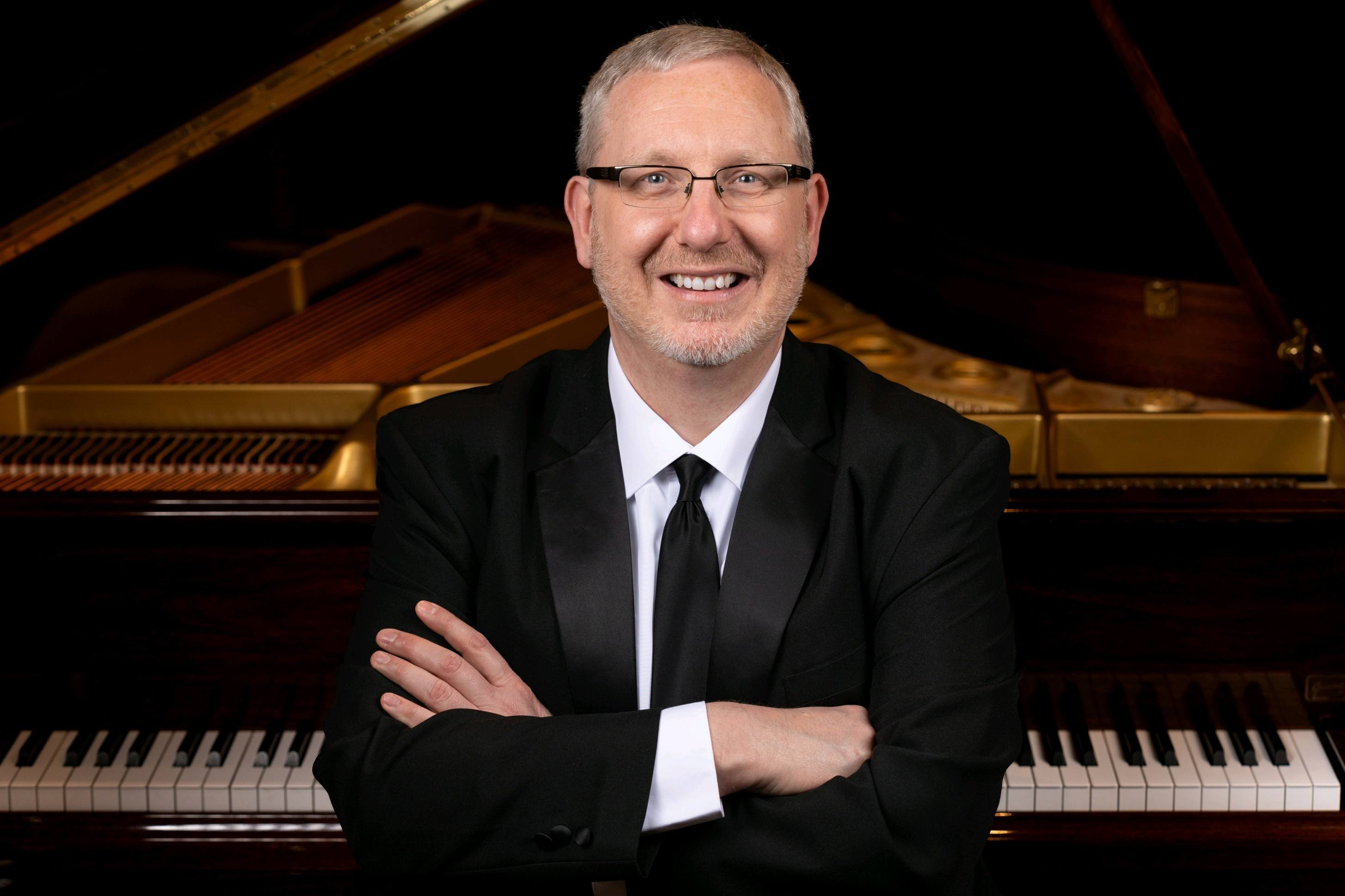
Kevin McGill taught himself to play the piano at the age of 12, and by the age of 14 was playing the organ for church services in his hometown of Richmond, Indiana. He attended the University of Evansville and earned a Bachelor of Music degree in piano performance. He received a Master of Music degree in piano performance and pedagogy from Bowling Green State University where he had assistantships in Opera accompanying and voice studio accompanying. His piano teachers include Laura Melton, Virginia Marks, Anne Hastings-Fiedler, and Cecilia Cho. After graduating, Kevin taught at Bowling Green State University and Bluffton University.
As an organist, Kevin was Director of Music Ministry at St. Mark’s Lutheran Church in Bowling Green, OH for 20 years. He has also toured Europe with various choirs. His organ teachers include Vernon Wolcott, Douglas Reed and Dwight Thomas.
Mr. McGill is currently Adjunct Assistant Professor of piano and choral accompanist at BGSU, pianist for The Toledo Masterworks Chorale, and organist at St. Mark’s Lutheran Church (Bowling Green). He is also active as a freelance collaborative pianist.

Dr. Richard Schnipke serves as Associate Professor of Music Performance Studies and Director of Choral Activities at Bowling Green State University. His duties at BGSU include conducting the Collegiate Chorale and Men’s Chorus, as well as teaching graduate courses in choral literature and graduate and undergraduate conducting. Previously, Dr. Schnipke held faculty positions at Xavier University and The Ohio State University and spent 15 years as a public-school choral director. He holds degrees from Bowling Green State University and The Ohio State University and has done additional graduate studies at the University of Cincinnati College-Conservatory of Music.
Choirs under Schnipke’s direction have performed at national and regional conferences of the American Choral Directors Association and have made numerous appearances at the Ohio Music Education Association Professional Development Conference and the Ohio Choral Directors Association Summer Conference. Schnipke’s choirs have also sung for the American Musicological Society and for several national seminars of the IMC: The Tenor-Bass Choral Consoritum. Dr. Schnipke also regularly prepares professional choruses for the Toledo Symphony Orchestra and frequently presents on the incorporation of Dalcroze Eurhythmics in the choral rehearsal.
Schnipke performs regularly as a professional chorister and has served as tenor section leader for Cincinnati’s Vocal Arts Ensemble under the direction of Grammy Award winner, Craig Hella Johnson. He is a Past-President of the Ohio Choral Directors Association, has served on the National Board of the National Collegiate Choral Organization, and is currently on the board of IMC: The Tenor-Bass Choral Consortium. He is also currently the tenor/bass repertoire and resources chair for the ACDA Midwestern region.

Heather McEwen Goldman is a pianist at Bowling Green State University where she accompanies both Volaré and Collegiate Chorale. She is also the Music Director and Organist at First Presbyterian Church in Bowling Green, OH. She has an MM in Piano Accompanying and Chamber Music from the Eastman School of Music in Rochester, NY where she played for Musica Nova, the Eastman-Rochester Chorus, and toured the country as part of the University of Rochester’s capital campaign. Prior to her time at Eastman, she was a New York City Teaching Fellow and obtained an MS in Math Education from City College in New York. She made her concerto debut with the Toledo Symphony Orchestra. Heather has collaborated with many opera singers and choruses, and enjoys playing chamber music both classical and modern.
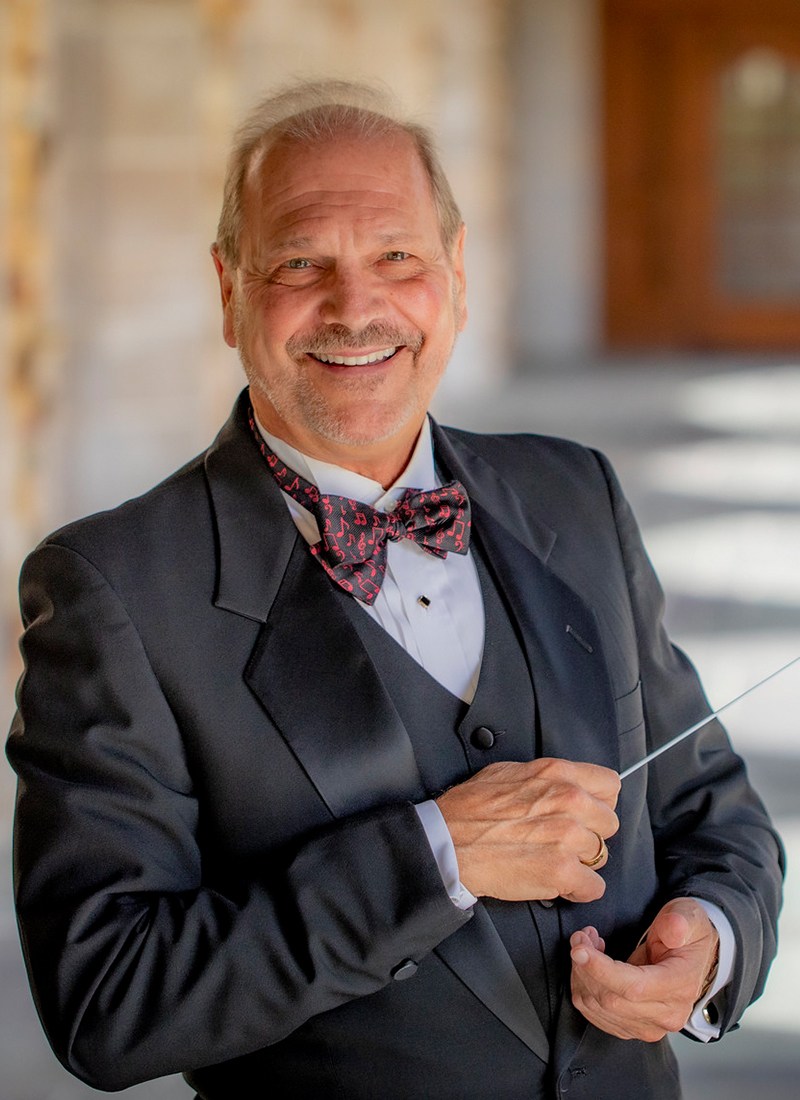
William Skoog served as Professor of Music at Rhodes College in Memphis, Tennessee from 2009 to 2025, retiring from Rhodes this year. He served as Chair of the Department of Music from 2009 to 2018, subsequently serving as the Director of Choral Studies until 2024.
Prior to serving at Rhodes, he held positions as Director of Choral Activities at Southwestern Michigan College, Indiana/Purdue University at Fort Wayne, and at Bowling Green State University. Skoog has several publications, most significantly a monograph on the Choral Music of Jennifer Higdon published by Cambridge Scholars Press, and is under contract by the same publisher for a monograph on The Choral Music of Dave Brubeck.
Skoog currently serves as Interim Choir Director at Germantown Presbyterian Church, and as conductor for a choir at Trezevant Manor, in Memphis. At Rhodes he conducted the Rhodes Singers, Chamber Singers, and the Rhodes MasterSingers Chorale, conducting major choral-orchestral works with that 100-voice, semi-professional ensemble, performing with the Memphis Symphony Orchestra. He has conducted orchestras and choirs in international festivals in Prague, Vienna, Salzburg, Dublin, Rome, Venice, London, Paris and Lucerne, and national festivals at the Kennedy Center and at Carnegie Hall. He holds a Doctor of Arts degree in Music with emphases in conducting and in voice/opera from the University of Northern Colorado, two Master of Arts degrees, one in Voice and one in Conducting from the Lamont School of Music at Denver University (CO), and a Bachelor of Arts degree in Music and Theatre from Gustavus Adolphus College, St. Peter Minnesota. Bill is the father of three grown children and has six grandchildren. He resides in Shelby County, Tennessee with his wife Elaine and their two dogs, Nutella and Brisket.
*****************************************
Thanks for attending this performance. If you have enjoyed your experience, please consider donating to the College of Musical Arts in support of our students and programming. Donate online at bgsu.edu/givecma, or call Karmen Concannon at 419-372-2424.
To our guests with disabilities, please indicate if you need special services, assistance or appropriate modifications to fully participate in our events by contacting Accessibility Services, access@bgsu.edu, 419-372-8495. Please notify us prior to the event.
Audience members are reminded to silence alarm watches, pagers and cellular phones before the performance. As a matter of courtesy and copyright law, no recording or unauthorized photographing is allowed. BGSU is a nonsmoking campus.
Updated: 04/09/2026 02:11PM