Guest Artists: Andrea Chenoweth-Wells, soprano and Ryu-Kyung Kim, mezzo
- BGSU
- College of Musical Arts
- Guest Artists: Andrea Chenoweth-Wells, soprano and Ryu-Kyung Kim, mezzo
Drawn Together: A Celebration
of Creation and Connection
Ryu-Kyung Kim, mezzo soprano
Andrea Chenoweth Wells, soprano
Ji-Hyang Gwak, piano
with Jennifer Sydor, dancer
Thursday, March 26, 2026
8 P.M.
Bryan Recital Hall
Program
The Prisoner and the Nightingale (1863) | Madame Caroline Rivé
In Memory Still those Days Return (1869) | Lizzie B. Ross
Songs of the Sea, Op. 10 (1890) | Amy Marcy Beach (1867-1944)
Canadian Boat Song (Thomas Moore)
The Night Sea (Harriet Elizabeth Prescott Spofford)
Sea Song (William Ellery Channing)
from Virgie Rainey – Two Narratives (2002) | Judith Zaimont (b. 1945)
Narrative 1 (Eudora Welty)
Enchantment (Elsa von Freytag-Loringhoven) | Hannah Cai Sobel
It Was Deep April and the Morn (Michael Field)
~~intermission~~
Music Like a Curve of Gold (2015) | Juliana Hall (b. 1958)
Barter (Sara Teasdale)
A Prayer (Sara Teasdale)
The Heart of the World: Six Imagist Poems by Women (2017) | Jodi Goble
Ode to the Sea (Winifred Ellerman)
In the Rangitaki Valley (Katherine Mansfield)
Midnight (Evelyn Scott)
The Storm (Sara Teasdale)
Never More Will the Wind (H.D. from Hymen, 1921)
Petals (Amy Lowell)
I Am in Need of Music (Elizabeth Bishop) (1999; rev. 2017) | Lori Laitman (b. 1955)
Cincinnati composer Madame Caroline Rivé was a singer, teacher and composer who studied with the so-called “father of vocal pedagogy,” Manuel Garcia. The majority of her compositions were written during and after the Civil War era. Her most famous piece was titled “He Has Gone and I Have Sent Him.” Most of the biographical information we were able to glean about Mme. Rivé came from information we discovered about her daughter, Madame Julie Rivé King who was an acclaimed piano virtuoso and composer. Mme Julie King’s student, Clara Baur, would go on to found the Cincinnati Conservatory of Music in 1867 which would merge with College of Music of Cincinnati College in 1955 to form the Cincinnati-College Conservatory of Music.
Madame Rivé’s piece “The Prisoner and the Nightingale” is a typical example of a parlor song of the time, written for young women to play and sing in their homes to entertain their families and impress potential suitors. When viewed through the lens of the Civil War, though, one can read the text as a captured Union soldier’s hope of rescue embodied in the song of the bird he hears.
(Prisoner) Near my prison drear,
Where grief drowneth cheer,
Where my heart doth fail,
Sing sweet Nightingale,
Sing sweet Nightingale.
(Nightingale) “Ah, ah, ah, ah, ah...”
(Prisoner) Though full of sadness, I still repine.
Brings back some gladness
Each song of thine...
No, not forsaken,
If thou’It remain
Sing and awaken
Bright hopes again.
Soon thou wilt leave me,
Brief joy of heart
Thou too will grieve me,
Soon will depart.
Ah, grief, depart.
We were not able to find any biographical information about composer Lizzie B. Ross, even though she has several pieces of music catalogued in the Library of Congress. This lack of information is unfortunately rather typical for female composers from this era. This is why we feel it is important to perform these types of works.
“In Memory Still Those Days Return” is written in verse-refrain form. The repeating chorus explores a typical harmonic structure of the time with the singers primarily singing in thirds; each verse is written for a solo singer with a drastically different character and form. The soprano focuses on the presence of a “guiding star” in one’s life with melismatic passages and opportunities for additional ornamentation. The mezzo’s verse is more lyrical, focusing on the bleakness of the future, expressing their inability to hold onto the light.
1869 was a tumultuous year in the United States: the Transcontinental Railroad connected the East to the West, the Supreme Court case Texas v. White established the Union was indissoluble, meaning that states could not secede; and the Women’s Suffrage Association was formed by Susan B. Anthony and Elizabeth Cady Stanton. It is easy to see how in a post-Civil War society, the text might have expressed some of the competing feelings about the time.
*(Refrain) In memory still those days return,
Those days so full of joy to me,
When hope, sweet hope within me burned,
And life was naught but ecstasy.
Beautiful star whose cheering ray.
Gladdens the sad and drooping hearts,
Guides the wand’rer on his way,
Life and joy to him imparts. *
Hope for me is dying,
Paling are its rays so bright,
Tho’ my heart is crying,
Heeds it not in upward flight.
Dreary now is earth to me,
All my joy has fled...
What can mortals hope who see
That bright star lie dead...
Hope the guide of childhood,
Manhood
Or declining years. *
Amy Marcy Beach is the first commercially successful American female composer. She demonstrated an early affinity for music as a small child and gave her first public performance on piano at the age of 16. When she married at the age of 18, her husband asked her to limit her public performances as it did not align with his standards for “women of society” so, instead, she focused her attention on composition. Her “Gaelic Symphony” was the first symphony composed and published by an American woman. Its premiere by Boston Symphony in 1896 earned her the “distinction” of being dubbed “one of the boys” by the so-called Second New England School of composers which included George Whitefield Chadwick, Horatio Parker, John Knowles Paine, Arthur Foote, and Edward MacDowell. After her husband’s death, Beach began to teach and mentor young pianists and composers. She became the first president of the Society of American Women Composers and was a strong proponent of music education. Beach wrote symphonies, sonatas, choral works, chamber music, and one opera, but she is most remembered for her 150 songs.
She wrote prolifically about music education, performance and composition. In a popular article in Etude magazine in 1918 titled “To the Girl Who Wants to Compose,” she offers not only encouragement to aspiring young composers, but valuable insight into her view of the duty of the composer: “When young people ask me my opinion as to whether they had better undertake composition or not, I always say, “Certainly, if it means anything to you that will be worth working for. How much do you care about expressing yourself in music? How much patience have you—how much persistence? Can you face disappointment? Are you prepared to take the thing seriously, or do you merely want to dabble in it? If you mean to be serious, and love the work, not only for the sake of what it may mean to you, as a means of expressing your own ideas, but for the insight it will give you into the workings of master minds, by all means enter into it. I believe there is nothing that helps us to understand the great works of genius so well, as to attempt writing ourselves.”
Beach’s Sea Songs are typical examples of her compositional style: highly romantic and evocative. Throughout the three pieces one hears elements of water in the piano. “Canadian Boat Song” tells the story of gliding down the St. Lawrence River in a canoe; one can almost feel the strokes of the oars slicing through the water. “The Night Sea” is told from the perspective of women waiting for their loves to return from their fishing expeditions, but the mood shifts as a storm rolls in and one by one the boat lights are snuffed out as the boats sink. This song is the most emotionally complex of the three, and is also, interestingly, the only of the three that sets a text written by a woman: Harriett Prescott Spofford. “Sea Song” captures the freedom felt while sailing in the open water, the pride one feels in battling the sea, and the joy of a safe return home.
A Canadian Boat Song (Thomas Moore)
(Written on the River St. Lawrence)
Faintly as tolls the evening chime,
Our voices keep tune and our oars keep time.
Soon as the woods on shore look dim,
We’ll sing at St. Ann’s our parting hymn.
Row, sisters, row, the stream runs fast,
The rapids are near and the daylight’s past!
Why should we yet our sail unfurl?
There is not a breath the blue wave to curl!
But when the wind blows off the shore,
Oh! sweetly we’ll rest our weary oar.
Blow, breezes, blow, the stream runs fast,
The rapids are near and the daylight’s past!
Utawas’ tide! this trembling moon
Shall see us float over thy surges soon.
Saint of this green isle! hear our prayers,
Oh, grant us cool heavens and favouring airs.
Blow, breezes, blow, the stream runs fast,
The rapids are near and the daylight’s past!
The Night Sea (Harriet Elizabeth Prescott Spofford)
In the summer even,
While yet the dawn was hoar,
I went plucking purple pansies,
Till my love should come to shore.
The fishing lights were gleaming,
They were keeping out at sea,
And “Come,” I sang, “my true love,
Come home, come home to me.”
But the mist fell thick at mooning,
And the white gulls rocked thereon,
And the young moon dropped from heaven,
And the fishing lights hid one by one.
All silently their glances
Slipped down the cruel sea,
And “Wait,” cried the night and the storm,
The wind and storm, “Wait till I come to thee.”
Sea Song (William Ellery Channing)
Our boat to the waves go free,
By the bending tide, where the curled wave breaks
Like the track of the wind on the white snowflakes:
Away, away! 'Tis a path o'er the sea
Blasts may rave, spread the sail
For our spirits can wrest the power from the wind
And the gray clouds yield to the sunny mind
Fear not we the whirl of the gale
Waves on the beach, and the wild sea-foam
With a leap, and a dash, and a sudden cheer
Where the seaweed makes its bending home
And the sea-birds swim on the crests so clear
Wave after wave, they are curling o'er
While the white sand dazzles along the shore
Judith Lang Zaimont demonstrated an affinity for music from an early age. Her family reported that she often sang in her sleep as a child and they were amazed by her ability to play piano by ear and sightread with ease. She began studying piano with her mother and then started lessons in piano and composition at Juilliard at the age of 12; she won her first prize for composition that same year. She identifies her compositional style as influenced by Romanticism and Impressionism and is particularly known for complex rhythms and sudden meter changes.
Her “Virgie Rainey: Narrative One” serves as a clear example of her style. In fact, this piece is written with no time signature at all; the meter for each measure is dictated by the text and Zaimont’s conception of the phrases which made for a rather challenging learning process! Zaimont sourced the text for this work from the writings of a famous Southern writer of short stories and novels, Eudora Welty (1909-2001). The text comes from a collection of short stories The Golden Apples (1949) that describes various personalities in the fictional small town of Morgana, Mississippi over a 40 year span. In Narrative One, Zaimont chooses to focus on the character Virgie Rainey on the day that her mother, referred to in the text as Miss Katie, has died.
…Always wishing for a little more….
The day Miss Katie died, Virgie was kneeling on the floor of her bedroom cutting out a dress from some plaid material. She was sewing on Sunday….
Always in a house of death, Virgie was thinking, all the stories come evident, show forth from the person, become part of the public domain. Not the dead’s story, but the living’s.
Virgie walked down the hill…. and made her way through the old MacLain place, through pasture and down to the river. She stood on the willow bank. It was bright as mid-afternoon in the openness of water, quiet and peaceful. She took off her clothes and let herself into the river.
She saw her waist disappear into reflectionless water; it was like walking in to sky, some impurity of skies. All was one; all seemed one. One weight, one matter, one warmth, air, and her own body. – Until as she put down her head and closed her eyes and light slipped under her lids, she felt this matter a translucent one; the river, herself, the sky, all vessels which the sun filled. She began to swim in the river, forcing it gently.
… She hung suspended in the Big Black River as she would know to hang suspended in felicity. A wood thrush, which had begun to sing, hushed its long moment and began again. Virgie put her clothes back on – always wishing for a little more of what had just been.
Hannah Cai Sobel is a NYC based vocalist, conductor, and composer who is inspired wholeheartedly by the human experience. They draw on the modes and textures of early chant and polyphony in their own writing, forcing age-old techniques to “crash headfirst” into contemporary practices and harmonies. They are the artistic director of Transcend Community Chorale, a choir for trans and gender non-conforming singers; they are also the co-president of their opera company, Granite Planet, which focuses on promoting underrepresented opera artists. They also sing soprano, compose, and conduct for C4: The Choral Conductor Composer Collective.
“Enchantment” and “It Was Deep April and the Morn” represent a cross-section of Sobel’s compositional style. “Enchantment” is a musical representation of the manner in which the poet laid out the text of their poem; the voices “take turns” with the text, leaving spaces in between the words in some places and blending seamlessly together in others . “It Was Deep April and the Morn” leans more heavily on chant for inspiration and embraces more stable tonality throughout.
Enchantment (Elsa von Freytag-Loringhoven)
Here
crawls
moon—
Out
of
this
Hole
out
of
this
hole—
—
slips
moon —
out
of
this
cloudhole
Traditional
she
points
Lightdipped
Toetips.
shrill
insectchimes
‘
turn
me
Rigid
It was deep April, and the morn (Michael Field)
It was deep April and the morn,
Shakespeare was born,
the world was on us pressing sore,
my Love and I took hands and swore
against the world to be poets and lovers ever more
to laugh and dream on Lethe’s shore,
to sing to Charon in his boat,
heartening the timid souls afloat
of judgement never to take heads,
but to those fast-locked souls to speed,
who never from Apollo fled
who spent no hour among the dead
continually with them to dwell
indifferent to heaven and hell.
American art song composer Juliana Hall specializes in creating vocal works. Her more than 60 song cycles, monodramas, and vocal chamber works have been described as “brilliant” (Washington Post), “beguiling” (The Times, London), and “genuinely moving” (Boston Globe).
In discussing her interest in writing vocal music, Hall shares that, “I have rarely gone a day without some sort of text in my mind, primarily poems, but also diaries, fables, letters, play texts, and sacred writings. Great writers illuminate beauty, truth, and magic present in even the smallest of things in our world, and since song is all about text, it is those writers’ insights I wish to share in my songs.”
From Ms. Hall’s note at the top of the score: Music Like a Curve of Gold is a short song cycle that celebrates the pursuit of beauty in this often difficult world and encourages a spirit of gratitude for all the beauty one has experienced throughout one’s life. Both poems emphasize the value of riches that are not monetary, but rather the importance of loving the special moments and people in your life – and of loving life itself.
Poems by Pulitzer Prize winner Sara Teasdale (1844 - 1933) have been set by notable composers including Gary Bachlund, Ernst Bacon, John Duke, Scott Gendel, Kirke Mechem, Simon Sargon, as well as Amy Beach, Jodi Goble, Lori Laitman, and Judith Zaimont whose works are featured elsewhere on this program.
Barter
Life has loveliness to sell,
All beautiful and splendid things,
Blue waves whitened on a cliff,
Soaring Rire that sways and sings,
And children's faces looking up
Holding wonder like a cup.
Life has loveliness to sell,
Music like a curve of gold,
Scent of pine trees in the rain,
Eyes that love you, arms that hold,
And for your spirit's still delight,
Holy thoughts that star the night.
Spend all you have for loveliness,
Buy it and never count the cost;
For one white singing hour of peace
Count many a year of strife well lost,
And for a breath of ecstasy
Give all you have been, or could be.
A Prayer
When I am dying, let me know
That I loved the blowing snow
Although it stung like whips;
That I loved all lovely things
And I tried to take their stings
With gay unembittered lips;
That I loved with all my strength,
To my soul's full depth and length,
Careless if my heart must break,
That I sang as children sing
Fitting tunes to everything,
Loving life for its own sake.
Composer Jodi Goble writes text-based, character-driven music fueled by her extensive background as a vocal coach and song-specialist collaborative pianist. Her compositions have been performed across the United States and internationally and featured on National Public Radio. She won the Iowa Music Teachers Association Commission Competition in 2013 and took first prize in the National Association of Teachers of Singing Art Song Competition in 2024 for her song cycle Sea Creatures. She also placed as a NATS ASCA finalist in 2008, 2017, 2020, and 2021, as the honorable mention winner in 2015, and won second prize in 2016. The American Prize named her a 2025 national finalist for the Charles Ives Vocal Chamber Music Composition Award for Sea Creatures and the Thomas Putsche Memorial Award in Opera/Film/Dance Composition for Meow and Forever.Ms. Goble is Full Teaching Professor in Voice at Iowa State University.
The Heart of the World collects together six settings of poems by women from the school of Imagism. Imagism was an early 20th-century modernist poetry movement in England and the United States that championed precision, economy of language, and clear, sharp, concrete images. Imagists used free verse to capture the essence of an object or moment and was a direct response to the overtly flowery language of the 19th century Romantic and Victorian eras. The poets Goble selected represent a broad range of experiences, many outside the socially traditional for the time in which they were writing. Winifred Ellerman identified as a lesbian but lived for years with her female lover, the writer Hilda Doolittle (known as H.D.), and H.D.’s male lover (whom Ellerman married). H.D.’s poetry is also represented in this cycle; she looked to ancient Greece for inspiration in her writing. Katherine Mansfield was born in New Zealand but spent most of her life living in London with both male and female lovers, including a wealthy Maori woman she called Maata in her journals. Amy Lowell was a Pulitzer Prize winning poet, also a lesbian whose partner was the subject for many of her romantic poems; Lowell was known for smoking cigars and wearing a pince- nez, two decidedly “unfeminine” pursuits.
The cycle includes two solos for mezzosoprano, two solos for soprano, and two duets. Each piece highlights the poetry with evocative piano accompaniments. The duets explore different ways of layering the voices, sometimes call and response, sometimes singing in expected harmonic patterns and sometimes with dissonances that resolve unexpectedly into unisons.
I. Ode to the Sea by Winifred Ellerman
How shall I fashion the heart of my song?
When the storm-blown song-silvered sea-birds sail. Swept along,
on the desolate curve of a wind-swayed wave.
Oh, I will piece they soul’s most secret cave,
Laugh not, song-winged Sea,
thou shall not fly from me,
My hand’s upon thy robe of azure air,
and my wind-sandalled feet
shall prove them tempest fleet,
until I grasp the tresses of thine hair.
Until I seize thy locks, all dream-in-wrought,
mingle my unsung melodies with thine,
till all thy veiled thought and form-borne harmonies are mine.
II. The River Rangitaki Valley by Katherine Mansfield
O valley of waving broom,
O lovely, lovely light,
O hear of the world, red-gold!
Breast high in the blossom I stand;
It beats about me like waves
Of a magical, golden sea
The barren heart of the world
Alive at the kiss of the sun,
The yellow mantle of Summer
Flung over a laughing land,
Warm with the warmth of her body
Sweet with the kiss of her breath
O valley of waving broom,
O lovely, lovely light,
O mystical marriage of Earth
With the passionate Summer sun!
To her lover she holds a cup
And the yellow wine o’erflows.
He has lighted a little torch
And the whole of the world is ablaze.
Prodigal wealth of love!
Breast high in the blossom I stand.
III. Midnight by Evelyn Scott
The golden snow of the stars
Drifts in mounds of light,
Melts against the hot sides of the city,
Cool cheek against burning breast,
Cold golden snow,
Falling all night.
IV. The Storm by Sara Teasdale
I thought of you when I was wakened
By a wind that made me glad and afraid
Of the rushing, pouring sound of the sea
That the great trees made.
One thought in my mind went over and over
While the darkness shook and the leaves were thinned
I thought it was you who had come to Rind me,
You were the wind.
V. Never more will the wind by Hilda Doolittle from Hymen (1921)
Never more will the wind
cherish you again,
never more will the rain.
Never more
shall we find you bright
in the snow and wind.
The snow is melted,
the snow is gone,
and you are flown:
Like a bird out of our hand,
like a light out of our heart,
you are gone.
VI. Petals by Amy Lowell
Life is a stream
On which we strew
Petal by petal the flower of our heart;
The end lost in dream,
They float past our view,
We only watch their glad, early start.
Freighted with hope,
Crimsoned with joy,
We scatter the leaves of our opening rose;
Their widening scope,
Their distant employ,
We never shall know. And the stream as it flows
Sweeps them away,
Each one is gone
Ever beyond into infinite ways.
We alone stay
While years hurry on,
The flower fared forth, though its fragrance still stays.
Described by Fanfare Magazine as “one of the most talented and intriguing of living composers,” Lori Laitman has composed operas, choral works, and over 350 songs, setting texts by classical and contemporary poets, including those who perished in the Holocaust. Laitman’s music is praised for its uniqueness, craft and beauty: “unmistakable sense of identity…masterful skill” (Opera News); “artistry of the highest order” (Textura.org); “gripping and thought-provoking” (American Record Guide). She’s received commissions from the BBC, The Royal Philharmonic Society, Opera America, Lyric Opera of Kansas City, Opera Colorado, Seattle Opera, Grant Park Music Festival, Washington National Opera Chorus, Music of Remembrance, Baltimore Symphony Orchestra and others. Her discography is extensive with releases on Naxos, Albany, Acis and more. A magna cum laude Yale College graduate, Laitman received her MM from Yale School of Music.
Poet Elizabeth Bishop was independently wealthy due to inheritance from her father which allowed her to travel widely and write poetry without concern for an income. Unlike other poets of her time, she avoided personal references in her poetry, instead focusing on more general themes.
I am in need of music that would flow
Over my fretful, feeling fingertips
Over my bitter-tainted, trembling lips
With melody, deep, clear, and liquid-slow
Oh, for the healing swaying, old and low
Of some song sung to rest the tired dead
A song to fall like water on my head
And over quivering limbs, dream flushed to glow!
There is a magic made by melody:
A spell of rest, and quiet breath, and cool
Heart, that sinks through fading colors deep
To the subaqueous stillness of the sea
And floats forever in a moon-green pool
Held in the arms of rhythm and of sleep.
A prizewinner of numerous competitions, pianist Ji-Hyang Gwak has garnered international praise for her versatility, energy, and technical mastery. As a performing solo artist, chamber musician, and pedagogue, she made appearances across the United States, in the Czech Republic, England, France, Germany, Italy, Spain, Japan, and Korea.
Dr. Gwak is the top prize winner of the Sicily International Piano Competition, Seattle International Piano Competition, Franz Liszt International Piano Competition – Ohio, High Point University Piano Competition, and the Michigan MTNA Young Artist Piano Competition. She also won awards in the Lyon International Music Competition in France, the 39th Joongang Music Concours, the Korea-Germany Brahms Associations Concours, and was a semi-finalist at the Concours Musical International de Montréal, Seoul International Piano Competition, the Olga Kern International Piano Competition, and the Ricard Viñes International Piano Competition. Dr. Gwak is the recipient of the MFMC Rosamond P. Haeberle Memorial Piano Award and the Doreen Wessel Taylor Piano Award. She was selected to participate in summer festivals, including the CCM Prague Festival in the Czech Republic, the Sicily Piano Festival in Italy, UFIPF (University of Florida International Piano Festival) in Gainesville, and PianoTexas in Fort Worth.
She has performed in concerts and recitals at various venues: Yamaha Salon in New York, Salle Molière in France, Palffy Palace in Prague, PepsiCo Recital Hall in Fort Worth, Benaroya Hall in Seattle, Chiostro di Campitelli al Teatro di Marcello, Sala Sciabica, Palazzo Spadaro, and Museo Diocesano in Italy, Hill Auditorium, Kerrytown Concert House, The Heritage Museum and Cultural Center in Michigan, among many others. Dr. Gwak made her orchestral debut at 15 with the Bucheon Chamber Orchestra at Jancheon Art Hall in Seoul. In 2014, she was the winner of the Eastman School of Music Concerto Competition, allowing her to perform Rachmaninoff's Piano Concerto No. 2 with the Eastman Philharmonia under the baton of Maestro Neil Varon in the historical concert venue, 2400 seats Kodak Hall, Rochester. She has also appeared as a soloist with the Ann Arbor Symphony Orchestra at Hill Auditorium and the Dexter Community Orchestra at Dexter Center for the Performing Arts.
Dr. Gwak holds a Bachelor of Music in piano performance, summa cum laude, from Seoul National University and a Master of Music in piano performance and literature from Eastman School of Music. Her teachers include Kyungrok Park, Jinson Kim, Prof. Hie-Yon Choi, and Prof. Natalya Antonova. She earned a Doctor of Musical Arts in piano performance and completed her Specialist degree at the University of Michigan under the tutelage of Prof. Christopher Harding, with the Earl V. Moore Award, the School of Music · Theatre & Dance department's top graduation honor.
In April 2026, she will appear as a soloist with the Dayton Philharmonic Orchestra, performing Gershwin's Rhapsody in Blue.
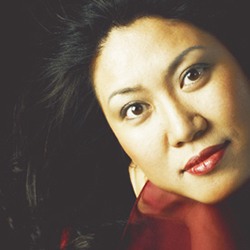
Ryu-Kyung Kim, Korean-American mezzo-soprano, performs a wide range of music from Handel to Schönberg and has so far appeared in thirteen world & U.S. opera premieres. Highlights from her recent season included performing as a featured soloist for Oratorio Society of Queens Holiday Concert, San Jose State University’s New Music Festival, and Silicon Valley Chamber Music Festival’s world-premiere project, ‘وحدة JUNTOS” which is a ground-breaking song cycle co-composed by CMSV Fellows and six Iraqi, Nigerian, Lebanese, and Egyptian young composers in collaboration with American Voices.
Dr.. Kim has performed with Santa Fe Opera, Baltimore Opera, Cleveland Opera, El Paso Opera, Dayton Opera, Virginia Opera, Gotham Chamber Opera, Opera Orchestra of New York, and the Caramoor Music Festival. Internationally, she has collaborated with the Korean Symphony Orchestra and Seoul Philharmonic Orchestra in Korea, the Sapporo Symphony Orchestra in Japan, and Staatskapelle Halle and Frankfurter Sinfoniker in Germany. She has appeared in concerts at Avery Fisher Hall and Alice Tully Hall at Lincoln Center as well as Carnegie Hall’s Isaac Stern Auditorium and Weill Recital Hall where she made her solo recital debut in 2005.
A frequent prizewinner, Dr. Kim has received awards from the Oratorio Society of New York, the Liederkranz Foundation, the Annapolis Opera Voice Competition, and the Metropolitan Opera National Council District Auditions. Her performance in “The Floating Box: A Story of Chinatown” (New World Records, 2005), presented by The Asia Society of New York, was praised in Opera News and The New York Times. She is also featured on two acclaimed recordings with The Shakespeare Concert Series, “Who Is Sylvia?” and “Music to Hear” (Navona, 2020).
Dr. Kim earned a Doctor of Musical Arts degree from SUNY Stony Brook, an Artist’s Diploma from the Academy of Vocal Arts, and master’s and bachelor’s degrees from Manhattan School of Music. She currently serves as Director of the World Music Choir and Associate Professor of Voice at the University of Dayton.
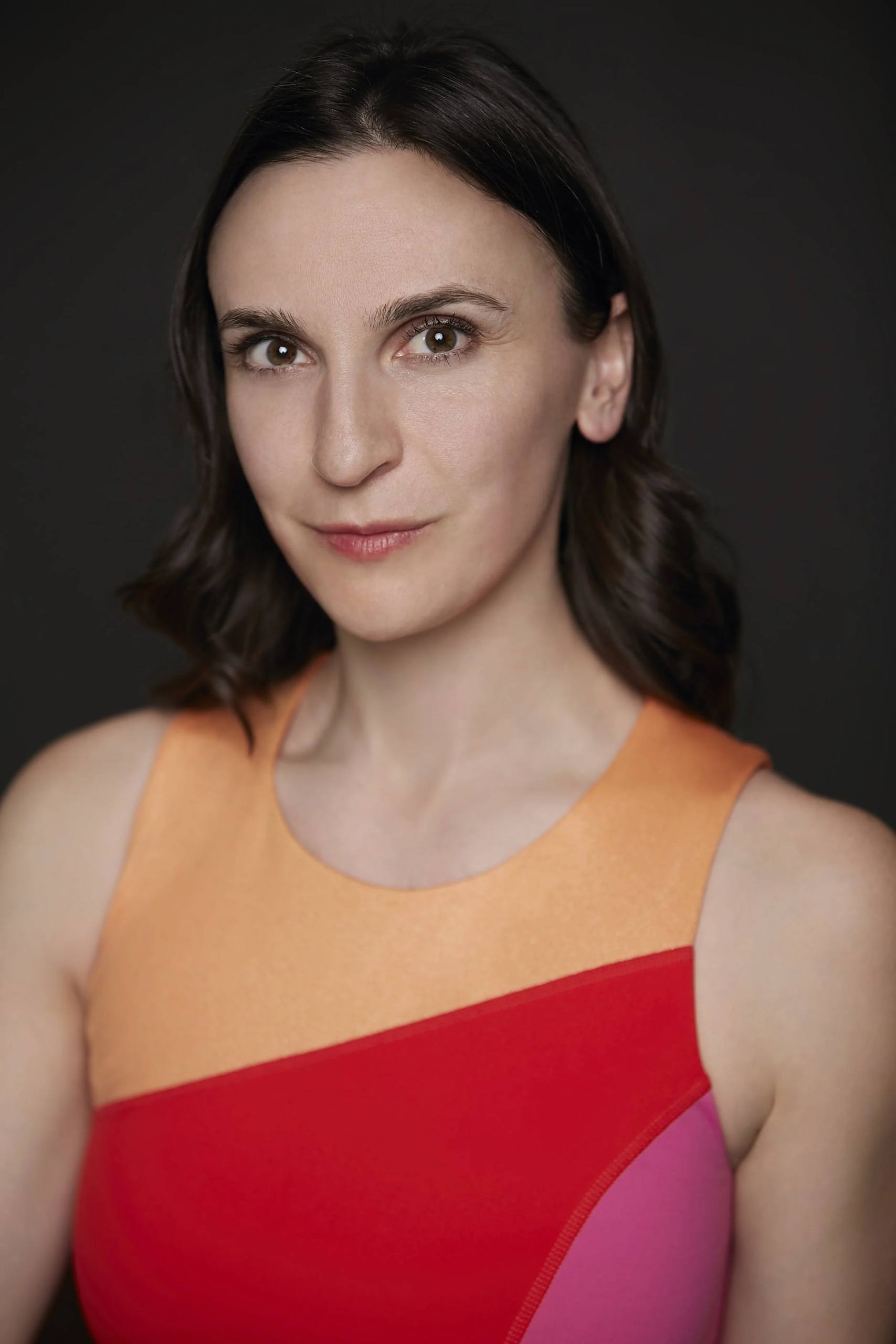
Jennifer Sydor is a dancer, choreographer, educator, and arts leader whose work centers around somatic-informed practice, inclusive pedagogy, and interdisciplinary performance. She is Adjunct Professor of Dance at the University of Dayton, where she teaches Contemporary Jazz, Movement for All, and Inclusive Dance Studies and directs the University Dance Ensemble. She is also on faculty in the Musical Theater department at Wright State University. She holds an MFA in Dance from the University of Wisconsin–Milwaukee and a BFA in Dance Performance from Butler University. Her teaching emphasizes anatomy, injury prevention, dancer longevity, and access.
Jennifer is the Artistic and Executive Director of the Dayton Dance Initiative, a seasonal dance company specializing in interdisciplinary collaboration. As an AGMA-affiliated artist, she has been a featured dancer with The Metropolitan Opera Ballet since 2008. Her choreographic work spans contemporary concert dance, opera and musical theatre, with recent productions choreographed for Sinclair Community College, Wright State University, and the University of Dayton. jennifersydor.com.
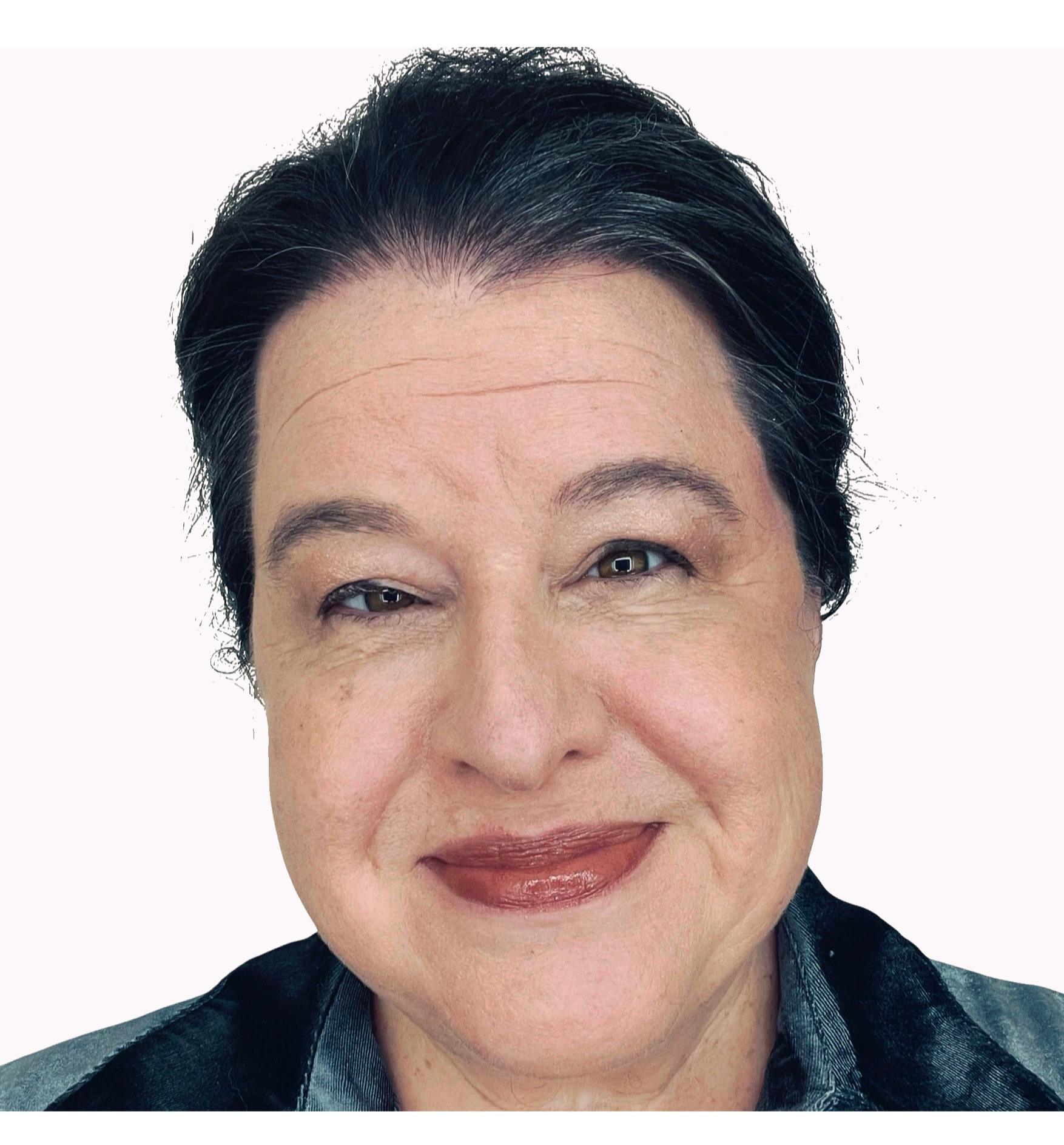
Andrea Chenoweth Wells, soprano, has long been recognized for her expressive artistry and commitment to text-driven performance. She has appeared with orchestras and opera companies throughout the United States, including regular engagements with The Cleveland Orchestra, Dayton Philharmonic Orchestra, Cleveland Opera, and Dayton Opera. Career highlights include her Carnegie Hall debut as the soprano soloist in Verdi’s Requiem and a concert tour of Japan with Maestro Neal Gittleman and the Telemann Chamber Orchestra.
A passionate advocate for new music, Wells has collaborated with numerous living composers, including Libby Larsen, Joseph Summer, Jack Perla, Scott Gendel, Jonathon Sheffer, and Monica Houghton. She is featured on multiple recordings of Shakespeare-inspired repertoire on the Parma and Albany labels and appears frequently as a soloist with The Shakespeare Concerts in Boston.
In addition to her performing career, Wells is a stage and intimacy director and serves as Assistant Professor of Voice at the University of Dayton. She holds a DMA in voice and directing from the University of Cincinnati College-Conservatory of Music, an MM in voice from the Cleveland Institute of Music, and a BA in English from the University of Dayton.
******************************************
Thanks for attending this performance. If you have enjoyed your experience, please consider donating to the College of Musical Arts in support of our students and programming. Donate online at bgsu.edu/givecma, or call Karmen Concannon at 419-372-2424.
To our guests with disabilities, please indicate if you need special services, assistance or appropriate modifications to fully participate in our events by contacting Accessibility Services, access@bgsu.edu, 419-372-8495. Please notify us prior to the event.
Audience members are reminded to silence alarm watches, pagers and cellular phones before the performance. As a matter of courtesy and copyright law, no recording or unauthorized photographing is allowed. BGSU is a nonsmoking campus.
Updated: 03/09/2026 04:08PM