
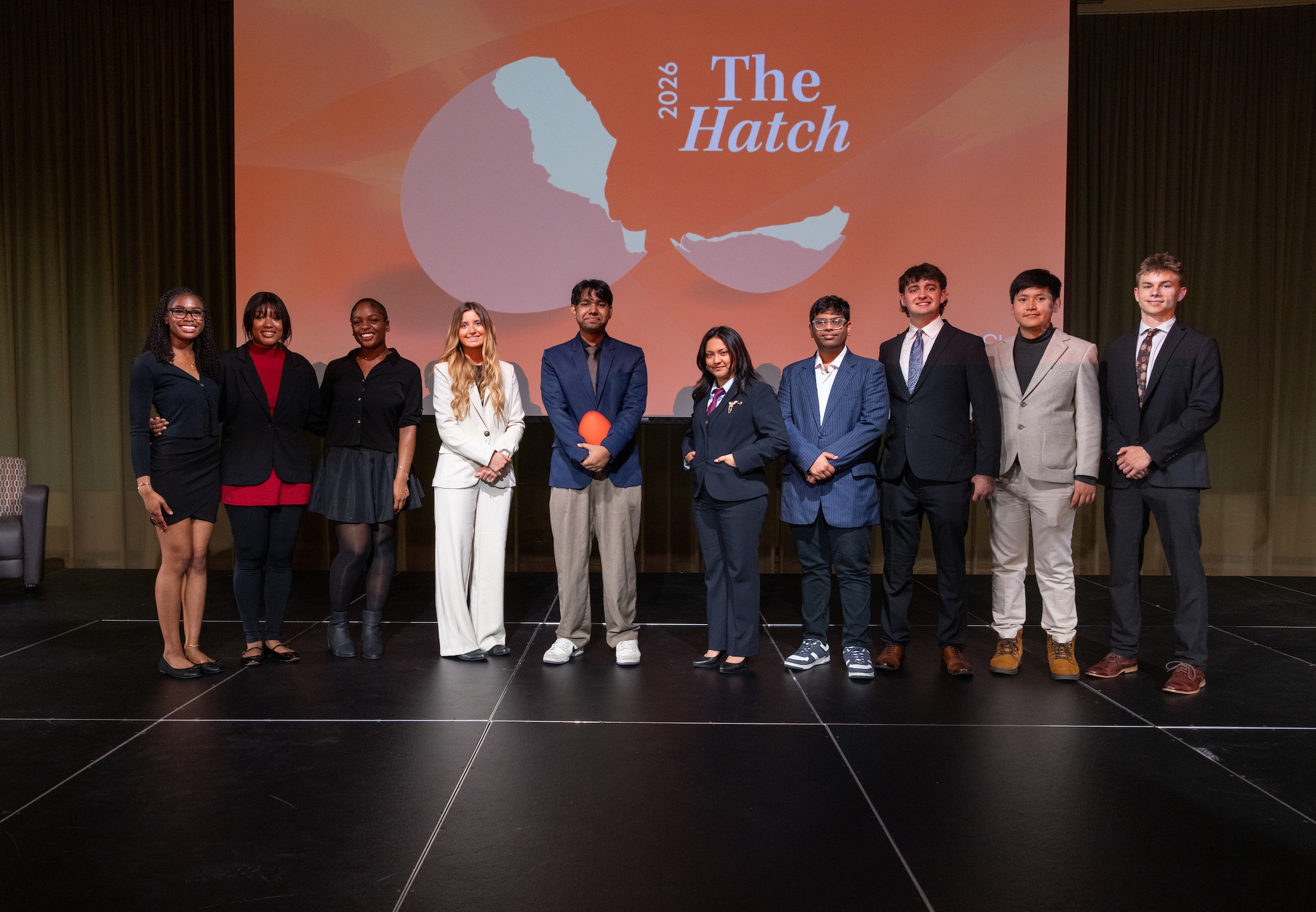
The Hatch 2026

Expanding personalized learning
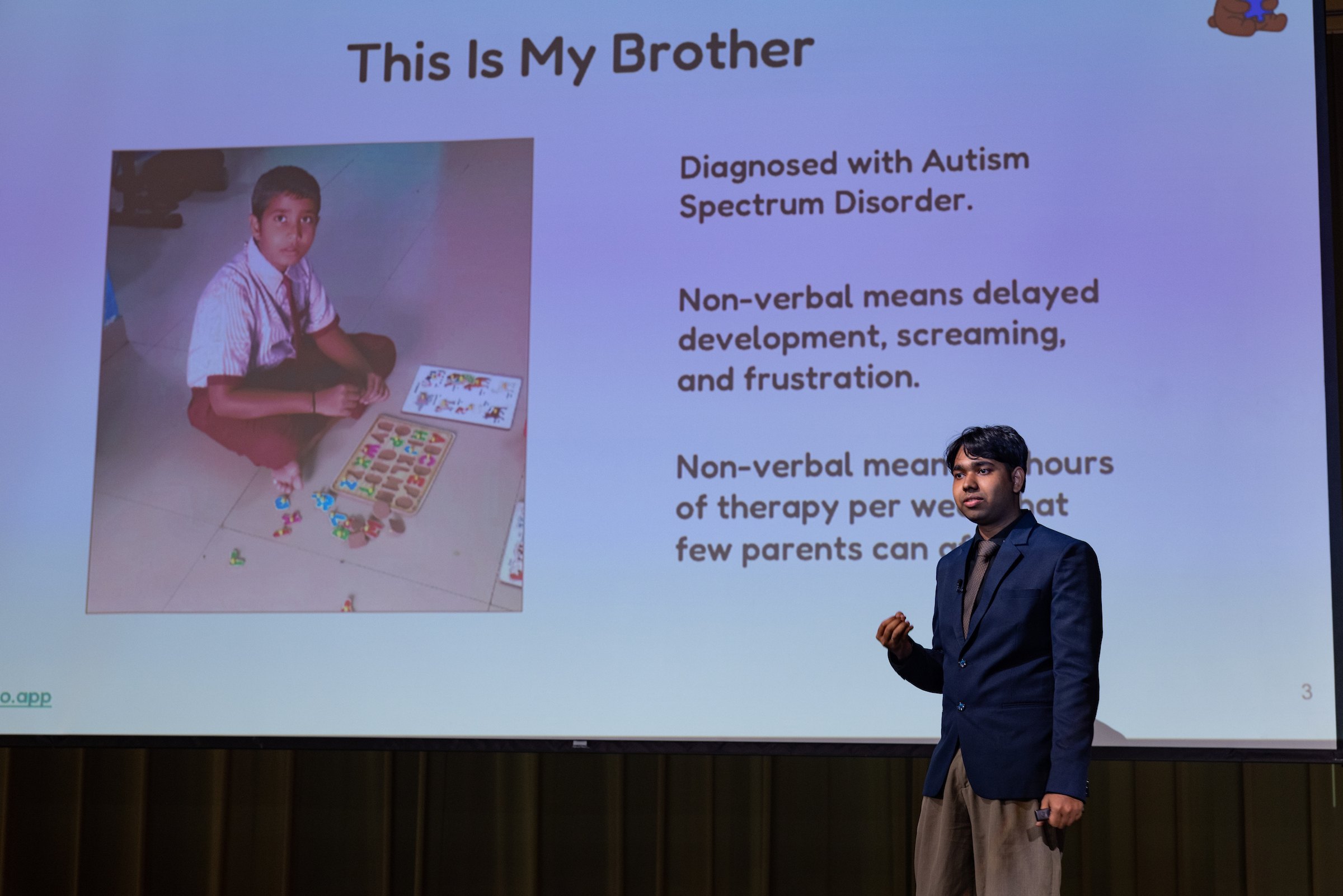
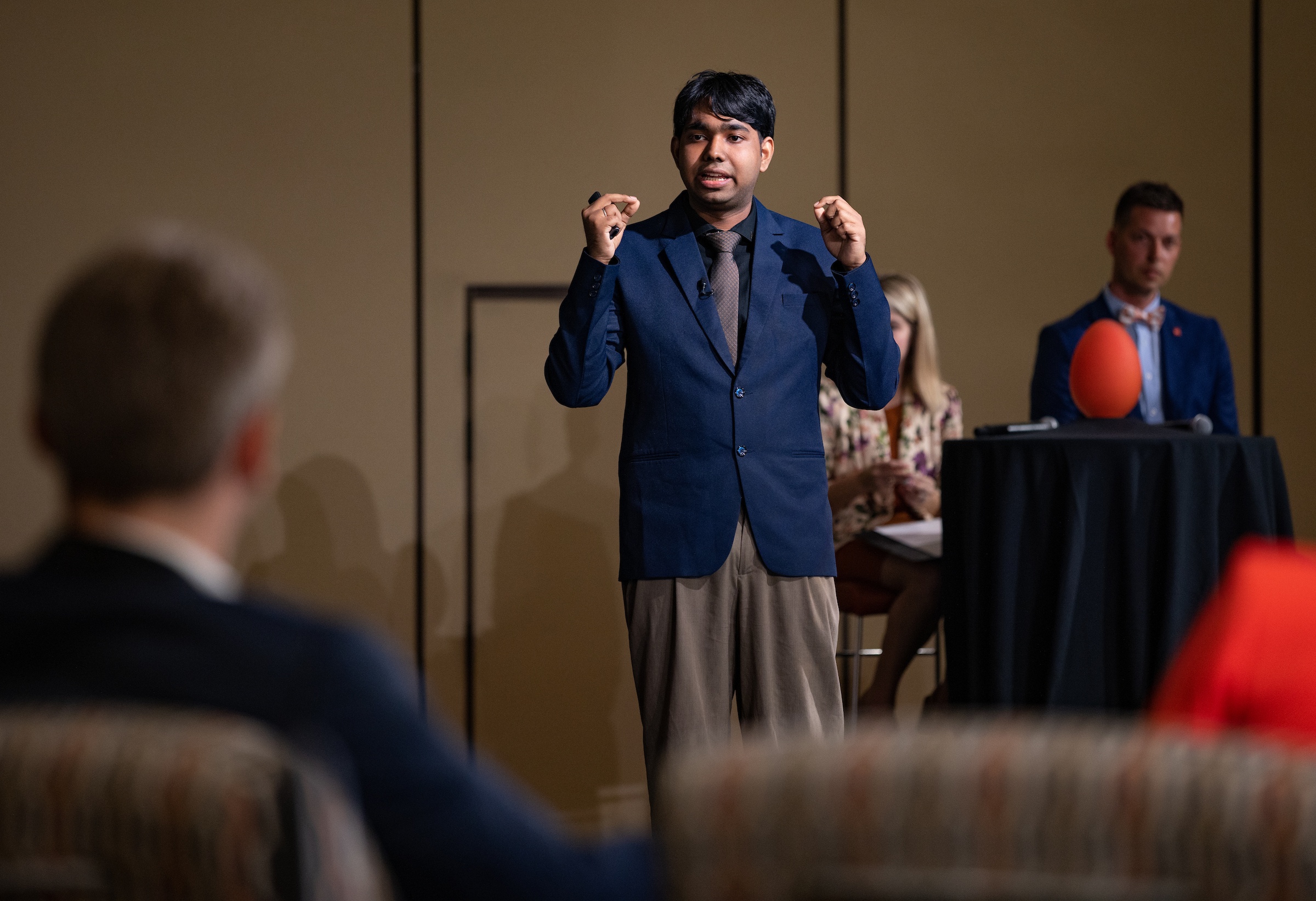
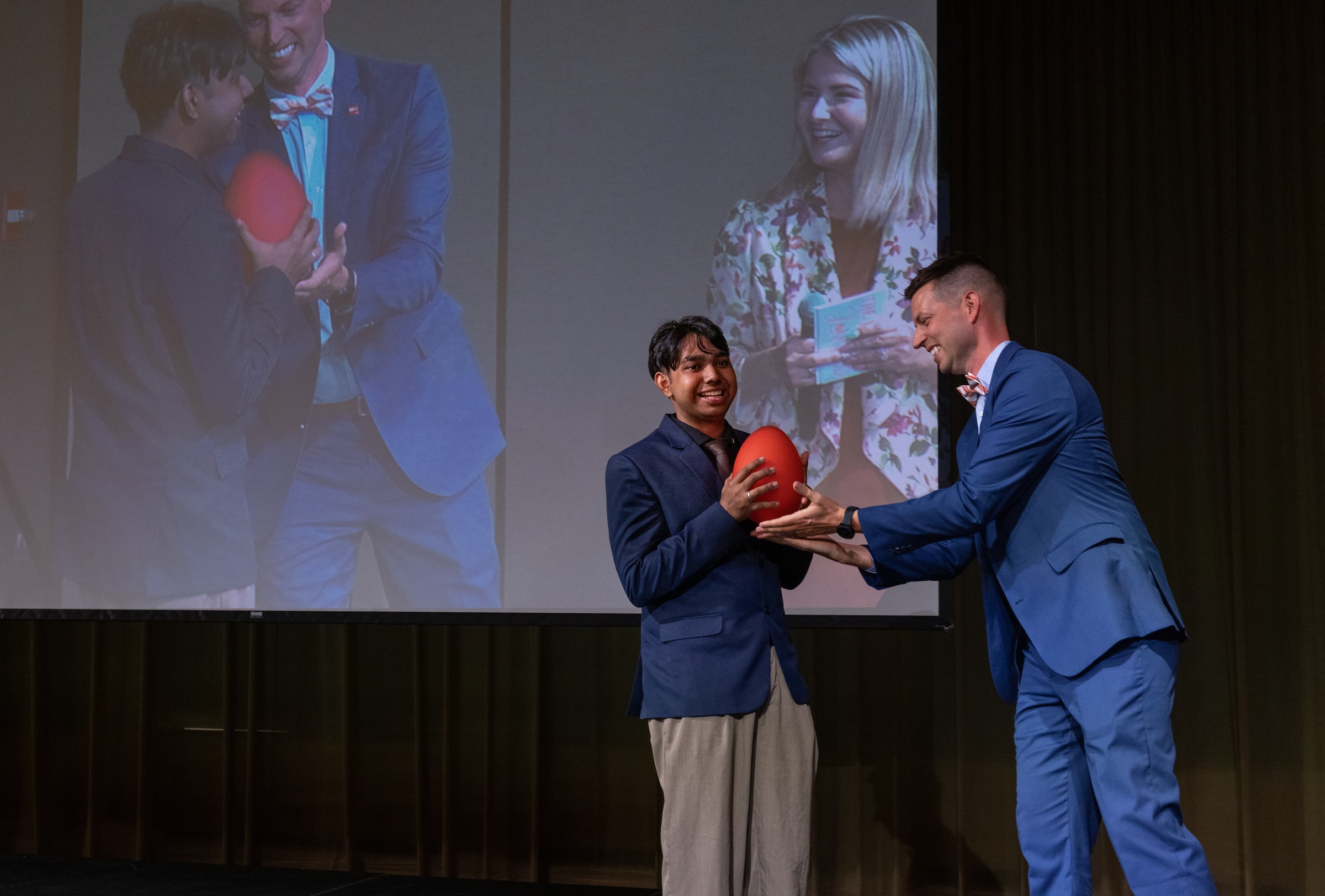
Rudrashis Mandal, a second-year computer science student in the College of Arts and Sciences, placed first in the competition for his AI-powered educational app, Curio, which makes personalized learning accessible and affordable for autistic children ages 2-8.
Mandal, who is minoring in entrepreneurship, was inspired to create the app to make autism interventions more accessible and affordable. He said the idea for the app came after his parents were told his brother, who is autistic and nonverbal, would need 30 hours of therapy a week, which would cost about $17,000 a year.
“Every kid deserves what my brother deserved: to communicate, to connect, to be understood,” Mandal said. “Technology can do that for you. The research proves it. I'm just creating it.”
Mandal said he’s planning to use the funds awarded through The Hatch to hire developers and artists to continue refining the app. He’s currently testing it with therapists in Ohio and exploring a potential pilot program in schools.
“We have moved beyond the scope of a project to a real business,” Mandal said. “Through the guidance of The Hatch, I learned that building an application wasn’t enough on its own. The mentoring by Joe Wagner and other mentors through The Hatch was crucial in teaching me that we weren’t solving just a personal issue, but a systemic one affecting more than 280,000 American families.”
Building student connections
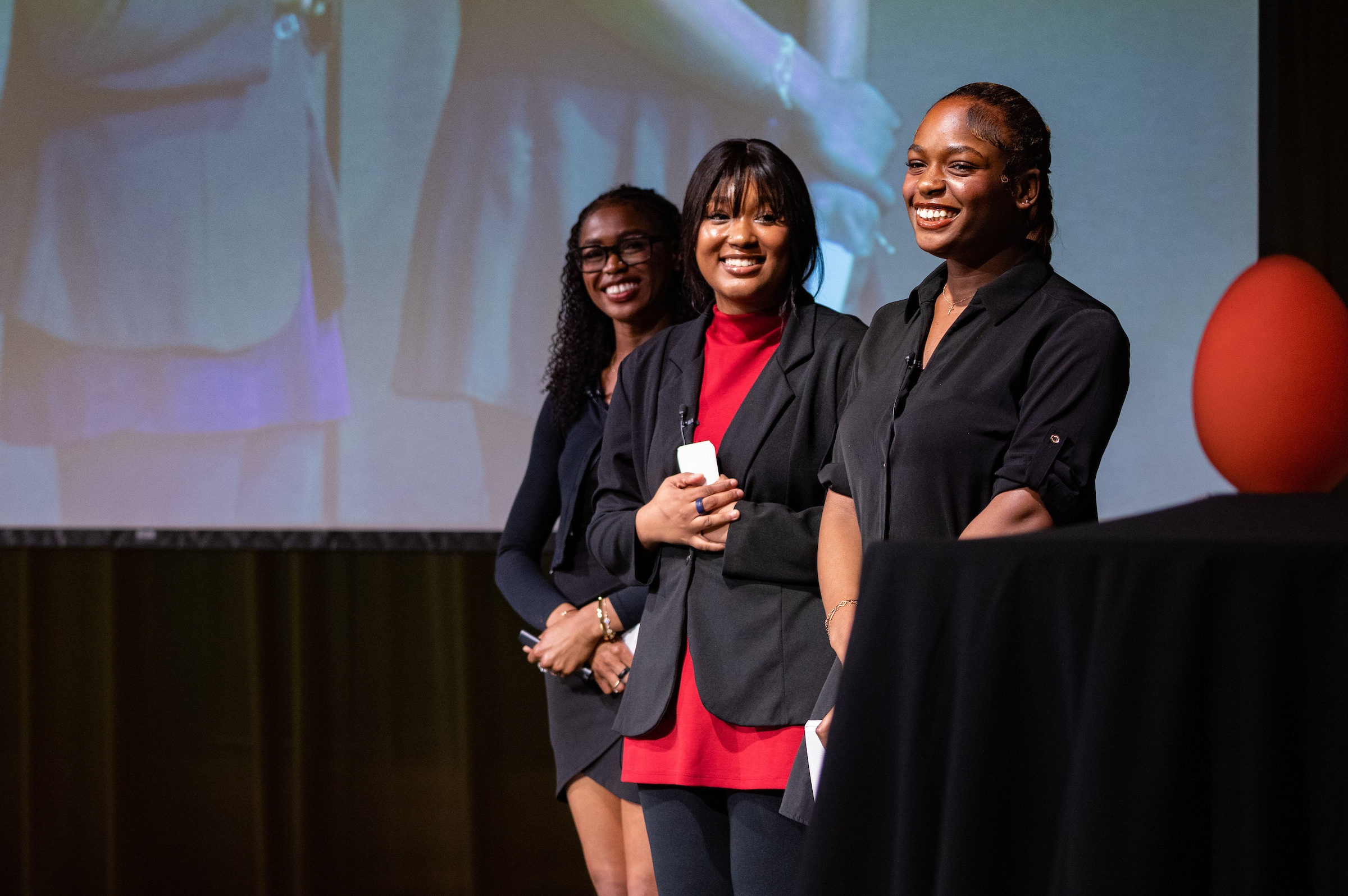
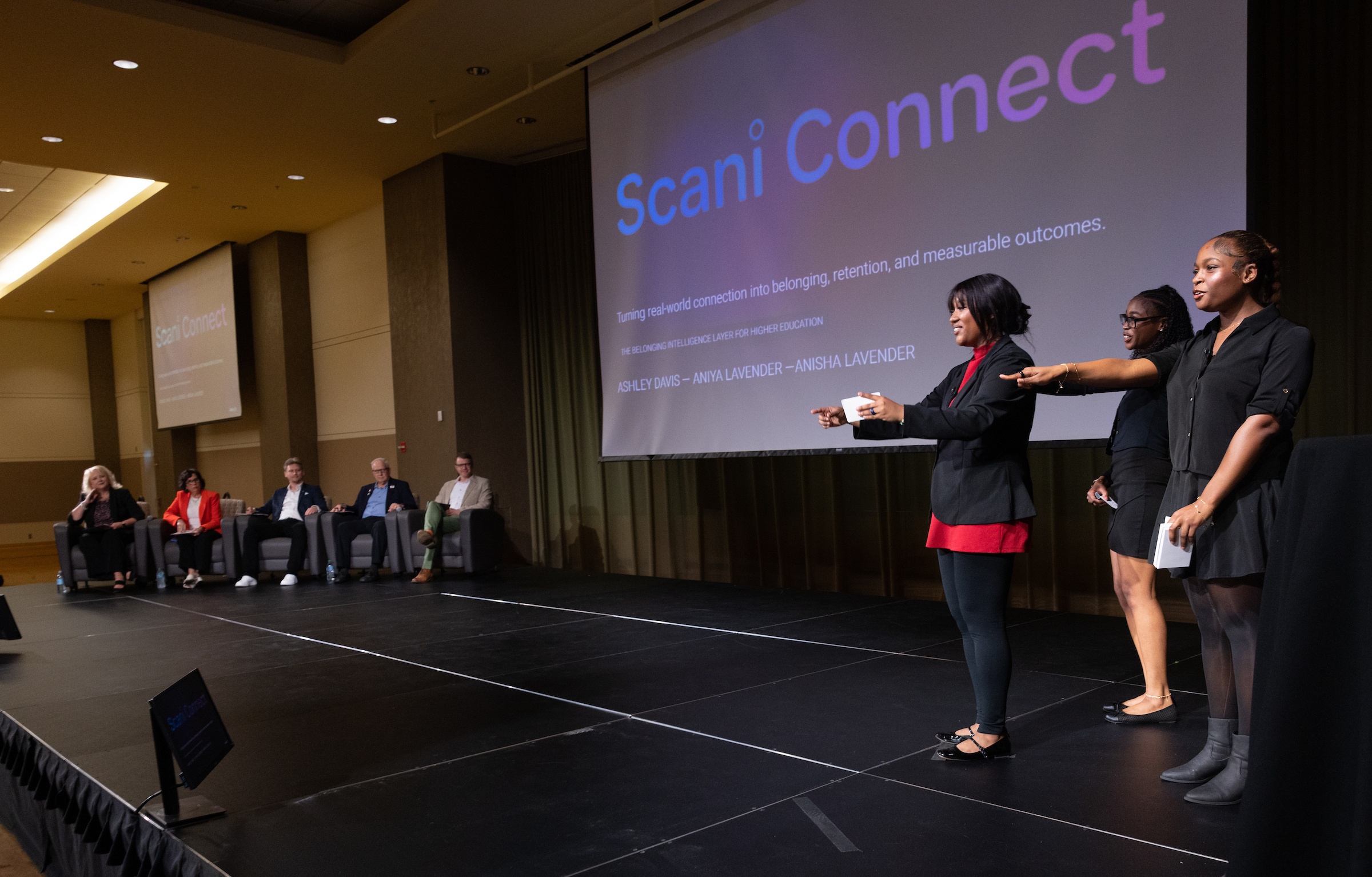
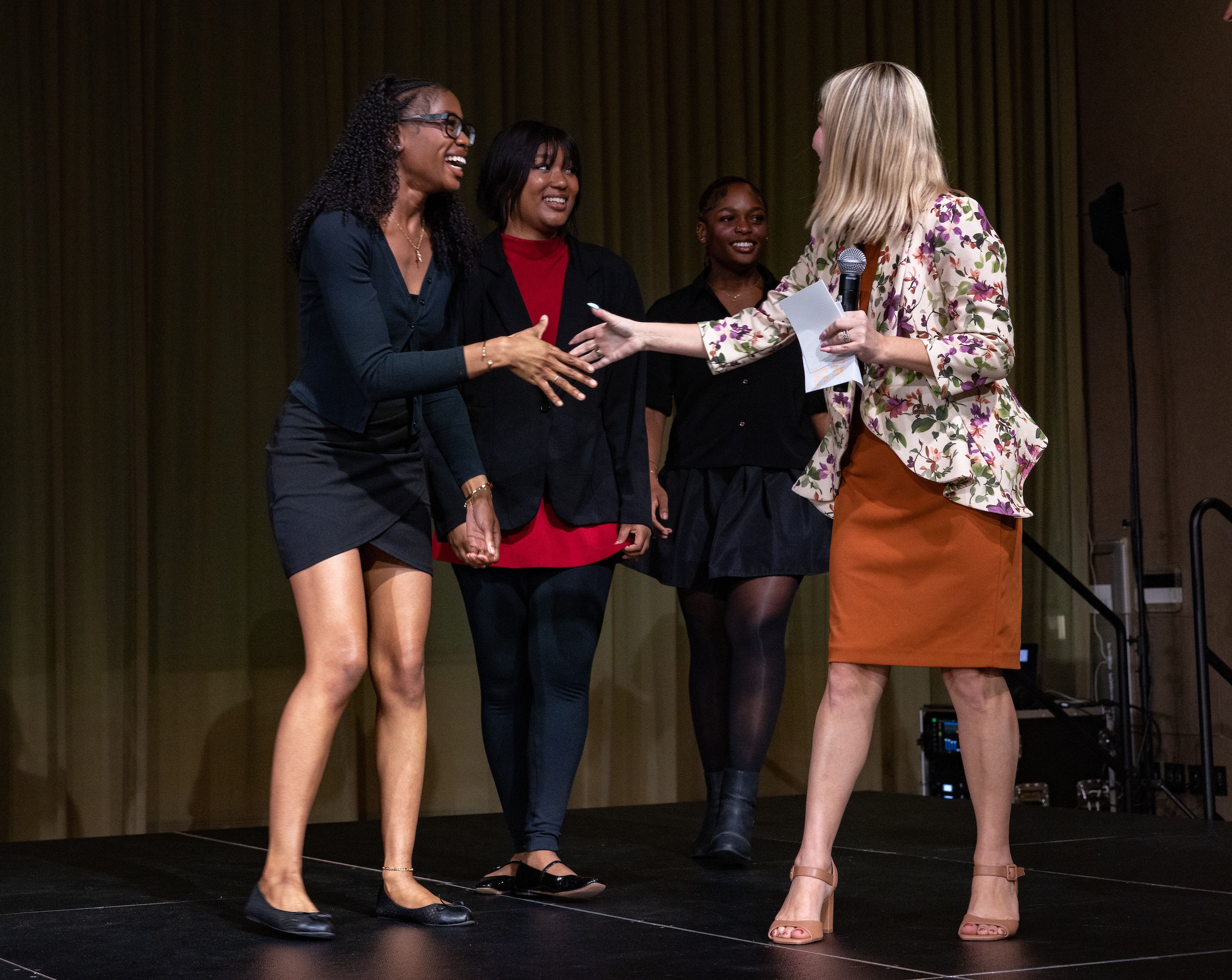
The trio of Ashley Davis, Anisha Lavender and Aniya Lavender, who represented the College of Arts and Sciences, College of Education and Human Development and Schmidthorst College of Business, placed second for their student engagement tool, Scani Connect, designed to help universities understand and improve student life through simple, real-life interactions. The app’s goal is to reduce the friction of exchanging contact information or social media in the moment and to make everyday interactions more seamless.
Davis said the impetus for creating the app was based on her and her co-founders’ experiences on campus.
“I met my co-founders, Aniya and Anisha, through a student organization, and that experience made us realize how important student connections are to the college experience,” she said. “Some of the most meaningful parts of college come from the people you meet, and we felt that students should be able to fully experience the four years they sign up for.”
The team valued their experience in The Hatch, calling it one of the most valuable parts of building Scani Connect.
“It took our idea from something conceptual and pushed us to think through how it would work in the real world, for real students,” Aniya Lavender said. “The most beneficial part was the constant feedback from our mentors, Ebony Carter and David, who challenged us to refine Scani Connect and make it stronger. It helped us see gaps we wouldn’t have noticed on our own and made our business much more realistic and focused.”
Aniya Lavender said placing second in The Hatch provides credibility that will be beneficial as they seek interest from potential users, partners and supporters.
“Moving forward, we can use this recognition to continue developing Scani Connect, improving the product and taking bigger steps toward launching and scaling it,” she said.
Reinventing onboarding
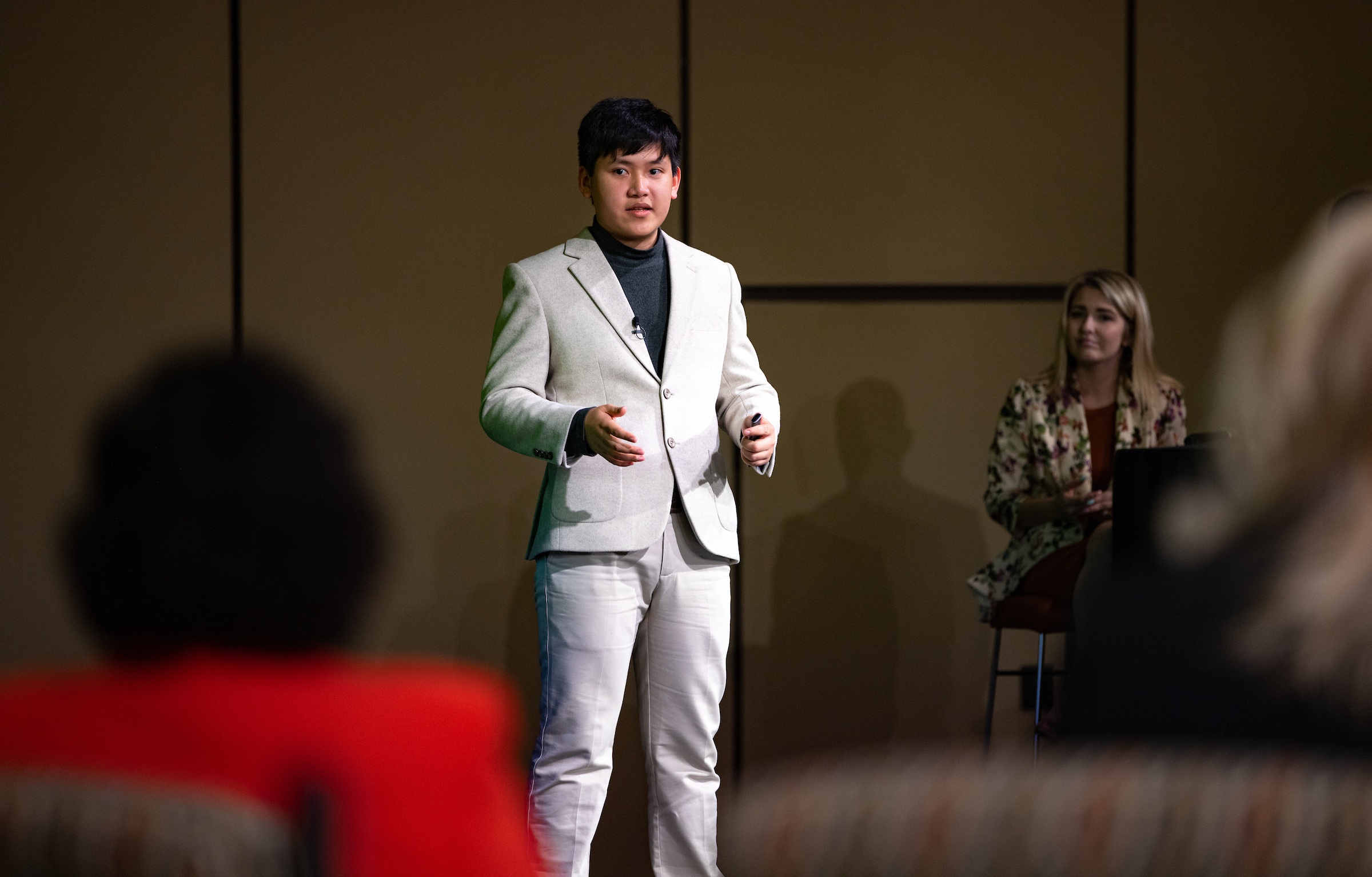
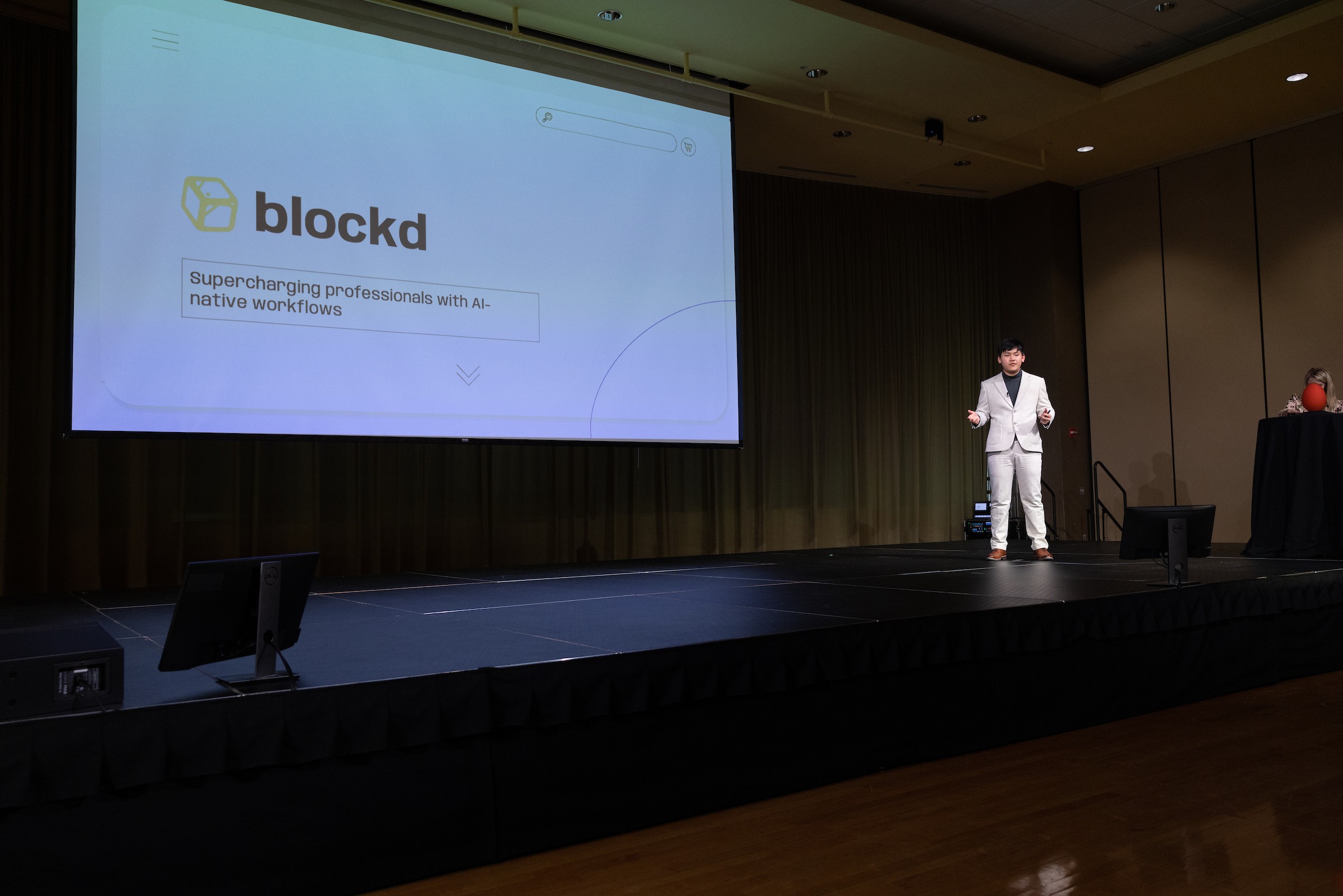
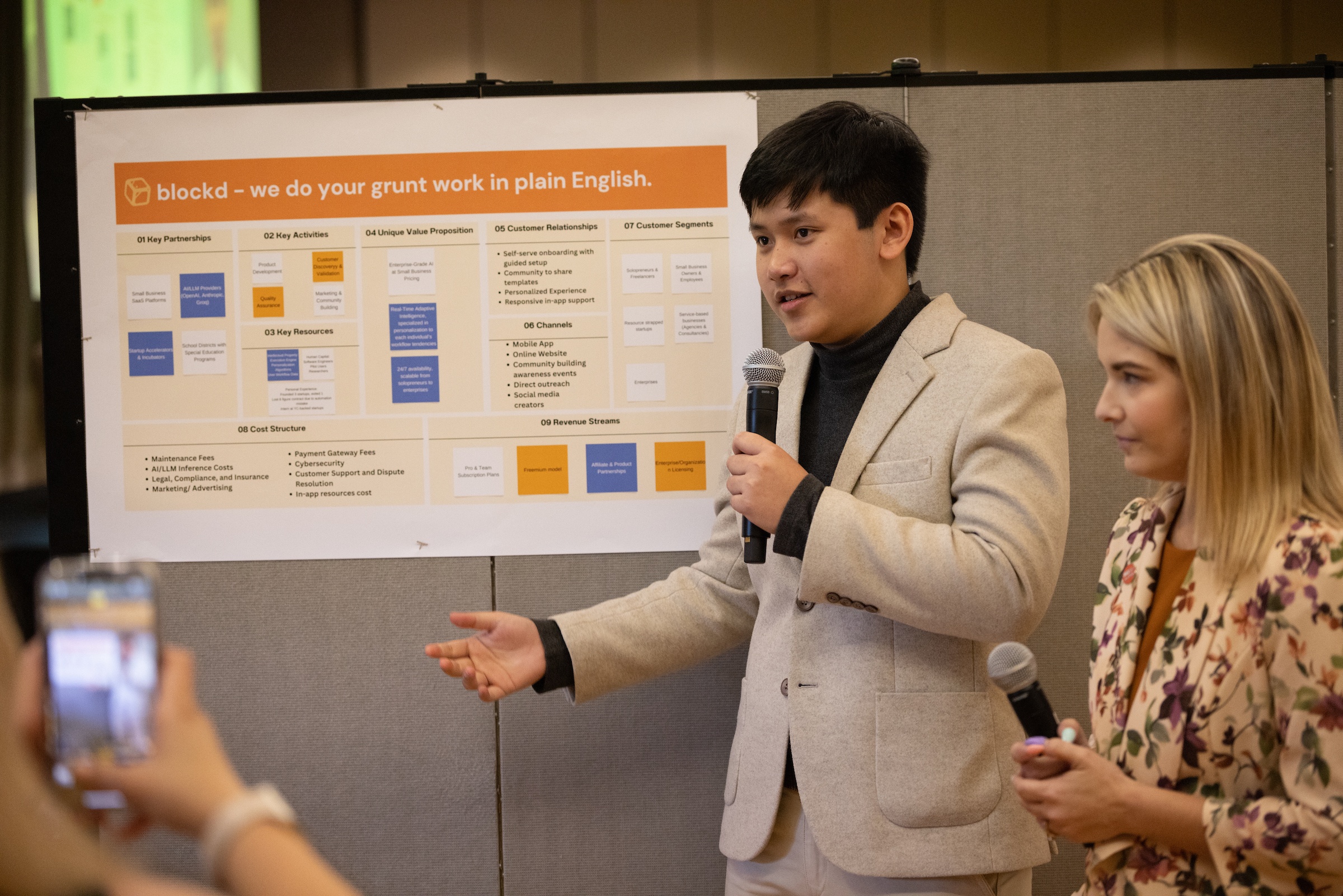
Third-year computer science student Kien Quoc Ngo, also representing the College of Arts and Sciences, placed third to continue developing Blockd, an AI-powered brain for onboarding employees.
Onboarding typically takes three to five days, costing companies thousands of dollars in lost productivity. Ngo said Blockd is built to understand companies and create comprehensive onboarding documents to reduce onboarding time by 60-80%, helping new employees more quickly assimilate to company culture and their roles.
“The interest and early success of Blockd shows me there is a gap in this sector and what I’m doing matters,” Ngo said. "Winning third place also gave me a mental boost to encourage me to push even harder.”
Ngo is already talking with potential customers in San Francisco and has had a few businesses sign letters of intent, reflecting serious interest in the technology. In addition to the mentorship he's receiving at BGSU, Ngo is also involved in a startup accelerator program called Founders, Inc. and was awarded $40,000 through the Jackson Square Ventures Launchpad Accelerator Program.
From ideas to impact
Casey Wyman, the University’s vice president for finance and administration and chief financial officer, served as a judge during the live pitch competition and said he was impressed by the students’ ideas and presentations. He commended the participants for stepping out of their comfort zones to explore entrepreneurship alongside their academic responsibilities.
“Walking into Hatch, I expected to hear some good ideas. Walking out, I was reminded that the future is already here, and it’s sitting in BGSU classrooms,” he said. “The creativity, confidence, and courage these students brought to the stage made being a judge very rewarding.”

Updated: 05/20/2026 02:05PM