
Demographic Variation by Age Among U.S. Adults Aged 50+, 2024
An Aging Family Portrait (AFP-26-01)
Krista K. Westrick-Payne & Susan L. Brown

Introduction
The U.S. is an aging population, reflecting gains in longevity and shrinking birth rates. Projections indicate that the number of U.S. adults aged 65 and older is growing rapidly, rising from about 57.8 million in 2022 to an estimated 106.3 million in 2100 (Federal Interagency Forum on Aging Related Statistics, 2024). This Aging Family Portrait draws on data from the 2024 American Community Survey to describe the sociodemographic characteristics of the older population, distinguishing between adults aged 50-64 and 65+.
Age
Over 123 million Americans were aged 50 or older in 2024.
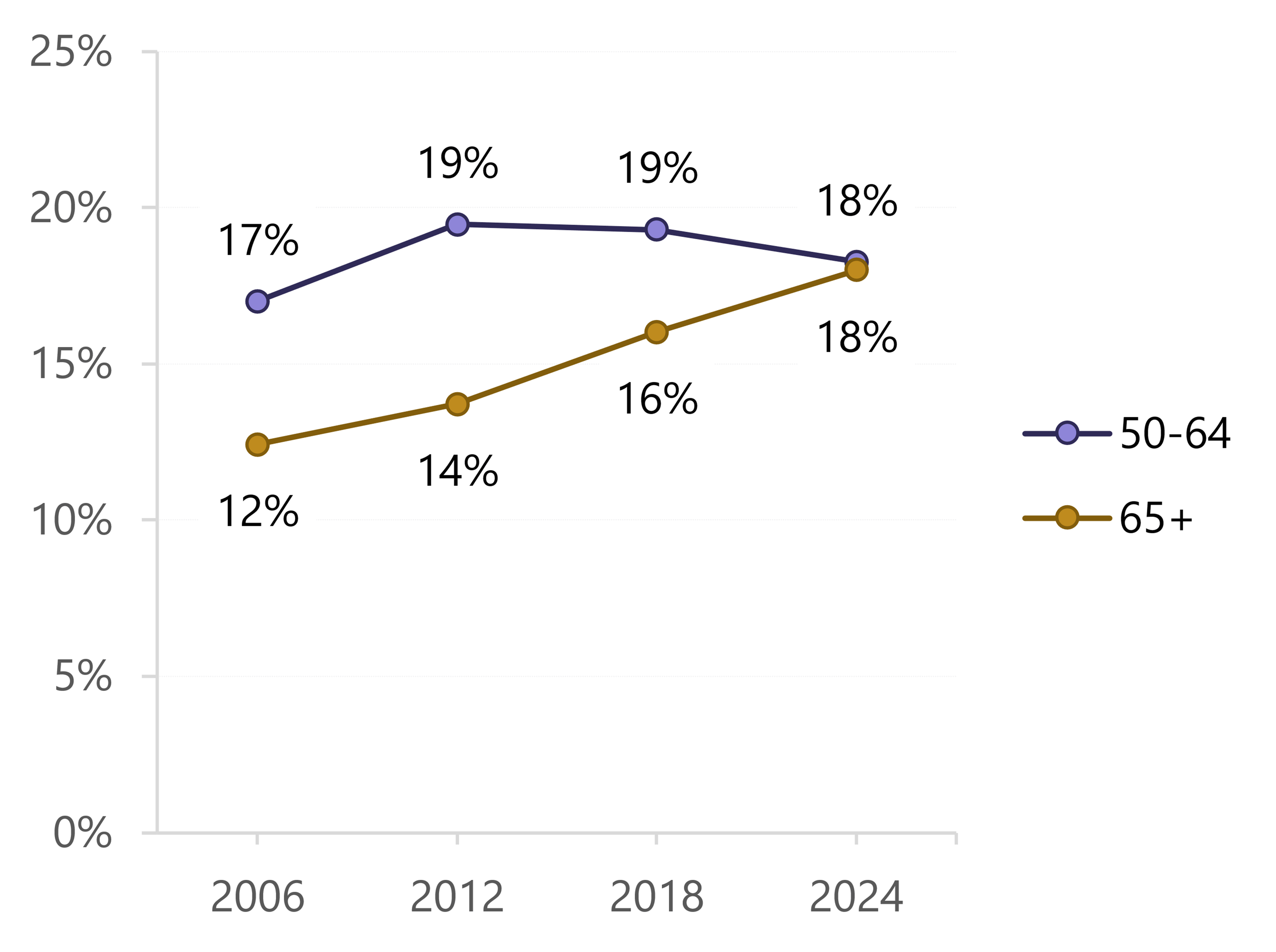
Since 2006, the shares of the population aged 50–64 and 65+ have converged. By 2024, each group represented 18% of the population.
Figure 1. Population Share by Age Group, U.S. Adults Aged 50+, 2006-2024
Source: CAF analysis of U.S. Census Bureau, American Community Survey, 1-year files, 2006-2024 (IPUMS USA)
Geographic Variation
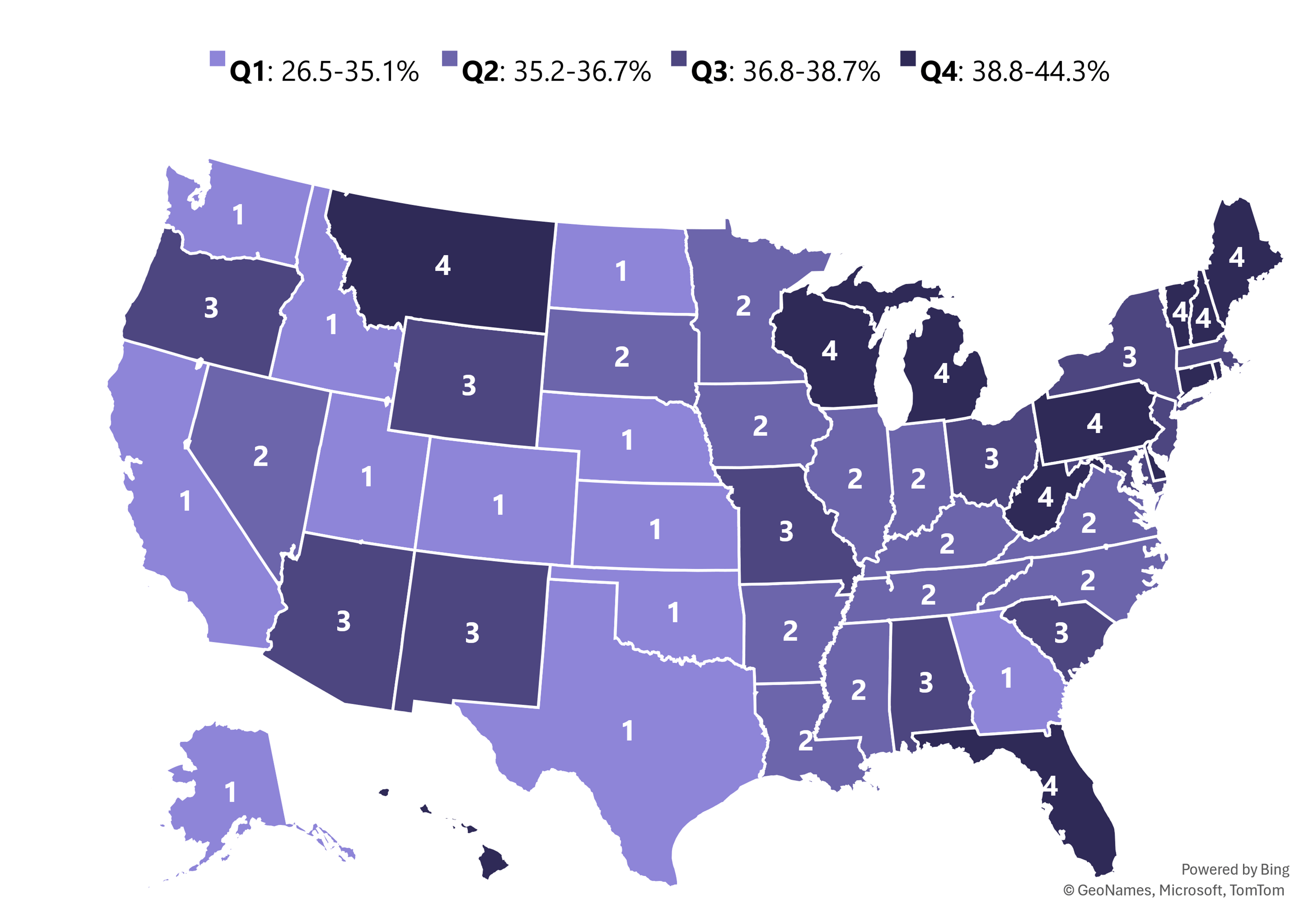
States differed modestly in the share of residents aged 50+.
In 2024, Utah had the lowest share of residents aged 50+ (26.5%), whereas Maine had the highest share (44.3%).
Figure 2. Share of the U.S. Population Aged 50+ by State Quartile, 2024
Source: CAF analysis of U.S. Census Bureau, ACS, 1-year Subject Table S0103, 2024
Note. Q1 = first quartile; Q2 = second quartile; Q3 = third quartile; Q4 = fourth quartile. Categories may not sum to 100% due to rounding.
Metro Status
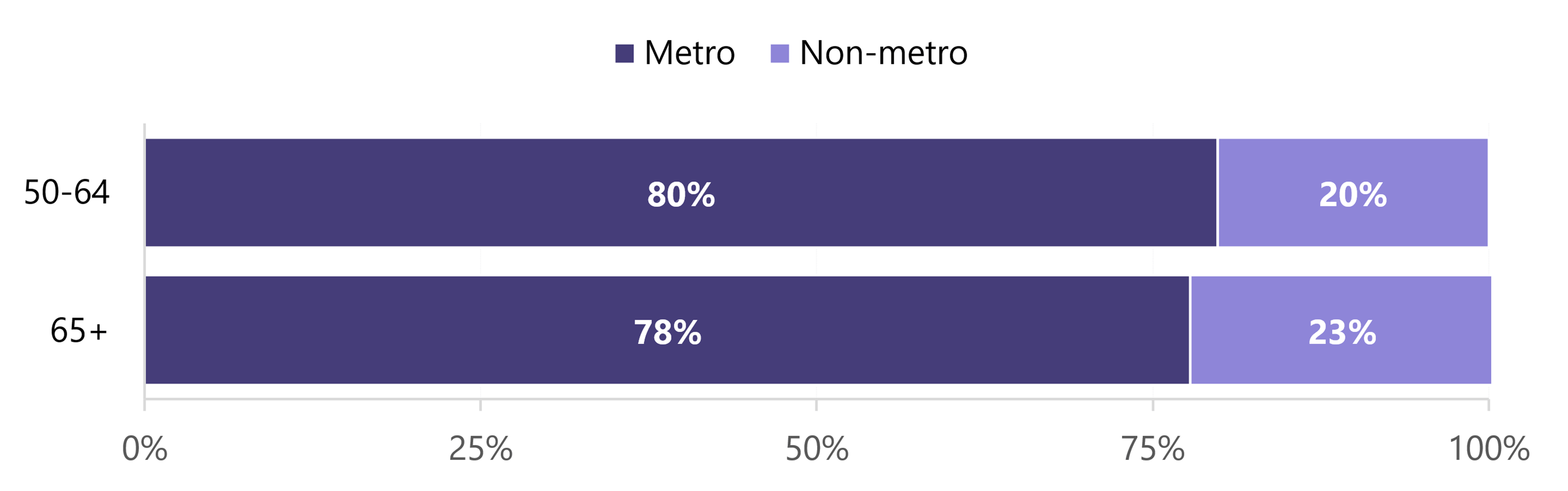
Nearly 4 in 5 adults aged 50+ lived in metropolitan areas.
In 2024, adults aged 65+ had slightly larger shares living in non-metro areas than those aged 50-64 (22.6% compared with 20.2%).
Figure 3. Metro vs. Non-Metro Residence by Age Group, U.S. Adults Aged 50+, 2024
Source: CAF analysis of U.S. Census Bureau, American Community Survey, 1-year files, 2024 (IPUMS USA)
Note. Categories may not sum to 100% due to rounding.
Educational Attainment
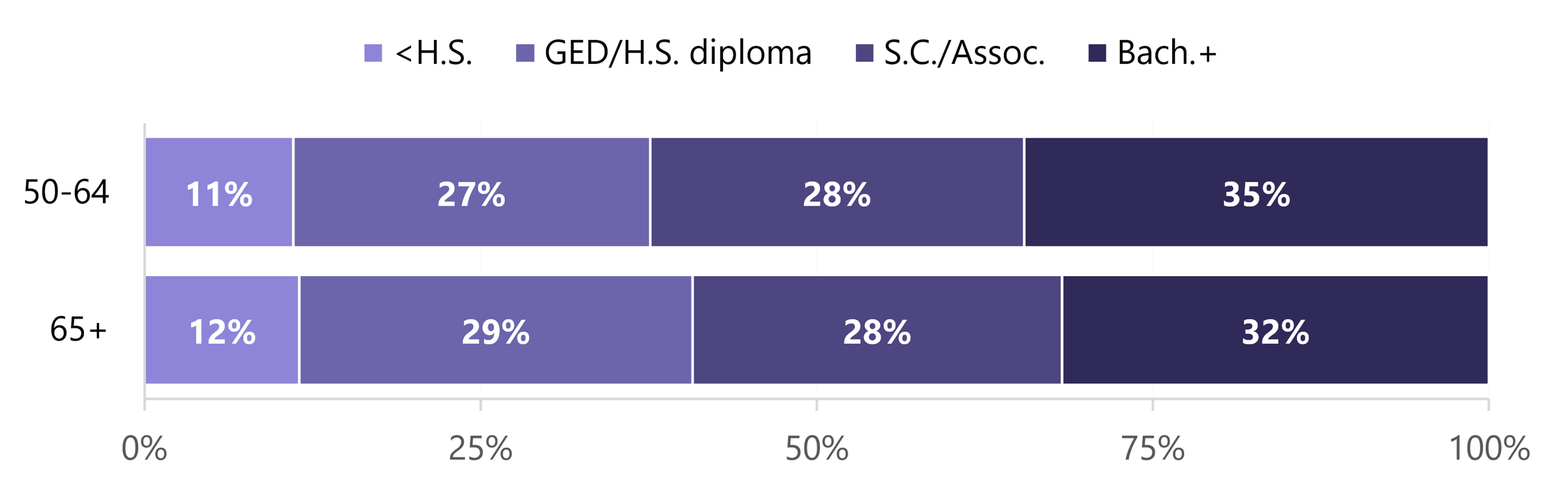
Adults aged 50–64 had slightly higher levels of educational attainment than those aged 65+.
In 2024, 34.6% of adults aged 50–64 had a bachelor’s degree or higher compared with 31.7% of those aged 65+.
Figure 4. Educational Attainment by Age Group, U.S. Adults Aged 50+, 2024
Source: CAF analysis of U.S. Census Bureau, ACS, 1-year files, 2024 (IPUMS USA)
Note. HS = high school; GED = General Educational Development credential; SC = some college; Assoc = associate degree; Bach+ = bachelor’s degree or higher. Categories may not sum to 100% due to rounding.
Race & Ethnicity
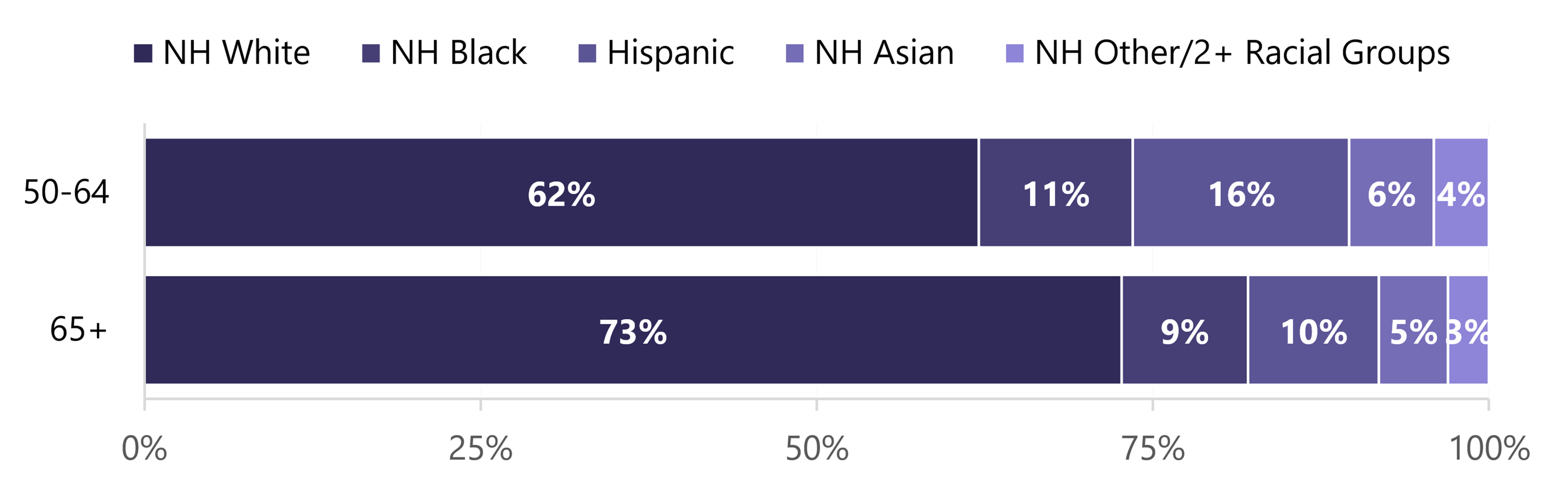
Adults aged 65+ had a higher share of non-Hispanic White individuals and lower shares of racial and ethnic minority groups than those aged 50-64.
Figure 5. Race & Ethnicity by Age Group, U.S. Adults Aged 50+, 2024
Source: CAF analysis of U.S. Census Bureau, American Community Survey, 1-year files, 2024 (IPUMS USA)
Note. NH = Non-Hispanic. “NH Asian” includes non-Hispanic individuals identifying as Asian or Native Hawaiian and Other Pacific Islander. “Other/2+ Races” includes non-Hispanic individuals identifying as American Indian or Alaska Native alone, some other race alone, or two or more races. Categories may not sum to 100% due to rounding.
Functional Limitations
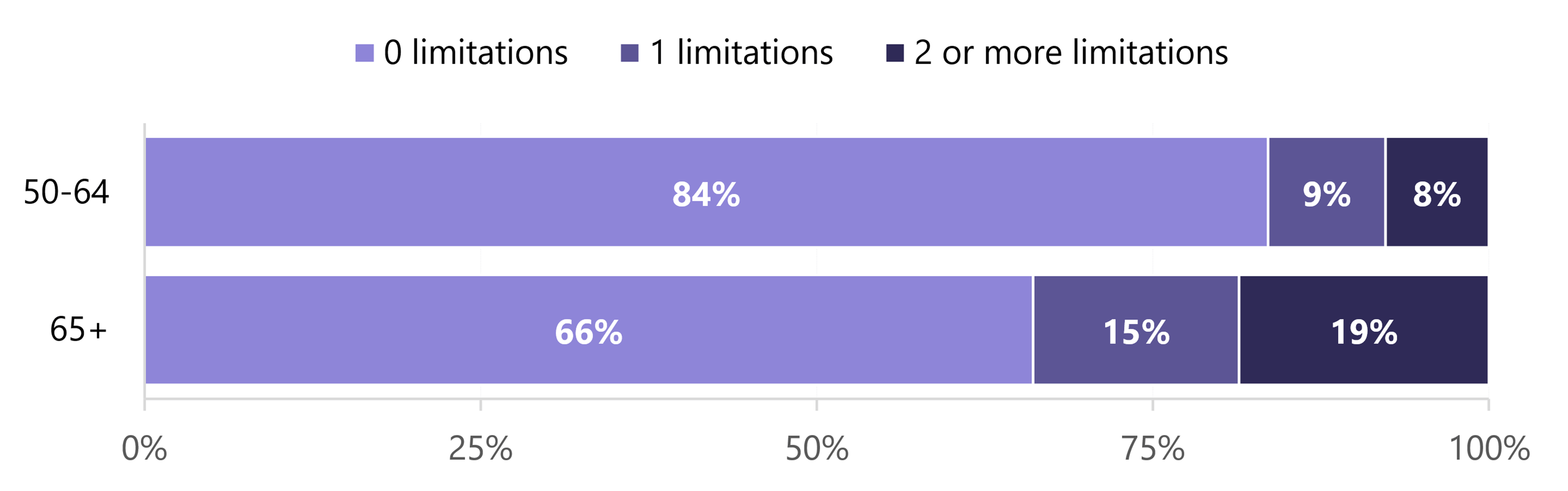
Nearly 31 million Americans aged 50+ reported at least one functional limitation.
In 2024, 15% of adults aged 65+ reported at least one daily limitation, compared with 9% of those aged 50-64.
Figure 6. Number of Functional Limitations by Age Group, U.S. Adults Aged 50+, 2024
Source: CAF analysis of U.S. Census Bureau, ACS, 1-year files, 2024 (IPUMS USA)
Note. The ACS asks about experiences of difficulty in six areas; cognitive difficulty, ambulatory difficulty, independent living difficulty, self-care difficulty, vision difficulty, hearing difficulty. Categories may not sum to 100% due to rounding.
Data Source
Ruggles, S., Flood, S., Sobek, M., Backman, D., Cooper, G., Rivera Drew, J. A., Richards, S., Rodgers, R., Schroeder, J., & Williams, K. C. W. (2025). IPUMS USA: Version 16.0 [Dataset]. Minneapolis, MN: IPUMS. https://doi.org/10.18128/D010.V16.0
References
Administration for Community Living. (2024). 2024 profile of older Americans. U.S. Department of Health and Human Services. https://agingstats.gov/docs/LatestReport/Older-Americans-2024-508-May-update.pdf
Suggested Citation
Westrick-Payne, K. K., & Brown, S. L. (2026). Demographic variation among U.S. adults aged 50+, 2024. An Aging Family Portrait, AFP-26-01. Bowling Green, OH: Center for Aging Families. https://doi.org/10.25035/caf/afp-26-01
Research reported in this publication was supported by the National Institute on Aging of the National Institutes of Health under award number P30AG096979. The content is solely the responsibility of the authors and does not necessarily represent the official views of the National Institutes of Health.
Updated: 05/12/2026 06:50PM